
A long weekend at the lake, a tailgate that runs past sunset, a job site with no shade: that’s where a dependable ice chest earns its keep. The cooler market splits between classic foam-insulated chests and modern thermoelectric models that plug into your vehicle’s 12V socket (the round 12-volt power outlet, once used for cigarette lighters, found in nearly every car, truck, boat, and RV). This roundup covers both worlds. Thermoelectric coolers use a solid-state heat pump to actively chill contents below ambient temperature, while passive ice chests rely on thick insulation and ice. Each pick below solves a different kind of cold-storage problem, from solo day trips to multi-day base camp duty.
A Side-By-Side Look

Stanley Adventure Outdoor Cooler 16 qt (Black)

Engel 19qt Leak-Proof Drybox Cooler
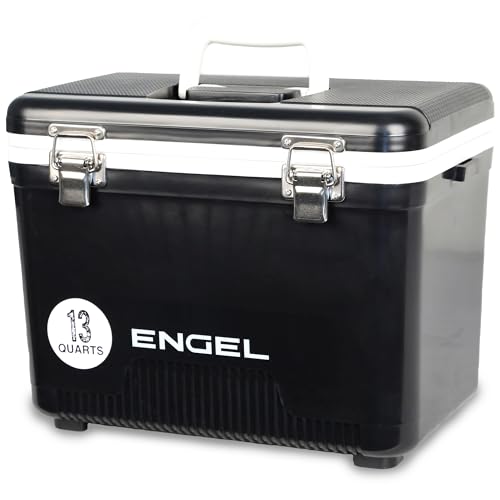
Engel 13qt Leak-Proof Drybox Cooler

YETI Tundra 45 Cooler

Lifetime Hard Cooler, High Performance Ice Chest

Igloo Hard Cooler Profile Series

SPARKING 12V Cigarette Lighter Extension Cord 12FT

AO Coolers Expedition Canvas Soft-Sided Cooler

Klein Tools 55600 Work Cooler 17-Quart
AO Coolers Stow-N-Go Canvas Soft-Sided Cooler
The Strengths Of Each Pick
The Stanley Adventure series has long been the budget-friendly foil to the premium coolers above it, and the 16-quart sits in the sweet spot for a single afternoon out. It carries enough cans for a small crew without forcing you to haul a full-sized chest to the truck. The wide top handle makes one-handed carries realistic, even when the cooler is fully loaded with ice and drinks.
Where this cooler earns repeat use is its surprisingly thick foam wall compared to typical entry-level chests. The lid closes firmly enough to keep spills contained, and the bungee retention cords on top come in handy for strapping a jacket or a Stanley bottle in place during transit. For tailgates, fishing mornings, or a quick park outing, the size and weight are hard to beat at this level.
Practical Advantages
- Lighter than rotomolded (rotationally molded, a process that creates seamless, ultra-tough plastic shells) alternatives, so shorter trips don’t punish your back.
- Holds roughly two dozen standard cans with a sensible ice ratio, fitting most small-group needs.
- Top handle and lid bungees simplify loading and securing extra gear on the lid.
- Sturdy latches and a tight-fitting lid help the cooler keep ice longer than many foam-only competitors.
Worth Noting
- Ice retention lands below premium rotomolded coolers in side-by-side conditions.
- The plastic shell can show scuffs and scratches with rough use over time.
Who It Suits Best
Casual weekend tailgaters, anglers who only need a half-day of cold drinks, and anyone wanting a portable cooler that doesn’t dominate the back seat.
Look Elsewhere When
Multi-day base campers are better served by the YETI Tundra 45 Cooler, which holds ice considerably longer in tough heat.
The Engel 19qt cooler reads more like a piece of marine hardware than a soft foam box. The stainless steel latches and hinged lid give it a satisfying, lock-down feel that survives chop on a small boat and rough drops from a truck bed. Anyone who has wrestled with flimsy plastic clips will appreciate the upgrade on contact.
Inside, the molded polystyrene foam (a rigid, high-density insulation board sealed inside the plastic shell) does the heavy lifting. Engel has built its reputation around this exact insulation, and it shows in the two-day ice retention under realistic conditions. The air-tight seal also makes the cooler genuinely leak-proof when laid on its side, which matters for kayak fishing or stowing it inside an RV cabinet.
The Value In It
- Stainless steel hardware that won’t rust or snap after a saltwater season.
- Holds about thirty cans with proper ice packing, plenty for a long day on the water.
- Truly airtight, so melted ice stays put instead of pooling in your trunk.
- Compact footprint fits under most center console seats and bench seats.
Trade Offs
- Heavier than a soft-sided cooler at the same capacity.
- Higher upfront cost than foam-only competitors of similar size.
Made For
Anglers, boaters, and overlanders who need a rugged drybox that doubles as reliable cold storage.
A Better Fit Elsewhere
Road-trippers wanting something packable should consider the AO Coolers Expedition Canvas Soft-Sided Cooler instead.
The Engel 13qt shrinks the same drybox formula into a lunchbox-friendly footprint. If you’ve ever tried to wedge a full-sized cooler behind a truck seat or onto a pontoon bench, you’ll understand why a smaller, harder shell has appeal. The hinged lid and stainless latches carry over from the larger sibling, so the durability story doesn’t shrink along with the capacity.
This is a smart pick for solo use or short trips where you’d rather not commit to a full cooler. It slides under many vehicle seats and tucks onto a deck without dominating the space. The same molded polystyrene insulation keeps contents cold for roughly two days under normal conditions.
What Helps Most
- Compact size fits solo lunches, snacks, and a dozen cans comfortably.
- Airtight seal keeps melted ice contained, even if the cooler tips.
- Durable latches survive years of grab-and-go use.
Small Caveats
- Limited interior height, so tall bottles or wine bottles won’t always stand upright.
- Not big enough for family-size provisions on full-day outings.
Best Suited To
Solo commuters, day hikers, and anyone who wants a small drybox that won’t budge from a truck cab or boat deck.
Where Another Pick Suits Better
For bigger group outings, the Engel 19qt Leak-Proof Drybox Cooler offers the same rugged build with more usable space.
The YETI Tundra 45 is the chest many shoppers measure every other cooler against, and for good reason. Its rotomolded shell feels nearly indestructible underfoot, and the thick PermaFrost insulation (YETI’s proprietary closed-cell foam wall) locks in cold well past the point where a budget cooler has surrendered. Open the lid on day three of a hot hunt and you may still find solid cubes, depending on conditions and how aggressively you packed it.
The Tundra 45 also earns points as a multi-purpose platform: a flat, stable seat on a tailgate, a step up into a truck bed, or a work surface at a campsite. Bear-resistant certification adds peace of mind for anyone storing food in grizzly or black bear country. Compared with the Stanley Adventure’s lightweight foam build, this is a heavy-duty step up.
A Favorable Mix
- Rotomolded shell resists dents, drops, and UV damage season after season.
- Excellent ice retention thanks to thick foam walls and a tight-fitting lid gasket.
- Bear-resistant certification for serious backcountry trips.
- Doubles as a sturdy seat or work surface at camp.
Honest Caveats
- Empty weight is substantial, so loading and unloading takes effort.
- Premium price puts it out of reach for casual shoppers.
Who Will Love This
Hunters, long-haul campers, and serious tailgaters who measure a cooler by the number of days it holds ice.
Swap It Out When
Short trips and tight budgets point toward the Stanley Adventure Outdoor Cooler 16 qt, which handles single-day duty with much less weight and cost.
The Lifetime Hard Cooler punches well above its price tier, especially for shoppers who measure cold-keeping in days rather than hours. The high-density polyethylene shell (a tough, UV-resistant plastic commonly used in outdoor furniture and water tanks) handles drops and sun exposure without cracking, and the rope handles stay comfortable enough for a short carry between the truck and the campsite.
Where the Lifetime really earns attention is its bear-resistant certification from the IGBC (Interagency Grizzly Bear Committee), the independent body that tests containers against simulated grizzly bear attacks. That same heavy-duty build also lends itself to a work-site or off-grid lifestyle where the cooler doubles as a footrest or extra seat. Compared with the YETI Tundra 45, you trade brand cachet for notable cost savings.
What Makes Sense
- Long ice retention that approaches more expensive rotomolded coolers.
- Bear-resistant build adds security in the backcountry.
- Garden-hose-compatible drain plug simplifies cleanup after a long trip.
Things To Consider
- Bulkier profile than the Stanley Adventure 16 qt.
- Rope handles are sturdy but less refined than molded grips.
The Right Fit
Campers, hunters, and rural homeowners who want premium-class ice retention without the premium-class price tag.
Another Choice May Suit
For an ultralight day-out cooler, the AO Coolers Stow-N-Go Canvas Soft-Sided Cooler is far easier to carry.
The Igloo Profile Series is built around a tall, vertical footprint that fits where wider chests won’t. Longneck bottles stand upright without drama, and the slim shape slides into narrow spaces on a boat, in a garage, or against a wall on the patio. Igloo’s Cool Riser Technology lifts the base slightly off the ground, which helps the foam work more efficiently in direct sun.
Where the Profile earns its place in this roundup is everyday backyard and party use. The hinged lid stays out of the way while you grab drinks, and the integrated pour channels in the liner make draining meltwater a controlled pour rather than a splashy mess. Compared with the Engel 13qt above, this is a roomier, party-friendly step up.
Positive Takeaways
- Tall interior fits upright bottles and stacks of cans efficiently.
- Fold-flat bail handle simplifies storage when not in use.
- Elevated base improves cooling performance in hot conditions.
Possible Compromises
- Ice retention is shorter than deep-insulation rotomolded chests.
- Plastic shell is more prone to cosmetic scuffs than steel-latched coolers.
Perfect Match For
Backyard entertainers, pool owners, and anyone hosting a cookout who values upright bottle storage over multi-day ice.
Reach For A Different Pick When
Boaters needing a leak-proof drybox should consider the Engel 19qt Leak-Proof Drybox Cooler instead.
This SPARKING cord isn’t a cooler, but it solves a problem that plagues anyone running a thermoelectric cooler or a 12V appliance from a tailgate. The 12-foot length stretches from a vehicle socket to a tent, awning, or back of a pickup, freeing you from the awkward reach of factory wiring. The built-in LED indicator on the male plug is a small but useful touch: you can see at a glance whether the line has power.
For campers using a 12V travel fridge, air compressor, or even an LED light setup, this cord earns its keep on the first night out. The 15A inline fuse adds a layer of safety against shorts or overloads, and the 18AWG copper (American Wire Gauge 18, a standard conductor thickness for medium-duty DC accessories) is rated for the typical 12V to 24V accessories people plug in.
Good Reasons To Consider
- 12-foot reach makes rear-of-vehicle and campsite setups much more flexible.
- LED power indicator confirms connection at a glance.
- 15A fuse protects your vehicle’s 12V circuit from shorts.
Details To Watch
- Not a substitute for a true power station if you need AC output.
- Cable is thicker than factory wiring, so storing it neatly takes a little patience.
Who Should Grab It
Campers and overlanders running 12V coolers, pumps, or lights who need extra reach from their vehicle socket.
Where A Sibling Pick Shines
For pure ice-based cold storage without a power source, the Stanley Adventure Outdoor Cooler 16 qt is the better fit.
The AO Coolers Expedition has been a familiar sight at boat ramps and beaches for decades, and the canvas soft-sided format remains one of the easiest ways to carry food and drinks without a heavy box. The 600 denier canvas (denier is a measure of fiber thickness; higher numbers mean tougher fabric) with a Scotchguard topcoat shrugs off UV and splashes, and the closed-cell foam inside (a dense foam that doesn’t absorb water, so it keeps insulating even when wet) keeps ice alive for a full day in most conditions.
For a day at the sand or a long drive, the soft shell folds flat for storage and rides comfortably against a hip. Owners commonly report the welded seams holding up well over many seasons, and the leak-proof liner keeps the melted ice from leaking into the trunk. Compared with the Engel drybox above, this is the lighter, friendlier sibling for casual trips.
The Good Stuff
- Lightweight and folds flat when empty, great for road-trip packing.
- Tough canvas shell handles weather, sand, and frequent handling.
- Closed-cell foam holds temperature without waterlogging over time.
A Few Limitations
- Soft sides mean the cooler loses shape when fully loaded with empty space.
- Not bear-rated, so it’s not the right call for backcountry food storage.
Built With In Mind
Beachgoers, day-trippers, and casual road-trippers who want an easy-carry cooler that packs flat in a trunk.
Not Your Match When
Multi-day campers needing serious ice retention should look at the YETI Tundra 45 Cooler instead.
The Klein Tools Work Cooler is a tradesman’s lunch box on steroids. The recessed lid accepts one-liter bottles standing upright, and the inside-lid compartment stashes keys, napkins, or meds without losing them in the ice. The 300-pound lid rating means it doubles as a sturdy stool on the job site, which removes a small but real frustration from long days on hard surfaces.
Cold-keeping is the standout spec: the manufacturer rates it for up to 30 hours of ice retention, which puts it well ahead of typical soft coolers and competitive with mid-range hard shells. For electricians, framers, and HVAC techs, this is the lunch box that doubles as a seat, a footrest, and a day-long icebox in one.
Real-World Strengths
- Stool-rated lid adds a real seat at remote job sites.
- Recessed lid holds upright 1-liter bottles without waste.
- Inside-lid compartment keeps small essentials organized and dry.
- Up to 30-hour cold retention for full work shifts.
Things To Weigh
- Heavier than a soft cooler at similar capacity.
- Industrial look may not suit casual beach or park use.
Whose Shelf It Belongs On
Trades, contractors, and serious outdoor workers who want a workhorse cooler that doubles as seating.
Skip It When
Lightweight beach use calls for the AO Coolers Expedition Canvas Soft-Sided Cooler, which packs down flat for travel.
The Stow-N-Go earns its name from a low-profile shape designed to slide under truck seats, RV benches, and UTV (Utility Task Vehicle, a side-by-side off-road vehicle common on farms and trails) cargo areas. If you’ve ever played Tetris with coolers behind a bench seat, the relief is immediate. It carries enough food and drinks for two people across a long day without dominating the cabin.
Despite its compact shape, the closed-cell foam inside delivers a full day of cold retention, even in conditions pushing toward 100°F. The soft-sided build won’t scratch delicate gel-coat finishes on a boat or scuff leather seats, and the heavy-duty liner holds up to repeated loading and unloading. Compared with the larger Expedition, this is the stealth option for tight interiors.
Practical Pluses
- Low profile slides under most truck, SUV, and RV seats.
- Soft sides won’t scratch gel coat or leather upholstery.
- Full-day ice retention in hot conditions.
Room For Improvement
- Smaller capacity than upright coolers in this roundup.
- Soft body compresses if packed with too much empty space around the contents.
Who It Suits Best
Truck and RV owners, boaters, and UTV riders who want cold storage that fits under seats without wasting cabin space.
Consider Something Else When
Larger group outings call for the Engel 19qt Leak-Proof Drybox Cooler, which handles more capacity in a hard-shell format.
What Matters Most In A Travel-Ready Ice Chest
Choosing the right 12 volt ice chest cooler comes down to how you actually use it, not just how many cans it holds. Capacity is the obvious starting point: a 13-quart cooler covers solo lunches and small snacks, while a 45-quart chest handles family weekends. A good rule of thumb is to overestimate slightly, since you’ll almost always pack more drinks and ice than you planned.
Ice retention depends on insulation thickness and lid seal quality. Rotomolded coolers like the YETI Tundra 45 use thick foam walls and gasketed lids to push past three days, while lighter foam chests typically hold ice for a day or two. For most weekend trips, two days of retention is plenty; for hunters and long-haul campers, longer retention justifies the heavier build.
Portability shapes daily use. A soft-sided cooler folds flat for trunk storage and is easier to carry long distances, but it loses shape when overpacked. Hard shells stack and lock onto tie-downs in a truck bed, and bear-resistant certifications matter in serious backcountry. Match the cooler to your vehicle and your terrain, not just your cooler budget.
Durability and maintenance round out the decision. Polyethylene shells resist UV and impacts, but rope handles and hinges take the most abuse over years. Drain plugs, gasket condition, and latch quality are where most coolers eventually fail. A cooler you can rinse out with a garden hose and dry open is one you’ll actually keep clean.
Key Considerations Across These Picks
Pitfalls Shoppers Hit
A common mistake is choosing capacity based on cans alone, without accounting for ice volume. The widely cited 2:1 ice-to-contents ratio eats a lot of space, and a cooler that looks roomy empty may feel cramped once packed. Another misstep is ignoring lid gasket condition. Foam-only coolers with worn gaskets lose hours of ice retention, and that loss shows up on day two when you need cold drinks most.
When Paying More Pays Off
Higher-tier models buy thicker foam, rotomolded shells, and hardware that lasts beyond a few seasons. For multi-day trips, hot climates, or any backcountry use where a bear-resistant build is required, the upgrade from a basic foam chest to a rotomolded cooler pays for itself in reliability. For single-day, short-haul use, a quality foam chest or soft-sided bag is plenty and keeps the budget in check.
Frequently Asked Questions
How long does ice typically last in a 12 volt ice chest?
Most foam-insulated hard chests hold ice for one to three days under realistic conditions, depending on how often the lid opens and the outside temperature. Rotomolded models like the YETI Tundra 45 typically push past three days with proper pre-chilling and a 2:1 ice-to-contents ratio.
What’s the difference between a thermoelectric cooler and an ice chest?
A thermoelectric cooler uses a heat pump (a solid-state device that moves heat from one side to the other when powered) plugged into a 12V socket to actively chill contents below ambient temperature, while a traditional ice chest relies on ice and insulation. Thermoelectric units need continuous power; ice chests work anywhere but require ice replenishment.
Can these coolers double as seats or work surfaces?
Several hard-shell models, including the YETI Tundra 45 and the Klein Tools Work Cooler, are designed to support the weight of an adult sitting on the lid. Always check the rated weight before relying on a cooler as a seat, especially on uneven ground.
Are bear-resistant coolers worth the extra cost?
For anyone camping in bear country, bear-resistant certification from the IGBC is essential, not optional. The Lifetime Hard Cooler and YETI Tundra 45 both meet that standard, and the extra build quality also helps in rough everyday use.
How do I clean and maintain an ice chest for longer life?
Rinse the interior after each trip with mild soap and water, leave the lid open to dry fully, and periodically inspect the gasket for cracks. A thin coat of silicone spray on rubber gaskets can extend their life and keep the seal tight.
The Takeaway
The right 12 volt ice chest cooler depends on where you take it and how long you need it to perform. Solo day-trippers get plenty of mileage from a compact Engel drybox or a Stanley Adventure, while long-haul campers and hunters benefit from the rotomolded build of a YETI or Lifetime. Trades and job-site shoppers land on the Klein Work Cooler, and soft-sided fans find a friend in either AO Coolers option. Match the cooler to your scenario, pack more ice than you think you need, and the rest of the trip gets easier.