
Setting up an above ground pool means more than filling a ring with water. The base layer, the wall-to-floor transition, and the equipment footprint underneath all decide how long the pool holds up and how often you wrestle with wear. The right base products spread the load, block punctures, and stop a brand-new liner from stretching itself thin before the first swim season ends.
Most pool owners start with whatever the retailer throws in, then patch things when a leak shows up two summers in. Smart setup looks different. A ground pad cushions against rocks and roots, a foam cove takes pressure off the wall seam, and replacement bases for pumps and filters keep heavy equipment stable on uneven pads. This roundup covers ten practical picks across those categories, so the install goes smoother and the pool keeps its shape for the long run.
The Choices Worth Comparing
CQQGO Rectangular Pool Liner Pad (15.4×7.9FT)

Hayward SX180K Filter Base Replacement

Blue Wave Peel and Stick Pool Cove 24-Pack

Gladon NL104-19 Premium Pool Cove 19-Pack
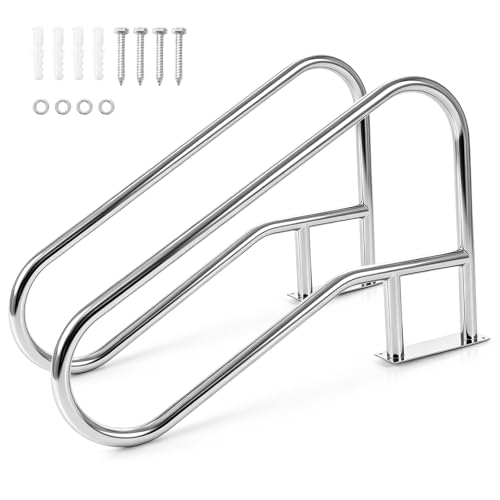
Goplus Pool Handrail Stainless Steel 2-Pack

Zeonly 12 FT Round Pool Liner Pad (300 g/m²)

Gonioa 15 FT Round Pool Liner Pad Navy Blue

Swimline Unibead Pool Liner 15×25 Oval 25-Gauge

Waterway 419-7251 Coupling Assy Kit Standard Base

Hayward SX200J Support Stand Replacement
Why These Options Stand Out
Small rectangular pools rarely get the ground-prep attention that round ones do, so a pad sized for a 15-by-7 footprint fills a real gap. The CQQGO Rectangular Pool Liner Pad uses 200 grams per square meter PE (polyethylene) sheeting, which is dense enough to spread point pressure from small stones before they reach the liner.
Compared with the larger Zeonly pad reviewed later, this one is built for tighter footprints and lighter seasonal pools. Backyard owners with a narrow lawn strip, a sun deck, or a small swim-spa layout will appreciate how the cut keeps trimming to a minimum. The black color also helps block light that would otherwise encourage algae growth between the pad and the liner.
Reasons It Performs
- PE sheet at 200 g/m² resists tears from twigs and small gravel better than thin foam.
- Black coloring reduces light penetration under the pool, slowing algae-friendly conditions.
- Cut dimensions match common rectangular frames, so less trimming is needed at install.
- Waterproof layer keeps ground moisture from wicking up into the liner during wet seasons.
Things To Weigh
- Smaller footprint means it will not cover a full 18-foot round layout without an extra pad.
- PE sheeting can be slippery on grass, so staking or weighting the edges during install helps.
Key Specs
Right Fit For
Owners of compact rectangular pools on level ground who want a no-fuss puncture barrier.
A Better Fit Elsewhere
Yards with a larger round pool should look at the Zeonly 12 FT Round Pool Liner Pad, which matches a wider circular layout.
A sand filter is only as steady as the base under it, and a cracked or corroded base will eventually let a heavy tank wobble. The Hayward SX180K Filter Base is a direct-fit replacement for several Pro Series and high-rate sand filter models, which makes it a clean swap rather than a guess.
Unlike the CQQGO pad that sits under a pool, this base sits under the equipment pad. The kit includes the matching screws and washers, so a filter that has been in service for years can be re-anchored without a hardware-store run. For owners running the S180T through S270T or compatible high-rate models, this is the hardware-shaped answer.
Notable Gains
- Direct replacement engineered for Hayward Pro Series and high-rate sand filters.
- Includes screws and washers, removing a second-order purchase.
- Restores a flat, stable platform so plumbing unions stop carrying stress.
Honest Caveats
- Only fits specific Hayward filter SKUs, so model numbers should be checked twice before ordering.
Key Specs
Best Suited To
Hayward owners whose existing filter base has cracked, rusted, or gone wobbly on the equipment pad.
Skip It When
Pool owners on a Waterway or non-Hayward system should reach for the Waterway 419-7251 Coupling Assy Kit instead.
The wall-to-floor seam is the first place a vinyl liner gives up, so a foam cove acts as a soft buffer between metal wall and pool floor. The Blue Wave Peel and Stick Pool Cove arrives in 24 individual 48-inch sections, giving installers a long total run to cover bigger round pools without piecing together leftovers.
Each strip is 4 inches wide and 3 inches tall, which fills the typical gap between the wall base and the sand or earth floor. The peel-and-stick adhesive backing removes the need for extra spray adhesive or tape, so a single install pass usually wraps the full circumference. Compared with the Gladon cove below, this 24-pack favors owners with bigger diameters who need a few extra sections on hand.
Real-World Strengths
- 24-pack covers larger round pools with margin for a mis-cut or future patch.
- Self-adhesive backing speeds install and keeps the cove locked to the wall.
- 3-inch height fills the wall-floor gap so the liner cannot pinch against bare metal.
Points To Keep In Mind
- Sticky backing works best on warm, dry walls, so a cool morning may need a hair dryer or extra adhesive.
Feature Snapshot
Who It Suits Best
DIY installers putting up a large round pool who want a cove they can run around the wall in one pass.
Another Choice May Suit
Smaller pools or budget-tight jobs may pair better with the Gladon NL104-19 Premium Pool Cove 19-Pack.
Density (the amount of material packed into each cubic foot) is the quiet hero of pool cove. A denser foam resists water pressure year after year instead of going flat after a couple of seasons. The Gladon NL104-19 is rated to 1.8 pounds per cubic foot, which puts it on the firmer side of the cove market.
Each section is 48 inches long with the same peel-and-stick design as the Blue Wave option above, so the install routine is familiar. Where Gladon leans ahead is in longevity: thicker foam keeps its shape under the weight of a full pool longer, and that translates into a liner that does not stretch into a gap. Owners with 15 to 18-foot round pools get full coverage from the 19-piece count.
Advantages To Know
- Higher density foam holds shape longer than lighter cove options.
- 48-inch sections speed the install with fewer seams around the wall.
- Adhesive backing locks strips in place during liner placement.
- 19-piece count fits mid-size round pools without leftover waste.
Worth Noting
- For pools above 24 feet in diameter, an extra pack may be needed.
Quick Facts
Perfect Match For
Pool owners who want a cove that survives more than two seasons without compressing flat.
Look Elsewhere When
Bigger round or oval pools above 24 feet should grab the Blue Wave 24-Pack for full coverage.
Grab rails are not technically under the pool, but the base plate is the part that ties the rail to the deck, and a sloppy mount turns a safety feature into a wobble. The Goplus Pool Handrail ships as a 2-pack of stainless steel rails, each anchored through a base plate on the deck surface. The 50-by-30-inch configuration in this listing is the largest of the brand’s four size options.
The four-bend design shapes the rail so swimmers get a natural grip when stepping out, rather than fighting a straight bar. Compared with the liner pads above, this pick is a different category entirely, but it belongs in the same install conversation: any above ground pool with a deck and a step should be paired with a solid grab rail. Stainless build also holds up to chlorinated water better than powder-coated steel over time.
Practical Advantages
- 2-pack outfit covers both sides of a deck step in one purchase.
- Stainless steel resists rust in chlorinated splash zones.
- Four-bend grip shape matches a natural hand position for safer entry and exit.
- Base plate mount design works with standard deck anchor hardware.
Points To Note
- Listed as an inground pool rail, so above ground pool owners with a tall deck should measure deck-to-water distance first.
Who Should Grab It
Pool owners with a deck entry who want a sturdy, rust-resistant grab rail on both sides of the steps.
Reach For A Different Pick When
Shoppers looking strictly for ground-prep gear should skip this and look at the Zeonly or CQQGO liner pads.
Heavier fabric weight translates directly into better puncture defense, which is the entire point of a ground pad. The Zeonly 12 FT Round Pool Liner Pad runs 300 grams per square meter, noticeably thicker than lighter 100 to 150 g/m² options on the market, and the round cut fits standard 12-foot above ground pools.
Yards with a rocky base, scattered roots, or hard-packed clay benefit most from the denser sheet because the fabric absorbs and spreads point pressure before it can press through. Compared with the smaller CQQGO rectangular pad above, the Zeonly trades compact sizing for sheer fabric weight. Anyone who has pulled a stone out of a punctured liner knows why that trade is worth it.
Useful Touches
- 300 g/m² fabric weight offers stronger puncture defense than lighter pads.
- Round cut matches standard 12-foot circular pool footprints with minimal trimming.
- Eco-friendly fabric is built for repeated seasonal use rather than single-season throwaway.
- Helps level out small dips in the ground before the liner goes down.
Soft Spots
- Heavier fabric is stiffer to fold and transport, so plan on a flat work area for unrolling.
Spec Overview
Made For
Yards with rocky or root-filled ground who want maximum cushion between soil and liner.
Swap It Out When
Smaller rectangular pools should consider the CQQGO pad for a closer fit without trimming.
Not every liner pad has to feel industrial. The Gonioa 15 FT Round Pool Liner Pad uses a felt-style fabric that feels softer underfoot, which translates to a gentler surface for kids playing in shallow water and a quieter step when the pool is full.
Cut to a 15-foot round footprint, this pad matches the most common residential above ground size and lines up with the swim-season reality for many families. Felt materials also tend to suppress weed and root growth better than slick PE sheeting, which the listing highlights as part of the anti-puncture pitch. Side by side with the Zeonly pad above, Gonioa favors comfort and weed-blocking over maximum fabric weight.
Positive Points
- Soft felt feel cushions bare feet in shallow-water play areas.
- Anti-puncture layer blocks small rocks, twigs, and root tips before they reach the liner.
- Helps suppress weed growth under the pool over multi-season use.
- 15-foot round size fits the most common residential pool without trimming.
Trade-Offs
- Felt holds moisture longer than PE, so a level site with good drainage is important.
- May need a second person to lay flat because the fabric catches a slight breeze.
At A Glance
Built With In Mind
Family pools where kids and bare feet matter as much as raw puncture defense.
Where A Sibling Pick Shines
Yards with serious rocky soil will get more protection from the heavier Zeonly 300 g/m² pad.
Sometimes the base under the pool is fine, but the liner itself is finished. The Swimline Unibead Pool Liner in Crystal Tile pattern covers a 15-by-25 oval frame with a 54-inch wall height, which is a common residential size for an oval above ground pool.
The unibead edge (a single-bead top edge) accepts a standard bead receiver, so install is similar to a j-hook liner without the hook. At 25 gauge, the vinyl sits in the middle of the thickness range: heavier than economy liners, lighter than the 30-gauge commercial options. This listing also comes with a separate protection plan option, but the liner itself is the main reason to consider it.
What Earns Its Place
- Unibead edge fits standard bead receivers for an easier install than overlap liners.
- 15 x 25 oval size covers a popular residential footprint.
- 25-gauge vinyl hits a middle-ground thickness for typical seasonal use.
- Crystal Tile pattern gives the pool a finished, decorative look.
Less Ideal Details
- 25-gauge vinyl is mid-weight, so aggressive use or sharp toys can still mark it.
- Oval pools require careful wall-fit alignment during install.
Whose Shelf It Belongs On
Owners of a 15 x 25 oval pool whose liner has faded, stretched, or started leaking at the seams.
Not Your Match When
Round-pool owners should look at the CQQGO or Zeonly ground pads and pair them with a round-fit liner instead.
Pump plumbing lives or dies by the couplings at the base, and a worn or cracked coupling turns a small leak into a constant drip. The Waterway 419-7251 Coupling Assy Kit Standard Base is a replacement assembly built for Waterway pumps, designed to slot back into the same footprint as the original part.
Reference model 419-7251 is the part number to match before ordering, since pump plumbing varies by series. Compared with the Hayward SX180K filter base earlier, this is a smaller-scale part that lives on the pump itself rather than the filter tank, but it belongs in the same category of replacement hardware that keeps a pool base operating properly. For Waterway owners, the model match is the main thing that matters.
What Helps Most
- Direct-fit replacement for Waterway pump plumbing assemblies.
- Standard base fits the original footprint, so no adapter hunting required.
- Restores a tight seal at the pump-to-filter connection, stopping slow drips.
Worth Bearing In Mind
- Only fits specific Waterway models, so part number verification is essential before ordering.
The Right Fit
Waterway pump owners chasing a leak at the base coupling or rebuilding equipment after a freeze.
Consider Something Else When
Hayward systems should look at the SX180K filter base reviewed earlier in the roundup.
A sand filter full of media weighs hundreds of pounds, and a bent or missing support stand lets the tank settle unevenly, which then stresses the plumbing. The Hayward SX200J Support Stand is the replacement leg for several Pro Series and S-line sand filters, designed to sit under the filter base to keep the whole assembly level.
The part is small, but the role is structural: a wobbly filter pulls on unions and valves, and those leaks tend to appear slowly over a season. Compared with the SX180K filter base earlier, this support stand is the leg beneath the base, completing the equipment-pad picture. Hayward owners should match their specific model number against the listed compatibility before ordering.
A Favorable Mix
- Direct-fit replacement engineered for a long list of Hayward Pro and S-line sand filters.
- Restores a level foundation so plumbing unions are not under constant stress.
- Lightweight 4.1-pound part is a simple swap with basic hand tools.
Small Caveats
- Confirming the Hayward model number is critical since the stand fits a specific range of filter tanks.
- Often purchased alongside the SX180K base for a full equipment-pad rebuild.
Who Will Love This
Hayward sand filter owners noticing a tilt or wobble in the tank, or rebuilding equipment after years of service.
Where Another Pick Suits Better
Waterway equipment owners should reach for the Waterway 419-7251 Coupling Assy Kit instead, which fits a different system.
What To Look For Before You Buy Bases For Above Ground Swimming Pool
Match the Pad to the Pool Footprint
The first decision is shape, then size, then material. A rectangular pool needs a rectangular pad, and a 12-foot round needs a 12-foot round. Buying oversized is fine because most pads can be trimmed, but going undersized leaves exposed ground that defeats the purpose. The CQQGO pad above fits small rectangles, while the Zeonly and Gonioa pads target round pools in the 12 to 15-foot range.
Think About Ground, Not Just Pool
The pad is only as good as what is under it. Yards with a lot of clay, scattered gravel, or known root systems benefit from a heavier fabric weight, like the 300 g/m² Zeonly pad. Quieter lawns with established grass and few stones can get by with a lighter 200 g/m² PE pad, like the CQQGO. The honest read is that more fabric weight always helps, but only matters when the ground is actually threatening the liner.
Don’t Skip the Wall-to-Floor Transition
A ground pad handles the floor, but the cove handles the wall seam. Foam coves like the Blue Wave 24-pack or the Gladon NL104-19 fill the 3-inch gap at the base of the metal wall, keeping the liner from rubbing against the wall edge. Skipping the cove is the most common reason liners fail early in the corner zones, so plan a cove purchase alongside any pad.
Equipment Pads Need Their Own Base Layer
Sand filters and pumps need a stable, level surface too. The Hayward SX180K base, the SX200J support stand, and the Waterway 419-7251 coupling kit are all hardware that lives underneath or inside pool equipment. Owners of existing systems should match the model number before ordering, and new builders should consider what equipment they are running so the right base and stand are part of the original plan.
Key Considerations Across These Picks
Common Shopping Slip Ups
The most frequent mistake is buying a pad sized to the pool’s water diameter rather than its outer wall diameter, which leaves a half-foot ring of bare ground. Another slip is treating the cove as optional, when in reality the wall seam is where liners fail first. Finally, ordering a replacement base or support stand without confirming the exact model number often leads to a return trip, since Hayward and Waterway parts are not interchangeable.
Where The Extra Money Goes
A thicker ground pad (300 g/m² versus 200 g/m²) costs more because of the extra fabric and the heavier roll, but it defends against sharper ground and lasts longer. A denser cove (1.8 lb/ft³ versus standard) holds its shape under water pressure for more seasons. A stainless handrail costs more than a powder-coated one because the metal resists corrosion in chlorinated splash zones. The upgrade pays off when the pool sees heavy seasonal use or sits in a tough yard.
Frequently Asked Questions
Do above ground pools need a base underneath?
Yes. A ground pad, cove, or sand base cushions the liner against punctures and helps distribute the weight of the water more evenly. Skipping the base layer is the most common reason liners wear out early.
What size pad should I get for a round pool?
Buy a pad that matches the outer wall diameter of the pool, not the water diameter. A 15-foot pool typically needs a 15-foot round pad, with extra material that can be trimmed or tucked under the wall.
How long does a pool cove usually last?
A dense foam cove rated around 1.8 pounds per cubic foot tends to hold its shape for several seasons under normal residential use. Lighter coves may compress flat within a year or two, especially under larger pools.
Can I reuse my old pad when replacing a liner?
Sometimes. A pad that is clean, dry, and free of tears can be reused, but a pad that has been compressed, pierced, or sitting under a leaking liner should be replaced. The cost of a new pad is small compared to the cost of a new liner.
How do I know which Hayward base to buy?
Match the model number of the sand filter to the listed compatibility on the replacement part. The SX180K base and SX200J support stand fit different filter series, and using the wrong one leaves the tank unsupported or out of level.
Closing Remarks
A pool that lasts a decade starts with the right base layer underneath it, the right cove around the wall, and the right hardware supporting the equipment. The picks above cover the ground pad, the cove, the liner, and the equipment base, so a full install or a single repair can be handled in one pass. Match the part to the actual pool size and model, and the rest of the season takes care of itself.