
Hauling a manual pump across an acre of lawn is where fun afternoons go to die. A battery-powered backpack takes the pumping out of the job, which matters when you’re spraying weeds, feeding fruit trees, or treating a fence line. The six picks below cover a wide range of gardens, tank sizes, and battery platforms, so you can match the right tool to the work you actually do.
The Lineup, Simplified
Funnywhale 4.76 Gallon Battery Powered Backpack Sprayer
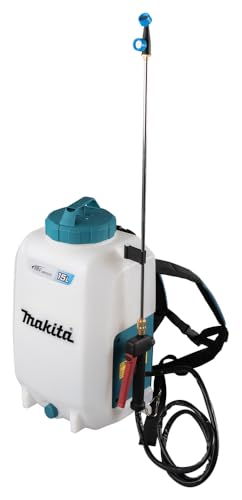
Makita DUS158Z 18V Backpack Garden Sprayer

M4 Battery Powered Backpack Sprayer (4.5 Gallon)

GOCHIFIX 4.2 Gallon Electric Backpack Sprayer

Funnywhale Battery Powered Backpack Sprayer (DeWalt 20V)

LABAAOAO 2 Gallon Electric Sprayer
The Details Behind The Selections
The Funnywhale 4.76-gallon tank is the headline feature here, and it’s the one that decides who this sprayer is for. If you’re spraying a half-acre or more between refills, the extra capacity pays off every single time, because fewer trips to the spigot means more continuous coverage.
It accepts any DeWalt 20V MAX battery you already own (DCB200, DCB201, DCB203, DCB204, DCB205, DCB206), so there’s no new charging platform to manage. Padded breathable straps keep the load comfortable during longer sessions around tree rows or fence lines.
The Practical Payoff
- 4.76-gallon tank covers more ground per fill than most backpack sprayers in this category.
- Works with the common DeWalt 20V MAX batteries many homeowners and contractors already own.
- Includes seven nozzles and two spray wands for misting, fan, and direct-stream tasks.
- Padded, breathable straps reduce shoulder fatigue on extended yard sessions.
- No manual pumping, which helps anyone with wrist or grip strength issues.
Points To Keep In Mind
- Battery and charger are not included, so budget for those if you don’t already own DeWalt 20V batteries.
- The larger tank is heavier when full, which may feel like a lot on hilly terrain or for smaller-framed users.
- Rinsing the tank thoroughly after each use is wise, since residue buildup can clog nozzles over time.
Right Fit For
Homeowners with DeWalt 20V batteries already on the shelf and a yard big enough to justify a heavier, higher-capacity tank.
A Better Fit Elsewhere
The 2-gallon LABAAOAO is a friendlier match for small patios where carrying four gallons would simply be overkill.
Makita built the DUS158Z for crews who already own LXT (Lithium-ion Xtreme Technology, Makita’s slide-in 18V battery system) batteries and want a sprayer that handles daily professional use. Its compact tank and trim profile make it easier to maneuver around shrubs and tight garden beds than wider backpack designs.
The 18V motor delivers up to 0.5 mPa (megapascals, a pressure unit where higher numbers mean stronger spray output) of spray pressure, which is plenty for most homeowner weed control and foliar feeding tasks. A lock-on function reduces hand fatigue during long spray passes.
Bright Spots
- Slim, compact build is easier to navigate between tight garden rows than bulkier sprayers.
- Lock-on spray function cuts down on trigger fatigue during long jobs.
- Uses the same 18V LXT batteries that power many other Makita tools, simplifying charging.
Trade Offs
- Battery and charger are sold separately, which adds cost if you’re new to the platform.
- Smaller tank capacity suits shorter jobs more than marathon spraying days.
- 0.5 mPa is modest pressure compared with the M4, which tops out much higher.
Feature Snapshot
Who It Suits Best
Landscape crews and dedicated homeowners already invested in the Makita LXT battery system.
Consider Something Else When
Without an existing Makita battery stash, the GOCHIFIX brings more built-in features for similar money.
The M4 (by MY4SONS) stands out for one reason most backpack sprayers don’t deliver: adjustable pressure from 20 to 80 PSI (pounds per square inch, the standard measure of spray pressure). Lower PSI suits seedlings and foliar feeding, while higher PSI pushes herbicide into thick brush.
Its 4.5-gallon tank lands in the middle of the pack, balanced between coverage and carry weight. The 12V sealed lead-acid battery charges automatically, so keeping it topped up between weekends is simple.
What It Does Well
- 20-80 PSI range covers delicate misting and aggressive herbicide application in one tool.
- 80 PSI self-priming pump starts quickly and holds steady during longer spray sessions.
- 4.5-gallon tank is a practical compromise for medium to large yards.
Less Ideal Details
- Sealed lead-acid battery is heavier than modern lithium-ion packs.
- Less name recognition than the DeWalt-compatible Funnywhale picks.
- Lead-acid batteries typically need replacement sooner than lithium chemistries.
Made For
Sprayers who switch between gentle foliar work and tougher weed-killing pressure on the same day.
Look Elsewhere When
The Funnywhale 4.76-gallon is a smarter pick for users already carrying DeWalt batteries on every job.
The GOCHIFIX stands apart with an active agitation button that stirs the tank on demand, which matters when you’re working with wettable powders (dry chemicals that need constant mixing to stay suspended) or anything that settles quickly. Most budget sprayers leave you shaking the whole unit, which gets old fast.
Stepless pressure regulation gives finer control than stepped dials, and the telescopic wand reaches into hanging baskets and under low foliage. A built-in battery indicator helps avoid surprise shutdowns mid-spray.
What Earns Its Place
- Active agitation button keeps powders and concentrated mixes uniformly suspended.
- Stepless pressure adjustment offers finer flow control than fixed-step settings.
- Telescopic wand plus five nozzles covers most spraying scenarios out of the box.
- Battery indicator helps avoid mid-job power loss.
Honest Caveats
- More onboard controls to learn, and beginners may not use the agitation button right away.
- The 4.2-gallon tank is slightly smaller than the Funnywhale’s 4.76.
Quick Facts
Best Suited To
Homeowners spraying wettable powders, soluble fertilizers, or anything that settles and needs stirring.
Skip It When
Simple weed-and-feed homeowners may find the M4’s adjustable PSI more useful than the GOCHIFIX’s agitation feature.
This Funnywhale sibling to the 4.76-gallon model uses the same DeWalt 20V MAX battery compatibility, so the choice between the two often comes down to tank size and budget. If you don’t want the heaviest fill possible but already own DeWalt batteries, this is the cleaner pick.
The padded, breathable adjustable straps and lightweight build reduce shoulder fatigue, which matters more than people expect during a 45-minute spraying session around fruit trees.
What Makes Sense
- Slides into an existing DeWalt 20V battery setup with no new charger needed.
- Lighter feel than the 4.76-gallon Funnywhale, easier for shorter users.
- Seven nozzles and two spray wands handle most residential spraying tasks.
Where It May Fall Short
- Battery and charger are not included.
- Smaller tank means more refills on bigger properties.
- Pressure range isn’t as wide as the M4’s adjustable setup.
Perfect Match For
DeWalt battery owners who want a lighter backpack for moderate-size lawns and gardens.
Reach For A Different Pick When
The Funnywhale 4.76-gallon is a better match for very large properties where fewer refills matter most.
The LABAAOAO is technically a handheld rather than a true backpack, but it lands on this list because not every yard needs four gallons strapped to your shoulders. The 2-gallon tank and easy-carry handle make it the lightest option in the roundup.
The 23.62-inch retractable wand reaches into hanging baskets and underneath dense foliage, while six nozzles cover mist, fan, and direct-stream patterns. The rechargeable battery is said to deliver 2-3 hours of consistent spray per charge.
Why It Works Well
- Compact 2-gallon size is easy to carry without back strain.
- Six nozzles handle mist, fan, and stream patterns.
- Retractable wand reaches into hanging baskets and tight spots.
Practical Considerations
- 2-gallon capacity means frequent refills on anything beyond a small yard.
- Not designed for marathon spraying sessions; battery life limits job length.
- Not a true backpack, so it strains one arm during longer use.
At A Glance
Whose Shelf It Belongs On
Patio gardeners and small-yard owners who want a lightweight electric sprayer without the bulk of a backpack.
Not Your Match When
Anyone with more than a quarter acre to cover should step up to the Funnywhale 4.76-gallon for fewer refills.
What To Weigh Before Buying A Backpack Sprayer
Tank capacity drives how often you refill, but it’s not the only thing that matters. A 4-5 gallon tank covers most residential yards in a single fill, while anything over 5 gallons starts feeling heavy on the back before the tank empties. For lawns under a quarter acre, a 2-gallon handheld like the LABAAOAO is often the more comfortable choice.
Battery platform matters more than people realize. Picking a sprayer that uses the same batteries as your drill, blower, or trimmer saves you from buying a new charger and second set of cells. That’s why the two DeWalt-compatible Funnywhale models are so appealing to existing DeWalt owners, and why the Makita DUS158Z makes sense for landscape crews already running LXT tools.
Pressure adjustability opens up more use cases. A fixed-pressure sprayer handles basic weed control, but adjustable PSI lets you mist seedlings on the low end and push herbicide into thick brush at the high end. The M4’s 20-80 PSI range is the widest in this lineup, while the GOCHIFIX adds stepless control plus tank agitation for mixed solutions.
Comfort features earn their keep over time. Padded straps, breathable back panels, and a lock-on trigger all reduce fatigue on longer jobs. If you have a larger yard or sensitive shoulders, prioritize these over a slightly bigger tank.
Picking The Right Fit For Your Yard
Common Shopping Slip Ups Skipping the battery question is the biggest one. Many sprayers ship as “tool only,” meaning you’ll need a compatible battery and charger before the first spray. Factor that into the total cost before choosing.
A close second is underestimating tank weight. A full 4-gallon tank weighs around 35 pounds, which catches smaller-framed users off guard. The LABAAOAO’s 2-gallon design sidesteps this entirely.
Finally, ignore nozzle count at your own risk. Most spraying jobs use one or two patterns, but having five to seven options means you can switch from a wide fan on the lawn to a tight stream around tomato cages without buying extras.
Where The Extra Money Goes Higher-tier backpack sprayers usually cost more because of three things: a stronger pump (more PSI), a better battery (lithium-ion instead of sealed lead-acid), and more comfortable harness systems. The M4 earns its premium with adjustable pressure; the Funnywhale picks earn theirs by slotting into the DeWalt battery family many homeowners already own.
For most residential yards, a mid-tier pick delivers the right balance. Pros with daily spraying routines will appreciate the Makita’s compact build and the M4’s wider PSI range, while casual users will rarely need more than a solid mid-capacity tank and a comfortable harness.
Frequently Asked Questions
How long does a battery-powered backpack sprayer run per charge? Most models in this category run 2-3 hours per charge under typical residential use. Heavy brush and high-pressure work drain the battery faster than light misting.
Do backpack sprayers need regular maintenance? Yes. Rinsing the tank after each use, flushing the wand and pump with clean water, and storing the unit in a frost-free area all extend pump life. Lead-acid batteries, like the one in the M4, typically need replacement sooner than lithium-ion packs.
Can I use any battery with these sprayers? Only the batteries each manufacturer lists as compatible. The DeWalt 20V Funnywhale models work with specific DeWalt 20V MAX packs, the Makita DUS158Z uses Makita LXT batteries, and the GOCHIFIX and LABAAOAO use their own included rechargeable batteries.
Are these safe for organic gardening? Backpack sprayers are generally safe for any approved garden solution. Clean the tank thoroughly between uses, especially when switching between herbicides and anything edible, to avoid cross-contamination.
What’s the difference between PSI and mPa on sprayer specs? PSI (pounds per square inch) is the standard U.S. unit for spray pressure. mPa (megapascals) is the metric equivalent used in some international listings. The Makita DUS158Z’s 0.5 mPa equals roughly 72 PSI.
Wrap Up
Your yard, your battery shelf, and your spraying style all shape the right backpack pump sprayer for you. DeWalt owners get the cleanest experience with the Funnywhale models, pros gravitate toward the Makita, and anyone working with mixed solutions will appreciate the GOCHIFIX’s agitation button. Match the tool to the job and the rest takes care of itself.