
A dripping pressure vacuum breaker, a stuck test cock, or a cracked bonnet can turn a quiet Saturday into a hardware store run. These small assemblies sit between your irrigation system and your potable water, so a worn seal or a tired spring quickly becomes a real concern. The kits and parts below cover the most common repairs, plus a few add-ons worth knowing about if you’d rather prevent the next failure than scramble through one.
The Leading Options At A Glance

Zurn RK18-860XL Wilkins Test Cocks 4-Pack

ShineUs 720A Pressure Vacuum Breaker Repair Kit

Fundyliue 720A Repair Kit for RK1-720A

SUNICO Sprinkler Cover 22x34in Beige

ONDAQUA 1 Inch Brass Pressure Vacuum Breaker

Vibrant Yard Winterize Blowout Adapter

Zurn Wilkins 975XL2 Reduced Pressure Preventer
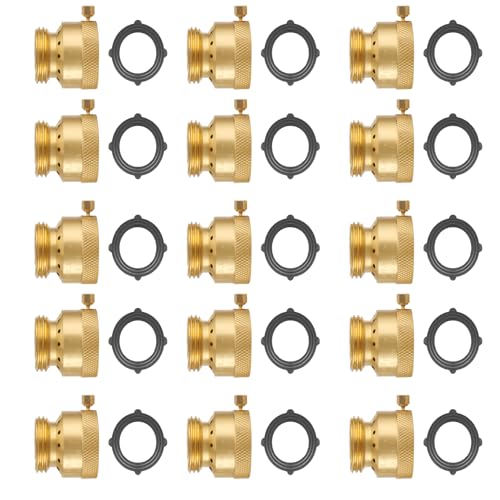
PLUMBINGMASTER Brass Hose Bib Vacuum Breaker 15-Pack

Zurn Wilkins RK1-720AB Bonnet Repair Kit

Watts LF288A Lead-Free Anti-Siphon Breaker
What Each Pick Brings To The Table
Test cocks are the small bleed valves a certified tester uses to confirm a backflow preventer is still doing its job. The Zurn RK18-860XL set ships four 1/8-inch standard test cocks sized for backflow assemblies from 1/4 inch through 1 inch, which lines up with the most common residential and light commercial installations. For most homeowners running a yearly test on a small PVB or RP valve, having spares on hand keeps the appointment from slipping when one turns up seized.
Unlike the rebuild kits lower on this list, this isn’t a wearable-part replacement; it’s a component swap. You’ll want to confirm your existing valve’s port threads match the 1/8-inch standard before ordering, since mixing standards is the fastest way to a frustrating afternoon.
Where It Delivers
- Four units per order, enough to service or fully re-stock a single 1/4- to 1-inch valve assembly.
- Standard 1/8-inch threading covers the format most testers expect on common residential assemblies.
- Zurn/Wilkins pedigree helps when local inspectors are particular about parts matching the body they’re attached to.
- Useful as bench stock for property managers handling several irrigation systems across a season.
Things To Consider
- Not a seal or spring kit; this only addresses the test ports, so a leaking bonnet still needs a separate rebuild.
- Confirm thread standard with your existing valve body before installing, since some older units use non-standard ports.
Who It Suits Best
Anyone scheduling annual backflow certifications on 1/4- to 1-inch assemblies and wanting spare test cocks already on the shelf.
Consider Something Else When
The Zurn Wilkins RK1-720AB Bonnet Repair Kit is the better fit for owners dealing with worn bonnets and O-rings on a 720A valve.
The 720A pressure vacuum breaker is one of the most common PVBs on residential irrigation lines, so a rebuild kit that hits the three most popular sizes is genuinely useful. ShineUs packages a plastic washer, O-ring, spring, and a poppet with spider assembly, all sized for the 1/2-, 3/4-, and 1-inch 720A bodies. That’s the full set of soft parts most homeowners actually need when their PVB starts spitting water from the top after a long season.
Compared to the Fundyliue kit one slot down, the part count is essentially the same; the real choice here is which seller you trust to ship a complete kit. For most DIY repairs on a familiar 720A, this covers the basics without overreaching into territory you don’t need.
Noteworthy Benefits
- Covers all three common 720A body sizes in one kit, so the same package works across multiple valves on a property.
- Includes the poppet and spider assembly, which is the part most often blamed for a continuously discharging PVB.
- Far cheaper than swapping the entire valve body when only the wearable internals have given up.
Honest Caveats
- Does not include bonnet hardware, so a stripped canopy screw still means a separate trip.
- Plastic washer feel is acceptable, but anyone chasing a decades-long service life may prefer an all-rubber OEM-style kit.
Made For
DIYers maintaining a single 720A valve who want to replace seals, spring, and poppet in one sitting.
Swap It Out When
Pick the Zurn Wilkins RK1-720AB instead if you specifically need the bonnet, canopy screws, and original-equipment sealing hardware.
The Fundyliue kit is a clean direct replacement for the original RK1-720A parts bundle, aimed squarely at the 1/2-, 3/4-, and 1-inch 720A pressure vacuum breaker. If your PVB sits on a drinking water line and has started siphoning contaminated water into the supply, rebuilding it with fresh seals and a new poppet is the textbook fix. The kit ships the wearable internals so a single afternoon can put the assembly back into service.
Where the ShineUs option feels like a generic soft-parts bundle, Fundyliue markets itself specifically as an RK1-720A replacement, which can matter if your valve is under a municipal cross-connection program that prefers documented compatibility. For most home installations, both kits perform the same job; the difference is paperwork and packaging.
A Few Strong Suits
- Marketed explicitly as an RK1-720A replacement, helpful for inspectors or warranty paperwork.
- Targets the same three common sizes as the original, so the part lands in the right body almost every time.
- Lets you skip a full valve replacement when only the internals have worn.
Points To Note
- Like the ShineUs kit, it does not replace bonnet hardware, so cracked canopies still call for a different package.
- Confirm your valve is genuinely a 720A series before ordering, since the 720A and 720P look similar but use different parts.
Who Will Love This
Owners of 720A-series PVBs who want a parts kit clearly mapped to the OEM reference number.
Not Your Match When
Reach for the ShineUs 720A kit instead if you’d rather shop by brand or are comparing basic soft-parts bundles across sellers.
Plenty of backflow preventer failures start with a hard freeze, not a worn seal. The SUNICO cover is a five-layer insulating jacket that drops over an outside valve assembly, sized at roughly 22 by 34 inches to fit most residential backflow and sprinkler manifolds. Rated for conditions down to about 5°F, it’s a practical add-on for owners who would rather insulate than blow out the lines every fall.
Unlike the rebuild kits on this list, this doesn’t fix a broken valve; it tries to keep a working one from breaking in the first place. For most properties in zones that see real winter, pairing a cover with a proper blow-out gives you two chances to avoid a cracked bonnet.
The Good Stuff
- Five-layer build adds genuine thermal mass over the valve instead of just a thin foam shell.
- Generous 22×34-inch footprint covers most residential backflow assemblies without custom fitting.
- Helps prevent the freeze damage that creates repair work for every other kit on this list.
Small Caveats
- Inner dimensions shrink because of the thick insulation, so measure your valve height first to confirm fit.
- A cover is not a substitute for a proper winter blow-out in regions with prolonged sub-freezing stretches.
Best Suited To
Homeowners in cold-winter regions who want a low-effort layer of protection over an outside backflow preventer.
A Better Fit Elsewhere
The Vibrant Yard winterize blowout adapter is a stronger pick if you’d rather clear the lines with compressed air than insulate them in place.
Feature Snapshot
When the existing valve is past saving and you’d rather start fresh with a heavy brass body, the ONDAQUA 1-inch PVB is a serious option. It carries UPC certification through IAPMO and aligns with the ASSE 1020-2020 standard for pressure vacuum breakers, which matters for any installation that has to pass a real inspection. The 400 PSI working ceiling is well above anything a residential irrigation line will ever push at it.
Compared to the rebuild-focused picks earlier in this list, this is a full assembly rather than a parts bundle. For most homeowners replacing a cracked body or upgrading from an aging plastic PVB, the brass construction and certified paperwork justify the spend.
A Strong Showing
- UPC certification through IAPMO, which inspectors in many jurisdictions specifically ask for.
- Solid brass body that resists the UV and weather exposure that eats at cheaper castings.
- 400 PSI rating leaves a wide safety margin over typical residential line pressure.
- Designed for non-potable lines like lawn irrigation, where durability matters more than polish.
Factors To Consider
- Heavier than plastic PVBs, which can matter if your existing mounting is marginal or on a thin standpipe.
- Plumber-grade PTFE tape is recommended at install, so first-timers may want to budget for the right thread sealant.
Right Fit For
Homeowners replacing a failed PVB on a 1-inch irrigation main who want a certified, heavy-duty brass assembly.
Skip It When
Stick with the ShineUs 720A kit if your existing 720A body is fine and you just need fresh internals.
Winterizing a sprinkler system means forcing compressed air through the lines, and you need a fitting that mates an industrial plug to the female SAE 45-degree flare port on most backflow preventers. Vibrant Yard machines this adapter from a solid lead-free brass casting, so it can handle the pressures a DIY blow-out typically runs without flexing or cracking. The reusable packaging even includes a printed procedure for first-timers.
Compared to the SUNICO cover a few picks up, this is the active winterization path: you clear the water out instead of insulating around it. For most homeowners in zones with hard freezes, the two approaches complement each other.
Bright Spots
- Solid lead-free brass casting that survives repeated seasons of compressor use.
- Standard SAE 45-degree flare matches the ports on most residential PVBs and backflow valves.
- Printed procedure on the packaging helps if this is your first winter blow-out.
Points To Keep In Mind
- Requires a compatible air compressor and reasonable flow to actually clear water from the lines.
- Only solves freeze risk, so a leaking bonnet still needs a separate rebuild kit from earlier in the list.
Perfect Match For
Homeowners who blow out their irrigation lines each fall and want a sturdy brass adapter that lasts.
Reach For A Different Pick When
Pick the SUNICO Sprinkler Cover if you’d rather insulate in place and skip the compressor step entirely.
The 975XL2 is the big sibling of the 720A picks earlier on. It’s a reduced pressure principle backflow preventer, which is a step up from a simple PVB and is used where contaminated water under pressure could otherwise push back into a potable supply. The wye-pattern bronze body gives separate access to each check valve and the relief valve, which simplifies debris removal during annual testing.
For most residential irrigation, a PVB is enough, but if you’re on a high-hazard potable line, this is the kind of valve inspectors specifically call for. Easy access to the first check is the kind of detail that pays off during a service call.
The Helpful Details
- Wye-pattern bronze body offers separate access to each check and the relief valve for easier service.
- Reduced pressure principle design protects against both backsiphonage and backpressure of contaminated water.
- Easy access to the first check speeds up the kind of debris clearing that otherwise turns into a long afternoon.
Things To Weigh
- Overkill for basic residential irrigation; most homes do fine with a 720A-class PVB instead.
- Bronze body is heavy, so plan mounting and support before install.
Made For
High-hazard potable water applications where reduced pressure principle protection is required or preferred.
Look Elsewhere When
The ONDAQUA Brass Pressure Vacuum Breaker is the better match for standard lawn irrigation that doesn’t need RP-grade protection.
An outdoor hose bib without a vacuum breaker is one of the easiest cross-connections to fix, and the PLUMBINGMASTER pack makes it painless to handle the whole house in one order. Fifteen 3/4-inch FHT by 3/4-inch MHT brass vacuum breakers means a multi-faucet property or a rental portfolio can be brought up to code without a second trip to the hardware store. The break-off screw adds a layer of tamper resistance once installed.
Where the PVB kits earlier in this list work on the main irrigation line, this is for the hose faucets themselves. For most homeowners with several outdoor taps, the bulk format is the easiest path.
Practical Advantages
- Fifteen units per pack covers a whole property or a small rental portfolio in one shipment.
- Heavy-duty brass body resists corrosion and weather better than zinc or plastic alternatives.
- Break-off screw allows permanent attachment if local code requires it.
Less Ideal Details
- Drain hole design means a small amount of water stays inside, so cold-weather owners should still disconnect hoses before freezes.
- 3/4-inch thread only; properties with 1/2-inch hose bibs will need an adapter or a different product.
Whose Shelf It Belongs On
Property owners with multiple outdoor hose bibs who want to retrofit every faucet in one order.
A Better Fit Elsewhere
The Watts LF288A is a smarter pick for a single lab or specialty faucet needing lead-free brass construction.
The Zurn Wilkins RK1-720AB is the official bonnet repair kit for the 720A pressure vacuum breaker, sized for the 1/2- through 1-inch bodies. It bundles the three canopy screws, the canopy itself, the bonnet, the bonnet washer, and the bonnet O-ring, which together address the most common leak point on an aging PVB. Step-by-step repair videos live on the Zurn YouTube channel if you want a visual reference.
Compared to the ShineUs and Fundyliue kits one and three picks up, this leans on the original-equipment pedigree. For most homeowners whose 720A body is still solid but whose top end is weeping, the OEM bundle keeps paperwork clean.
Features That Help
- Includes canopy screws plus the canopy, so a stripped fastener no longer derails the repair.
- Targets the bonnet and its seals, which is where most persistent 720A leaks actually originate.
- Documented OEM part number helps during inspections and warranty conversations.
Practical Considerations
- Doesn’t include the spring or poppet, so a fully worn internals job still needs the ShineUs or Fundyliue kit.
- OEM-branded kits typically sit at a higher price than aftermarket soft-parts bundles.
Who Should Grab It
Owners of a Zurn 720A whose bonnet or canopy hardware is the specific failure point.
Swap It Out When
Choose the ShineUs 720A kit instead if the problem is internal seals and a tired poppet rather than the bonnet hardware.
The Watts LF288A is a compact 1/2-inch anti-siphon vacuum breaker built from lead-free brass, intended for low-flow, non-continuous applications where hot and cold water both run through the line. Lab equipment, processing taps, and similar non-continuous fixtures are the typical fit. It also aligns with the USC FCCCHR Manual specs, which is the kind of detail inspectors tend to look for.
Compared to the irrigation-focused PVB kits earlier on, this is a smaller, fixture-scale device. For most homeowners, it solves a specific faucet or appliance problem rather than the main irrigation line.
Everyday Wins
- Lead-free brass construction for installations where potable safety is the priority.
- Compact 1/2-inch form factor fits tight under-sink and lab-tap locations.
- Protects against back-siphonage of both non-toxic and toxic liquids into the supply.
- Meets USC FCCCHR Manual specifications, useful for code-sensitive installs.
Potential Compromises
- Rated for non-continuous duty, so it isn’t the right pick for a constantly running irrigation main.
- 1/2-inch connection only, so adapters may be needed for 3/4-inch supply lines.
Built With In Mind
Lab and specialty faucet installs needing lead-free, code-aligned anti-siphon protection on a small line.
Where A Sibling Pick Shines
The PLUMBINGMASTER hose bib pack is the better match for whole-property outdoor faucet retrofits.
What Matters Before Choosing A Backflow Preventer Repair Kit
Start by identifying your valve type. A pressure vacuum breaker (PVB) like the 720A uses a spring-loaded poppet to keep the assembly closed when system pressure drops. A reduced pressure principle (RP) valve adds a relief port and is used where contamination risk is higher. A vacuum breaker on a hose bib is a third category entirely, and the parts don’t cross over. Pulling the bonnet or canopy and reading the stamped model number is the fastest way to land in the right aisle.
Match the kit to the size and the failure mode. The 720A line covers 1/2-, 3/4-, and 1-inch bodies, and kits that explicitly state RK1-720A compatibility remove most of the guesswork. If your leak is coming from the bonnet or canopy screws, a bonnet kit like the Zurn RK1-720AB is a smarter pick than a soft-parts bundle that leaves the hardware untouched. For new installations, certified brass bodies like the ONDAQUA PVB justify the spend when paperwork matters.
Think about prevention alongside repair. A winter cover or a blowout adapter won’t fix a worn seal, but skipping them is how most repairs start in the first place. Homeowners in freezing climates get the longest life from a valve when the lines are blown out every fall and the assembly is shielded from direct exposure.
Finally, weigh paperwork against parts. OEM-branded kits are easier to document during inspections or warranty calls, while aftermarket bundles tend to cover more parts per dollar. For most residential repairs, either path works as long as the model match is right.
Smart Considerations Across These Picks
Mistakes Worth Dodging
The most common error in this category is ordering by brand recognition instead of by model number. A 720A and a 720P look almost identical from the outside but use different rebuild kits, and a kit built for the wrong model simply won’t seat. Always confirm the stamped model and the body size before clicking order.
When Paying More Pays Off
Higher-tier picks like the ONDAQUA brass PVB and the Zurn Wilkins 975XL2 cost more because they’re built from heavier castings, carry third-party certifications, and slot into inspection paperwork without friction. The upgrade pays off when the valve sits on a code-monitored potable line, but for a basic backyard irrigation repair, a soft-parts bundle is usually enough.
Frequently Asked Questions
How Do I Know Which Backflow Preventer Repair Kit I Need?
Open the bonnet or canopy and look for the stamped model number on the body. A 720A PVB uses the RK1-720A or RK1-720AB kits, while an RP valve like the 975XL2 has its own dedicated parts list. Matching the model number beats guessing by appearance every time.
Can I Replace Just The Seals Instead of The Whole Valve?
In most cases, yes. If the body is sound and only the spring, poppet, O-rings, or bonnet hardware are worn, a rebuild kit restores function for a fraction of the cost of a full assembly. Replacement makes more sense when the body itself is cracked, heavily corroded, or doesn’t carry the certification your inspector requires.
What’s The Difference Between A PVB and An RP Valve?
A pressure vacuum breaker uses a poppet and spring to prevent backsiphonage and is the common residential choice for irrigation. A reduced pressure principle valve adds a relief port that opens if pressure shifts, protecting against both backsiphonage and backpressure on higher-hazard potable lines. Use an RP only when local code or hazard level actually calls for it.
Do I Need To Winterize My Backflow Preventer?
In climates that see sustained freezes, yes. Water left in the assembly expands and cracks the body or bonnet, which is what triggers most of the rebuilds covered above. A proper blow-out with compressed air or a snug insulating cover both work, and pairing them is the conservative play.
How Often Should A Backflow Preventer Be Tested?
Many jurisdictions require annual testing on irrigation and potable lines, with the test cocks on the assembly being the main touchpoints. A spare set of test cocks, like the Zurn RK18-860XL pack, keeps the appointment on schedule when one of the originals is seized or damaged.