
A reliable axe quietly decides how a camping trip feels. The right tool turns kindling duty into a quick task, handles tent stakes and clearing brush, and earns a permanent spot in the gear crate. Choosing among axes for camping means balancing blade geometry, head weight, handle length, and how far you actually have to carry it from the trailhead to the fire ring. The picks below cover everything from pack-friendly hatchets to longer splitting axes that pull double duty at a basecamp, with honest notes on who each one really serves.
An Overview Of The Picks

Fiskars U32 Ultra Splitting Axe 32″


Fiskars X11 Splitting Axe 17″
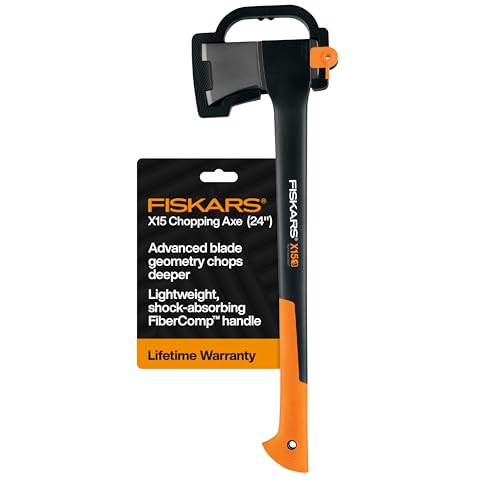
Fiskars X15 Chopping Axe 24″

Fiskars X27 Super Splitting Axe 36″

Fiskars Pro IsoCore 8 lb Splitting Maul, 36″

Fiskars X7 Small Hatchet Axe 14″

Fiskars X13 Ultralight Hiking Axe 13″
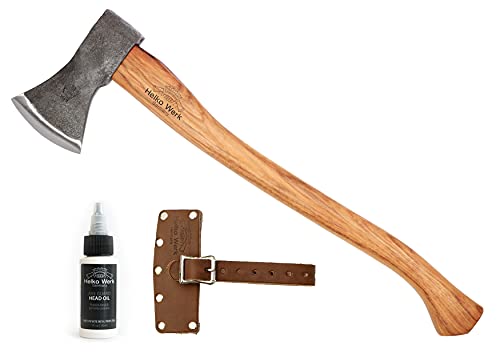
1844 Helko Werk Germany Black Forest Woodworker Axe (13562)
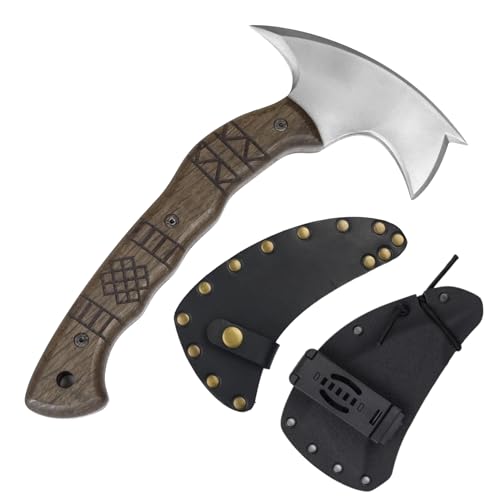
AncientSmithy Tactical Tomahawk Small Axe
A Breakdown Of The Leading Choices
The Fiskars U32 Ultra Splitting Axe sits at the meeting point between a full-size splitter and a tool you can still stash in a truck bed or pack crate without drama. The 32-inch handle gives a long enough arc to build real momentum, while the hardened steel head with the RazorEdge profile is built to bite cleanly into oak, ash, and denser hardwood rounds. For most basecamps, that combination covers both the evening’s worth of kindling and the night’s worth of stove fuel in a few swings.
Compared to the shorter X-series options further down this list, the U32 adds reach and a heavier impact, so it leans toward campers who set up near a woodpile rather than those humping gear for miles. You get a low-friction coating on the head to help the blade pull free, and a balanced feel that most users find forgiving over a long session of splitting. It is a tool designed to stay outside the pack, in the open air, doing real work.
Key Advantages
- Hardened steel head with a precision-ground edge for cleaner, more decisive splits
- 32-inch handle length that builds real swing speed without becoming unwieldy
- Low-friction head coating helps the blade release from stubborn rounds
- Composite handle construction that resists weather-related cracking at camp
Worth Noting
- Too long to comfortably pack on a hike, so it really shines as a basecamp tool
- Heavier than a hatchet, which may tire out smaller users over a full evening of splitting
Who It Suits Best
Campers with vehicle access who process firewood in volume and want one tool that can handle the whole cord.
Where Another Pick Suits Better
Backpackers carrying gear for long distances will find the Fiskars X7 Small Hatchet Axe 14″ a much friendlier pack weight and size.
The Fiskars X25 is a workhorse in the middle of the lineup, and for most weekend campers it is the right size. The 28-inch handle is long enough to develop solid power on medium to large rounds but short enough that it stows behind a seat or in a trailer bin. The forged steel head has a convex bevel geometry that drives through wood and releases cleanly, so you are not prying the axe free after every hit.
Compared to the U32, you give up a little reach and a bit of weight, but the trade is a tool that more people can use comfortably for an hour without fatigue. Owners commonly report that the composite handle holds up well to weather, and the permanently bonded head design keeps the two pieces from working loose in the field. For car campers, cabin owners, and anyone who hauls their own firewood, the X25 is a dependable middle ground.
Noteworthy Benefits
- Forged steel head with a low-friction coating that resists sticking in dense rounds
- 28-inch handle hits a sweet spot between power and control for most adults
- Permanently bonded head-handle design reduces the chance of a loose fit over time
Trade Offs
- Not suited to backpacking, since 28 inches is too long for a pack carry
- More than a hatchet for quick kindling-only jobs at small fire rings
Made For
Weekend campers who split their own wood and want a single axe that handles medium to large rounds reliably.
Consider Something Else When
Those heading into the backcountry will be better served by the lighter Fiskars X13 Ultralight Hiking Axe 13″, which trims grams from the carry.
The Fiskars X11 is one of those tools that does a lot without taking up much space. At 17 inches overall, it is small enough to live in a camp kitchen bin or ride along in a daypack, yet it still works as a real splitter for kindling and small rounds. The blade geometry borrows from the larger X-series, so the X11 actually bites into wood rather than just bouncing off.
Where the U32 and X25 shine at heavy rounds, the X11 earns its place at campsites where most of the wood is already cut to size and the main job is breaking it down to fire-ready pieces. You can use it one-handed for limbing, and that flexibility makes it handy for trail work as well as fire duty. For tent campers, van lifers, and anyone packing a tight kit, it is a versatile middle option.
Strong Points
- Compact 17-inch length that stows in bins, totes, and smaller camp kits
- Forged steel head with the same convex geometry found on larger X-series axes
- Comfortable one-handed use for limbing branches and processing kindling
Minor Gripes
- Limited leverage on rounds larger than forearm size, where the longer X25 or X27 would do better
Right Fit For
Campers with mostly pre-cut wood who need a compact, one-handed tool for kindling and small splitting chores.
Not Your Match When
Those who regularly face full rounds of firewood will appreciate the Fiskars X25 Splitting Axe 28″ for the added swing weight.
The Fiskars X15 Chopping Axe is the bridge between a hatchet and a full splitter, and it leans into the chopping side of that spectrum. The 24-inch handle and moderate head weight are tuned for felling small trees, limbing branches, and breaking down rounds that are not quite firewood-sized yet. For campers who clear their own spot in the woods, that balance matters more than pure splitting force.
The PermaHead construction bonds the head to the shaft so it stays put, which is reassuring when the axe gets bumped around in a truck bed or canoe. Compared to the X11, the X15 offers more reach and a heavier swing for cleaner cuts across the grain. Compared to the X25, it gives up some splitting power but gains agility around brush and small trunks. It is a true all-rounder for campsite setup.
A Few Highlights
- 24-inch handle length strikes a useful balance between chopping power and maneuverability
- Permanently bonded head design holds up well to rough transport and field use
- Forged steel blade with a low-friction coating for smoother cuts and easier release
Points To Note
- Not the best pick for heavy splitting rounds, where a dedicated splitter handles cleaner
- Still too long for comfortable backcountry packing in most setups
Best Suited To
Campers who clear brush, fell small trees, and process medium rounds at a basecamp with a single tool.
Look Elsewhere When
Travelers who mostly deal with pre-cut rounds will find the splitting geometry of the Fiskars X25 Splitting Axe 28″ a better match for that workflow.
The Fiskars X27 is the long-reach splitter in the family, and it earns its place on sites where leverage is the difference between one swing and three. The 36-inch handle lets taller users and bigger-built folks stand upright and still get a full arc, which takes strain off the back over a long evening of work. The head geometry is tuned for splitting, not chopping, so it focuses energy on driving rounds apart along the grain.
For most campers, the X27 is overkill on small kindling and just right on stubborn oak rounds. The composite handle absorbs vibration well, and the bonded head design removes one of the common failure points on older wooden-handle axes. You will likely store this one at the truck rather than carry it on a trail, but for a basecamp or cabin it pulls serious weight.
The Helpful Details
- 36-inch handle length gives a long swing arc and serious splitting leverage
- Forged steel head with a low-friction coating for cleaner wood separation
- Composite handle construction that resists weather cracking and absorbs shock
- Permanently bonded head-to-handle design for long-term reliability in the field
Honest Caveats
- Too long and heavy for backcountry use, so it stays a vehicle-camp tool
- Overkill for campers who mostly burn small pre-cut wood
Who Will Love This
Taller campers and anyone splitting extra-large rounds at a basecamp or cabin who values leverage over portability.
A Better Fit Elsewhere
Hikers who need any kind of edge at all should look at the Fiskars X7 Small Hatchet Axe 14″, which actually fits inside a pack.
The Fiskars Pro IsoCore Splitting Maul is a different animal from the axes on this list, and that is the point. With an 8-pound head on a 36-inch handle, it is built to drive through dense, knotty rounds that laugh off lighter tools. The IsoCore handle uses an internal dampening system to reduce the shock that normally rattles your arms and elbows on a hard hit, which matters more than people expect on the tenth swing of the night.
For a camping context, this maul lives at the firewood-processing site rather than the fire ring. It is the right answer when your camp has a steady supply of large rounds and you want them broken down quickly with fewer strikes. Compared to the X27, the maul trades fine-edge precision for blunt force, and you feel that on really stubborn grain. It is a tool for serious wood work, paired with camping.
Why It Works Well
- 8-pound maul head delivers serious splitting force for dense, large-diameter rounds
- 36-inch handle length provides a long swing arc and full-body leverage
- IsoCore handle construction reduces vibration and arm fatigue over long sessions
- Forged steel head with a splitting-optimized blade profile
Practical Considerations
- Significantly heavier than typical camping axes, so it is not a multi-purpose tool
- Too large and heavy for transport beyond a vehicle, so it stays at the woodpile
Perfect Match For
Campers who manage their own wood supply and regularly process large rounds at a basecamp or homestead.
Reach For A Different Pick When
Anyone carrying gear any distance should consider the Fiskars X25 Splitting Axe 28″, which splits well while remaining manageable to transport.
The Fiskars X7 is the kind of hatchet that quietly becomes part of every camping kit it joins. At 14 inches overall, it stows in a pack, hangs from a belt loop, and rides in a canoe without complaint. The forged steel head has the same low-friction coating found on the bigger X-series axes, so the blade glides through kindling and small rounds with surprising ease for its size.
What makes the X7 especially useful for camping is its versatility. You can split kindling, drive tent stakes, chop small limbs for a cooking tripod, and trim brush around a fire ring all with one tool. Compared to the X11 further up, the X7 is smaller and lighter, but it gives up some of the splitting authority. For backpackers and canoe campers, the size difference is exactly the point.
What Stands Out
- 14-inch length and light weight make it easy to pack, hang, or stow in tight spaces
- Forged steel head with a low-friction coating that cuts and releases cleanly
- Useful for kindling, small splitting, tent stakes, and campsite trim work
Soft Spots
- Limited splitting power on rounds bigger than wrist size
- Requires a sheath or guard for safe transport in a pack, which is a small extra step
Who Should Grab It
Backpackers, canoe campers, and day hikers who want one compact tool that handles most small campsite wood tasks.
Swap It Out When
Campers who drive up to a site and need to process real firewood will appreciate the splitting muscle of the Fiskars X25 Splitting Axe 28″.
The Fiskars X13 Ultralight Hiking Axe is the lightest axe in the X-series, and the whole design leans into that fact. At 13 inches overall with a low carry weight, it slips into a pack sleeve or external attachment without turning into dead weight on the trail. The forged steel blade is sized for one-handed control, and the handle geometry is set up for accurate, repeatable swings on small wood.
For distance hikers and multi-day backpackers, the X13 changes the math on carrying a blade at all. It handles enough wood duty to keep a small backcountry fire going without forcing you to hump a full-size axe for ten miles. A bright orange handle and low-friction coating round out a tool designed to be found in the brush and to keep working in damp conditions. It is purpose-built for trail-first camping.
Features That Help
- Ultralight construction that fits a long-distance pack without punishing your back
- Forged steel head with a low-friction, rust-resistant coating for trail conditions
- 13-inch length sized for one-handed control and accurate small swings
- High-visibility handle for easier spotting in camp and on the trail
Where It May Fall Short
- Not built for processing full-size firewood rounds, so it stays a trail tool
Whose Shelf It Belongs On
Long-distance backpackers and alpine campers who want packable fire-making capability without the bulk of a hatchet.
Where A Sibling Pick Shines
Campers with vehicle access and bigger rounds will prefer the Fiskars X15 Chopping Axe 24″ for its reach and chopping authority.
The 1844 Helko Werk Germany Black Forest Woodworker Axe is a different kind of answer to the camping axe question. Hand-forged in Germany with a Rheinland pattern head, it carries a heritage that modern composite-handle tools do not. The compact size makes it a reasonable pack or truck-camp tool, while the build quality gives it a feel that some campers will simply prefer.
For users who value craftsmanship and traditional axe design, this Helko is a meaningful step up from a generic hatchet. The wooden handle rewards proper care with a comfortable, warm grip, and the head holds an edge well with routine sharpening. Compared to the Fiskars X7, the Helko is heavier and a different aesthetic, but it also feels more like a tool meant to be passed down. It is a luxury choice that doubles as a working tool.
Everyday Wins
- Hand-forged Rheinland pattern head from a long-established German maker
- Compact enough to pack or stow in a camp kit
- Traditional wooden handle that rewards care with comfortable, secure grip
Points To Keep In Mind
- Wooden handle requires more maintenance than composite shafts, especially in wet camp conditions
- Priced above mass-market hatchets, so it is a deliberate investment rather than an impulse buy
Built With In Mind
Traditionalists and campers who prioritize craftsmanship, heritage design, and a tool that feels like a real axe in the hand.
Another Choice May Suit
Campers focused purely on low-maintenance durability should consider the Fiskars X7 Small Hatchet Axe 14″, which trades heritage for weather resistance.
The AncientSmithy Tactical Tomahawk Small Axe is designed for users who want a hatchet that pulls double duty as a survival tool. At 11 inches overall and roughly 1.76 pounds, it is small enough to live in a pack or a vehicle bag without becoming a burden. The oak handle and tactical-style head give it a different feel from a classic hatchet, leaning toward field utility rather than pure firewood duty.
For campers focused on bushcraft, trail clearing, and emergency readiness, the tomahawk covers tasks like cutting cordage, light chopping, and breaking down small wood. Compared to the Fiskars X7, the AncientSmithy is shorter and more tactical in feel, but it gives up some of the easy, clean splitting of a purpose-built hatchet. It is the right tool when your camping overlaps with preparedness.
A Strong Showing
- Compact 11-inch size and light weight that fit a pack or kit bag
- Multi-use head design suited to bushcraft, light chopping, and trail tasks
- Oak handle offers a natural, grippy feel in the hand
Where It Is Less Suited
- Tactical profile is less efficient for routine kindling splitting than a dedicated hatchet
- Shorter handle means less leverage for any task beyond small wood
The Right Fit
Campers and bushcrafters building a preparedness kit who value versatility and a compact, tactical tool over pure splitting performance.
Skip It When
Campers whose main goal is fast kindling duty should look at the Fiskars X7 Small Hatchet Axe 14″, which is purpose-built for that workflow.
Choosing Axes For Camping That Fit Your Trip
Match Handle Length To How You Carry
Handle length drives how an axe feels in the hand and how it travels. Long-handle splitters in the 32 to 36-inch range, like the Fiskars U32 and X27, build real momentum on full rounds but only make sense when you have vehicle access. Mid-length tools in the 17 to 28-inch range, including the X25 and X15, are the practical sweet spot for car camping and cabin trips. Short hatchets in the 11 to 14-inch range, like the X7, X13, and the AncientSmithy, earn their place in packs where every inch and ounce counts.
Think About Head Weight And Blade Geometry
A heavier head splits more easily because it carries more momentum, but it also wears you out faster. A blade’s bevel geometry, the angle of the cutting edge, matters just as much as weight. Convex blade profiles on Fiskars X-series axes are tuned to drive through wood and release cleanly. Tomahawk-style heads and traditional hatchet heads handle light chopping well but split less efficiently. For a mixed camp routine, the X25 or X15 split that difference well.
Consider Handle Material For The Conditions
Composite handles shrug off weather, absorb shock, and rarely crack in cold or wet camp conditions. Wooden handles, like the one on the Helko Black Forest and the AncientSmithy, feel warm and grippy, but they want oiling and dry storage to last. For most campers, the choice comes down to how much care you want to give the tool between trips.
Match The Tool To The Wood Supply
Campers processing pre-cut wood and breaking it to fire-ready size can do most of the work with a compact hatchet. Campers who fell small trees, limb branches, and split rounds from a standing tree need the reach and weight of a 24 to 28-inch chopping axe. Anyone running a woodpile at a basecamp benefits from a longer splitter or even a maul for the densest rounds. Pick the tool that matches your actual wood, not the wood you wish you had.
Things Worth Knowing Before You Buy
Pitfalls Shoppers Hit
A common slip is buying the heaviest splitter you can find, assuming more weight means better performance. The honest read is that an 8-pound maul is wasted on kindling and exhausting on small rounds. Another trap is choosing a hatchet with no sheath or guard, only to discover it cuts into pack fabric and gear. Short, tactical-style heads also tempt people who really need a splitting blade, and the result is more effort per swing than expected.
What The Higher Tier Buys
Paying more in the axe category usually shows up in three places: head material, head-to-handle construction, and handle engineering. Forged steel heads hold an edge longer than stamped alternatives. Permanently bonded head designs, like those on the X-series, remove the wedge that can loosen over time. Premium handle systems, like the IsoCore dampening on the Pro maul, reduce the shock that adds up across an evening of work. The upgrade is worth it for campers who process wood often, and less relevant for occasional weekend fire duty.
Frequently Asked Questions
What Size Axe Is Best For Camping?
For car camping and cabin trips, a 24 to 28-inch axe like the Fiskars X25 or X15 covers most wood-processing tasks without becoming a burden to transport. For backpacking, a 13 to 14-inch hatchet like the Fiskars X7 or X13 is the right balance of capability and pack weight.
Are Hatchets Enough For Camping Firewood?
A good hatchet handles kindling and small rounds just fine, and most camp wood arrives already cut to that size. For full rounds of firewood, a longer splitting axe or a maul is the faster, safer answer.
How Do I Maintain An Axe On A Trip?
Keep the head dry between uses, give it a light coat of oil before storage, and touch up the edge with a small file or puck when the cut starts to feel sluggish. Wooden handles benefit from a thin coat of linseed oil at home, while composite handles need little more than a wipe-down.
Can I Bring A Hatchet On A Plane?
Checked baggage rules around camping tools vary by carrier and destination, and hatchets are restricted or prohibited on many flights. Ground transport, whether by car, canoe, or pack, is the simpler answer for most campers.
Is A Splitting Axe The Same As A Chopping Axe?
A splitting axe uses a wedge-shaped head tuned to drive rounds apart along the grain, while a chopping axe has a thinner edge tuned to cut across the grain. Felling small trees and limbing branches favor a chopping axe, while firewood work favors a splitter.
Wrap Up
A good camping axe is the one that matches the trip you actually take. Backpackers want the Fiskars X13 or X7. Car campers splitting real firewood will be happier with the X25 or U32. Anyone processing serious rounds at a basecamp should look at the Pro IsoCore maul, while those drawn to craftsmanship will appreciate what the Helko Black Forest brings to the kit. Pick the tool that fits your wood, your distance from the truck, and your tolerance for maintenance, and the campfire gets a lot easier to manage.