
A rough night on the wrong sleeping pad wrecks the next day. You wake up stiff, the tent floor feels every pebble, and the cold seeps up through the ground. The right camping mattress changes all of that, turning rocky ground, car interiors, and tent floors into a flat, warm sleep surface. This guide walks through nine air mattress campings built for different styles of adventure: ultralight backpacking, family car camping, truck-bed overnights, and even Tesla Model Y road trips.
A Quick View Of The Lineup

Exped Ultra Ultralight Inflatable Backpacking Sleeping Pad

Lost Horizon Self-Inflating Foam Camping Mattress for Model Y

LLUAII Self Inflating Sleeping Pad with Electric Pump, 4″

Lost Horizon Option3 Self-Inflating Foam Camping Mattress, Twin, 4.5″
QPAU Inflatable Kids Air Mattress with Tent and Fast Electric Pump

Lost Horizon Self-Inflating Foam Camping Mattress, Single, 3″ Thick

Lost Horizon Option3 Self-Inflating Foam Camping Mattress, Full, 4.5″
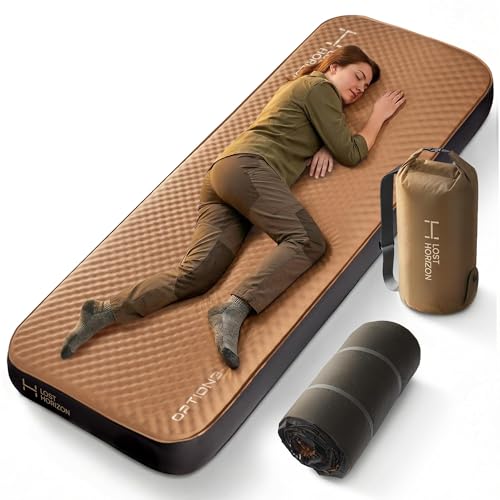
Lost Horizon Option3 Self-Inflating Foam Camping Mattress, Single, 4.5″

Elegear 4″ Thick Sleeping Pad for Camping with 9 R-Value Insulated
What Each Pick Brings To The Table
Built for people who count every gram in their pack, the Exped Ultra strips a sleeping mat down to its essentials. It uses air-insulated chambers running head-to-toe to deliver 3 inches of cushion, while staying under one pound total, the kind of weight that disappears into a frameless pack on a fast-and-light trip. For thru-hikers, bikepackers, and summer alpine missions, that balance is the entire point.
Compared to the foam-heavy options later in this list, the Exped relies entirely on air rather than foam fill. You trade some insulation for a much smaller packed size, which matters when your pack space is shared between food, shelter, and layers.
Bright Spots
- Sub-1 lb weight keeps it light on multi-day trips
- 3-inch air chamber cushion handles rocky ground better than thin closed-cell pads
- Air-insulated head-to-toe design holds warmth through summer nights
- Small packed footprint frees up room for a tent, stove, and food bag
- Strong fit for fast-and-light hikers and bikepackers
Things To Consider
- Designed for summer, so shoulder-season warmth is limited
- No foam layer means puncture repairs matter more on sharp alpine terrain
- Lacks the self-inflating ease of the foam options further down this list
Key Specs
Who It Suits Best
Long-distance backpackers, bikepackers, and alpine summer users who prioritize weight over plush thickness.
Look Elsewhere When
Cold-weather campers should reach for the Elegear 4″ Thick Sleeping Pad instead, since its higher R-value handles winter ground temperatures better.
Designed for the 2-row Tesla Model Y, this Lost Horizon pad slots into the cargo area where the rear seats fold flat. The 4.5-inch thickness paired with 9 pounds of foam fill gives it a home-mattress feel that you would never expect from an inflatable camping product. For Tesla owners who road-trip, camp at trailheads, or sleep at charging stops, that fit is the entire selling point.
Unlike the backpacking-focused Exped Ultra, this is a car-based pad that prioritizes cushion over pack size. The foam interior distributes air evenly, so you don’t bottom out on the cargo floor, which matters for taller drivers using the rear footwell as legroom.
Where It Excels
- Custom-cut shape for the 2-row Model Y cargo area
- 440 lb weight capacity handles tall adults and gear storage
- 9 lb foam core resists bottoming out on the hard cargo floor
- Self-inflating design eliminates the need for a pump on most nights
Honest Caveats
- Specific fit means it won’t help owners of other vehicles
- Heavier than most pads in this guide, since the foam core is substantial
Made For
Tesla Model Y (2-row) owners who want a purpose-built sleep platform for road trips, charging stops, and overnight trailheads.
Consider Something Else When
You don’t drive a Model Y, in which case the LLUAII Self Inflating Sleeping Pad offers a similar foam-and-pump setup that fits a truck, cot, or guest bed.
The headline feature here is the built-in electric pump, which fills the pad in around a minute with the press of a button. No foot pump, no lung-bursting blowing, no lying on top of the valve to trigger self-inflation. Combined with a 4-inch foam-and-air build and a built-in pillow, this is one of the most low-effort pads in the roundup.
Where the Exped Ultra goes ultralight and the Model Y-specific Lost Horizon fits a niche, the LLUAII sits in the middle as a grab-and-go family option. Owners commonly report that the first inflation takes a few rounds to fully expand, since the pad ships vacuum-packed.
What It Does Well
- Built-in electric pump inflates and deflates automatically
- 4-inch thickness with foam support for side and back sleepers
- Built-in pillow eliminates a separate piece of gear
- Versatile footprint works on cots, truck beds, and guest rooms
Worth Noting
- Vacuum packaging means the first inflation needs a patience pass
- Electric pump adds weight compared to plain self-inflating pads
Key Specs
Best Suited To
Glampers, car campers, and SUV or truck-bed sleepers who want set-it-and-forget-it inflation without sacrificing cushion.
A Better Fit Elsewhere
Backpackers should choose the Exped Ultra, since it drops the pump and foam to save substantial weight on the trail.
The twin-sized Option3 stretches wider than a single sleeper pad without going full mattress. Its 4.5-inch foam core and 300 lb capacity handle two average adults sprawled out, or one restless sleeper who likes to roll. For couples in a tent, parents camping with a kid, or guest-room hosts, that extra width tends to matter more than the absolute length.
Compared to the Model Y-specific Lost Horizon pad, this one is far more versatile, since the twin footprint fits a tent floor, a kid’s room, or a sleepover setup just as well as a campsite. The foam distribution keeps pressure points soft, which matters for anyone waking up with hip or shoulder soreness on thinner pads.
A Few Highlights
- 4.5-inch foam build cushions pressure points on hard ground
- Twin footprint fits couples, kids, or one sprawled sleeper
- Self-inflating design simplifies setup after a long drive
- Doubles as a guest-room mattress for overnight visitors
Possible Compromises
- Twin size adds bulk when transporting in smaller vehicles
- 8.5 lb foam weight is hefty for hikers, even car campers feel it
Who Will Love This
Couples, families, and hosts who want a versatile twin pad for tents, spare bedrooms, and sleepovers.
Skip It When
You camp solo and prefer a smaller, lighter pad like the Lost Horizon Self-Inflating Foam Camping Mattress in single 3″ form, which packs down smaller for weekend trips.
Backyard camping with kids lives or dies on whether the setup is fun. The QPAU pairs an inflatable mattress with an integrated mesh tent and a fast electric pump, so a 3-year-old can go from indoors to “sleeping outside” without adult-level engineering. The mesh mosquito netting and sunshade fabric address the two real enemies of outdoor kid sleep: bites and sunburn.
While the adult pads earlier in this list target thru-hikers and Tesla owners, this one is built for short, joyful adventures. You trade packability and insulation for a self-contained sleep pod that works in a yard, on a patio, or at a family campground.
Key Advantages
- Integrated tent cuts out the need for a separate shelter piece
- Mesh mosquito netting protects against bites and curious insects
- Sunshade fabric shields kids from harsh daytime exposure
- Fast electric pump simplifies inflation for tired parents
- Designed for ages 3+, fitting kids and small siblings
Things To Consider
- Kids-only sizing means it won’t work for teens or adults
- Single-use scope offers no real cold-weather insulation
Key Specs
Perfect Match For
Families with young kids who want a hassle-free backyard camping setup that doubles as a sleepover or nap pod.
Not Your Match When
You camp solo or as a couple, in which case the LLUAII Self Inflating Sleeping Pad with its electric pump and adult-sized cushion fits better.
For casual campers who don’t need 4.5 inches of foam, this 3-inch single pad from Lost Horizon keeps things simple. The 5.5 lb foam fill is enough to take the edge off roots and gravel without making the rolled-up bundle a hassle to carry. You give up some cushion compared to the thicker Option3 line, but you gain easier transport and a friendlier pack size for short trips.
Versus the heavier Model Y-specific pad above, this one suits a wider range of tents and budgets. It targets weekend campers rather than permanent setups, and you may find the 220 lb capacity limiting for larger sleepers.
A Favorable Mix
- 3-inch foam core at a manageable pack size
- Self-inflating setup saves effort after a long drive
- Single-person footprint fits smaller tents easily
- Lower bulk makes transport simpler for casual trips
Trade Offs
- 220 lb weight capacity won’t suit all body types
- Thinner profile means less insulation than the 4.5″ Option3 pads
Who Should Grab It
Casual weekend campers and lighter-weight adults who want an easy-to-pack foam pad without paying for thicker premium builds.
Reach For A Different Pick When
You sleep cold or want more insulation, since the Elegear 4″ Thick Sleeping Pad with its 9 R-value outperforms this one on chilly ground.
This full-size Option3 is the heavyweight of the lineup. With 12 lb of foam packed into a 4.5-inch build and a 440 lb weight rating, it handles tall adults, broad shoulders, and restless sleepers without flattening out. The trade is bulk: at 12 lb, this is firmly a car-camping pad, not something you carry far.
The twin Option3 earlier handles couples more compactly, while this full version takes over when one or both sleepers need real estate. For two adults who don’t want their elbows touching, the width is the real win.
What Makes Sense
- 4.5-inch thickness with 12 lb foam for serious support
- 440 lb capacity handles larger body types and shared weight
- Full footprint gives sleepers genuine room to spread out
- Foam distribution reduces pressure point soreness
Where It May Fall Short
- Heaviest pad in the roundup at 12 lb foam
- Full-size transport requires a roomy vehicle
Built With In Mind
Tall, wide, or heavy sleepers who want a true car-camping bed with home-grade support and plenty of room.
Swap It Out When
You want a similar cushion at lower weight, since the Lost Horizon Option3 Single 4.5″ cuts roughly 5.5 lb off the foam core while keeping the same thickness.
The single-size 4.5″ Option3 sits in the comfortable middle of this roundup. It drops about 5.5 lb of foam compared to the full version above, while keeping the same 4.5-inch cushion that softens pressure points on hard tent floors. For solo weekend campers, it offers much of the comfort without the full-size bulk.
Compared to the thinner 3-inch Lost Horizon single earlier, the difference shows up most on side sleepers and on rocky ground, where the extra inch of foam matters. You may find the 220 lb capacity a constraint for larger sleepers, which is the main reason to look up to the full-size version.
Everyday Wins
- 4.5-inch foam core balances cushion with portability
- Single footprint fits standard solo tents
- Self-inflating setup minimizes camp-time effort
- Even foam distribution reduces pressure point soreness
Details To Watch
- 220 lb capacity won’t suit every body type
- 6.5 lb foam still rules out long-distance backpacking
The Right Fit
Solo weekend campers who want a real cushion under their sleeping bag without committing to a full-size pad.
Where A Sibling Pick Shines
Cold-weather campers get more value from the Elegear 4″ Thick Sleeping Pad, since its 9 R-value handles winter ground temperatures more reliably than this foam build.
R-value measures how well a sleeping pad blocks heat flow from your body into the ground. Higher numbers mean warmer sleep in cold conditions, and the Elegear’s 9 R-value sits well above what most casual pads deliver. The 9-layer insulation build is SGS tested against the ASTM F3340-22 standard, which is the technical reassurance cold-weather campers usually want before trusting a pad in shoulder-season or winter conditions.
While the foam-based Lost Horizon pads earlier in this list target comfort and cushion, this Elegear is built for warmth first. You trade some plushness for insulation that holds up when nighttime temperatures drop well below what summer pads can handle.
The Case For It
- 9 R-value insulation rated for cold-weather camping
- 4-inch thickness cushions pressure points on hard ground
- Independent SGS testing against ASTM F3340-22 standard
- Single-person footprint suits solo winter and shoulder-season trips
Where It Is Less Suited
- Insulation-heavy build adds weight compared to summer pads
- Single sizing means no extra room for restless sleepers
Whose Shelf It Belongs On
Winter campers, shoulder-season backpackers, and anyone camping on snow or freezing ground who needs serious insulation under their sleeping bag.
A Better Fit Elsewhere
Summer ultralight hikers get more value from the Exped Ultra, since they can drop weight and insulation without losing sleep comfort on warm nights.
Picking The Right Pad For The Way You Camp
Choosing an air mattress camping starts with how you actually sleep outside, not just the price tag. Match the pad to your trip style first, then dial in thickness, R-value, and pack size once you know the use case.
Thickness And Comfort
Thickness affects how much air sits between your body and the ground. 3 inches is the floor for most adult sleepers, especially side sleepers who need their hips and shoulders to sink without bottoming out. 4 to 4.5 inches is the comfort sweet spot for car camping and family trips, which is why the LLUAII, the Lost Horizon Option3 line, and the Elegear all cluster there. Thinner pads save weight and pack size, but they punish restless sleepers and anyone on rocky soil.
R-Value And Cold-Weather Use
R-value is a measure of insulation, with higher numbers meaning less heat loss to the ground. For summer camping, anything over 2 R-value is workable. For three-season use, look for 3 to 5. For winter and freezing ground, you want 5 and up, which is where the Elegear’s 9 R-value earns its place. The foam-based pads in this list don’t publish R-value numbers, so they read as warmer-season choices unless paired with an additional ground insulation layer.
Size, Weight, And Vehicle Fit
Sizing matters more than most people expect. A single pad fits standard solo tents and most truck beds, while a twin or full needs a bigger tent footprint and a vehicle with the cargo space to carry it. The full-size Option3 hits 12 lb of foam, which is fine for a car-camping trunk but absurd for backpacking. Compare that to the Exped Ultra at under 1 lb, and the trade between cushion and portability becomes obvious.
Inflation Style And Setup
Inflation style changes the camp routine. Self-inflating foam pads use the foam’s natural expansion to suck air in, then you top off with a few breaths. Built-in electric pumps, like the one on the LLUAII, do the work in a minute at the cost of added weight and a charging requirement. Manual-only pads keep weight low but require lung power. Pick based on how much setup friction you tolerate after a long drive.
What To Watch Before You Buy
Common Shopping Slip Ups
The biggest mistake is buying a backpacking pad for car camping or a car-camping pad for backpacking. A 12 lb foam core on a trail kills your pace, while a sub-1 lb air pad at a family campsite leaves everyone sore. Match the pad to the trip first, then refine by comfort. Another trap is ignoring R-value: many casual buyers pick a summer pad and wonder why they freeze on shoulder-season trips where nighttime temperatures dip unexpectedly.
Why Top Tier Costs More
Premium pads in this category cost more for three real reasons: higher R-value insulation, more foam for thickness and pressure-point relief, and custom shapes or features like the Model Y-specific fit or built-in electric pumps. The upgrade is worth it when you camp often, in cold conditions, or with family members whose comfort directly affects your trip mood. For occasional summer weekends in mild weather, a simpler foam pad gets the job done without the premium price.