
A good air camping tent trades fiddly poles for inflatable beams, so you spend less time wrestling with the campsite and more time enjoying it. The category now spans ultralight bug shelters, glamping-grade canvas dwellings, and everything between, which makes the right pick depend heavily on where you camp and how many people you bring. This shortlist covers six options across that spectrum, from a packable mosquito net to a 12-square-meter inflatable lodge. Each pick below is chosen for a specific style of outdoor use, and the buying guide breaks down the attributes that actually matter when you’re standing in a parking lot, pump in hand.
The Shortlist At A Glance

Sportneer Pop-Up Mosquito Net Tent, Instant Setup Camping Shelter for Cot or Ground

Coody Premium Inflatable Tent for Camping, Canvas Air Tent with Stove Jack
NANJEEN Large Luxury Inflatable Camping Tent, 12 sqm Interior, 2-10 Person Shelter

EchoSmile Instant Pop Up Camping Tent, 2/4/6 Person Easy Setup Tent

Luxury Inflatable Camping Tent for 1-2 Person, 600D Oxford Air Tent
What Each Pick Brings To The Table
The Sportneer Pop-Up Mosquito Net Tent is closer to a shelter than a traditional tent, weighing next to nothing and unfolding from a flat disc the moment you release the strap. The breathable mesh body keeps mosquitoes, no-see-ums, and most flying nuisances outside your sleeping area, and the 86.6-inch length fits over a standard camping cot or directly on the ground for a ground-level bivy.
Where this option truly shines is on warm-weather trips where rain protection matters less than airflow. Backpackers heading into bug-heavy lake country, hammock campers needing a backup canopy, and parents introducing kids to camping all benefit from the throw-and-go setup. Compared to the heavier options further down this list, this one sacrifices full waterproofing and headroom in exchange for a pack size that disappears into a daypack.
Noteworthy Benefits
- Setup takes seconds, no pole assembly required, which removes the most common source of campsite frustration for first-time campers.
- Lightweight, pack-flat design fits easily inside a backpack or duffel, making it ideal for bikepacking or motorcycle trips.
- Full mesh coverage creates a near-360-degree view while still blocking insects, useful for stargazing on clear nights.
- Generous interior length accommodates adults over six feet tall when paired with a cot.
Trade-Offs To Consider
- Mesh construction offers little defense in steady rain, so owners commonly pair it with a tarp or use it only in dry forecasts.
- Folding the tent back into its disc shape takes practice the first few tries, and the included instruction video tends to be worth a watch.
Made For
Solo backpackers and warm-weather campers who prioritize bug protection and pack size over weatherproofing and full enclosure comfort.
Consider Something Else When
Anyone expecting rain resistance should look at the Coody Premium Inflatable Tent instead, since its canvas body handles weather far better.
The Coody Premium Inflatable Tent blends canvas (TC, a polyester-cotton blend known for breathability and temperature regulation) with inflatable beams to build a shelter that feels closer to a small cabin than a backpacking tent. The integrated stove jack lets you run a wood-burning heater safely through the wall, opening up cold-weather and shoulder-season camping that lighter nylon tents simply cannot handle.
This is a tent for campers who treat the campsite as a destination rather than a waypoint. The breathable fabric reduces condensation in humid weather, and the roomy interior creates a true living space for families or couples who want to stand, sit, and cook inside. The trade-off versus the Sportneer bug shelter at the top of this list is bulk and weight: this is a vehicle-camp item, not a backpack-carry pick.
What Stands Out
- Canvas construction handles temperature swings better than nylon, staying cooler in summer and retaining warmth when paired with a stove in cold weather.
- Built-in stove jack enables safe wood stove use, extending the camping season well into the colder months.
- Inflatable frame eliminates metal pole stress on canvas, which owners tend to appreciate over years of repeated setup.
- Spacious interior accommodates cots, chairs, and gear with room to spare, making it a genuine living space rather than just a sleeping pod.
Worth Bearing In Mind
- Canvas absorbs moisture when wet and dries slowly, so packing and storing it properly between trips matters.
- Weight and packed size rule out any trip that involves carrying the tent far from a parking spot.
Best Suited To
Glampers and four-season campers who keep a base camp at one vehicle-accessible site for multiple nights at a time.
Reach For A Different Pick When
Backpackers needing to cover real distance should consider the Sportneer Pop-Up Mosquito Net Tent for its pack-flat, ultralight profile.
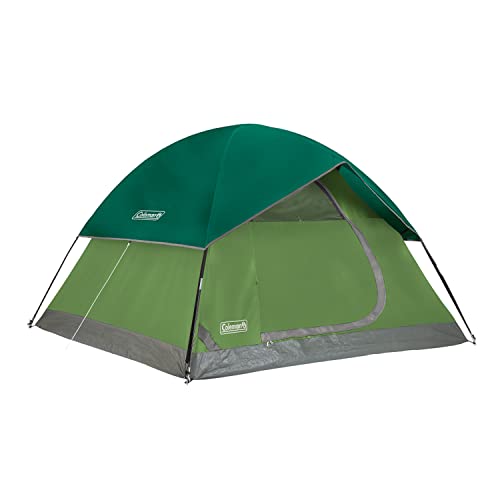
The Coleman Sundome is the familiar dome tent most people picture when they imagine car camping, but it remains on this list because it delivers reliable shelter without forcing you to learn anything new. Setup follows the standard pole-and-sleeve pattern: snag-free continuous sleeves (pole tubes sewn into the fabric) feed the fiberglass poles through, the dome clicks into shape, and you are done in minutes. Available in 2-person and 3-person configurations, both sized for the kind of weekend trip where you just need a dry place to sleep.
Coleman’s WeatherTec system, with welded floors and inverted seams, handles light rain and wind better than bargain tents in the same size class. The Sundome is the practical middle ground between the ultralight bug net above and the heavy canvas Coody, suiting families and casual campers who want a dependable option that does not require special handling.
What Works In Its Favor
- Welded seams and inverted floor seams (seams turned so stitching sits on the protected side) keep light rain out better than stitched-only competitors.
- Compact pack size fits in most car trunks without taking up dedicated cargo room.
- Continuous pole sleeves speed setup, with fewer separate pole sections to keep track of at the campsite.
Things To Consider
- Fiberglass poles can crack if bent too aggressively or stored in cold conditions, so careful handling extends their life.
- Limited headroom means most adults cannot stand inside, which is fine for sleeping but cramped for changing clothes in foul weather.
- Not designed for snow loading or sustained high winds, so alpine or exposed-site camping calls for a sturdier option.
The Right Fit
Casual campers and families wanting a dependable, easy-to-source shelter for fair-weather weekends at established campgrounds.
Not Your Match When
Couples who want to stand up inside should look at the NANJEEN Large Luxury Inflatable Camping Tent for its full standing height and larger footprint.
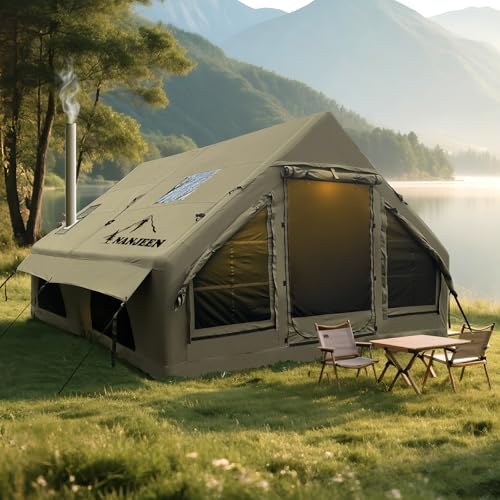
The NANJEEN Large Luxury Inflatable Camping Tent is the largest option on this list, with a roughly 12-square-meter interior that comfortably hosts 2 to 10 people depending on how you configure gear. The cotton-based construction, reinforced seams, and dual-door layout are built for groups who treat the tent as a social space rather than just overnight shelter. Setup with the included hand pump runs about 8 minutes, which is competitive for a tent this size.
Mosquito-proof mesh windows handle ventilation while keeping insects out, and the four-season framing (designed to handle spring, summer, fall, and mild winter conditions) extends its usability beyond summer-only fair-weather use. Compared to the lighter EchoSmile pop-up reviewed later, this NANJEEN trades quick-toss convenience for serious structural permanence and weather resistance.
Well-Handled Touches
- Generous interior fits queen air mattresses, cots, and chairs without crowding, which makes it a real base camp rather than a sleeping bag.
- Cotton fabric with reinforced seams handles rain and wind better than budget nylon tents, particularly over multi-day stays.
- Dual doors reduce traffic jams when multiple campers are coming and going, especially at night.
- Mosquito-proof mesh windows balance airflow and bug protection in summer conditions.
Honest Caveats
- Around 35 kilograms packed, so you will want a vehicle within reach of the campsite.
- Cotton requires thorough drying before storage to avoid mildew, which adds a post-trip step owners sometimes overlook.
Who Should Grab It
Groups, families, and base-campers who host multiple people under one roof and want a tent that doubles as a gathering space.
A Better Fit Elsewhere
Solo travelers should look at the Luxury Inflatable Camping Tent for 1-2 Person instead, since the smaller footprint and lighter carry make it more solo-friendly.
The EchoSmile Instant Pop Up Camping Tent springs open the moment you release the strap, and that single feature is the entire reason to consider it. Available in 2-person, 4-person, and 6-person configurations, it suits festival campers, parents wrangling small kids at the campsite, and anyone who has ever abandoned a tent halfway through assembly. The terylene (a polyester-based synthetic fabric) outer stands up to casual use and folds down to a flat disc for storage.
Realistically, this is a fair-weather tent. It handles a light shower and a calm night but is not engineered for sustained wind or heavy rain. Where it shines is removing setup as a variable, which can matter more than weather performance for short trips with kids or gear-heavy first-timers.
Everyday Perks
- Setup in seconds means you can pitch camp after dark without fumbling with poles, a real advantage at festivals.
- Multiple size options let you match capacity to your group without paying for unused space.
- Lightweight carry is manageable for short walks from a car to a campsite.
Some Limits To Know
- Folding the tent back into its disc shape requires patience, and beginners often need a couple of attempts to get the technique down.
- Light fabric and minimal pole structure make this a poor choice for windy, exposed sites or storms.
- Limited ventilation panels can trap warmth on hot summer days, so ventilation is worth considering for warm-weather campers.
Built With In Mind
First-time campers, festival-goers, and families who value fast setup and easy teardown over serious weather performance.
Skip It When
Campers expecting rain resistance should look at the NANJEEN Large Luxury Inflatable Camping Tent, whose heavier fabric and sealed construction handle weather better.
The Luxury Inflatable Camping Tent for 1-2 Person uses 600D Oxford fabric, a tightly woven polyester known for abrasion resistance and toughness, paired with inflatable beams to deliver a compact, solo-or-duo shelter that sets up in roughly five minutes with the included hand pump. The interior features a black UV-coated layer that blocks harmful sun exposure, making it useful for trips where shade and heat management matter more than airflow.
This sits between the Sportneer bug net at the top of the list and the larger NANJEEN further up: more weather-resistant than the mesh option, smaller and lighter than the family-size pick. Couples road-tripping through varied conditions, or a single camper who wants standing headroom without hauling a four-person dome, will find this size hits a useful sweet spot.
Positive Takeaways
- 600D Oxford exterior resists abrasion from rough ground and rocky sites better than lighter nylon tents.
- UV-blocking inner layer keeps interior cooler in direct sun, reducing midday heat buildup.
- Five-minute pump setup is faster than pole tents of similar size, while still providing real weather protection.
Small Caveats
- Two-person rating assumes close quarters, so two adults plus gear means a tight fit.
- Hand-pump inflation adds a few minutes versus a pop-up design, though it still beats traditional pole assembly.
Whose Shelf It Belongs On
Couples and solo campers who want an inflatable tent’s convenience without committing to family-size weight and bulk.
Where Another Pick Suits Better
Festival-goers prioritizing speed above all should consider the EchoSmile Instant Pop Up Camping Tent, which throws open in seconds.
What Matters Most When Choosing An Air Camping Tent
Air camping tents replace rigid poles with inflatable beams, so setup shifts from a mechanical task to a pumping task. The right choice depends on a few attributes that matter more than the marketing claims.
Capacity and footprint are the first filter. A 1-2 person inflatable tent fits a queen air mattress with no spare room, while a 2-10 person model gives you living space plus sleeping space. Match capacity to your group plus any gear you want inside, and remember that manufacturer ratings tend to be optimistic.
Fabric choice shapes the experience in subtle ways. Polyester and nylon are lightweight and quick-drying but can feel clammy in humid air. Cotton canvas breathes better and manages temperature swings, though it absorbs moisture and dries slowly. Oxford blends, the 600D variety seen on several picks above, lean toward abrasion resistance for rocky or rough sites.
Pump and inflation time directly affects how you feel about the tent after a long drive. Five minutes with a hand pump is reasonable; ten minutes plus a tiring pump session is annoying. Factor in whether the tent accepts electric pumps if you own one, and whether valves are accessible for topping off overnight in changing temperatures.
Weather rating matters even for summer campers. A summer afternoon thunderstorm tests waterproofing, seams, and pole strength in ways a sunny weekend never does. Sealed seams, coated floors, and storm flaps cost money but reward you on the one night you really need them.
Key Considerations Across These Picks
Where Shoppers Go Wrong
The most common slip is buying by capacity label rather than usable interior. A “6-person” tent that fits four adults and gear comfortably is rare, so checking dimensions before trusting the number saves a frustrating first night. Another trap is assuming all inflatable tents handle the same weather. A pop-up mesh shelter and a cotton canvas inflatable lodge perform very differently in sustained rain, even though both qualify as air camping tents.
Where The Extra Money Goes
Higher-tier models in this category spend the budget on fabric weight, sealed seams, and frame durability. The Coody and NANJEEN picks above cost more than the EchoSmile because their materials and structural engineering hold up to repeated multi-day use in real weather, while budget options save money with lighter fabrics and simpler valves that wear out faster. The upgrade pays off for anyone camping more than a handful of weekends per year, while fair-weather festival campers often find the budget tier does everything they need.
Frequently Asked Questions
How long does it take to inflate an air camping tent? Most inflatable tents on this list take between 5 and 10 minutes with the included hand pump, depending on size and how many beams need filling. Larger family-size models can run closer to the longer end of that range.
Can air camping tents handle rain and wind? The heavier cotton and Oxford-fabric models handle rain and moderate wind well when seams are properly sealed. The mesh and ultralight pop-up options are fair-weather choices that should be paired with a tarp for storms.
How do you store an inflatable camping tent between trips? Dry the tent completely, deflate the beams, fold loosely rather than tightly, and store in a cool, dry place. Cotton models benefit most from full drying to prevent mildew during long-term storage.
Are air camping tents heavier than pole tents? Not necessarily. The inflatable beam material is light, and the absence of metal poles often makes comparable-size air tents lighter than traditional pole tents. Larger canvas air tents do run heavier than their pole-tent equivalents, so size matters more than the beam type.
Do inflatable tents need maintenance? Periodic valve checks and occasional beam re-inflation are the main tasks. Cotton and canvas models also benefit from re-proofing every couple of seasons to maintain water repellency.
Wrap Up
The right air camping tent depends on where you camp, how many people you bring, and how much weather protection matters. Ultralight bug shelters like the Sportneer suit backpackers, family-size inflatables like the NANJEEN handle base camps, and canvas options like the Coody open up cold-season comfort. Match the tent to your most common trip, not your most ambitious one, and the rest of the decision tends to fall into place.