
Whether you’re rigging a tarp over the picnic table at a crowded campground or propping up a sunshade on a windy beach, the right pole turns a wobbly setup into a reliable one. After sorting through nine different options for length, material, and load rating, the picks below cover everything from backpack-friendly ultralight poles to heavy-duty adjustable systems built for full awnings. The goal: matching the pole to the kind of shelter you actually pitch.
Your Options, Compared
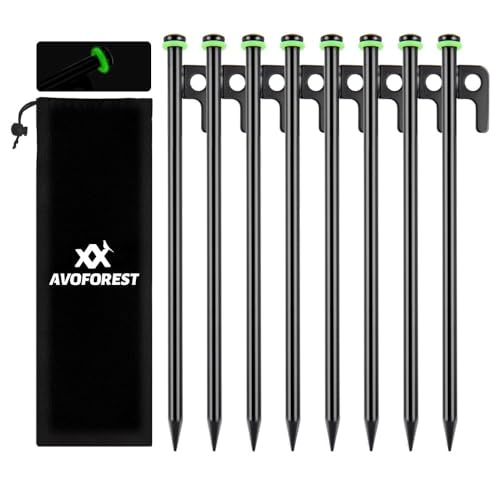
AVOFOREST 8Inch Heavy Duty Tent Stakes with Fluorescent Rings

Green Elephant Camping Tarp Poles, Adjustable Aluminum Telescoping Set of 4

AVOFOREST 9.2FT Aviation Aluminum Telescoping Tent Poles (Set of 2)

Strdfeve 2PCS 5.6ft Foldable Beach Tent Poles for Neso 1

AVOFOREST Aviation Aluminum 8.7FT Telescoping Tent Poles (Set of 2)

OneTigris Lightweight Tent Poles, 7075 Aluminum Alloy, 2pc/Set

XINCAMPING Adjustable Heavy Duty Tarp Poles 7.6FT, 4-Pack

BRILLIANCE4U Aluminum Tent Pole Male End Tips, 12-Pack Replacement

JCMCAMP Tarp Poles, Telescoping, Extends to 7’6″ (2 PCS)
Why These Options Stand Out
Ground stakes don’t get the spotlight, but a shelter that walks away in a gust makes the whole setup pointless. These forged S45C steel pegs are built for the kind of compacted dirt, gravel, and rocky soil where thinner wire stakes bend or snap on the first hard push. The fluorescent silicone rings sit near the top of each stake, so tripping over them at midnight becomes a lot less likely.
An eight-pack covers most small-to-medium tarp and tent layouts without leaving you short. The included storage bag keeps them corralled in the trunk of your car between trips, and the bright rings make spot-checking your perimeter at dawn much faster. Most campers will treat these as a baseline purchase rather than a luxury.
The Upside
- Forged S45C steel resists bending in hard or rocky ground
- Fluorescent rings improve visibility in low light
- Corrosion-resistant finish suits damp coastal or alpine sites
- Eight stakes plus a storage bag covers typical setups
- Sharp tips penetrate tough soil with less effort
Things To Consider
- Eight inches may run short in very loose or sandy soil where deeper anchors help
- Steel adds weight compared to aluminum alternatives if you’re counting every gram
Feature Snapshot
Built With In Mind
Campers pitching tarps or tents on hard, rocky, or compacted ground where wire stakes fail.
Look Elsewhere When
Backpackers counting ounces should reach for the OneTigris Lightweight Tent Poles set instead.
Where the AVOFOREST stakes handle the ground, these Green Elephant poles handle the air above it. The telescoping design telescopes (slides and locks) between roughly 2 feet collapsed and 8 feet extended, which means four of them can drop into a car trunk and still cover a wide beach shade or a caravan awning once they’re deployed. Aluminum construction keeps the weight low without giving up strength.
Each pole supports up to 50 pounds, enough for a taut rain fly or sun canopy that doesn’t sag under its own fabric. The four-section design gives you fine height control, so matching uneven ground between poles stops being a constant headache. Car campers, especially those running awnings off a van, tend to appreciate the compact packed size most.
Practical Advantages
- Telescoping range from about 2 ft to 8 ft fits varied setups
- Aluminum build resists rust at coastal sites
- Four-pack covers a full tarp or canopy footprint
- 50 lb per-pole load rating handles taut rain flies
- Lightweight at roughly 1.1 lb each
Points To Note
- Twist-lock collars can loosen under heavy vibration in truck-mounted setups
- Maximum height may fall short for taller van awnings
Whose Shelf It Belongs On
Caravan owners and beach campers wanting a four-pole system that stores small and deploys fast.
Where Another Pick Suits Better
Campers needing more than 8 feet of reach should consider the AVOFOREST 9.2FT Telescoping Tent Poles instead.
Stepping up from the Green Elephant set, this AVOFOREST pair trades a couple of poles for raw strength per pole. The aerospace-grade aluminum walls are notably thicker than typical telescoping poles, which is what lets them claim serious wind resistance without snapping or bending under load. Reaching just over 9 feet gives tall RVers and shade seekers the headroom that shorter poles can’t match.
The sliding buckle lock is the key safety feature here, since the extra length multiplies the leverage a gust can apply to the joint. A protection cap on the top end keeps fabric from tearing where the pole meets a tarp grommet. Set up a large canopy or full RV awning, and the difference in stability becomes obvious within minutes.
The Helpful Details
- Aerospace-grade aluminum resists bending under load
- 9.2 ft maximum height clears tall awnings
- Sliding buckle lock adds a second friction point at each joint
- Protection cap prevents fabric wear at contact points
Trade-Offs To Consider
- Two-pole set may not cover a four-corner tarp without ordering twice
- Heavier than the Green Elephant four-pack at the same quantity
Spec Overview
The Right Fit
RVers and canopy owners running larger shelters where pole height and bend resistance matter most.
Swap It Out When
Beachgoers wanting a complete four-pole kit out of one box should consider the Green Elephant set instead.
Not every shelter needs to reach for the sky. The Strdfeve pair targets the popular Neso 1 beach canopy specifically, where 5.6 feet of height is exactly what the design calls for. The pointed bottom tip is the real story, since driving a pole straight into sand is what keeps the whole canopy from sliding sideways when the sea breeze kicks up.
Aluminum construction handles the salt-air exposure that would pit steel in a single season. Glued foam balls near the joint keep sections from clacking together during transport, which is a small detail that beachgoers tend to notice when they’re packing up sandy gear. It’s a niche pick, but for its intended tent, it’s a clean fit.
What Makes Sense
- Pointed tip drives easily into compacted sand
- 5.6 ft height matches the Neso 1 canopy’s design
- Aluminum build resists salt-air corrosion
- Foam joint protectors reduce transport rattle
Worth Bearing In Mind
- Built specifically for the Neso 1, less versatile than universal poles
- Short length rules it out for taller awning setups
Who Should Grab It
Neso 1 canopy owners who need a direct replacement pair without modifying their existing shelter.
Reach For A Different Pick When
Campers using varied tarp brands should consider the more universal JCMCAMP Telescoping Tent Poles instead.
The shorter sibling to AVOFOREST’s 9.2 ft pair, this 8.7 ft set shares the same aviation aluminum construction but steps the diameter up to 32 mm for additional stiffness. That extra wall thickness matters when the wind is doing the deciding for you. A double anti-collapse design layers a second lock on top of the standard telescoping clamp, so a sudden gust is less likely to telescope the pole back down on itself.
The 60 lb per-pole load rating handles tarps, awnings, and lightweight canopies with room to spare. The minimum storage length of about 2.9 feet keeps them packable for car camping and shorter hiking distances. In most wind-protected sites, this is overkill; in open terrain, that extra margin pays for itself the first time the weather turns.
Positive Takeaways
- 32 mm diameter adds stiffness over standard poles
- Double anti-collapse locking reduces wind failure
- 60 lb load rating supports heavier tarps
- Rust-proof aviation aluminum for wet climates
- Packs down to about 2.9 ft for transport
Some Limits To Know
- Two-pole count requires buying multiples for larger footprints
- Heavier than thinner-walled competitors at the same length
Best Suited To
Campers pitching tarps and awnings in open or coastal terrain where wind loading is the main concern.
A Better Fit Elsewhere
Hikers who count every ounce will find the OneTigris Lightweight Tent Poles easier to carry.
The opposite end of the spectrum from the heavy-duty AVOFOREST poles, OneTigris leans into backpack-friendly design. The 7075 aluminum alloy is the same grade used in high-end backpacking gear, so you get serious strength at a fraction of the weight. Each pole collapses into a compact stuff sack made from 420D Oxford fabric, which resists scuffs on rough trails.
Two poles can be joined end to end to extend the length when you need it, which is a clever way to keep the carry weight low while still covering taller setups. Click-together sections mean assembly is fast at the end of a long day. Anyone who’s ever balanced gear on a scale before a trip will recognize why this set earns its place in an ultralight kit.
Advantages To Know
- 7075 aluminum alloy delivers high strength at low weight
- Two-piece design joins into a single longer pole
- Click-connect sections speed up field assembly
- Oxford fabric stuff sack holds up to trail abrasion
- Anti-slip connection keeps joints from working loose
Potential Compromises
- Thinner walls trade some rigidity compared to heavy-duty poles
- Two-pole set limits large tarp coverage without extras
Perfect Match For
Thru-hikers and backpackers packing shelter support into a tight kit where ounces count.
Not Your Match When
Car campers running larger canopies should reach for the XINCAMPING 4-Pack Tarp Poles instead.
Group trips and family setups need more poles than a solo backpacker carries, which is where this XINCAMPING 4-pack earns its keep. Each pole adjusts from roughly 2.6 feet collapsed to 7.6 feet extended, covering a standard rectangular tarp footprint out of the box. The 1.3 lb per-pole weight stays manageable even when you’re walking gear from the parking area to the campsite.
Rust-proof aluminum shrugs off morning dew and coastal spray without developing the flaky surface cheaper alloys pick up over time. The protection cap on the top end guards fabric grommets from the kind of small punctures that turn into big tears after a windy afternoon. For most weekend trips with two or three people, this is the kit that gets the job done without overbuying.
Reasons It Performs
- Four-pole set covers a full rectangular tarp
- 7.6 ft max height suits most shelter designs
- Rust-proof aluminum for wet environments
- Protection cap reduces fabric wear at contact points
Small Caveats
- Maximum height is shorter than AVOFOREST’s 8.7 and 9.2 ft options
- Four poles add up to a bulkier carry than two-pole kits
Feature Card
Right Fit For
Family campers and small groups who want a complete four-pole tarp system from a single purchase.
Consider Something Else When
Solo backpackers should look at the OneTigris Lightweight Tent Poles for a lighter carry.
Not every pole problem needs a new pole. The end tips on aluminum tent poles are the part that takes the worst beating, cracking, deforming, or simply wearing through after years of friction and ground contact. This BRILLIANCE4U pack ships 12 replacement ferrules (the small sleeve-like tips that connect pole sections) sized for 9.5 mm (3/8 inch) poles, giving you a field-repair kit without buying fresh equipment.
The 7001 series aircraft-grade aluminum matches the strength of most tent pole stock, so repairs don’t turn into the weak link in your shelter. Anyone who’s been halfway through a setup and watched a tip snap off knows the value of a 12-pack sitting in the gear drawer. For most campers, this is a backup purchase rather than a primary one.
What Pays Off
- 12-pack covers multiple repairs plus spares
- 7001 series aluminum matches common pole material
- Fits the standard 9.5 mm (3/8 inch) pole diameter
- Compact size slips into existing repair kits
Where It Is Less Suited
- Limited to one diameter; not a universal repair solution
- Replacement tips require basic fitting skill to install cleanly
Who It Suits Best
Long-term tent owners who want to extend the life of existing aluminum poles rather than replace them.
Skip It When
Shoppers buying their first tent should pick a full pole set like the JCMCAMP Telescoping pair instead.
Rounding out the list, this JCMCAMP pair is the kind of telescoping pole most casual campers reach for. Three adjustable sections take the length from about 3 feet 1 inch collapsed to 7 feet 6 inches extended, which suits weekend car-camping tarps and modest awnings without overshooting. The total weight of 2.2 lbs per pole lands right in the middle of the pack, neither ultralight nor heavy-duty.
The locking mechanism uses a telescoping clamp that holds up under normal wind, though in coastal gusts you’ll want the AVOFOREST models instead. Packed length keeps the poles out of the way in a trunk or cargo bin, and the straightforward design means no fumbling at the campsite. For most weekend setups, that’s plenty.
What Earns Its Place
- Three-section design simplifies length adjustment
- 7’6″ max height fits common shelter footprints
- Compact collapsed length stores easily in vehicles
- 2.2 lb per pole balances weight and durability
A Few Limitations
- Single locking collar offers less security than double-lock designs
- Two-pole count may fall short for wider tarp layouts
Made For
Weekend car campers running smaller tarps or sunshades who want simple, adjustable support.
Where A Sibling Pick Shines
Anyone needing a complete four-pole setup should pick the XINCAMPING 7.6FT 4-Pack instead.
What To Weigh Before Choosing Adjustable Tent Poles
Length Range and Pack-Down Size
The first spec to compare is how far each pole extends and how short it collapses. Tarps and awnings between 7 and 9 feet tall cover most casual setups, while taller RV awnings push toward the 9-foot range. Pack-down length matters more for backpackers, where every inch of pack space is contested.
Material and Wall Thickness
Aluminum dominates this list for good reason: it resists rust, stays light, and handles the flex of repeated setup. The difference between 7001 and 7075 alloys matters mainly under stress. 7075 aluminum is a higher-strength alloy often used in aerospace, while 7001 is a tougher, more common tent-pole grade. Thicker walls add rigidity but also weight, so heavier poles suit car camping better than backpacking.
Lock Mechanism and Wind Resistance
Single twist locks are simpler, but double-lock and sliding-buckle designs hold their position longer in sustained wind. For exposed ridges or coastal sites, that extra lock is the difference between a taut shelter and a collapsed one. In sheltered forests, a basic clamp is usually enough.
Quantity and Use-Case Fit
Two-pole sets pair well with A-frame tarps, while four-pole kits suit rectangular shelters or full canopies. Buying pairs lets you build out as needed, but a complete four-pack saves time and ensures matching hardware. Match the kit to the shelter footprint you actually use, not the one you might want someday.
Key Considerations Across These Picks
Common Shopping Slip Ups
The biggest mistake is buying poles that are too short. Measure your tarp ridge height before you commit, and add at least a foot for taut pitch. Another frequent error is ignoring pole diameter: thin walls feel light in the pack but flex under wind. For most campers, mid-weight aluminum hits the right balance between portability and stiffness.
Where The Extra Money Goes
Higher-tier poles earn their cost through thicker aluminum walls, dual locking systems, and protection caps that prevent fabric wear. Those features matter most on long trips, in harsh weather, or when shelter failure carries real consequences. For weekend car camping in mild weather, the budget-friendly end of this list will serve you just as well.
Frequently Asked Questions
What length of adjustable tent pole do most campers need?
Most casual setups work well with poles that extend between 7 and 8 feet. Taller RV awnings and full canopies typically need 9 feet or more for a comfortable pitch.
Are aluminum tent poles strong enough for wind?
For most conditions, yes. Aluminum combines light weight with enough flex to absorb gusts rather than snap. In sustained high wind, thicker-walled poles with double locking mechanisms hold up better than thinner alternatives.
Can one telescoping pole replace a fixed-length pole?
In many cases, yes. Telescoping poles let you fine-tune height to match uneven ground, which is harder with a fixed pole. The trade-off is more potential failure points at the locks.
How do I keep tent pole locks from slipping?
Check the clamp tension before each setup, and look for wear on the locking collar over time. A small piece of grip tape wrapped around the joint adds friction in stubborn cases.
Do I need four poles for a basic tarp setup?
A simple A-frame tarp uses two poles and two tie-out points. Rectangular tarps and full canopies usually need four. Buy the count that matches your shelter’s footprint.
Closing Thoughts
The right adjustable tent pole depends on what you pitch and where you camp. Backpackers should focus on weight and pack-down size, car campers benefit from four-pole kits and heavier aluminum, and exposed sites call for double-lock systems and thicker walls. Pick the one that matches the shelter you actually carry, and the rest of the setup gets easier.