
Cold shoulder seasons and surprise snowstorms in July are the camping moments most 4-person tents quietly fail at. You need something that handles wind, wet, and a frosty morning without turning the interior into a condensation cave. The right 4 season 4 person tents for your crew depends on where you camp, how often, and how much weight you actually want to haul to the trailhead. This shortlist focuses on shelters that hold their own in shoulder-season weather without forcing a long, frustrating pitch in the dark.
The Essentials At A Glance

Coody Premium Inflatable Canvas Air Tent

Gazelle T4 Waterproof 4 Person Pop Up Tent

Naturehike Village Instant Cabin Tent
Naturehike Cape 4/6/8 Person Instant Tent
Naturehike KOTA Double Layer Family Tent
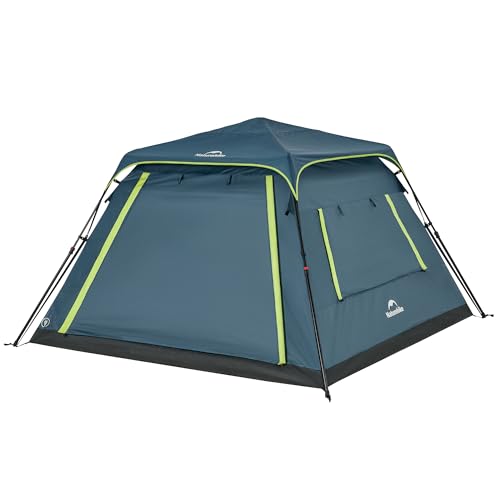
Naturehike Cape Lite Instant Cabin Tent
Why These Options Stand Out
The Coody inflatable tent flips the usual camping script. Instead of a forest of rigid poles, you get an air frame that inflates and a canvas shell that breathes. For shoulder-season campers who want something closer to a cabin than a bivy, that tradeoff is the whole point.
Where the Gazelle T4 and the Naturehike cabin tents lean on speed and simplicity, the Coody prioritizes feel. A built-in stove jack opens up real cold-weather use, and the breathable canvas blend helps reduce that clammy morning condensation you sometimes get on synthetic shelters. Depending on your climate, that single change can move a tent from spring-to-fall only into a four-season piece of gear.
A Few Strong Suits
- Air-frame pitch means no fiddling with poles at dusk.
- Canvas construction handles temperature swings better than thin polyester.
- Integrated stove jack enables proper cold-weather camping with a compatible wood stove.
- Generous interior height makes sitting and changing comfortable for adults.
Honest Caveats
- The packed weight is heavier than the Naturehike cabin-style options, which matters if you are hiking any distance.
- Canvas needs proper drying before storage to prevent mildew on long trips.
- You will need a separate pump for the inflatable frame.
Key Specs
Made For
Cold-weather campers and glampers who camp by car or short carry and want true four-season comfort without pole frustration.
A Better Fit Elsewhere
Backpackers and ultralight hikers will find the Naturehike KOTA Double Layer Family Tent easier to carry and faster to dry on long traverses.
The Gazelle T4 is built around a single obsession: getting out of your car and into a standing shelter before the rain hits. The pre-assembled hub design uses telescoping poles that pop out and lock into place, so pitch time is measured in seconds, not minutes.
For families running from the parking lot to the picnic table, that speed is the whole pitch. Where the Coody focuses on cold-climate canvas comfort, the T4 trades that for polyester practicality, a removable floor, and full mesh walls. In our view, it is less of a winter shelter and more of a fast summer-and-shoulder-season pop-up that makes camping feel like setting up a sunshade.
Reasons It Performs
- Pop-up hub design pitches in roughly 90 seconds, even for first-time users.
- Removable floor converts it into a beach or shade shelter.
- Full mesh panels and rain fly provide good ventilation during humid evenings.
- Freestanding frame means you can pick a flat spot almost anywhere.
Some Limits To Know
- Polyester build is lighter on insulation than the canvas Coody.
- Storage bag dimensions tend to be bulky compared to smaller backpacking tents.
- Less suited for sustained snow loads or alpine shoulder-season use.
Right Fit For
Weekend car campers, festival-goers, and beach families who want a reliable pop-up that anyone in the group can pitch without instructions.
Look Elsewhere When
Cold-weather and shoulder-season hikers chasing snowline camping should look at the Naturehike KOTA Double Layer Family Tent for its modular winter setup.
The Naturehike Village is the cabin-style shelter that aims to make car camping feel like a spare bedroom. Pre-attached poles mean the structure snaps into place, and the near-vertical walls give you usable floor space rather than a sloping wedge.
Where the Gazelle T4 prioritizes speed in a smaller footprint, the Village pushes for livability. The fabric carries a UPF 12500+ rating and a waterproof PU 2000mm+ coating, which is a real comfort in bright, wet weather. For parents tired of crouching over sleeping bags, the standing height alone is worth the upgrade.
A Favorable Mix
- Vertical cabin walls let cots, air mattresses, and gear sit against the sides.
- Pre-attached pole system cuts pitch time significantly.
- UPF-rated fabric reduces sun exposure inside the shelter during hot days.
- Available in 4-person and 8-person layouts for different group sizes.
Small Caveats
- The cabin footprint is wide and flat, so you need a clear, level site to pitch it.
- Packed weight climbs higher than traditional dome tents.
- Windows and doors benefit from a quick wipe-down after wet trips to prevent mildew on mesh panels.
Feature Snapshot
Best Suited To
Families with kids or pets who want standing room, square sleeping space, and easy setup at established campgrounds.
Reach For A Different Pick When
Cold-climate campers running shoulder-season trips will want the Naturehike KOTA Double Layer Family Tent for better insulation and snow handling.
The Naturehike Cape trades the cube-shaped cabin footprint for a longer tunnel layout, which translates into real interior volume. Sleeping pods sit in a row, gear lives at the ends, and you can stand up through the central spine.
Compared to the Village, this Cape feels more like a basecamp tent than a guestroom. The 190T polyester is lighter than the Village’s 150D Ti Black fabric, so it packs a little smaller, but it still earns its waterproof PU3000mm rating for serious rain. For group car camping, that combination is hard to beat without jumping to a heavier expedition shelter.
Real-World Strengths
- 60-second instant pitch keeps group arrival simple.
- Tunnel shape maximizes standing and moving room.
- Waterproof PU3000mm rating holds up in sustained rain.
- Multiple size options let you scale the shelter as the group grows.
Points To Note
- Tunnel tents need proper staking at both ends to stay taut in wind.
- Polyester fabric needs careful folding along seam lines to avoid creasing the coating over time.
- Less internal privacy than divided-room tents for mixed groups.
Who It Suits Best
Group car campers and families who want maximum interior space with quick setup and do not mind staking both ends.
Where A Sibling Pick Shines
Parents needing separate sleeping and living areas for kids will find the Naturehike Village Instant Cabin Tent offers a more room-divided layout.
The KOTA is the only shelter in this shortlist that openly markets a true four-season build. The inner mesh tent and outer fly can be used together, separately, or in modular combinations, which gives you year-round flexibility rather than a single-purpose winter shelter.
Compared to the Cape and Village, the KOTA’s 75D 210T polyester is the heavier fabric here, but the trade-off is real cold-weather credibility. You can shed the fly in summer and stargaze through the mesh, then button everything up when the temperature drops. Vestibules and a covered porch extend usable dry space outside the sleeping area, which matters when snow is piling up against the walls.
Strengths Worth Knowing
- Modular double-layer setup adapts to three-season and four-season use.
- Waterproof PU 3000mm+ rating handles wet snow and driving rain.
- Vestibules and porch add covered storage for boots and packs.
- Free-standing inner tent can pitch alone for warm, dry summer nights.
Worth Noting
- Heavier and bulkier than the Village or Cape, so storage space in smaller vehicles is tighter.
- Two-layer pitch takes longer than the instant single-frame options.
- Owners commonly report needing extra guy lines in high-winter conditions for full stability.
Feature Rundown
Who Will Love This
Year-round car campers who camp through shoulder seasons and want one shelter that flexes between summer mesh and winter double-wall duty.
Skip It When
Quick weekend campers prioritizing the absolute fastest pitch should stick with the Naturehike Cape Lite Instant Cabin Tent.
The Cape Lite is the entry-level cabin in the Naturehike instant lineup. It trims weight and bulk from the bigger Cape and KOTA, while keeping the same pre-attached-pole pitch that beginners can manage on a first trip.
Where the KOTA feels like a winter-ready basecamp and the Village feels like a family room, the Cape Lite feels like a friendly weekender. The roughly 101.5 by 101.5-inch floor fits a queen mattress comfortably, and a 62.2-inch peak height lets most adults stand inside without crouching. For new campers, that combination removes two of the most common frustrations at the campsite.
Useful Highlights
- Pre-attached poles pitch in around a minute.
- Queen-mattress-friendly floor simplifies family sleeping arrangements.
- 62.2-inch peak height lets most adults stand and dress inside.
- Lighter than the KOTA, easier to haul in a smaller car.
Trade-Offs
- Not a true four-season shelter; thin walls and lighter zippers handle summer and mild shoulder seasons best.
- Single-layer construction means more condensation in cool, humid nights.
- Smaller vestibule space than the KOTA for covered gear storage.
Perfect Match For
New campers, couples, and small families who want a near-foolproof cabin-style pitch at established three-season campgrounds.
Not Your Match When
Cold-weather campers should reach for the Naturehike KOTA Double Layer Family Tent for its stronger winter credentials.
Picking A Shelter That Actually Holds Up In Shoulder Seasons
The right 4 season 4 person tent for you depends less on raw feature lists and more on how you actually camp. A shelter that feels like a fortress to a winter basecamper can feel suffocating to a July festival-goer, and vice versa. Use these four angles to narrow the field before you click through to a product page.
Match The Season To The Wall Count
Single-wall tents pitch fastest and pack smallest, but they breathe poorly and run wet in cold, humid air. Double-wall designs add an inner tent plus a separate rain fly, which gives you a real vapor gap and noticeably better cold-weather comfort. For shoulder-season and winter use, the extra pitch time is almost always worth it.
Look At Waterproof Ratings, Not Marketing Claims
A PU 2000mm+ coating handles steady summer rain, but wet snow and driving shoulder-season storms behave differently. Higher ratings like PU 3000mm+ on the KOTA and Cape are meaningful where precipitation is sustained or heavy. For drier climates, you can trade some waterproofing for weight savings without real consequences.
Inspect Ventilation Before Pitch
Mesh panels and adjustable vents are what stop a tent from turning into a condensation cave at dawn. The Village, Cape, and Cape Lite all lean on mesh walls for airflow, while the Coody manages moisture through breathable canvas. If you camp in humid coastal or lakeside environments, prioritize the ventilation design as much as the waterproof rating.
Size The Tent To Your Gear, Not Just Your Headcount
A four-person label usually means sleeping space for four adults, not much else. If you travel with cots, a queen mattress, a dog crate, or full-size duffels, step up to the 6-person or 8-person version of the same model. The extra room also leaves space to sit out a rainstorm without crowding the door.
Key Considerations Across These Picks
Pitfalls Shoppers Hit
The most common mistake is buying by person count alone. A four-person label assumes backpacking-style sleeping pads packed shoulder-to-shoulder, which rarely matches how families actually camp. Another trap is trusting the heaviest waterproof rating without checking ventilation, since a fully sealed shelter can drip from condensation even when the fabric itself never leaks. Lastly, ignoring packed dimensions leads to a tent that technically fits the family but physically does not fit the trunk.
Why Top Tier Costs More
The jump from a beginner cabin tent to a four-season shelter buys you fabric weight, double-wall construction, and modular setup options that let you adapt the shelter to real weather. You also pay for tighter seams, stronger zippers, and better pole engineering under wind load. For campers who only pitch in calm summer conditions, that premium is hard to justify. For everyone else, it tends to show up exactly when conditions get ugly.
Frequently Asked Questions
What makes a 4 person tent truly four-season?
A four-season tent uses heavier fabric, more pole structure, and fewer mesh panels to handle snow loading and sustained wind. True winter shelters also avoid large single-wall mesh openings that let heat escape and let spindrift in.
Can a 4 season 4 person tent handle summer heat?
Most can, but ventilation becomes the limiting factor. Double-wall designs with full mesh inner tents, like the KOTA, work well in summer by shedding the fly and sleeping under the mesh alone. Single-wall summer pop-ups like the Gazelle T4 are usually too hot in still summer air past the mid-80s.
How long does a quality 4 person tent usually last?
With reasonable care, a well-built polyester or canvas tent should give you five to ten years of regular seasonal use. The lifespan depends most on UV exposure, storage dryness, and how often you pitch on abrasive ground.
Is a heavier tent always better for cold weather?
Not always. Heavier fabrics resist abrasion and snow loading, but they also add packed weight and slow pitch time. The right balance is a double-wall shelter with a strong but not overbuilt fly, like the KOTA, rather than the heaviest option in the catalog.
Do these tents need a footprint or ground tarp?
A footprint or ground tarp extends fabric life by protecting the floor from sharp rocks and pine needles. For car camping, a cheap poly tarp sized to your tent footprint is usually enough. Backpacking footprints add ounces, so many campers skip them for shorter trips.
Bottom Line
The best 4 season 4 person tents for you come down to your climate, your vehicle, and how much pitch time you can stomach at the end of a long drive. For cold-weather car camping, the KOTA earns its four-season design. For quick weekends and beach trips, the Gazelle T4 still earns its speed. New campers who want the lightest learning curve will probably end up happiest with the Cape Lite, while families chasing standing room should look hard at the Village. Match the shelter to your conditions, not the marketing.