
Pulling into a trailhead with the family loaded in the back seat, you want a tent that pitches fast, stays dry, and gives everyone room to breathe. A car camping tent has to do more than just sleep four; it needs standing headroom, gear storage, and weather protection for nights that turn wet or cold. The six options below cover the main scenarios you’ll run into: glamping-style canvas living, quick pop-up basecamps, tall cabin-style family tents, and double-layer shelters for shoulder-season trips.
A Side-By-Side Look

Coody Premium Inflatable Canvas Air Tent

Gazelle T4 Waterproof 4 Person Pop Up Tent

Naturehike Village 4-Person Instant Cabin Tent
Naturehike Cape 4-Person Instant Tent
Naturehike KOTA 4-Person Double Layer Tent
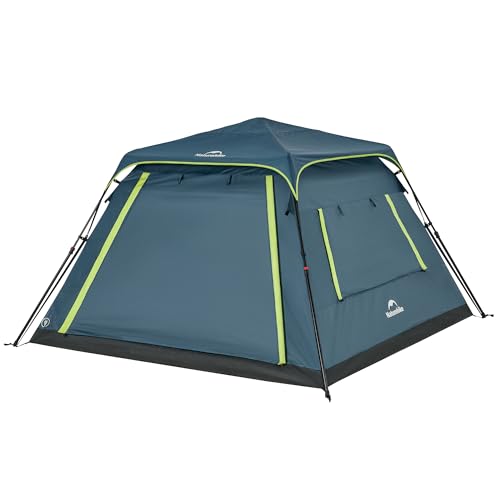
Naturehike Cape Lite 4-Person Instant Cabin
Inside Each Recommended Option
The Coody inflatable tent breaks away from the pole-and-fabric pattern of every other pick on this list. Instead of rigid fiberglass or aluminum, it uses an air-beam frame (a sealed inflatable tube you pressurize with a pump to form the structural skeleton of the tent) wrapped in breathable TC cotton canvas (a poly-cotton blend that handles condensation far better than thin nylon). The stove jack at the back wall opens a clear path for a compatible wood stove, which turns the shelter into a four-season basecamp rather than a fair-weather cabin.
Compared to the Gazelle pop-up that follows, Coody is heavier, slower to inflate, and demands more storage space in your garage. Where it earns its keep is on long, cold-weather trips where condensation control and a heat source matter more than setup speed.
What Earns Its Place
- Air-beam frame removes the pole-sewing and pole-snapping frustrations common with fiberglass.
- Breathable TC canvas keeps interior humidity lower through temperature swings.
- Built-in stove jack extends the usable season into late fall and early spring.
- True living space: you can stand, sit at a small table, and store coolers out of the rain.
- Glamping-ready footprint feels like a small cabin, not a sleeping bag cocoon.
Honest Caveats
- Requires a manual or electric pump to inflate, adding a piece of gear to your loadout.
- Heavier packed weight makes it less appealing for quick overnighters.
- Canvas takes longer to dry out before storage, which can encourage mildew if you pack it damp.
Built With In Mind
Car campers planning multi-day stays in shoulder-season weather, glampers furnishing a basecamp with cots and chairs, and anyone who wants a tent that feels like a small cabin.
Reach For A Different Pick When
The Naturehike Village Instant Tent suits shoppers who only want to camp in summer and would rather skip the pump, the heavier packed weight, and the canvas drying routine.
The Gazelle T4 is built around a pre-assembled hub (a central mechanical joint that holds the tent’s poles in their final shape, so the whole structure expands outward like an umbrella). You pop the hubs open, extend the roof, and stake it down. That mechanism is the whole reason it exists, since it trades peak height and weather durability for the fastest pitch on this list.
The polyester shell, mesh walls, removable floor, and rain fly cover the basics without pushing the weight or packed size into truck-bed territory. Where it loses ground against the Coody is breathability, insulation, and four-season tolerance; thin polyester simply does not insulate or manage condensation like canvas does.
Where It Helps
- Pop-up hub cuts setup time to roughly 90 seconds for a single person.
- Removable floor makes post-trip cleanup, drying, and sweeping faster.
- Mesh panels and rain fly offer flexible airflow for warm-weather weekends.
Trade-Offs To Consider
- Limited peak height, so adults spend most of the trip crouching or sitting.
- Polyester shell is best for fair-weather trips and humid nights can feel clammy inside.
- Hub mechanism occasionally needs re-tensioning after a windy night, based on owner reports.
Right Fit For
Road-trippers, beach campers, and festival-goers who value a one-minute pitch over standing headroom or cold-weather performance.
Look Elsewhere When
The Naturehike Village Instant Tent is a better call for shoppers who want similar quick-pitch convenience but with cabin-style walls you can stand inside.
The Naturehike Village is the cabin-style answer for families who want standing room without giving up quick pitch. Pre-attached telescoping poles (rigid shafts that slide into place rather than threading through fabric sleeves) lock the structure in around a minute, and the near-vertical walls create a usable floor plan that feels closer to a hotel room than a backpacking tent.
Fabric is where the Village separates itself from the cheaper Cape Lite that comes later. The 150D Ti Black shell uses a titanium-coated polyester weave (a metallic oxide layer applied to the fabric that reflects UV and strengthens the weave) rated for UPF 12500+ (a measure of how much ultraviolet radiation the fabric blocks) and a PU 2000mm+ waterproof coating (a polyurethane layer applied to the underside of the fabric, with the millimeter rating indicating the water column pressure the coating can withstand before leaking). For a desert basecamp or sun-exposed lake site, that UV handling is a real upgrade.
Reasons It Performs
- Full rainfly and tall cabin walls let four people sit, dress, and move without crouching.
- Pre-attached pole system drops pitch time under 60 seconds for practiced campers.
- UV-blocking fabric handles multi-day trips in direct sun without rapid degradation.
- Available in 4-person and 8-person layouts so the same brand scales with family growth.
Points To Keep In Mind
- Packed weight and folded size are noticeably larger than the Gazelle T4.
- Cabin shape catches wind from the broad side; solid staking matters on exposed ground.
Quick Facts
Who Should Grab It
Car campers with kids or dogs who want walk-in space, and basecampers at sun-exposed lakes or desert sites where UV resistance matters.
Swap It Out When
The Naturehike KOTA is the stronger call for shoulder-season campers who run into cold nights and need a double-layer shelter with vestibule space.
The Naturehike Cape leans into a tunnel shape (an elongated arch that maximizes interior length at the cost of vertical headroom) that gives the tent a strong sense of space once you step inside. Setup works through the same pre-attached telescoping pole pattern as the Village, with most owners reporting a sub-60-second pitch after a single practice run at home.
Fabric weight is a clear step down from the Village. The 190T polyester (a lightweight, tightly woven fabric where the “T” denotes the thread count and the higher the number, the denser the weave) with waterproof PU3000mm coating holds its own in moderate rain, and the tunnel layout means better wind shedding in stormy weather. The honest read is that this is the “weekend” version of the Village: similar pitch speed, lower fabric grade, lower weight, and lower price.
What It Does Well
- Sub-60-second pitch through pre-attached telescoping poles.
- PU3000mm waterproof coating (a polyurethane layer rated to withstand 3000mm of water column pressure before leaking) handles steady rain without seam-seal worry.
- Tunnel design sheds wind from the side, useful on exposed ridges.
- Available footprints from 8.3m² to 12.9m² so the same brand grows with your group.
Some Limits To Know
- 190T fabric is lighter than the Village’s 150D, so UV resistance and abrasion tolerance are lower.
- Lower peak height than the Village cabin design.
Feature Card
Whose Shelf It Belongs On
Weekend car campers, small families, and groups who want tunnel-style wind handling without premium fabric pricing.
Not Your Match When
The Naturehike Village Instant Tent is the better call for shoppers who prioritize a tall cabin interior and stronger UV-rated fabric over the Cape’s lighter pack weight.
The KOTA is the only double-layer shelter on this list, and that structural choice (two nested tents: an inner mesh sleeping pod plus an outer rainfly shell) is what separates it from the Cape and the Village. The inner mesh tent can stand alone for stargazing on dry summer nights, and the outer shell can pitch as a canopy or rain shelter when you want to keep a picnic table dry.
Fabric lands at 75D 210T polyester with a PU3000mm+ coating. That specification points toward a tent built to handle more than weekend summer use. Vestibules (covered porch areas extending from the tent door where you can stash muddy boots, a pack, or a camp chair) and porch space expand your usable living footprint, which is a meaningful upgrade over the tighter entries from the Cape Lite or the Gazelle T4.
What Makes Sense
- Double-layer design lets you use the inner mesh, the rainfly, or both, depending on weather.
- Vestibule space keeps wet boots and packs out of the sleeping area.
- 75D fabric offers better abrasion tolerance than the Cape’s 190T shell.
- Outer shell doubles as a stand-alone canopy or rain shelter at basecamp.
Room For Improvement
- Two-layer design takes longer to dry and pack than a single-layer option.
- Setup involves more steps than the Cape’s single-pole instant system.
The Numbers That Matter
Perfect Match For
Shoulder-season car campers, mixed-weather basecampers, and families who want a versatile shelter that adapts between summer and cool spring or fall trips.
Skip It When
The Gazelle T4 fits shoppers who only camp in warm weather and would rather trade the KOTA’s weather flexibility for the Gazelle’s 90-second pop-up convenience.
The Cape Lite is the entry-level cabin in the Naturehike line, and the spec most worth knowing is the floor: roughly 101.5 by 101.5 inches, sized to swallow a queen mattress with room to spare. Peak height lands at 62.2 inches, enough to sit upright on a camp chair but not quite walk under without ducking.
Setup mirrors the other Naturehike instant tents on this list, with pre-attached poles and a sub-60-second pitch after a little practice. Compared to the Village that came earlier, the Cape Lite is lighter, smaller, and easier on the wallet. Compared to the Gazelle T4, the Cape Lite offers cabin-style walls you can actually sit upright inside. The trade-off is that fabric thickness, weather rating, and vestibule coverage are not specified by the manufacturer for this model.
Everyday Perks
- Floor plan sized for a queen mattress with usable gear space around it.
- Pre-attached pole system shortens pitch time for new campers.
- Cabin-style walls feel less cramped than pop-up dome shapes.
- Lower packed weight fits smaller sedans and crossover SUVs.
Less Ideal Details
- Fabric weight and waterproof rating are not stated, so weather expectations should stay conservative.
- 62.2-inch peak height lets you sit, but tall adults will duck near the walls.
The Right Fit
New car campers, couples with a dog or a kid, and weekend campers who want cabin-style comfort without a heavier or more expensive build.
A Better Fit Elsewhere
The Naturehike Cape Instant Tent serves shoppers who want the same quick-pitch cabin style but need a stronger waterproof rating and a longer tunnel floor plan.
What To Weigh Before Choosing 4 Person Car Camping Tents
Sizing And Floor Plan
A “4-person” rating is a sleeping-bag fit, not a living fit. The Cape Lite’s roughly 101.5-inch square floor is one of the few that comfortably holds a queen mattress with gear space, while the KOTA’s vestibule adds dry storage outside the sleeping area. Plan around cots, pads, and coolers rather than head-count tags.
Setup Speed Versus Packed Size
Pop-up hub designs like the Gazelle T4 collapse fastest but trade peak height for compactness. Pre-attached telescoping-pole cabins like the Village and the Cape split the difference between speed and interior space. Air-beam shelters like the Coody offer the most spacious feel but require a pump and more packed weight.
Fabric And Weather Rating
Polyester specs carry weight here. UPF ratings matter for sun-exposed sites, PU coatings above 2000mm handle steady rain, and double-layer construction (as on the KOTA) extends your season. Canvas on the Coody manages condensation differently than any polyester on this list, but demands longer drying time.
Season And Use Profile
Summer weekend trips stay simple with the Cape Lite or the Gazelle T4. Shoulder-season basecamps call for the KOTA’s double-layer build or the Village’s UV-rated fabric. Cold-weather or extended living shifts the conversation to the Coody with its stove-ready design.
Picking Smart Across The Lineup
Wrong Turns To Avoid
The most common mistake is buying a tent that fits four sleeping bags and not much else. Coolers, chairs, wet boots, and a dog take up floor space quickly, and tents without vestibules force all of that gear into the sleeping area. Another trap is picking the lightest option without checking the waterproof rating, since summer storms can soak a thin shell in minutes.
What The Higher Tier Buys
The step up to premium tents typically adds thicker fabric, stronger waterproof coatings, and modular features like removable floors or double-layer shells. The Coody leans on canvas and a stove jack for true cold-weather camping. Higher pricing also tends to mean taller peak heights and more usable interior volume, which is what separates a weekend cabin from a basecamp that handles multi-day stays.