
Camping sleep is one of those categories where a thin barrier between you and cold ground decides the whole trip. A self-inflating foam mattress handles setup, adds a layer of cushion, and traps a little warmth in a way air-only pads struggle to match. For car campers, weekend families, and anyone sleeping in a tent or back of an SUV, the right pad means waking up without the lower-back ache.
The Picks In Brief
Lost Horizon Self-Inflating Foam Camping Mattress, Full, 3″ Thick

Lost Horizon Self-Inflating Foam Camping Mattress for Model Y

LLUAII Self-Inflating Sleeping Pad with Electric Pump, 4″ Thick

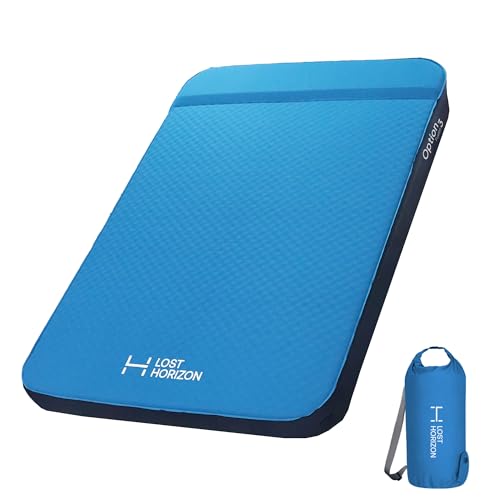
Lost Horizon Option3 Self-Inflating Foam Camping Mattress, Full, 4.5″

Elegear 4″ Thick Sleeping Pad with 9 R-Value Insulated, Single
A Breakdown Of The Leading Choices
For weekend car campers who don’t want to overthink their sleep setup, the Lost Horizon Full offers a 3-inch foam profile that handles ground warmth and pressure relief without the fuss of a separate pump. The 10-pound foam fill gives the pad a stable feel that thinner air mats tend to lack, and the 400-pound weight capacity suggests a body-friendly build for most adult campers.
It’s the kind of pad that rolls out flat, pulls in air on its own, and asks for maybe a few breaths of top-off through the valve. Compared to the heavier 4.5-inch Option3 further down this list, this one stores more compactly and weighs less in the back of a hatchback, which most casual campers will appreciate.
A Few Highlights
- 3-inch foam handles rocky and uneven ground better than thin air mats
- Self-inflating design cuts setup to roughly a minute of hands-off waiting
- 10-pound foam fill stays stable when sleepers shift at night
- Full-size footprint fits tall adults without their feet hanging off
- Rolls up compact enough for a sedan trunk or rooftop cargo bag
Things To Consider
- 3 inches feels slightly thin for strict side sleepers who like deep hip cradling
- Valves on foam pads commonly let a slow trickle of air escape in cold weather, so a top-off breath before bed becomes routine
Quick Facts
Who Will Love This
Back and stomach sleepers running a two-night tent or car-camping setup who want a fuss-free foam pad without hauling a heavy duty-camp bed.
Skip It When
Pick the Lost Horizon Option3 instead, since heavier sleepers and side sleepers benefit from its 4.5-inch profile and 440-pound capacity.
This pad is built around a very specific scenario: sleeping inside a Tesla Model Y with the rear seats folded. The 4.5-inch foam fill and 440-pound capacity give it more cushion than the basic 3-inch Lost Horizon, and the custom-cut shape is meant to match the cargo area of the 2-row Model Y without wrestling an oversized rectangle into place.
For anyone who has tried to make a full-size pad fit a Tesla trunk, the tailored shape alone solves a real problem. It’s not built for backpackers or tent use in any meaningful way, but as a vehicle-camping pad, it removes the worst fitting frustration of that exact setup.
Useful Touches
- Custom dimensions tailored for the Model Y cargo area, no trimming needed
- 4.5-inch depth gives side sleepers real hip cushion
- Self-inflating mechanism handles the bulk of setup without a pump
Honest Caveats
- Only fits the 2-row Tesla Model Y, limiting its appeal outside that niche
- Heavier than the standard Lost Horizon at 9 pounds of foam fill, which adds to packing weight
- Vehicle-specific foam shape can’t double as a general-purpose tent pad
Right Fit For
Tesla Model Y owners who regularly camp out of the cargo area and want a pad designed for that exact foot print.
Look Elsewhere When
Choose the Lost Horizon Option3 for tent camping or sleepovers, since its full rectangular cut works across more setups.
Setup fatigue is a real thing, especially after a long drive or a tough hike into camp. The LLUAII 4-inch solves that with a built-in electric pump that inflates and deflates the pad at the press of a button, plus an integrated pillow that removes one more thing to pack. The 9.5 R-value (a measure of insulation, where higher numbers mean more warmth from the ground) makes it a strong option for shoulder-season trips when the ground gets cold.
The trade-off shows up in the foam’s vacuum packaging, which means the first inflation takes longer as the foam fully decompresses. Owners commonly run the pump for a few cycles and let the pad sit for half an hour before the loft reaches full thickness.
What Pays Off
- Built-in electric pump eliminates manual inflation entirely
- 9.5 R-value handles cold ground in three-season and early winter trips
- Integrated pillow removes one item from the packing list
- 4-inch thickness cradles hips and shoulders for side sleepers
Practical Considerations
- First inflation can take longer as vacuum-packed foam fully expands
- Built-in pump adds weight and bulk compared to valve-only self-inflating pads
- Electric pump requires a charged source, so a backup method is worth carrying on longer trips
Feature Snapshot
Best Suited To
Car campers and SUV sleepers who want push-button setup, side-sleeping comfort, and enough insulation for shoulder-season nights.
Consider Something Else When
Pick the Elegear 4″ Insulated Pad instead if backpacking weight matters, since a dedicated high-R-value pad without an electric pump travels lighter.
The Option3 is the beefier sibling in the Lost Horizon lineup, and the upgrades show up the moment it hits the ground. A 4.5-inch foam depth, 12-pound foam fill, and 440-pound weight capacity give it a near-bed feel that lighter pads struggle to match. Side sleepers, restless movers, and couples sharing a tent will appreciate how little the surface compresses under load.
Compared to the 3-inch Lost Horizon at the top of this list, the Option3 trades compact packability for serious comfort. It rolls up larger and weighs more in the trunk, but for sleep quality, the extra foam pays off on longer trips or anytime a stiffer pad helps sore joints.
Points In Its Favor
- 4.5-inch depth cradles hips and shoulders for side sleepers
- 12-pound foam fill resists compression under shifting bodies
- 440-pound capacity handles two average adults or one plus a child or pet
- Self-inflating core reduces manual effort at camp
Trade Offs
- Larger packed size than thinner self-inflating pads, harder to fit in small cars
- Heavier carry weight than 3-inch alternatives
- Foam dries slowly if soaked, so storing it damp can lead to mildew over time
Built With In Mind
Side sleepers, couples, and anyone over 180 pounds who wants a thicker foam pad that mimics home-mattress comfort at camp.
Swap It Out When
Pick the LLUAII 4″ Electric Pump Pad when camp setup time matters more than packed size and you want push-button inflation.
For cold-weather campers, the headline number is the 9 R-value, which sits well above what most general-purpose self-inflating pads offer. The 9-layer insulation system is designed to block ground chill in conditions most casual campers never encounter, and the 4-inch foam depth gives it the comfort of a thicker pad rather than a thin backcountry mat.
This is the pick for shoulder-season mountaineering, winter basecamps, and anyone who has felt that creeping cold come up through a less-insulated pad. Compared to the LLUAII Electric Pump pad, it skips the built-in pump in favor of insulation depth, which is the right trade for cold-weather trips where battery life matters more than push-button setup.
Notable Upsides
- 9 R-value blocks cold ground in freezing and below-freezing conditions
- 9-layer insulation system delivers dependable warmth for winter use
- 4-inch foam depth cushions hips and shoulders for side sleepers
- Single-person cut packs smaller than full-size camping mattresses
Factors To Consider
- Insulation-focused build adds bulk and weight compared to summer-only pads
- Single-person size is tight for anyone who spreads out while sleeping
- High insulation is overkill for warm-weather trips, so it lives in the closet most of the year
Whose Shelf It Belongs On
Winter campers, shoulder-season backpackers, and alpine hikers who need real insulation under them when ground temperatures drop.
Reach For A Different Pick When
Pick the LLUAII 4″ Electric Pump Pad for summer or three-season trips where insulation matters less and one-touch setup matters more.
Choosing A Self-Inflating Mattress That Actually Fits How You Camp
The right self-inflating mattress depends on where you sleep and how cold the ground gets. Foam thickness drives comfort, R-value drives warmth, and packed size decides whether the pad makes it into the car in the first place.
Foam Thickness And Sleep Style
Thinner pads around 3 inches suit back and stomach sleepers who don’t compress deep into the mattress. Side sleepers benefit from 4 inches or more, since the foam has to cradle hips and shoulders without bottoming out. Foam density also matters: heavier fills resist compression under restless sleepers and stay firmer through the night.
R-Value And Ground Temperature
R-value measures how well a pad blocks heat loss to the ground. Summer camping in mild weather calls for modest insulation, while shoulder-season and winter trips need higher numbers to keep cold from radiating upward. Cold-ground campers should prioritize insulation depth over foam thickness, since warmth outranks plushness when temperatures drop.
Packed Size And Vehicle Constraints
Self-inflating pads roll up larger than air-only inflatables because of the foam core. Campers packing into a small sedan or shared trunk space should pay close attention to packed dimensions, since a 4.5-inch foam pad can swallow a surprising amount of cargo room. Heavier foam fills also raise carry weight, which matters for anyone hoofing gear from the parking lot to the campsite.
Shape And Use Case Fit
Rectangular full-size pads suit tents and most sleeping arrangements, while custom-cut shapes fit specific vehicles. Buyers should match the pad footprint to where they’ll actually sleep, since a pad that doesn’t fit the tent floor or vehicle cargo area creates setup headaches no amount of foam solves.
What Sets These Picks Apart
Mistakes Worth Dodging
A common slip is choosing thickness over insulation for cold trips. Foam depth feels great in the store but does little against ground chill, so winter campers should weight R-value first and thickness second. Another trap is underestimating packed size: a 4.5-inch pad that fits a living room rarely fits a half-loaded car trunk, so measuring cargo space before checkout saves real frustration.
Where The Extra Money Goes
Higher-priced pads in this category usually pack more foam, layered insulation systems, and stronger outer fabrics. The upgrade pays off for cold-weather campers and side sleepers who notice the difference between a 3-inch and a 4.5-inch pad every night. Shoppers who only camp in mild summer weather can comfortably stay at the budget end and still sleep well.
The Takeaway
Self-inflating camp mattresses solve the setup problem and add a layer of cushion that air mats struggle to match. Weekend car campers get the most from a balanced foam pad, while side sleepers and cold-weather campers benefit from thicker profiles and higher R-values. Match the pad to the trip and the ground temperature, and sleep quality follows.