
A screen tent with a floor changes how a campsite feels. Instead of brushing insects off your ankles between the cooler and the car, the space becomes a sealed room where kids can nap, dogs can settle, and gear stays clean. The right floor matters: a tight tarp keeps crawling things out, while a mesh-only base lets them walk right in.
This lineup spans single-person sleep shelters, family-sized screen rooms, and weather-tough instant tents. Each entry solves a different problem, from ultralight hammock-of-air comfort to full campsite kitchens that seat eight. The seven picks below cover the most useful shapes, sizes, and materials available right now.
The Lineup, Simplified

Sportneer Pop-Up Mosquito Net Tent 86.6”x33.5”x35.4”

SANSBUG Screen Tent (Instant Pop Up, Tarp Floor)

Gazelle T4 Waterproof 4-Person Pop Up Tent, Orange

Alvantor Pop-Up Screen House Tent 10×10 FT (Peaked Roof)

Alvantor Screen House Mesh Tent 10×10 FT (Beige)

Alvantor Screen House Gazebo 10x10x7 FT (4-6 Person)
Alvantor Pop-Up Screen House Tent with UPF 50+
A Breakdown Of The Leading Choices
The Sportneer is essentially a personal bubble of mesh, sized for one cot or sleeping pad. Its 86.6-inch length and 33.5-inch width keep the footprint tight enough for hammock tents or solo tarp setups, where a full screen room would be overkill. The pop-up frame means the entire shelter deploys the moment an elastic strap is released, so a tired hiker can be bug-free before the campfire is lit.
Because it is just a mesh shell, breathability is the standout feature: no condensation pools overnight in warm weather. For backpackers counting grams, the lack of rigid poles in the packed form keeps the bundle small. Anyone camping in mosquito-dense northern woods, or hosting a guest on an indoor cot in summer, gets the same benefit.
What Stands Out
- Truly one-piece pop-up setup with no loose pole segments to lose in the dark.
- Mesh walls on every side let cross-breezes flow, reducing stuffy nights in humid camps.
- Low packed volume fits beside a sleeping bag inside a 40-liter pack.
- Doubles as an indoor bed canopy for apartments without screens.
Trade-Offs Worth Knowing
- Mesh-only base means crawling insects can enter from below; a separate footprint or pad is needed.
- Single-occupant footprint limits use to solo sleepers or one child.
- The figure-eight fold can frustrate first-time packers until the motion is practiced.
At A Glance
Made For
Solo backpackers, hammock campers, and anyone sleeping outdoors who needs a bug-free personal cocoon without hauling a full tent.
A Better Fit Elsewhere
Campers needing weatherproof shelter above the mesh should look at the Gazelle T4 Waterproof 4-Person Pop Up Tent, which adds a rain fly for stormy weekends.
The SANSBUG earns its keep by combining a pop-up frame with a sewn-in tarp floor, sealing the bottom that open-base shelters leave exposed. Its no-see-um mesh (extra-fine weave that blocks tiny biting midges, not just mosquitoes) makes it a strong match for bug-heavy coastal or lakeside sites where standard mesh lets gnats through. The free-standing structure also means it can sit on a deck, a cabin porch, or an indoor floor.
Travelers who want one shelter for hotel-room beds, kids’ sleepovers, and backcountry platforms appreciate the versatility. Compared with the Sportneer above, the SANSBUG trades airflow for ground-level protection, so it feels more like a room than a net.
Standout Benefits
- Tarp floor blocks scorpions, spiders, and snakes from entering at ground level.
- No-see-um mesh handles biting midges that standard mosquito netting misses.
- Pop-up frame collapses in seconds for car-camp storage.
- Free-standing build allows indoor and outdoor use without staking.
Honest Caveats
- Tarp floor reduces breathability compared with mesh-only shelters, which can feel warmer on muggy nights.
- Single-occupant scale limits it to one adult or two small children.
- The figure-eight fold takes practice to fit back into the carry bag.
Key Product Details
Whose Campsite It Belongs On
Campers in bug-dense regions, allergy-sensitive sleepers, and parents setting up a bug-safe zone for infants on a screened porch.
Skip It When
Groups needing standing headroom should move up to the Alvantor Screen House Gazebo 10x10x7 FT, which accommodates four to six adults.
The Gazelle T4 is the most weather-capable shelter in this list, built around a pre-assembled hub design (a central hub of connected poles that pops outward like an umbrella, rather than separate poles that must be threaded through sleeves) that reportedly goes from bag to standing in roughly 90 seconds. Its removable floor and full rain fly make it a true three-season shelter, suitable for spring lake trips and shoulder-season car camping alike.
Where smaller pop-ups feel like nets, the T4 reads like a cabin: tall enough to stand in, room for a queen air mattress plus chairs, and sealed against rain. For a family setting up a basecamp, that extra structure justifies the heavier pack weight compared with the Sportneer or SANSBUG.
Practical Advantages
- Hub design reportedly enables near-instant setup without instructions or loose poles.
- Removable floor lets owners sweep out sand at the beach or mud at a trailhead.
- Rain fly adds weather protection missing from pure mesh shelters.
- 4-person footprint fits a family of four with gear.
Points To Note
- Larger packed size is a poor match for backpacking; better suited to car-camp storage.
- Heavier than mesh-only shelters, so solo travelers may need a cart at the lot.
- Polyester roof holds heat in direct sun, so shaded sites are preferable in summer.
Spec Overview
Best Suited To
Family campers and weekend basecampers who want one shelter that handles sun, rain, and bugs without juggling separate tarps.
Reach For A Different Pick When
Someone hosting a backyard birthday should consider the Alvantor Screen House Mesh Tent 10×10 FT (Beige), which trades weather sealing for an open, airy patio feel.
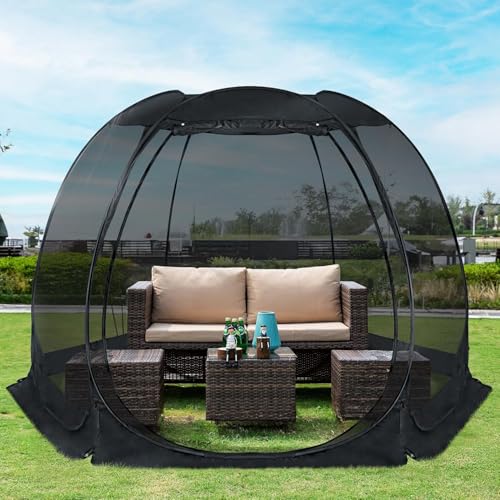
The black-mesh, peaked-roof Alvantor targets day-trippers rather than overnight campers. At roughly 7 pounds packed, it slips into a 28-inch carry bag that fits behind a car seat, and the snap-fit frame reportedly opens without tools. The 10-by-10 footprint covers a picnic table plus chairs, and the sandbags ship in the box for breezy sites.
This model sits between the Sportneer personal net and the Gazelle T4 cabin. Day use at a state park, beach cookout, or soccer tournament is the natural habitat, and the included sandbags hint at how Alvantor expects it to be anchored.
Positive Points
- Lightweight 7-pound carry bag suits trunk-of-car storage and short walks from the lot.
- Snap-fit frame reportedly deploys in seconds without separate pole threading.
- Sandbags included in the box for anchoring on grass or sand.
- Peaked roof channels light rain away from seated occupants.
Where It May Fall Short
- 6.5-foot ceiling height is comfortable for sitting but tight for taller adults standing.
- Mesh walls with no rain fly mean sudden storms require quick teardown.
Perfect Match For
Day-trippers, picnic hosts, and sports parents who want a fast-deploy bug zone for a few hours at a time.
Look Elsewhere When
Standing room matters, in which case the Alvantor Screen House Gazebo 10x10x7 FT adds nearly 1.5 extra feet of ceiling height.
The beige-tone sibling of the black-mesh Alvantor above reads more like patio furniture than camping gear. A sun-shade roof sits above the mesh walls, filtering direct sun while still letting in light, and the 10-by-10-by-7 dimensions give a useful bump in ceiling height over the peaked-roof version.
Backyard households hosting afternoon tea, neighborhood potlucks, or outdoor holiday dinners tend to gravitate here. Owners report using it as a toddler-safe outdoor playroom during the day, which speaks to how the screened floor keeps grass and dirt out.
Key Advantages
- Sun-shade roof softers harsh midday sun while still allowing airflow through mesh walls.
- 7-foot ceiling accommodates most adults standing upright inside.
- Neutral beige color blends with patio furniture and garden palettes.
- Snap-fit frame reportedly opens without tools.
Things To Weigh
- Larger packed size than the Sportneer or SANSBUG personal shelters.
- Mesh walls and shade roof offer limited weather sealing; storm prep is required.
- Floor is a flat mesh-and-fabric layer, so comfort depends on ground conditions underneath.
Quick Facts
Who Should Grab It
Backyard hosts, patio diners, and households wanting an outdoor living room that keeps mosquitoes out without darkening the space.
Consider Something Else When
Overnight family camping calls, in which case the Gazelle T4 Waterproof 4-Person Pop Up Tent adds rain protection and sleeping capacity.
This Alvantor scales the family-friendly formula with extra headroom and shoulder space, a meaningful upgrade for adults who want to stand and walk freely. Rated for 4 to 6 people, the gazebo fits a folding table plus chairs for a backyard dinner or a card-table game night without elbow bumping.
Compared with the beige Screen House above, the dimensions here trade a slight reduction in pure footprint for a noticeable boost in usable interior volume. For households hosting mixed groups of kids and adults, that extra ceiling makes the shelter feel less like a tent and more like a room.
Advantages To Know
- 4-6 person capacity handles backyard dinners or group camping.
- Pop-up frame reportedly deploys fast for spontaneous gatherings.
- Mesh walls keep insects out while maintaining cross-breeze.
- Carry bag included for off-season storage in a garage corner.
Some Limits To Know
- Mesh walls mean rain requires either quick teardown or an aftermarket tarp.
- 10-by-10 footprint demands a level patch of grass or patio; sloped yards shorten usable space.
Built With In Mind
Backyard party hosts, multi-generational gatherings, and group campers who want standing headroom without hauling a full cabin tent.
Where A Sibling Pick Shines
Sun-exposed patios benefit from the Alvantor Pop-Up Screen House Tent with UPF 50+, which adds rated UV protection to a similar footprint.
The closing entry adds rated UV protection (UPF 50+, a fabric rating that blocks 98% of ultraviolet radiation) to the screen-house formula, which is a real upgrade for households with sun-sensitive skin, fair-complexion kids, or anyone hosting all-day patio sessions in midsummer. The 2-to-10 person sizing claim is generous; smaller families will use the space more comfortably than ten adults would.
Lightweight fiberglass frame, automatic pop-up, and a portable footprint all carry over from the sibling Alvantor designs. This is the pick for shoppers who already know they want a screen room and now want one specifically tuned for sun exposure.
What Earns Its Place
- UPF 50+ roof provides rated UV protection for sun-sensitive households.
- Fiberglass frame reportedly deploys automatically without manual assembly.
- Mosquito netting on all walls keeps biting insects out.
- Lightweight build supports travel between home, vacation rental, and campsite.
Where It Is Less Suited
- Mesh walls and shade roof offer limited weather sealing; rain prep is still required.
- Higher person-count claim assumes sparse occupancy; tight at the upper end of the range.
Feature Rundown
The Right Fit
Sun-sensitive households, families with fair-complexion kids, and hosts planning long outdoor afternoons where UV exposure matters.
Swap It Out When
Weather is the bigger concern than sun, in which case the Gazelle T4 Waterproof 4-Person Pop Up Tent adds a rain fly and removable floor for storm-ready camping.
Choosing The Right Screen Tent For Your Campsite
The first decision is scale. Single sleepers, hammock campers, and parents wanting a bug-safe zone for one crib all fit inside a personal net like the Sportneer or SANSBUG, which pack small enough for a backpack or a car trunk. Group cooks, party hosts, and family diners need a 10-by-10 screen room with standing headroom, where models like the Alvantor gazebos earn their keep.
Floor design is the second decision. Mesh-only floors breathe better in summer heat but let crawling insects walk in from below. Tarp floors seal that gap at the cost of airflow, which matters in humid climates where condensation builds overnight. Removable floors, like the one on the Gazelle T4, sit in the middle: sealed when needed, vented when weather allows.
Setup speed, packed weight, and weather sealing are the trade-offs that follow. Pop-up frames reduce assembly to a single motion but require practiced folding. Fiberglass poles keep weight low for travel but flex more in wind than aluminum. And any shelter built from mesh walls and a sun-shade roof will need an exit plan when the forecast turns wet.
Picking The Best Match
Where Shoppers Go Wrong
The most common miss is buying a personal-size net for a group gathering, or a 10-by-10 screen room for solo sleeping. Scale drives comfort, and the wrong size ends up stored in a garage. Another misstep is ignoring floor type: a mesh floor in a scorpion-zone campsite is a real problem, and a tarp floor in a humid beach camp traps condensation. Check the ground conditions and the bug list before choosing the base material.
Where The Extra Money Goes
Premium models tend to add rated weather protection, taller ceilings, and stronger frame materials. The Gazelle T4’s hub design and rain fly, or the UPF 50+ roof on the closing Alvantor, represent upgrades that target specific scenarios (storms, sun exposure) rather than general quality. Paying more makes sense when a real condition threatens comfort; paying more for a slightly cleaner aesthetic rarely does.
The Takeaway
The right shelter depends on how it gets used: solo sleepers and hammock campers get the most from lightweight personal nets, while families and party hosts need the headroom and footprint of a 10-by-10 screen room. Match the floor type to the bug list, and pick weather sealing only when the climate calls for it. Any of the seven above will reward a little practice on the fold-back before the first trip.