
A flimsy camper door latch does more than inconvenience a traveler: it undermines the entire point of heading out. Rv keyless entry locks solve that quiet vulnerability with sturdier cylinders, smarter access, and far less fumbling for keys in the rain. The right fit depends on door thickness, RV class, and whether keypad or app control matters more than cost. Seven solid options follow, each aimed at a different kind of owner and travel style.
The Lineup, Simplified

TrampgiK RV Door Lock Set, Plastic Latch + 2 Storage Locks, 1-1/8″, Chrome
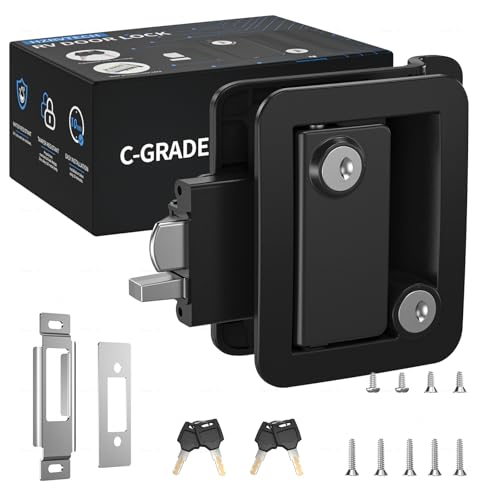
HZRVTECH RV Door Lock Replacement, 2.75″x3.75″ Cutout

CAMJOKE RV Door Lock, B-Class, 4 Keys, 2.75″x3.75″ Cutout

RVLock V4 Keyless RV Door Lock, Full Metal

HZRVTECH All-Metal Class C RV Lock, 3.5″ x 4.5″

HZRVTECH All-Metal Smart Keyless RV Door Lock

ONNAIS Smart RV Door Lock, App Control Keyless Entry
A Closer Look At Each Pick
Outfitting a camper on a tight budget rarely means choosing between doors and storage: the TrampgiK set hands over a front door latch plus two chrome 1-1/8″ storage compartment locks, all keyed alike so a single key handles every entry point. The engineering-plastic front latch keeps weight down, a real plus on travel trailers where every ounce chips away at payload.
For weekend campers juggling one key between the entrance door and exterior storage bays, the matched-key approach cuts the fumbling down to nothing. Travelers heading into dusty desert parks or coastal humidity will notice the plastic body feels lighter than metal alternatives, though, which may matter if a heavier lock is the priority.
Points In Its Favor
- Three locks share one key, simplifying daily access.
- Lightweight plastic latch eases strain on lighter trailer doors.
- 1-1/8″ storage locks suit most standard RV compartment cutouts.
- Combo package trims total cost versus buying three separate locks.
Honest Caveats
- Engineering plastic feels less rugged than the metal-bodied picks further down the list.
- Lacks any electronic or keyless entry feature, so hands-full convenience is limited.
Whose Shelf It Belongs On
New trailer owners and weekend campers who want every entry point on one key without overspending.
Look Elsewhere When
Full-time RVers who want all-metal durability and modern access should consider the HZRVTECH all-metal replacement instead.
The HZRVTECH replacement lock targets the most common RV door footprint: a 2.75″ by 3.75″ cutout and door thickness between 1.25″ and 1.5″. For travelers whose stock handle finally gave out, swapping in a fresh keyed unit feels like a Saturday-morning project rather than a costly shop visit. A precision internal groove key cylinder raises the bar against casual key copying.
This is a straightforward upgrade over the factory original, with a security focus rather than a tech one. Those storing valuables in the RV overnight at unfamiliar campgrounds will appreciate the harder-to-duplicate key design, which adds a quiet layer of protection without complicating daily routines.
Practical Pluses
- Internal groove key cylinder resists easy duplication at hardware counters.
- Matches the most common cutout dimensions on standard travel trailers.
- Direct replacement format keeps installation tools to a screwdriver and a few minutes.
- Compatible with door thicknesses from 1.25″ through 1.5″, covering most builds.
Points To Note
- Only fits standard 2.75″ x 3.75″ cutouts, so larger Class A or Class C doors need a different model.
- No electronic or keypad option for hands-free entry.
Made For
Travel trailer owners replacing a worn factory latch and wanting better key control without going electronic.
A Better Fit Elsewhere
Owners driving Class C motorhomes with bigger 3.5″ x 4.5″ cutouts should turn to the HZRVTECH all-metal Class C lock for a true match.
The CAMJOKE lock ships with four keys and an instruction sheet, easing the headache of handing spares to a partner, a co-pilot, or a hidden spare compartment. The tamper-resistant cylinder uses thousands of unique key codes, which is meaningful for B-class RV owners worried about copycats at unfamiliar service stops. Door thickness coverage runs 1.25″ to 1.5″.
Multi-length screws round out the package, accommodating the slight frame variations found across right-hinged B-class doors. Travelers who rotate between drivers or share the rig with family will find the four-key bundle removes the usual scramble for spares. Be aware, the cutout and hinge orientation rules out Class A, Class C, and glass-panel doors.
The Helpful Details
- Four keys ship in the box, removing the need to order spares separately.
- Tamper-proof cylinder design uses thousands of unique key codes.
- Multiple screw lengths adapt to minor frame differences during install.
Some Limits To Know
- Limited to right-hinged B-class doors with 2.75″ x 3.75″ cutouts.
- Excludes Class A, Class C, and glass-panel doors entirely.
- Keyed only, no keypad or smart features.
Who It Suits Best
B-class RV owners wanting secure keyed access with spare keys ready for family or traveling companions.
Consider Something Else When
Drivers who want keyless convenience for the entrance door should consider the RVLock V4 keypad system further down the lineup.
RVLock pioneered keyless entry for recreational vehicles, and the V4 stays close to that original vision with a full-metal housing built to shrug off weather and repeated travel. A weather-resistant keypad replaces the fumbling-for-keys moment, which feels like a small daily luxury after a long hike. It suits campers, 5th wheels, and travel trailers alike.
The build quality shows in the heavy-duty metal alloys, far cry from the plastic-bodied TrampgiK set reviewed earlier. Owners storing expensive gear inside will value the upgraded security tech, though anyone deeply embedded in a smart-home ecosystem may want app features covered by later entries. A solid hands-free option for those who prioritize proven metal construction.
Where It Helps
- Full-metal construction resists weather and rough handling on long trips.
- Keyless entry spares users from digging for keys with full hands.
- Backed by a brand with a long track record in RV-specific security.
- Fits multiple RV types including campers, 5th wheels, and trailers.
Trade-Offs
- Keypad requires occasional battery checks, unlike pure mechanical locks.
- Lacks app-based control found on the newer smart entries below.
Best Suited To
RVers wanting a reliable metal-bodied keypad upgrade without needing phone-app integration.
Swap It Out When
Owners who prefer unlocking the door from a phone rather than punching a code should consider the ONNAIS Smart RV Door Lock for app-driven access.
Where many replacement locks still hide plastic internals behind a metal face, HZRVTECH built this one with no internal plastic components at all. The result is a lock engineered for the harshest weather a motorhome tends to encounter, from desert heat snaps to mountain cold snaps. A 3.5″ by 4.5″ cutout signals Class A and Class C territory.
The sleek layered contour and premium black finish give the entrance door a more refined look than the typical chrome hardware found on factory installs. Owners chasing long-term durability, especially full-timers logging thousands of miles a year, will value the all-metal approach. For most weekend travelers, the price premium may feel like over-spec, but it pays off in longevity.
A Strong Showing
- All-metal construction with zero plastic internals boosts lifespan.
- Engineered for extreme weather exposure on long trips.
- Fits the larger 3.5″ x 4.5″ cutouts found on Class A and Class C motorhomes.
- Sleek layered contour replaces the look of dated factory hardware.
Trade-Offs
- Larger cutout sizing rules out standard travel trailer doors.
- Mechanical keyed design, no keypad or app features.
Who Should Grab It
Class A and Class C motorhome owners wanting metal-everywhere durability in a clean, modern package.
Reach For A Different Pick When
Owners wanting smart keyless entry in a similar metal build should check the HZRVTECH all-metal smart lock further down the list.
The HZRVTECH smart lock fuses the rugged build of the all-metal Class C lock with electronic convenience. A zinc alloy housing wraps reinforced metal internals, and an electronic system locks the handle and spring-loaded latch to block forced retraction. A manual deadbolt adds a physical layer on top.
Tech-forward full-timers will appreciate the dual-layer approach: even if the electronics misbehave, a keyed backup keeps the door secured. The trade-off shows up in installation complexity, since electronic locks often require careful battery placement and occasional firmware-style updates. For most casual weekend travelers, the keypad-only RVLock V4 above is simpler, but RV owners who want modern access plus backup security land here.
Positive Takeaways
- Zinc alloy housing and metal internals resist forced entry attempts.
- Electronic handle lock plus manual deadbolt doubles up on security layers.
- Smart keyless entry removes daily key handling.
- Spring-loaded latch design reinforces the handle position.
Points To Keep In Mind
- Battery reliance means periodic checks and replacements.
- More involved installation than purely mechanical replacements.
Built With In Mind
Full-time RV owners seeking modern keyless entry without giving up mechanical deadbolt security.
Where Another Pick Suits Better
Casual travelers wanting simpler installation may prefer the mechanical HZRVTECH all-metal lock from the previous entry.
The ONNAIS lock leans fully into the smartphone era, with app control unlocking the door within roughly 15 feet. Real-time battery monitoring surfaces in the app, sparing owners the surprise dead-lock scenario. Full-metal construction rounds out the package, so app-driven convenience does not come at the cost of physical security.
Rental hosts juggling guest turnovers will appreciate being able to issue and revoke digital keys without rekeying cylinders. The honest read: app control shines when the phone is charged and nearby, so keeping a manual backup plan in mind is wise for long off-grid stays. For tech-first owners, this is the most forward-looking pick on the list.
Where It Delivers
- 15-foot app range unlocks the door when hands are full.
- Real-time battery level visible in the app prevents lockouts.
- Full-metal body holds up to travel and weather.
- Digital key sharing simplifies rental or family access management.
Worth Bearing In Mind
- Phone or fob must be charged and nearby for the main access method.
- More setup steps than a purely mechanical or keypad-only lock.
Perfect Match For
Rental hosts and tech-forward RV owners who want smartphone-driven access and remote key management.
Not Your Match When
Travelers who prefer a tactile keypad over a phone interface should consider the RVLock V4 for a simpler keyless experience.
What To Weigh Before Picking Rv Keyless Entry Locks
Door Cutout And Thickness Come First
Every RV door has a specific opening size, and ignoring this detail leads to returns or forcing a mismatch. Standard travel trailers usually use a 2.75″ by 3.75″ cutout with door thickness between 1.25″ and 1.5″, the sweet spot for most replacement locks on this list. Class A and Class C motorhomes often run larger 3.5″ by 4.5″ openings, which is why dedicated options like the HZRVTECH Class C lock exist.
Build Material Affects Longevity
Plastic latches keep weight low and cost down, a fair trade for occasional weekend trips. All-metal builds resist weather extremes better, which matters for full-timers logging year-round miles or storing rigs in harsh climates. The internal-groove key cylinder is the security feature worth seeking, since it resists easy duplication at hardware counters.
Matched Keys Versus Smart Access
A keyed-alike combo like the TrampgiK set removes the need to juggle multiple keys, which suits owners who prefer pure simplicity. Keypad systems trade a slightly higher learning curve for hands-free entry. App-driven locks add remote management and guest access, but introduce battery and connectivity considerations that purely mechanical locks avoid.
Security Vs Convenience Balance
Tamper-resistant cylinders and all-metal housings add confidence at the campsite. Smart features add convenience but require power, whether batteries or a phone. Most owners land somewhere between a keyed upgrade and full app control, and the right pick depends on how often the rig moves and how many people need access.
Common Shopping Slip Ups In Rv Keyless Entry Locks
Pitfalls Shoppers Hit
The biggest mistake is buying a lock without measuring the existing cutout first. Even a quarter-inch mismatch turns a 30-minute swap into a weekend project. Another common trap is assuming every “universal” RV lock fits every RV class. A second oversight worth noting: skipping the keyed-alike detail. Owners buying separate front and storage locks should confirm the cylinders share a code, or carry twice the keys they planned.
What The Higher Tier Buys
Spending more in this category usually means metal where others use plastic, smarter cylinders that resist duplication, and electronics that remove daily key handling. The upgrade pays off most for full-time RVers and frequent travelers, since the durability gap widens with mileage. For occasional weekend trips, a budget combo like the TrampgiK set covers the basics without stretching the wallet.
Closing Thoughts
The best RV lock depends on door size, build material, and how the rig gets used day to day. A weekend trailer camper needs different security than a full-time Class C motorhome, and the seven picks above cover both ends and everything between. Match the lock to the door, not the other way around, and the upgrade pays off for every mile ahead.