
Running a 4-cycle chainsaw means no oil-to-gas mixing in the tank, lower emissions, and a quieter cold start. The trade-off is more parts to maintain, from primer bulbs and fuel filters to spark testers and bar oil. This list rounds up the supporting gear that keeps a 4-cycle saw cutting clean through storm cleanup and routine firewood duty, so you spend time on wood, not on troubleshooting.
An Overview Of The Picks
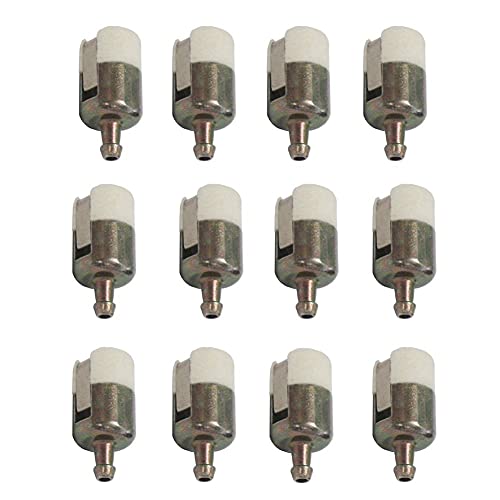
HIFROM Fuel Filter Replacement Pack of 12 for Walbro Echo Shindaiwa Stihl

1 Qt. Bar and Chain Oil

Uorimy 4 Sizes Fuel Line and Primer Bulb Fuel Filter Kit

Hipa Pack-of-14 Carburetor Adjustment Tool and Spark Tester

HIPA Pack-of-16 Carburetor Adjustment Tool Kit for Stihl Husqvarna

Mityvac MV5530 Engine Compression Test Kit with Bourdon Gauge

Hipa 188-512 Primer Bulb Pump for Husqvarna Stihl Craftsman MTD

AiBiCi Fuel Line Hose 10 Feet 3/32 in. ID for Poulan Craftsman

TruFuel 4-Cycle Ethanol-Free Fuel for Outdoor Power Equipment 32 oz Six Pack

AUTOKAY 4 Sizes Petrol Fuel Line Hose Tubing for Small Engines
More On The Choices That Made The List
A 4-cycle chainsaw that sputters under load usually traces back to a starving fuel system, and a clogged pickup filter is the most common offender. HIFROM’s twelve-pack covers the Walbro-style filters found across Echo, Shindaiwa, Robin, and older Stihl handheld saws. For most backyard operators, a fresh filter is cheaper than chasing a phantom carburetor issue.
The pack fits lines with a 3/16 inch inner diameter and engines up to about 30cc, which lines up with homeowner-class chainsaws and brush cutters. You’ll want to confirm the OEM (original equipment manufacturer) cross-reference on your saw before swapping, since filter housings vary even within a brand.
A Few Strong Suits
- Twelve filters in one pack, enough for multiple seasons of casual use
- Covers widely used Walbro carburetors across Echo, Stihl, and Shindaiwa
- 3/16 inch line match keeps installation simple on common handheld saws
- Cheaper than a carb rebuild when a clogged filter is the actual culprit
Things To Consider
- Engine size tops out around 30cc, so it won’t suit larger pro-grade 4-cycle saws
- You’ll still need to confirm the specific OEM part number before ordering
Who It Suits Best
Homeowners running older 2-cycle and small 4-cycle chainsaws who want a low-cost preventive maintenance stash.
Consider Something Else When
The Uorimy kit is a better pick for owners rebuilding an entire fuel system rather than just the filter element.
Bar oil doesn’t get attention until a chain smokes or seizes mid-cut, and by then you’ve already shortened bar life. A plain quart of chain lube from echosari is the unglamorous backbone of any 4-cycle saw owner’s garage. It pours into the reservoir with no mixing or measuring, which keeps the routine simple.
The one-quart size suits occasional storm cleanup and small firewood projects, where the saw runs for short bursts. If you cut hardwood for hours, you’ll move through this quickly and want a larger container on hand.
Where It Helps
- Standard quart size fits most homeowner saw reservoirs with no spillage
- No mixing required, since 4-cycle saws keep bar oil in a separate tank
- Useful across any chainsaw brand that uses bar-and-chain lubrication
- Simple stocking item for a small tool kit or garage shelf
Points To Note
- One quart runs out fast on bigger logs or extended cutting sessions
- No tackifier additive, so it can sling off the chain in very dry conditions
Made For
Casual cutters who want a basic, no-nonsense chain lube for light weekend jobs.
Skip It When
The TruFuel 4-Cycle fuel is the better grab for owners focused on fuel-side maintenance rather than the bar and chain.
Restoring a vintage chainsaw often means hunting down correct-diameter fuel hose across two or three brands, which is the kind of tedium that derails a Saturday. Uorimy’s kit bundles four common inner-and-outer-diameter fuel lines, two white fuel filters, and a primer bulb (the small rubber button you press to push fuel into the carburetor before starting) into one box. For owners juggling multiple saws, that variety removes most of the guesswork.
The hose resists swelling in cold weather, which matters for saws stored in unheated sheds through winter. The trade-off is compatibility with modern ethanol fuels, since the spec sheet warns against anything over 10 percent ethanol.
Practical Advantages
- Four common line sizes cover most older Poulan, Craftsman, and Homelite saws
- Primer bulb saves a separate trip to find the right rubber pump
- Two fuel filters included for spares or multi-saw households
- Cold-resistant hose helps winter storage in unheated spaces
Room For Improvement
- Not rated for fuels above 10 percent ethanol, which limits modern pump-gas use
- Filtration media is basic, so high-dust cutting jobs may still starve the carb
Best Suited To
Owners reviving a stored chainsaw or running mixed small-engine equipment that needs several line diameters on hand.
Look Elsewhere When
The AiBiCi bulk fuel hose is a stronger fit when only the line itself is rotted and the filters are still serviceable.
A 4-cycle saw that idles rough or stalls at full throttle often points to one of two culprits: a mis-tuned carburetor or a weak ignition system. Hipa pairs the usual Pac-Man-style adjustment keys (the small forked wrenches shaped like a video-game character, sized for carburetor adjustment screws) with a spark tester, letting you rule out the electrical side before you start turning screws. The white lettering on the tester makes the spark gap readable in low garage light.
The fourteen adjustment keys cover most Zama and Walbro carbs (the two most common small-engine carburetor brands) on Stihl, Husqvarna, Echo, and Ryobi saws. For most home mechanics, that’s enough range to handle anything from a chainsaw to a string trimmer.
A Few Highlights
- Spark tester included, so ignition checks don’t need a second purchase
- Wide carburetor coverage across Zama, Walbro, and several brand-name saws
- White gap lettering speeds up the test in dim work areas
- Pac-Man style keys fit common two-screw adjustment patterns
Honest Caveats
- Doesn’t include a T25 or Torx driver, which some newer carbs need
- Adjusting a carb without a tachometer is guesswork at higher RPM
Who Will Love This
DIYers who want one kit to cover both carburetor tuning and spark diagnosis on small 4-cycle saws.
Reach For A Different Pick When
The Mityvac MV5530 is the better choice when you need to measure compression, not just spark or idle quality.
HIPA bumps the count up to sixteen adjustment keys, which sounds small but covers a wider swath of carb screw profiles than most homeowner kits. Slim-profile keys reach into recessed adjustments that thicker tools can’t, especially on saws with a crowded engine housing. For a garage that runs both Stihl and Husqvarna equipment, having the whole set on hand is the difference between a quick idle fix and a parts-store run.
The set leans heavily toward two-stroke coverage, so 4-cycle owners will find most of the keys still apply on carbureted models. You may find a couple of keys that don’t match anything in your lineup.
The Practical Payoff
- Sixteen keys cover slim, double-D, and Pac-Man carb screw styles
- Useful across Stihl, Husqvarna, Craftsman, Poulan, Echo, and more
- Slim profile reaches recessed adjusters on tightly packed saws
- Works on trimmers, blowers, and chainsaws, so one set covers the shed
Soft Spots
- Some keys may duplicate others, depending on your specific saw lineup
- No spark tester included, unlike the smaller Hipa kit
The Right Fit
Mixed-brand homeowners who want one adjustment set that travels across several small engines in the garage.
A Better Fit Elsewhere
The Hipa Pack-of-14 makes more sense when you also need a spark tester and don’t already own one.
When a 4-cycle saw refuses to start and the spark and fuel sides check out, the issue usually hides inside the engine. The Mityvac MV5530 measures cylinder compression (the pressure the piston creates inside the combustion chamber, which indicates ring, valve, and head-gasket health) with a mechanical Bourdon-tube gauge (a coiled metal tube that moves a needle in proportion to applied pressure, with no batteries required). That’s a more meaningful number than a guess at the spark plug.
The kit includes threaded adapters for motorcycles, marine engines, and small air-cooled engines, plus an air-hold adapter for valve seal work without pulling the head. For most homeowner saws, you won’t need every adapter, but having them avoids waiting on a back-ordered part.
Real-World Strengths
- Bourdon gauge reads compression without batteries or calibration drift
- Adapters cover chainsaws, motorcycles, and small marine engines
- Air-hold adapter lets you test valve seals without a full teardown
- Manual pressure release keeps repeat readings consistent
Worth Bearing In Mind
- Adapter range is broad, so most users only touch a fraction of the kit
- Mechanical gauges are accurate but require a steady hand at low PSI readings
Perfect Match For
Serious DIYers who want workshop-grade diagnostics instead of replacing parts by trial and error.
Swap It Out When
The Hipa Pack-of-14 is a lighter, cheaper alternative when basic ignition and carb checks are enough.
A primer bulb that cracks or refuses to spring back means the carb is sucking air instead of fuel, which kills cold starts. Hipa’s 188-512 replacement cross-references the Walbro OEM part used on a wide range of Husqvarna, Stihl, Craftsman, MTD, and Poulan equipment. For owners of multiple saws and trimmers, one or two of these bulbs cover a lot of equipment.
The fit list covers handheld saws and trimmers back several model years, which matters since the older a saw gets, the more likely the original rubber has hardened. A fresh bulb restores that immediate spring response when you press the button.
Notable Gains
- Cross-references Walbro 188-512, a common OEM primer bulb
- Covers Husqvarna, Stihl, Craftsman, MTD, and Poulan handheld equipment
- Direct-fit replacement, so no adapter or modification needed
- Restores the cold-start fuel prime that aged rubber loses
Small Limitations
- Rubber primer bulbs harden faster in saws stored near heat sources
- You’ll want to confirm your model on the cross-reference list before ordering
Whose Shelf It Belongs On
Owners of older handheld saws whose primer buttons have gone soft or cracked from age.
Where Another Pick Suits Better
The Uorimy kit is a smarter pick when the line, bulb, and filter all need replacing at the same time.
Ten feet of Tygon-style fuel hose (a flexible, oil-and-gas resistant plastic tubing common in small-engine repairs) handles several repair jobs in one spool, which is useful when one rotted line usually points to another on the way out. The 3/32 inch inner diameter and 3/16 inch outer diameter match a common Poulan and Craftsman spec, and the hose resists swelling in cold storage. Most owners will find leftover length after a single saw repair.
Like several aftermarket fuel lines on the market, this hose is rated against fuels below 10 percent ethanol. Owners running saws on E15 or E85 will need to look at specialty fluorocarbon hose instead.
A Strong Showing
- Ten-foot length covers multiple saw repairs from one purchase
- Tygon-style material resists oil, gas, and low-temperature hardening
- Common Poulan and Craftsman spec reduces measurement guesswork
- Spool format keeps leftover hose usable for future repairs
Trade-Offs To Consider
- Not rated for fuels above 10 percent ethanol, which limits modern gas stations
- Single diameter included, so other saws may need a different size
Who Should Grab It
Homeowners fixing a known rotted line on a Poulan or Craftsman saw and wanting leftover hose for the next repair.
Another Choice May Suit
The AUTOKAY multi-size kit fits better when you don’t know which diameter your saw uses and want options in the box.
Ethanol in pump gas attracts moisture and degrades stored fuel, which is hard on 4-cycle carbs after a winter in the shed. TruFuel’s 4-cycle formula ships premixed at the right ratio for outdoor power equipment, with no ethanol to pull in water. A six-pack of 32-ounce jugs covers a full season of intermittent cutting for most homeowners.
The shelf stability is the headline feature: sealed jugs hold their chemistry through long breaks between uses, which matters when storms and yard work don’t follow a schedule. The trade-off is cost per gallon compared with pump gas, so daily operators may not feel the value.
What Pays Off
- Pre-mixed 4-cycle formula skips measuring and mixing mistakes
- Ethanol-free blend resists moisture pull and carb varnish during storage
- Six-pack format covers several saws or a full season of light use
- Stable through long breaks, which suits seasonal or storm-only cutting
Practical Considerations
- Higher cost per gallon than pump gas for daily operators
- Never refuel hot saws, since the warning label calls out flame risk
Built With In Mind
Saw owners who fire up equipment a few times a year and want fuel that still runs clean after months in the shed.
Not Your Match When
Daily commercial cutters will find the AiBiCi fuel hose and standard pump gas more cost-effective for high-hour use.
Multi-size hose kits shine in mixed-equipment garages where one saw uses a 3/32 inch line and another uses a 1/8 inch line. AUTOKAY bundles four common inner-and-outer-diameter combinations in a single pack, which removes the trip back to the parts store when the first diameter doesn’t match. The tubing is rated for gasoline and oil exposure, which is the baseline expectation for any fuel hose.
Each length is short, so the kit is best for one or two repairs rather than a long spool. Like other aftermarket fuel hose, it’s rated below 10 percent ethanol, which rules out modern high-ethanol pump fuels.
Practical Pluses
- Four diameters cover most Poulan, Craftsman, and Homelite saw specs
- Useful for mixed-engine garages with several fuel-line requirements
- Oil and gas resistant tubing suits standard small-engine use
- Compact package fits a small parts drawer
Some Limits To Know
- Not rated for fuels above 10 percent ethanol, limiting modern gas compatibility
- Each length is short, so large projects need multiple kits
Who Will Love This
Garage tinkerers who don’t know their saw’s exact line diameter and want to cover the common sizes in one box.
Where Another Pick Suits Better
The AiBiCi 10-foot roll is the better value for a single-line repair on a confirmed Poulan or Craftsman spec.
Picking The Right Maintenance And Support Gear For Your Saw
A 4-cycle chainsaw is a quieter, cleaner alternative to a 2-cycle, but it asks for more routine care. Fuel lines and primer bulbs crack with age, carburetors drift out of tune, and stored fuel degrades between cutting sessions. Choosing the right supporting parts keeps the saw running without overspending on tools and fluids you won’t use.
Match The Part To Your Specific Saw
Before buying any fuel filter, primer bulb, or hose, check your saw’s OEM part number. Walbro, Zama, and brand-specific carbs all look similar but accept different components. A five-minute search on the brand’s parts diagram saves the return trip when the new part doesn’t seat right.
Decide What Level Of Repair You’re Comfortable With
Routine swaps like bar oil, fuel filters, and primer bulbs need only basic hand tools and a clean workspace. Carburetor adjustment adds a small adjustment tool and patience, since turning the wrong screw makes a rough idle worse. Compression testing moves into deeper diagnosis and only matters when simpler fixes don’t restore performance.
Weigh Storage Conditions And Fuel Choice
Saws kept in unheated sheds benefit from cold-resistant hose and ethanol-free fuel, since both reduce wintertime fuel-system headaches. Operators in mild climates who run saws weekly can stick with pump gas and standard hose, with shorter service intervals. Picking fuel and hose to match your storage reality matters more than chasing premium specs.
Key Considerations Across These Picks
Pitfalls Shoppers Hit
The most common mistake is buying a fuel filter or primer bulb by appearance alone, since similar shapes hide different internal diameters and thread patterns. Another trap is grabbing carburetor adjustment tools sized for two-stroke screws when the saw is actually a four-stroke with a different profile. Always cross-reference OEM part numbers and engine family before clicking through to the product page.
What The Higher Tier Buys
Premium fuel and diagnostic tools justify their cost when storage, ethanol exposure, or repeated hard use are part of the picture. Ethanol-free fuel extends shelf life and protects the carb through winter. A mechanical compression tester reads cylinder health with no batteries and no calibration drift, paying off across years of saw ownership. For casual weekend cutting, basic filters and hose deliver most of the value at a friendlier cost.
Frequently Asked Questions
Do 4-cycle chainsaws need bar oil like 2-cycle saws?
Yes. Bar and chain lubrication runs on a separate tank in both engine types, so the oil reservoir is independent of the fuel tank. Skipping bar oil shortens bar and chain life quickly, especially during extended cuts in hardwood.
Why does my 4-cycle saw run rough at idle?
Rough idle usually points to carburetor adjustment, a clogged fuel filter, or a failing primer bulb. A quick spark test and a fresh filter rule out the cheap fixes before adjusting the carb screws.
How often should fuel lines be replaced on a small chainsaw?
Inspect lines annually, and replace any hose that feels stiff, cracked, or spongy. Rubber and Tygon hose harden with age even in dry storage, so a saw used once a year benefits from a line swap every few seasons.
Can I use ethanol-blended fuel in a 4-cycle chainsaw?
Most aftermarket fuel hose and primer bulbs are rated for fuels under 10 percent ethanol, so standard E10 pump gas is generally fine. Higher ethanol blends like E15 or E85 attack rubber components faster and shorten service life.
When does a chainsaw need a compression test instead of a tune-up?
A compression test makes sense when spark, fuel, and air filters all check out and the saw still won’t start or run cleanly. Low cylinder pressure usually means worn rings, sticky valves, or a head gasket issue that a tune-up can’t fix.
Closing Remarks
The right supporting gear keeps a 4-cycle chainsaw cutting through storm cleanup and firewood duty without sending you back to the parts store mid-project. Match parts to your specific model, store fuel with care, and tune carburetors only after the basics check out. With those habits in place, the saw stays ready for the next round of cutting.