
A parked RV takes a beating from sun, rain, wind, and falling debris between trips, and a quality cover is the cheapest insurance most owners never regret buying. Storage lots, driveways, and seasonal campsites all leave the exterior exposed for months at a time. The right fit depends on rig length, material weight, and how aggressive the wind gets at the site. This roundup looks at five solid options that cover the most common trailer sizes plus one targeted accessory.
How The Shortlist Stacks Up
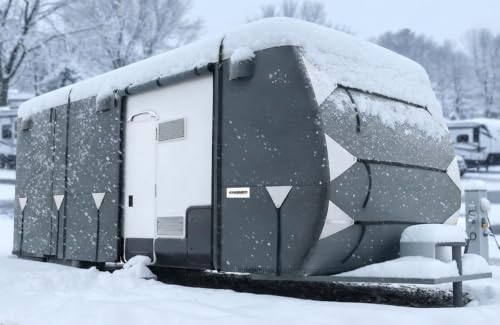
KING BIRD Enhanced RV Cover, 22-24ft

Classic Accessories Over Drive AC Cover

RVMasking Travel Trailer Cover, 24-26ft
RVMasking Travel Trailer Cover, 31-34ft
RVMasking Travel Trailer Cover, 26-28ft
More Details On Our Top Picks
Travel trailers in the 22 to 24-foot range sit in a sweet spot for many owners: long enough to need serious protection, short enough that a single cover can wrap them cleanly. The KING BIRD Enhanced RV Cover targets that exact bracket, with sizing slots covering 18-20ft and 20-22ft configurations alongside the headline fit. The build leans on a multi-layer top panel paired with reinforced stress points, which matters more than raw thickness for trailer duty.
For owners parking under tree lines or near coastal salt spray, the double-stitched edges and tear-oriented fabric construction offer a sensible step up from bargain-bin single-ply covers. Compared to the specialty AC cover later on this list, this is a full-rig solution meant for the body, not the rooftop unit.
Real Benefits
- Multi-layer top panel resists tearing at corners and seams, where most covers give their way first
- Two sizing slots (18-20ft and 20-22ft) make it easier to dial in the right fit for shorter trailers too
- Reinforced stress points add lifespan where wind catches the cover hardest
- Full-body coverage handles UV, rain, and dirt in one wrap
Things To Consider
- No air-conditioner-specific cutout, so rooftop units sit beneath the fabric
- Proper cinching matters, owners commonly note loose covers billow and wear faster
Key Specs
Made For
Mid-size travel trailer owners who park outdoors for extended stretches and want a balance of durability and value.
Consider Something Else When
The 26-28ft RVMasking option is a stronger pick for owners whose rigs run longer than this cover’s bracket.
Rooftop air conditioners sit exposed to sun, hail, and tree sap year-round, even when the rest of the trailer is garaged. The Classic Accessories Over Drive targets the AC shroud specifically, fitting the Dometic Brisk II shape among other common units. It is a small, focused accessory rather than a full-body cover, so it pairs well with a primary RV cover or works alone for indoor-stored trailers.
Compared to the full-rig KING BIRD and RVMasking covers earlier and later in this list, the Over Drive earns its place as a problem-solver for owners who already handle the body separately. Compatibility extends to Coleman Mach I, II, III, Mach 3 Plus, Mach 15, Roughneck, and TSR units.
Points In Its Favor
- Shields the AC shroud from UV, debris, and winter moisture that corrode plastic
- Compatibility list spans multiple Coleman and Dometic models, not just one
- Lower-cost addition to a storage setup that already covers the body
Worth Noting
- Not a substitute for a full travel trailer cover, the body remains uncovered
- Compatibility assumes a standard shroud profile, so measuring before ordering matters
- Black exterior absorbs heat, which can matter in sunny climates
Right Fit For
Owners with garaged trailers who still want year-round protection for an exposed rooftop AC unit.
Look Elsewhere When
The KING BIRD Enhanced RV Cover is the better pick for owners who need full-body coverage and do not already have a separate AC solution.
The 24 to 26-foot bracket is where many family-sized travel trailers land, and it is also where thin covers start to fail under serious weather. The RVMasking 9-Layer build layers up waterproofing and abrasion resistance in a way that matters when a storm rolls through mid-storage. Wind protection shows up in the strap layout: two over-roof straps plus an extra-long horizontal strap wrapping the bottom to keep the cover from billowing.
For owners in regions with gusty shoulder seasons, the tension-panel design at front and rear is the kind of detail that separates a cover from a tarp. The KING BIRD option above handles smaller rigs, while this RVMasking step is the heavier-duty sibling.
A Few Highlights
- Nine-layer construction stacks waterproofing and tear resistance
- Horizontal bottom strap stops wind from inflating the cover
- Elastic hem and front/rear tension panels keep fabric snug to the body lines
Trade Offs
- Heavier material is harder for one person to wrestle on solo
- Storage takes more shed space than lighter covers
Who Should Grab It
Owners in storm-prone regions parking 24 to 26-foot trailers outdoors for extended stretches.
A Better Fit Elsewhere
The 22-24ft KING BIRD cover is a lighter, easier-to-handle alternative when full nine-layer weight is overkill.
Longer rigs mean longer spans of fabric catching wind, which is exactly where bargain covers shred first. The 31 to 34-foot RVMasking keeps the same nine-layer waterproofing and strap layout as its smaller siblings but stretches it across trailer bodies that need real structural discipline. Front and rear tension panels pull the fabric into the body shape, while the elastic hem keeps the bottom from drifting.
For seasonal owners leaving a 33-footer parked through winter, the extra fabric weight is a real trade for longevity. Compared to the 24-26ft version earlier, the gain is mostly in fit range and strap length rather than new features.
Positive Takeaways
- Covers the long-rig bracket where most competing covers stop at 30 feet
- Same nine-layer waterproofing stack as the smaller RVMasking options
- Extra-long horizontal strap scales up to handle bigger wind loads
Soft Spots
- Installing on a 34-foot trailer is genuinely a two-person task
- Bulkier folded footprint needs a dedicated storage bin or tote
Best Suited To
Owners of larger travel trailers in the 31 to 34-foot range storing outdoors through long weather stretches.
Swap It Out When
The RVMasking 26-28ft cover is the better fit for trailer owners whose rigs run shorter than 31 feet.
The 26 to 28-foot slot is a common size for couples’ trailers and small family rigs, and it is also where wind tends to find loose fabric along the sidewalls. This RVMasking option uses the same nine-layer shell as the other sizes, with the strap system scaled to the body. The horizontal bottom strap pairs with tension panels to stop billowing, which is the most common cause of cover failure in this size class.
Compared to the 24-26ft option earlier, the trade is purely dimensional, the materials and strap layout run parallel. Versus the KING BIRD cover, the difference is layer count and wind hardware rather than raw concept.
The Helpful Details
- Snug fit tailored to common 27-foot trailer bodies
- Bottom elastic hem grips the trailer line for a cleaner profile
- Compatible wind-management strap layout shared with larger siblings
- Nine layers handle rain without soaking through in light storms
Less Ideal Details
- Measuring the trailer carefully matters since 26 and 28-foot rigs can sit at either end of the bracket
- Heavier than three-layer alternatives and slower to fold for storage
Perfect Match For
Owners with mid-to-large travel trailers in the 26 to 28-foot range parking on open, windy lots.
Another Choice May Suit
The RVMasking 31-34ft cover is the better match for trailers longer than 28 feet.
What To Weigh Before Picking Rv Covers
Fit comes first. Measure the trailer’s full length including the hitch, then compare to the cover’s stated bracket rather than guessing. A cover that is too short rides up and exposes the front cap, while an over-long cover bunches at the rear and collects water. Height matters as much as length, especially with rooftop AC units, antennas, or roof racks adding inches.
Material weight is the second decision layer. Lightweight single-ply covers are easier to handle but tend to fail at stress points within a season or two. Multi-layer and reinforced builds cost more and weigh more, yet they hold up under wind and UV exposure that would shred thin fabric. Storage site conditions should drive the choice: a covered carport lets a thinner cover survive, while an open field full of wind demands heavier construction.
Air-conditioner and rooftop accessories deserve a separate look. Full-body covers like the KING BIRD and RVMasking options wrap over rooftop units by design, which works fine for most owners. Owners who want targeted AC protection, especially with garaged trailers, may add a specialty cover like the Classic Accessories Over Drive alongside or instead of a full wrap.
Strap systems and access panels are the details that separate a cover from a tarp. Cross-strap layouts, elastic hems, and tension panels at the front and rear keep fabric tight against the body so wind cannot get underneath. Zippered access panels let owners climb inside without removing the whole cover, useful for quick winter checks.
Key Considerations Across These Picks
Mistakes Worth Dodging
The most common slip is sizing by the trailer model name rather than the actual measured length. Two trailers sold as “27-foot” models can sit at opposite ends of a cover’s bracket, and a tight fit fails faster than a slightly loose one. Skipping the strap layout is the next trap: a cover without cross straps and a bottom hem will billow in the first real wind and wear through at the corners within a season.
Where The Extra Money Goes
Heavier builds cost more because they stack more material layers and add reinforced stitching at stress points. The upgrade pays off for owners parking on open lots, near coastlines, or in regions with intense sun, where thin covers fade and tear fast. For trailers stored under a roof in mild climates, a mid-weight cover handles the job without the premium.
The Takeaway
A cover only helps if it fits the rig and stays put through wind, so match the size bracket first and let material weight follow the storage site. Add a specialty AC cover if the trailer lives indoors and only the rooftop needs protection. The right pick is the one that earns its keep season after season, not the heaviest fabric available.