
Walk-behind gas mowers cover a lot of ground for homeowners who don’t want a riding machine, and the latest crop handles hills, thick grass, and weekly cuts without much fuss. The picks below include push and self-propelled models, all sized for residential lawns where storage and budget matter. Engine size, deck width, and drive type drive most of the differences here, so matching those to yard size and slope saves wasted effort later.
How The Shortlist Stacks Up
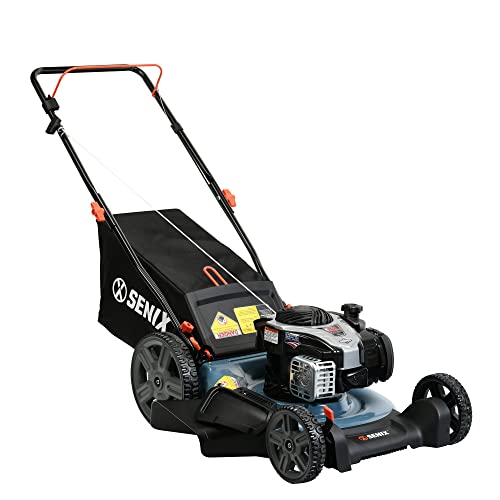
SENIX LSPG-M7 21″ Gas Push Lawn Mower, 140cc Briggs & Stratton

BILT HARD 21 Inch 201cc 4-Cycle Push Lawn Mower

SENIX 20-Inch Gas Lawn Mower, 125cc Briggs & Stratton

AMERISUN 21″ Self Propelled Gas Lawn Mower, 170cc RWD

SENIX 20″ 144cc Gas Push Lawn Mower

SENIX 22″ 201cc Variable Speed RWD Self Propelled Mower
More Details On Our Top Picks
The SENIX LSPG-M7 anchors this list because it balances the attributes most flat-lot homeowners actually use. Its 21-inch deck (the housing that contains the spinning blade) covers a typical suburban yard efficiently without dragging behind the user, and the Briggs & Stratton 140cc four-cycle engine (a four-stroke design that runs on regular gas without mixing in oil) starts with a straightforward Prime N’ Pull routine, meaning a quick push of the priming bulb followed by a pull cord.
For weekly maintenance on a quarter-acre lot, the 3-in-1 deck gives owners real flexibility. Side discharge handles overgrown patches in spring, mulching (chopping clippings into fine pieces that feed the soil) helps during summer dry spells, and the 16-gallon rear bag catches clippings cleanly for composting. The six-position dual-lever height adjustment is a small detail that pays off when switching between thick spring growth and a tighter summer cut.
Bright Spots
- 21-inch cutting deck reduces passes on small and medium lawns
- Briggs & Stratton 140cc engine is a widely serviced, familiar platform
- 3-in-1 design lets owners bag, mulch, or side-discharge without separate tools
- Six height positions adapt to seasonal growth swings
- 16-gallon rear bag limits emptying stops during long runs
Trade-Offs Worth Knowing
- Push-only design demands more effort on sloped or uneven terrain
- 140cc power can bog down in tall, wet grass compared to higher-displacement models
- Gas engines require seasonal oil changes and air-filter checks that electric mowers skip
Key Attributes
Right Fit For
Homeowners with flat, quarter-acre lawns who want a familiar gas engine and don’t mind providing the pushing power themselves.
Where Another Pick Suits Better
The AMERISUN 21″ Self Propelled Gas Lawn Mower is a smarter match on sloped lots, since its rear-wheel drive takes over the pushing effort.
BILT HARD leans into raw cutting power with this 21-inch push mower. The 201cc OHV engine (overhead valve, a design that improves airflow and efficiency over older side-valve setups) produces 9.0 ft-lb of torque, a rotational force measurement that translates to the blade’s ability to power through dense growth. Compared to the SENIX LSPG-M7 above, this one trades the smaller displacement for noticeably stronger cutting under load.
The no-choke, no-primer starting system removes the two steps that frustrate first-time gas-mower owners. Eight cutting positions give finer control than the typical six, which is helpful when moving between a shady back patch and a sun-baked front strip that demands a different height.
Positive Takeaways
- 201cc OHV engine with 9.0 ft-lb torque handles tall grass without bogging
- Eight height positions offer finer cut tuning than most competitors
- Steel deck construction holds up to seasonal bumps and storage scrapes
- No-choke starting eliminates one common beginner frustration
Points To Note
- Push-only format still requires full physical effort on hills
- Heavier engine and deck add storage strain in small sheds
- Higher torque suggests fuel use may exceed smaller-displacement models
Made For
Owners cutting tall fescue, Bermuda, or neglected lawns where extra torque prevents repeated passes over the same strip.
Skip It When
The SENIX 22″ 201cc Variable Speed RWD Self Propelled Mower is a better fit for anyone who wants this engine class without pushing it uphill.
This SENIX model answers a different question: how small can a gas mower go without feeling underpowered. The 20-inch deck and 125cc Briggs & Stratton E300 engine target owners with smaller lots or tight side yards where a 21-inch deck feels oversized. The fold-down handle is the storage detail that matters most here, since it cuts the footprint enough to fit alongside a wheelbarrow in a standard shed.
Unlike the BILT HARD above, this mower keeps things simple with a single-lever five-position height adjustment and side discharge only. That trims weight and complexity, which is the right trade-off for a yard under 5,000 square feet.
Real-World Strengths
- 20-inch deck navigates narrow gates and tight corner passes
- Fold-down handle saves shed space during off-season
- 125cc Briggs & Stratton E300 is a fuel-efficient daily-driver size
- Steel deck balances durability and manageable weight
Honest Caveats
- Side discharge only, no bagging or mulching option included
- Five height positions are fewer than the six or eight on other SENIX models
- Smaller engine struggles with grass left too long between cuts
Feature Snapshot
Best Suited To
Owners of small urban lots who want a gas mower with a tight storage footprint and minimal maintenance overhead.
Look Elsewhere When
The SENIX LSPG-M7 covers the same yard size with bagging and mulching included, making it a better match for anyone who composts clippings.
The AMERISUN AV8621S1 steps up from push to self-propelled, which changes how the mower feels underfoot. Rear-wheel drive (RWD) sends power to the back wheels, giving better grip when climbing damp slopes where front-wheel drive tends to slip. The 170cc OHV engine sits in the middle of the displacement range on this list, larger than the SENIX 125cc above but smaller than the BILT HARD 201cc.
An auto-choke system simplifies cold starts by adjusting the fuel-air mix automatically, and the forced air-cooling system keeps the engine at a steady operating temperature during long sessions. For most homeowners with uneven or sloped yards, the rear-wheel traction is the headline feature.
Where It Excels
- Rear-wheel drive climbs inclines that bog down push mowers
- Auto choke removes the manual mix adjustment during cold starts
- 21-inch heavy-duty blade cuts finer clippings for cleaner-looking lawns
- Reinforced steel deck resists flexing over rough ground
Factors To Consider
- Self-propelled systems add weight that complicates storage and transport
- Rear-wheel drive can fishtail on flat, dry pavement if not dialed back
- Drive components introduce additional service points versus push models
Whose Yard It Belongs On
Properties with noticeable slopes, uneven terrain, or homeowners who prefer the mower to handle propulsion rather than their own stride.
A Better Fit Elsewhere
The SENIX 20-Inch Gas Lawn Mower with 125cc Briggs & Stratton is a lighter, simpler choice for flat small lots where self-propulsion is overkill.
For first-time mower owners, starting reliability matters as much as cutting performance. This SENIX model ships with oil and basic tools included, so setup doesn’t require a separate trip to the hardware store. The 144cc four-cycle engine and 20-inch deck keep the package manageable without leaning on the smallest engine class where torque often disappoints.
Compared to the SENIX 125cc earlier on the list, this one gains a small bump in displacement at the cost of slightly more weight. For most suburban yards under 6,000 square feet, that tradeoff feels invisible in daily use.
Strong Points
- Includes oil and assembly tools for out-of-box setup
- Four-cycle engine runs on regular gasoline with no oil mixing
- 20-inch deck balances coverage and easy handling
- Two-year warranty offers protection during the learning curve
Room For Improvement
- Push-only design is tiring for larger yards
- Some users report minor assembly patience is required
- Lacks bagging or mulching capability in standard form
Who Will Love This
First-time homeowners, new property managers, or anyone replacing an inherited mower with minimal mechanical experience.
Consider Something Else When
The SENIX LSPG-M7 with 140cc Briggs & Stratton engine is a smarter upgrade path for owners who want bagging and mulching built in.
The largest deck and engine combination on this list belongs to the SENIX 22-inch self-propelled mower. The 201cc four-stroke OHV engine matches the BILT HARD for displacement, while variable-speed rear-wheel drive lets the user pace the mower to walking speed rather than a fixed setting. That control shows up during long stretches, where a single constant pace becomes uncomfortable.
The 3-in-1 steel deck supports mulching, side discharge, and rear bagging in one chassis. For owners with half-acre lawns or open spaces, the wider 22-inch swath reduces cutting time noticeably compared to the 20-inch models earlier in this guide.
Everyday Perks
- 22-inch cutting width covers ground faster on larger lawns
- Variable-speed RWD matches pace to user stride
- 201cc OHV engine delivers strong torque under load
- 3-in-1 deck handles mulching, bagging, and side discharge
Possible Compromises
- Larger footprint may not fit through narrow garden gates
- Heavier chassis requires more lift strength for storage
- Premium feature set carries a higher complexity ceiling for service
Feature Rundown
Who Should Grab It
Owners of half-acre or larger lots who want self-propelled convenience without giving up engine displacement.
Reach For A Different Pick When
The AMERISUN 21″ Self Propelled Gas Lawn Mower with 170cc RWD is the right call for sloped lots where the smaller deck handles tight turns better.
What To Weigh Before Buying A Walk-Behind Mower
Engine Size And Yard Scale
Engine displacement, measured in cubic centimeters (cc), is the most consistent predictor of how a mower handles thick grass. Anything under 140cc covers small lots with weekly mowing. Lifts above 160cc earn their keep on neglected lawns, taller fescue, or anyone who lets grass grow past five inches between cuts. For most suburban yards between a quarter and half acre, the 170cc to 201cc range strikes a useful middle ground.
Drive Type And Terrain
Push mowers cost less and weigh less, but every slope becomes a workout. Self-propelled rear-wheel drive is the better answer on hilly lots because rear tires carry more weight than front wheels. Front-wheel drive helps in flat yards with lots of turns since you can lift the front and pivot. Flat lawn owners who never mulch or bag wet clippings may find a quality push mower does the job with less maintenance.
Deck Width And Storage Footprint
Wider decks (22 inches) finish faster but need shed space and gate clearance. Twenty-inch decks squeeze through side yards and park neatly against a wall. The trade-off shows up in mowing time: a 22-inch deck typically trims a quarter acre in fewer passes than a 20-inch model, though the difference shrinks on heavily landscaped lots where tight turns dominate.
Grass Management Options
Bagging suits composting households and anyone wanting a crisp, post-cut appearance. Mulching returns clippings to the lawn as natural fertilizer, ideal during summer when moisture retention matters. Side discharge handles overgrown patches when the mower doubles as a brush cutter. Three-in-one decks offer all three, though switching modes mid-mow takes a minute per change.
Pitfalls And Payoffs Worth Knowing
Wrong Turns To Avoid
The most common buying slip is matching engine size to a yard that outgrows it within a season. New owners often underestimate how fast lawn area expands once landscaping fills in, and a 125cc engine that handled the first summer struggles in year two. Measure actual grass area, not the lot size listed on the deed, since landscaping beds shrink the mowing footprint less than expected.
What The Higher Tier Buys
Stepping up to a 200cc-plus self-propelled model isn’t just about more power; it buys variable speed, wider decks, and reinforced steel chassis that hold up over a decade of weekly use. For homeowners planning to stay in the same house for five or more years, the extra upfront cost tends to pay back in fewer replacement cycles and less fatigue during peak growing season. Budget-focused shoppers with smaller lots often do better saving the difference for a quality trimmer or blower instead.