
A good night’s sleep shapes the next day on any trip, especially when the ground is hard, the air is cold, and the tent is small. The right queen air mattress turns a campsite into something that actually feels like a bed, which matters for families sharing a tent, couples in an RV, and anyone who has spent too many nights on a thin pad. This roundup focuses on queen air mattresses for camping that balance comfort, pack size, and inflation speed, with picks that range from budget-friendly blow-ups to foam-filled self-inflating pads. Every option below earns its spot, but each serves a slightly different kind of camper.
The Shortlist At A Glance

Intex Dura-Beam Series Essential Rest Airbed with Internal Electric Pump, Queen (2020 Model)

16″ Queen Air Mattress with Built-in Pump and Storage Bag

COMMOUDS Queen Air Mattress with Battery Powered Removable Pump (13″)
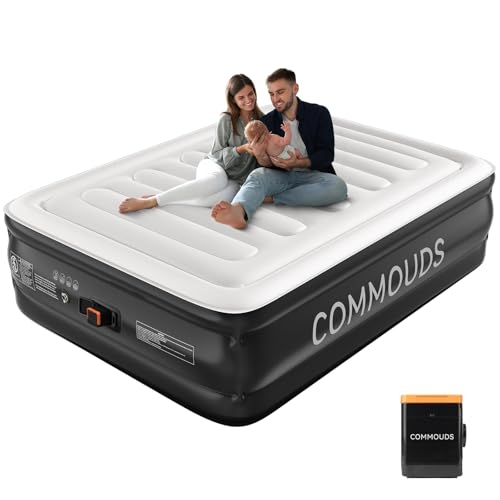
COMMOUDS Queen Air Mattress with 2000mAh Battery Pump (18″)

Lost Horizon Option3 Self-Inflating Foam Camping Mattress (Full, 4.5″)

Intex Pillow Dura-Beam Series Rest Raised Airbed with Internal Pump (2020 Model)
Inside Each Recommended Option
Drive-in campers who set up base at a powered tent pad get a real perk with this 18-inch-tall queen airbed: the built-in electric pump inflates the whole thing at the touch of a button, so there’s no manual pumping in the dark. The Fibre-Tech interior uses thousands of high-strength polyester fibers, which spreads weight more evenly than a single bladder and helps reduce that sinking-in-the-middle feel you get with cheaper coils.
A velvety sleeping surface makes it easier to grip sheets, and the traditional bed height means standard queen sheets fit without any wrestling. For campers who split time between a spare bedroom and a camp trailer, this airbed pulls double duty without any fuss.
The Helpful Details
- Internal electric pump saves time and elbow grease on arrival
- 18-inch bed height feels closer to a real mattress than a thin pad
- Fibre-Tech polyester fiber core holds shape and resists sagging
- Velvety top keeps sheets and sleeping bags from sliding around
- Versatile for guest use at home and camping trips alike
Worth Noting
- Needs mains power for the built-in pump, limiting it to sites with electricity
- Larger packed size compared to backpacking-specific mats
Key Specs
Right Fit For
Campers staying at powered drive-in sites, RV owners, and households that want one bed that handles both house guests and weekend trips.
Swap It Out When
Pick the KMFurnila 16-inch queen instead if the campsite has no hookups, since it packs down smaller for portable travel.
Car campers who carry their gear from the parking lot to the tent benefit most from this KMFurnila queen. At 16 inches tall with a flocked, skin-friendly surface that breathes and wicks moisture, it sits firmly between ultra-thin pads and full-on guest beds. The non-slip base keeps things quiet when sleepers shift around at night.
With a 330-pound capacity and an included storage bag, it works for solo travelers, couples in larger tents, or families wanting a spare surface at camp. It also doubles as a guest bed at home when the in-laws roll into town.
Practical Pluses
- Flocked top adds a softer layer and helps moisture dissipate overnight
- Non-slip stabilizing base reduces unwanted shifting and noise
- Built-in pump skips the need to lug a separate inflator
- Storage bag keeps the mattress compressed between trips
- Lightweight enough for car camping and short walks from the vehicle
Trade Offs
- 330-pound rating is lower than the COMMOUDS options, so heavier sleepers may want to verify comfort
- 16-inch profile is shorter than the raised Intex Dura-Beam in pick one
Whose Trip It Belongs On
Car campers and festival-goers who want a comfortable queen setup without a heavy or bulky pack size.
Consider Something Else When
Choose the COMMOUDS 18-inch queen with the 2000mAh battery pump if sleeping far from outlets and a taller bed matters.
Backcountry-style campers who boondock in places without shore power get genuine flexibility from this 13-inch COMMOUDS queen. The removable, battery-powered pump handles inflation and deflation with the touch of a button, removing the need to pack a foot pump or hunt for an outlet. Forty-eight internal air coils, more than many similar-sized options, distribute weight more evenly and resist the dreaded middle sag.
A 650-pound weight capacity makes it friendly for couples, families with kids, or anyone who shares the bed with a dog. It’s portable enough for car camping and RV travel without dominating cargo space.
Points In Its Favor
- Battery-powered pump works off-grid, ideal for remote campsites
- 48 internal air coils distribute weight and reduce sagging
- 650-pound capacity handles couples, kids, and pets
- Removable pump simplifies storage and charging
- 13-inch height keeps center of gravity low in windy setups
Small Caveats
- Lower profile than the 18-inch raised airbeds, which some sleepers find less comfortable
- Battery needs periodic charging, a small task that some campers may forget
Built With In Mind
Off-grid campers, overlanders, and anyone setting up at sites without electricity who still wants quick, button-press inflation.
Reach For A Different Pick When
Pick the Lost Horizon Option3 foam-and-air pad if the priority is a thinner, self-inflating mat that fits inside a backpack.
Campers who want a true raised-bed feel without plugging into anything will appreciate this step up from the previous COMMOUDS option. The 18-inch profile puts sleepers at standard mattress height, which makes getting in and out easier for older campers or anyone with knee or back issues. The built-in 2000mAh rechargeable lithium battery handles inflate-and-deflate cycles without a separate power source, an advantage over mains-only pumps.
An eight I-beam structure supports the surface above the floor, mimicking the support rails of a real bed frame. It’s a sensible choice for indoor guest use, glamping setups, and longer car-camping trips.
Where It Excels
- 18-inch raised height mimics a home mattress, easier on hips and knees
- Built-in 2000mAh rechargeable battery inflates and deflates on demand
- Eight I-beam structure supports the sleeping surface evenly
- Reusable across indoor guests, glamping, and remote camping
- Higher profile keeps sleepers further from cold ground
Points To Keep In Mind
- Battery needs recharging between trips, which is easy to forget
- Heavier than the 13-inch COMMOUDS, so it is less backpack-friendly
Key Specs
Made For
Glampers, RV owners, and campers who want a real-bed feel without depending on a campsite power pedestal.
Look Elsewhere When
The Intex Dura-Beam Essential Rest is the better value for campers with reliable hookups and no need for a cordless pump.
Self-inflating pads solve a specific problem for backpackers and cyclists: how do you get a comfortable sleep without spending five minutes huffing into a valve. The Lost Horizon Option3 opens its valve, pulls in air to expand a 4.5-inch foam core, and gets most of the way there on its own. A 12-pound foam filling adds insulation and structure that pure air mattresses cannot match.
At full size (not strictly queen), it works well for solo campers or couples who don’t mind sleeping close. A 440-pound capacity and even foam-air distribution keep pressure points to a minimum over multi-night trips.
Everyday Wins
- Self-inflating design removes manual pumping on cold mornings
- 4.5-inch thickness plus foam core cushions shoulders and hips
- Foam filling adds warmth in cool weather, unlike bare air mattresses
- Even air-and-foam distribution reduces pressure points
- Compact roll-up packs smaller than a full queen air mattress
A Few Limitations
- Full size, not queen, so it’s snug for two adults
- Heavier than ultralight air pads, less ideal for long backpacking days
Feature Snapshot
Best Suited To
Backpackers, cyclists, and weight-conscious campers who want foam comfort but still need a relatively compact pad.
Not Your Match When
Choose the Intex Dura-Beam Essential Rest queen if a true queen width and a tall, bed-like profile matter more than pack size.
Families and frequent campers put air mattresses through more wear than occasional users realize, which is where the Intex Pillow Dura-Beam stands out. Approximate inflation time sits around three and a quarter minutes from the internal pump, and indented sides hold fabric taut so fitted sheets stay put through restless nights. A 600-pound weight capacity is generous enough for two adults plus a kid or a dog without bottoming out.
At 60 by 80 by 16.5 inches, it lands between the 13-inch and 18-inch raised options in this roundup. A hand-carry bag makes it easier to load between the car and the tent on arrival day.
Practical Advantages
- Indented sides keep fitted sheets from popping off overnight
- 600-pound capacity handles couples and kids with margin
- Built-in pump cuts setup time on arrival
- Internal hand carry bag simplifies transport from car to campsite
- Raised profile makes getting in and out easier than flat pads
Practical Considerations
- Built-in pillow area may not suit stomach sleepers who prefer a flat surface
- Mains-powered pump means it is not ideal for off-grid camping without an inverter
Quick Technical Notes
Who Will Love This
Families camping with a full-size bed area, plus households that want a tough guest bed that doubles as a camp mattress.
A Better Fit Elsewhere
Pick the COMMOUDS 18-inch with the battery pump if you camp at sites without electrical hookups or prefer a cordless setup.
What Really Matters When Picking a Camp Air Mattress
Height and inflation method shape day-one experience more than almost any other feature. A taller bed, 16 inches or more, makes getting in and out easier, especially for older campers or anyone with stiff joints, while a shorter 13-inch profile keeps the center of gravity lower inside smaller tents. Inflation style splits into three camps: built-in electric pumps that need mains power, battery-powered pumps that work anywhere, and self-inflating foam pads for backpackers who want minimal effort. Pick the pump type that matches the campsite, not the campsite that matches the pump.
Weight capacity and surface materials deserve a close look. Higher capacity usually means a more robust internal coil structure, which reduces that middle-of-the-night sag where sleepers slide toward each other. A flocked or velvety top holds sheets and sleeping bags in place, which matters more in tents where shifting on a slick PVC surface can feel slippery and cold. PVC-only surfaces are easier to clean but less comfortable against bare skin.
Pack size and total weight decide where the mattress can actually travel. Self-inflating foam pads roll into a tight cylinder that fits next to a backpacking pack, while raised queen airbeds need trunk space and a few minutes of patience. Match the mattress to the trip: car campers can afford a larger bed, backpackers need something they can roll up and forget about until bedtime. Storage bags, repair patches, and a sensible valve setup also make life easier after a long day outdoors.
Key Considerations Across These Picks
Wrong Turns To Avoid
A common slip-up is choosing an airbed purely on price, then discovering the cheaper model sags within a few hours because it has fewer internal coils. Equally common is buying a tall, raised queen for backcountry trips and realizing it doesn’t fit in the tent vestibule. Check internal structure, weight capacity, and packed dimensions before committing. Another trap: assuming any queen air mattress works for cold nights, when bare air pads pull heat away from the body. Foam-core or insulated options handle chilly weather better.
What The Higher Tier Buys
Stepping up to a pricier queen air mattress typically buys three things: a stronger internal support structure (more coils, I-beam reinforcement, or foam fill), a higher weight capacity that holds up over years of family camping, and extras like battery-powered pumps, flocked surfaces, or built-in pillows. For weekend car camping, a mid-tier model often makes the budget happier. For full-time family camping or frequent guest use, the upgrade pays off in fewer middle-of-the-night top-offs and a longer lifespan overall.
The Takeaway
The right queen air mattress for camping comes down to where and how often it gets used. Powered drive-in sites favor tall raised airbeds with built-in electric pumps, while off-grid trips call for battery-powered or self-inflating options that travel light. Backcountry sleepers, weekend campers, and family road-trippers will each find a fit on this shortlist, and the trade-offs in each review make it easier to match the bed to the trip instead of the other way around.