
Cold nights at the campsite don’t have to end the fun. The right propane heater keeps a family tent, a tailgate, or a fishing shack comfortable when temperatures drop, and modern units pack a surprising amount of warmth into portable packages. This roundup covers seven well-regarded options, including radiant space heaters, tank-top models, portable fire pits, and a refillable propane cylinder, so anyone planning a chilly outdoor trip can match the right tool to the right situation.
The Picks In Brief
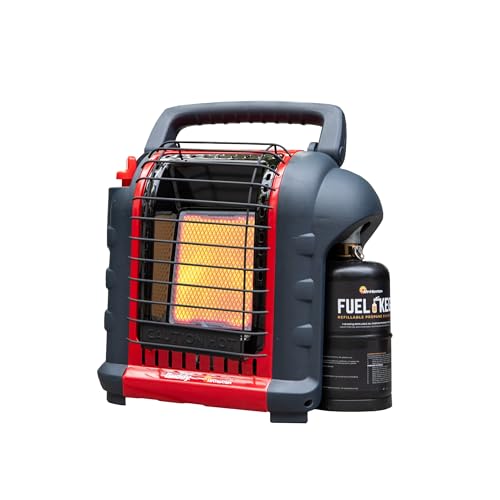
Mr. Heater 9,000 BTU Portable Buddy Radiant Heater
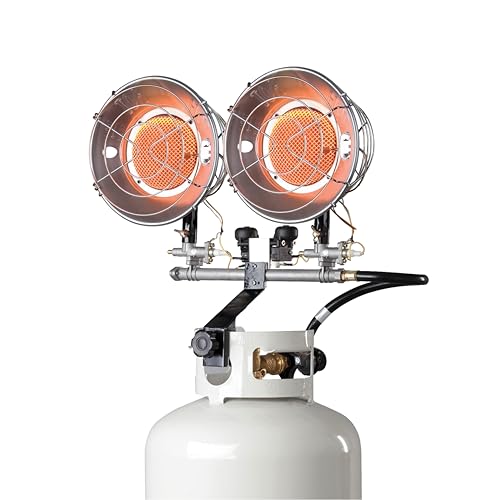
Mr. Heater 30,000 BTU Double Tank Top Heater

Ignik FireCan Elite Portable Propane Fire Pit

Ignik FireCan Deluxe Propane Fire Pit and Grill

Ignik FireCan Portable Propane Fire Pit

Mr. Heater 45,000 BTU 540-Degree Tank Top Heater
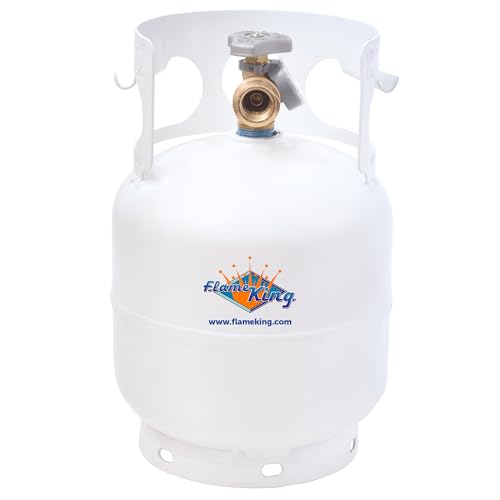
Flame King 5LB Propane Tank with Gauge
Taking A Closer Look At The Options
The Portable Buddy earns a top spot because it solves a problem most new campers hit first: how to warm a small tent or ice-fishing shelter without venting complications. It produces radiant heat, meaning warmth radiates outward from the burner surface rather than blowing hot air, and offers two output settings that shift between 4,000 and 9,000 BTU per hour. Approved for both indoor and outdoor use, it covers roughly 225 square feet, which fits most four-season tents, screen rooms, and small cabins.
Hookup is simple. A one-pound propane bottle attaches directly, or it can run off a larger 20-pound tank with the right adapter hose. For families new to propane gear, that low-fuss setup is a real advantage. Compared to the bigger tank-top models covered below, the Buddy trades raw output for portability and tent-friendly clearance, which matters more than raw power on a quiet weekend trip.
A Few Strong Suits
- Two-stage output (4,000/9,000 BTU) helps stretch fuel on milder nights
- Rated for indoor and outdoor use, useful for tents and porches alike
- Heats roughly 225 square feet, covering most small shelters
- Runs from a one-pound bottle or a larger tank with an adapter
- Radiant design warms people and gear without circulating dust or flame
Trade Offs
- Lacks the raw output of the tank-top models for open-air use
- Requires good ventilation even in approved setups, so closed-wall tents need monitoring
- One-pound cylinders empty quickly on the higher setting
Made For
First-time campers who want a safe, approachable radiant heater for small tents, pop-ups, and ice fishing shelters.
Skip It When
Anyone heating a large open patio or job site should reach for the Mr. Heater 30,000 BTU Double Tank Top Heater instead.
This tank-top unit steps up to serious work. It mounts directly on top of two propane cylinders, sitting in the classic triangular configuration, and uses a soft-nose P.O.L. connection with an adjustable regulator that cycles between high, medium, and low output up to 30,000 BTU. Radiant heat radiates outward in a wide arc, which suits a larger base camp, a tailgate canopy, or a hunting blind on a frozen morning. Where the Portable Buddy aims at one tent, this one aims at a group.
The model is built around quiet operation and dual tip-over safety shut-offs that cut fuel if the heater is knocked askew. That combination is genuinely helpful around gear, pets, or kids. Compared to the FireCan options below, this unit looks more industrial and produces a dryer, more directional heat, which is exactly what some campers want on a windy ridge.
A Favorable Mix
- Output up to 30,000 BTU for larger camps and tailgates
- High/medium/low regulator gives flexible fuel economy
- Dual tip-over shut-offs for added safety on uneven ground
- Quiet combustion suited to nearby conversation
- Soft-nose P.O.L. connection makes hookup tool-light
Things To Consider
- Less suited to enclosed tents; radiant output can scorch nearby fabric
- Needs a flat, stable surface since it sits atop twin tanks
- No grill or cooking accessory, unlike the FireCan Deluxe
Right Fit For
Group campers, hunters, and tailgaters running a larger tank and needing warmth across a wide radius.
Where Another Pick Suits Better
Backpackers wanting a smaller, packable setup should look at the Ignik FireCan Portable Propane Fire Pit, which folds flat and travels in tighter spaces.
The FireCan Elite targets campers who want campfire ambiance without the smoke or fire restrictions that come with wood. It puts out about 55,000 BTU per hour, which is serious heat for an open-air fire pit, and meets Canadian Standards Association benchmarks for outdoor appliances. A stainless-steel ammo-can body with an anodized aluminum lid gives it a tough, gear-hauler look, and the whole package is built to ride in a truck bed or strapped to a side-by-side.
Setup revolves around a quick-release four-foot hose with a 5 psi regulator that connects to refillable propane tanks, sold separately. An integrated flame control knob lets users dial in the output, and the controls tuck into the body for transport. Versus the standard FireCan below, the Elite favors heat output and certification over compact storage. Fire restrictions at many campgrounds favor a sealed propane flame like this one.
Strengths Worth Knowing
- Around 55,000 BTU per hour for serious campfire-style warmth
- Stainless-steel body with anodized aluminum lid for trail-tough durability
- CSA-compliant for adherence to international outdoor safety standards
- Quick-release hose and integrated flame knob for simple adjustments
Points To Note
- Heavier and bulkier than the smaller FireCan models
- Requires a separate refillable propane tank, which adds gear to pack
- Clean, polished finish tends to need a wipe-down to stay looking sharp after dusty trips
Quick Facts
Whose Shelf It Belongs On
Campers hosting groups, families needing a no-smoke fire pit, and tailgaters who want steady heat in any season.
Look Elsewhere When
Travelers needing a lighter, fold-flat option should consider the Ignik FireCan Deluxe Portable Propane Fire Pit and Grill, which adds cooking capability in a smaller package.
The Deluxe variant splits the difference between warmth and cooking, which makes it the most versatile FireCan in the lineup. It carries the same stainless-steel ammo-can chassis as the Elite but swaps some raw output for a removable grill insert. Breakfast on a cast-iron grate or dinner over an open flame both fit the same rig. For campers working with tight packing space, the dual-purpose design cuts gear count noticeably.
Like the rest of the FireCan line, the body, lid, and fittings fold down into a packable form that handles transport well. Setup takes only a few seconds once the propane source is connected. Compared to the smaller standard FireCan covered below, this one offers a cooking surface, which shifts it from pure heat to full campfire replacement. For wood-burn restrictions, that combination is hard to beat.
Good Reasons To Consider
- Removable grill insert adds cooking without extra gear
- Stainless-steel build handles repeated outdoor use
- Packable ammo-can shape stores easily in vehicle cargo areas
- Approved where wood fires may be restricted
- Works as a fire pit alone when the grill insert is removed
Minor Gripes
- Requires a separate propane cylinder, not included
- Grill surface is smaller than a dedicated camp stove
- Stainless finish shows fingerprints after handling
Best Suited To
Campers and families who want a single unit that handles both evening warmth and morning cooking.
A Better Fit Elsewhere
Pure heat seekers chasing maximum BTU output will find more raw fire from the Ignik FireCan Elite.
The standard FireCan is the most packable model in the lineup, and that matters when trunk space or pack weight is tight. Its rugged ammo-can shape houses foldable legs that swing down in seconds, raising the unit off the ground without tools. A five-foot quick-release hose with an adjustable regulator connects to standard refillable propane cylinders, and the steel mesh sides let the flame glow through while pushing heat outward.
A small dial near the pilot hole controls flame size, so a quieter simmer or a stronger fire both fit the moment. Compared to the Deluxe above, this version drops the grill insert for a slimmer profile. Campers heading into fire-restricted terrain often pick this as the most practical campfire replacement in the bunch.
What Earns Its Place
- Compact ammo-can design fits vehicle storage easily
- Foldable legs deploy without tools in seconds
- Steel mesh walls improve flame visibility and heat transmission
- Connects to common 5, 10, and 20-pound cylinders
- Adjustable flame dial for fine-tuned output
Honest Caveats
- Mesh sides let some heat escape laterally, which can feel less contained than a solid-walled pit
- No grill insert for cooking capability
- Requires a separate propane tank purchase
Feature Snapshot
Perfect Match For
Road trippers, overlanders, and anyone needing a compact propane fire pit that travels flat and sets up fast.
Not Your Match When
Campers who also want a cooking surface should step up to the Ignik FireCan Deluxe Portable Propane Fire Pit and Grill.
The 540-Degree sits at the top of Mr. Heater’s outdoor lineup, and it earns that spot with serious directional heat. The burner head throws warmth across a 360-degree arc, while a multi-directional bracket adds another 180 degrees of swivel, giving a combined 540-degree coverage. Output adjusts between 30,000 and 45,000 BTU, which covers everything from a chilly workbench to an open ice-fishing shack on a windy lake.
Operation is intentionally simple, with a tip-over safety shut-off and quiet combustion that won’t drown out conversation around a tailgate or hunting camp. Compared to the 30,000 BTU Double Tank Top model covered earlier, this one adds reach and swivel but needs a full 20-pound tank to run effectively. Anyone doing serious cold-weather camping will appreciate the extra coverage on frostbitten mornings.
A Strong Showing
- Adjustable output up to 45,000 BTU for severe cold
- 540-degree coverage via 360-degree burner plus 180-degree swivel bracket
- Quiet operation suited to shared outdoor spaces
- Tip-over safety shut-off for uneven terrain
- Mounts on a standard 20-pound propane tank
Possible Compromises
- Overkill for small tents or solo backpacking trips
- Consumes fuel quickly on the highest setting
- Reflector surfaces need occasional cleaning to maintain output
Key Product Details
Built With In Mind
Ice anglers, hunters, and cold-weather job-site workers who need the strongest directional radiant heat in the Mr. Heater catalog.
Swap It Out When
Backcountry campers wanting campfire-style ambiance should reach for the Ignik FireCan Deluxe instead, which adds cooking in a friendlier package.
A roundup of propane heaters is incomplete without a fuel source, and the Flame King 5-pound tank is a solid match for most portable gear. The built-in gauge is the standout feature: a simple meter shows remaining fuel, which removes the guesswork that plagues standard disposable one-pound bottles. For anyone tired of shaking a bottle to guess how much gas remains, the gauge is a small but meaningful upgrade.
The tank ships empty and pre-purged, ready to be filled at any propane refilling station, and an OPD valve helps prevent overfilling. Welded steel construction with a powder-coated finish handles trail wear reasonably well, though owners in coastal or wet climates may want to wipe it down before long-term storage. Compared to disposable bottles, a refillable tank pays off after only a few refills, especially for campers who use fire pits or heaters regularly.
Noteworthy Benefits
- Built-in gauge removes fuel-level guesswork
- Refillable design saves money over disposable bottles
- Standard connection fits common portable heaters and fire pits
- Welded steel body with powder-coated finish for rust resistance
Soft Spots
- Requires a trip to a refill station before first use
- Heavier than disposable one-pound bottles for short trips
- Powder-coat finish can scuff over rough handling
Who Should Grab It
Frequent campers, van-lifers, and tailgaters running gear like the Ignik FireCan line who want a reusable fuel source with a visible gauge.
Consider Something Else When
Casual weekend users who only need one or two trips a year may prefer the convenience of disposable one-pound bottles over managing a refillable tank.
What To Think Through Before Choosing Propane Heaters For Camping
Match The Heater Style To The Setup
Radiant models, like the Mr. Heater Portable Buddy, throw warmth outward without burning through oxygen in the same way a flame does, making them a safer pick for enclosed or partially enclosed shelters. Open-air fire pits, like the Ignik FireCan series, mimic the campfire experience and shine in wide-open camps where the radiant-only approach would feel weak. Tank-top units land in between, producing strong directional heat that works well in open shelters, work tents, or large canopy setups. Picking the right shape of heat matters more than chasing raw BTU numbers.
Think About Fuel Logistics Before The Trip
Most heaters on this list run off refillable propane cylinders rather than disposable one-pound bottles, which saves money over time but requires a refill station trip before departure. A built-in gauge, like the one on the Flame King tank, removes a common camping headache: running out of fuel mid-meal. Campers heading into remote terrain should match tank size to heater draw; high-output units like the 45,000 BTU tank-top model eat through fuel fast on the highest setting.
Safety Considerations That Actually Matter
Ventilation matters even on approved indoor units, especially in tightly sealed tents where oxygen depletion can become a concern overnight. Tip-over shut-offs, present on both Mr. Heater tank-top models, are genuinely helpful on uneven ground. CSA or equivalent third-party safety certifications, like the one on the FireCan Elite, signal that the unit has been tested against recognized standards. None of these features replace common sense, but they do lower the odds of an incident when the campfire coffee is flowing.
Portability Versus Output
Backpackers and bike campers should weigh every ounce; a heavy fire pit is a luxury most cannot justify. Road trippers with truck or van space can comfortably haul a FireCan Elite or a 45,000 BTU tank-top unit. Matching heater weight and packed size to vehicle or pack capacity avoids the common mistake of bringing gear that never leaves the car.
Smart Moves Across This Category
Where Shoppers Go Wrong
The most common misstep is choosing by BTU alone. Higher numbers look impressive on a listing page, but a 45,000 BTU heater in a small tent is wasted fuel and excess heat. Always match output to shelter size and ventilation. Another trap is grabbing a heater without checking whether it is rated for indoor use; radiant space heaters like the Mr. Heater Portable Buddy are explicitly approved, while open fire pits are outdoor-only, no matter how enclosed a campsite feels.
Where The Extra Money Goes
Premium models typically fund tougher materials, longer hoses, swivel brackets, and third-party safety certifications. The FireCan Elite, for instance, costs more than the standard FireCan because of higher output and CSA compliance. Tank-top units with adjustable regulators and tip-over shut-offs command a premium for those safety touches and the ability to dial output to conditions. For shoppers who use the gear often, those upgrades tend to pay back in reliability and flexibility; for occasional weekend use, the base models usually get the job done.