
Weekend campers and overlanders share a recurring headache: keeping phones, lights, coolers, and small appliances powered without leaning on a noisy gas engine. Modern lithium power stations solve that problem quietly, but the spec sheets blur together fast. This shortlist sorts six current options by what they actually do well, so the right capacity and port layout surface without the guesswork.
How The Shortlist Stacks Up
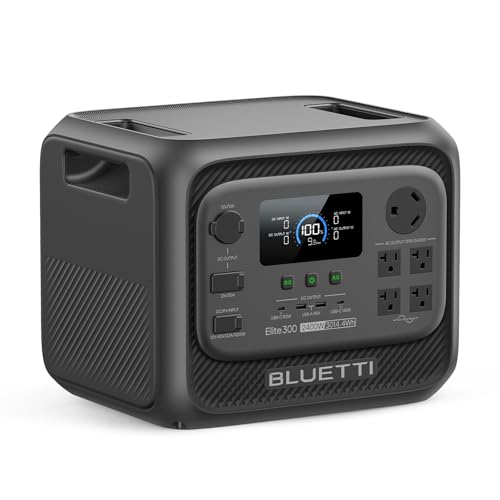
BLUETTI Elite 300 Portable Power Station 3014.4Wh

Honda EU2200i Companion 2200W Inverter Generator

EF ECOFLOW Delta 3 Portable Power Station 1024Wh

BLUETTI Elite 100 V2 Portable Power Station 1024Wh

BLUETTI Elite 200 V2 Portable Power Station 2600W

EF ECOFLOW River 3 Plus Extra Battery EB600
More Details On Our Top Picks
Extended-stay RVers and homeowners bracing for outage season tend to want the same thing: a single box that swallows a fridge, a microwave, and lights for a long weekend without a refill. The BLUETTI Elite 300 Portable Power Station 3014.4Wh answers that call with a 3 kWh class cell in a chassis reported to be far more compact than older 3 kWh units, which matters when the only spot for it is a storage bay or garage corner.
It pairs naturally with a roof array for off-grid stays, and its wattage headroom suits small kitchen appliances that the smaller entries in this shortlist struggle to handle. For a household that wants one unit to straddle camping and emergency backup, the value proposition looks solid.
Useful Strengths
- 3 kWh capacity runs refrigerators and microwaves across a long weekend without a recharge.
- Compact chassis for its class, freeing up truck bed or RV storage space.
- Strong fit for solar pairing, letting owners lean on daylight at base camp.
- Doubles as a home backup layer during grid outages alongside camping duty.
Worth Noting
- Heavier than sub-1kWh units, so two-handed lifting is the norm at arrival.
- Solar charging speed varies widely with panel wattage and sun angle, so plan for partial-day top-ups on shorter trips.
Feature Snapshot
Best Suited To
RVers and homeowners who want a single heavy-capacity unit that covers both a multi-day camping trip and a multi-day power outage.
Consider Something Else When
The Honda EU2200i Companion 2200W Inverter Generator makes more sense for crews that need unlimited runtime from fuel and don’t mind engine noise at base camp.
For crews running AC rooftop units, induction cooktops, or hair dryers at a long-haul base camp, the Honda EU2200i Companion 2200W Inverter Generator covers ground that battery stations cannot. Its inverter architecture cleans up the power waveform enough for sensitive electronics, and a built-in 30A outlet targets RV hookups directly.
The trade-off is engine sound and fuel logistics. You may find it impressively quiet for a gas unit, with published output in the 48–57 dB(A) range, but it still drones on for hours on a fuel tank. Owners commonly store it in a truck bed box or generator compartment, and a parallel kit lets two units double up for heavier draws.
Notable Upsides
- Continuous runtime is limited only by fuel, suiting multi-week base camps.
- 30A RV outlet removes the need for an adapter in most campers.
- Clean inverter power protects laptops, cameras, and modern control boards.
- Parallel-ready for households that already own a matching Honda inverter.
Practical Considerations
- Gasoline, oil changes, and spark plugs add maintenance that lithium stations skip entirely.
- Heavier than any battery option here, so a wheeled cart or a second helper pays off.
- Exhaust rules out indoor or enclosed tent use, unlike the BLUETTI Elite 300 Portable Power Station 3014.4Wh.
Made For
RV owners and tailgaters who need sustained wattage for AC units, microwaves, or induction cooking.
Skip It When
The BLUETTI Elite 200 V2 Portable Power Station 2600W is the smarter fit for households that want silent, fuel-free power for short- to medium-length trips.
Weekend warriors who arrive at camp Friday evening and leave Sunday morning can’t afford to babysit a slow charger. The EF ECOFLOW Delta 3 Portable Power Station 1024Wh tackles that reality with rapid AC input that reportedly takes a depleted unit to full in under an hour, plus broad solar input for off-grid stays.
It sits in the same capacity bracket as the BLUETTI Elite 100 V2 Portable Power Station 1024Wh covered next, but the expansion story is what separates them. The Delta 3 slots into a modular ecosystem that climbs toward 5 kWh with compatible battery add-ons. For owners planning a long-term power setup, that path matters more than a single-trip spec.
Practical Advantages
- Rapid AC input tops the unit up between arrival and bedtime, useful on short weekend rotations.
- Expansion path scales toward 5 kWh across the Delta family for future upgrades.
- 1800W output handles most kitchen countertop loads without throttling.
- Multiple USB outputs run a household’s worth of phones and cameras in parallel.
Honest Caveats
- Rapid charging pulls heavy household current, so a dedicated 15A circuit helps at home.
- Heavier than sub-500Wh units, making the EB600 add-on tempting only for those who already own a River 3 Plus.
Right Fit For
Shoppers who want a 1 kWh class station with room to grow into a multi-kilowatt home backup over time.
A Better Fit Elsewhere
The BLUETTI Elite 100 V2 Portable Power Station 1024Wh makes more sense for campers who prize a smaller footprint over expansion headroom.
Car campers and family tailgaters rarely need 3 kWh. The BLUETTI Elite 100 V2 Portable Power Station 1024Wh targets exactly that middle ground: enough capacity to keep a portable fridge, lights, and phones going for a full weekend, in a body that one person can still wrestle into a trunk.
Its 1800W continuous rating with brief power-lifting headroom covers induction cooktops and similar loads that smaller units throttle on. The fast-charge cycle keeps it useful between Friday night and Saturday morning, and its 11-port layout means a single unit powers phones, lights, a cooler, and a camera setup without juggling adapters.
What Helps Most
- Single-person carry for a 1 kWh class unit, simplifying trips from parking lot to tent.
- 1800W output with power-lifting mode runs most kitchen gadgets found at a campsite.
- Generous port count charges a full device lineup without a power strip.
- Rapid AC input shortens downtime between drives home and the next departure.
Trade Offs
- Not large enough for an AC rooftop unit or a multi-day fridge load without a recharge.
- Solar input speed depends on panel size, so weekend shade can slow top-ups noticeably.
Key Product Details
Who Should Grab It
Car campers and overlanders who want a one-person carry with enough output to cover a long weekend of small appliances.
Look Elsewhere When
The BLUETTI Elite 300 Portable Power Station 3014.4Wh fits better for multi-week base camps or for anyone straddling camping and home backup in one box.
Households that want a battery to behave like a small generator tend to bump into the same ceiling: not enough watts for a hair dryer or a coffee maker alongside the fridge. The BLUETTI Elite 200 V2 Portable Power Station 2600W clears that ceiling with a 2600W continuous rating and a power-lifting mode for brief surges, all from a 2 kWh class battery.
It slots between the BLUETTI Elite 300 Portable Power Station 3014.4Wh covered earlier and the 1 kWh entries below, balancing capacity against portability. For owners who split time between a road-trip rig and a home office, the wattage headroom matters more than the additional kilowatt-hour.
Where It Helps
- 2600W continuous output runs demanding appliances that smaller stations throttle on.
- Power-lifting mode absorbs brief start-up surges from motors and compressors.
- Mid-size capacity suits households that want a single unit for both camping and brief outages.
- Multi-port layout powers nine devices in parallel without swapping cables.
Points To Keep In Mind
- Still heavier than 1 kWh units, so two-handed loading is the norm.
- Premium wattage commands a price premium over simpler 1024Wh stations, with no surge beyond its spec.
Whose Shelf It Belongs On
Shoppers running coffee makers, hair tools, or induction cooktops at camp who want a battery that won’t blink at startup surges.
Reach For A Different Pick When
The Honda EU2200i Companion 2200W Inverter Generator suits crews that need sustained 2200W output and don’t mind carrying gasoline instead.
The EF ECOFLOW River 3 Plus Extra Battery EB600 isn’t a standalone power station. It’s an expansion pack designed to snap onto an existing River 3 Plus host, lifting total capacity and letting owners split the cells when needed. For shoppers already invested in the ecosystem, that flexibility pays off.
A pogo-pin connection stacks the extra battery in seconds without extra cables, and the module can run solo for short top-up jobs. Think of it as a step-up option for an existing setup rather than a starter purchase.
What Stands Out
- Stacks onto a River 3 Plus in seconds with no extra cables or screws.
- Runs independently for short, lightweight outings away from the main unit.
- Boosts total system capacity to support longer car fridge or kettle sessions.
- Modular approach lets shoppers grow capacity over time instead of buying bigger up front.
Things To Weigh
- Requires a River 3 Plus host to deliver full value, so first-time shoppers should start with that unit instead.
- Adds carrying weight and a second charge cycle to manage on longer trips.
Feature Card
Who Will Love This
Existing River 3 Plus owners who want a tool-free capacity boost for longer trips or added outage coverage.
Swap It Out When
First-time shoppers should pick up the EF ECOFLOW Delta 3 Portable Power Station 1024Wh instead, since it ships ready to run without a host unit.
Choosing The Right Capacity For Your Trips
Capacity and wattage matter, but the right match depends on the trip profile more than the numbers. A solo backpacker running a phone and a headlamp barely cracks 100Wh across a weekend, while a family running a 40W portable fridge, lights, and a phone or two lands closer to 1 kWh per day. Add a coffee maker or induction cooktop and the daily draw climbs past 2 kWh in a hurry.
Continuous output ratings matter just as much as capacity. A 1024Wh battery that throttles at 1000W cannot run a hair dryer or a 1500W induction plate, regardless of how much energy sits in the cells. For households mixing sensitive electronics with motor-driven appliances, surge tolerance and pure sine wave output (a clean electrical signal safe for electronics) often decide the winner.
Port layout and charging speed round out the real-world fit. Eleven ports sound excessive until a household tries to charge five devices at once, and a slow AC input can stall a Friday night turnaround. The picks above reflect those trade-offs: heavy-duty capacity for RVers, mid-size flexibility for car campers, and modular options for households planning to scale up.
Key Considerations Across These Picks
Common Shopping Slip Ups
Chasing the largest capacity number often overshoots the actual use case. A 3 kWh unit delivers nothing extra if a household only needs 800Wh per trip, and the extra weight becomes a liability every time the unit moves from trunk to tent. Match capacity to the daily draw, not the marketing brochure.
Where The Extra Money Goes
Higher-tier models earn their price through stronger inverters, faster charging, and broader port layouts rather than raw capacity alone. For crews running demanding appliances, the upgrade to a 2600W continuous rating removes throttling headaches that cheaper units can’t escape. That headroom is where the premium lives.