
A weekend in the woods hits different when the lights stay on. Campers who run a CPAP machine overnight, families powering a portable fridge for a long-haul road trip, and overlanders running LED camp lights and camera batteries all share one need: dependable off-grid energy without hauling a gas can uphill. This guide covers portable generators for camping, from quiet inverter units to high-capacity solar generators, matched to the way people actually use them in the field.
The Lineup, Simplified
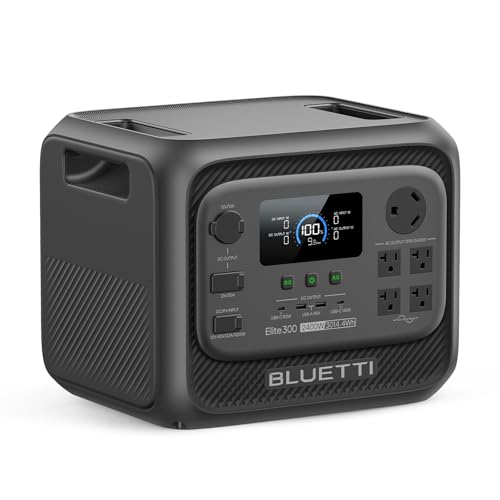
BLUETTI Elite 300 Portable Power Station (3014.4Wh)

Honda EU2200i Companion 2200W Inverter Generator

EF ECOFLOW Delta 3 Portable Power Station (1024Wh)

BLUETTI Elite 100 V2 Portable Power Station (1024Wh)

BLUETTI Elite 200 V2 Portable Power Station (2073.6Wh)

PowerSmart 2500W Portable Inverter Generator

EF ECOFLOW River 3 Plus Extra Battery EB600
H2: Meet The Standout Selections
Base-camp power feels different at the 3kWh tier, and the BLUETTI Elite 300 leans into that gap with a high-capacity LiFePO4 (lithium iron phosphate) battery engineered to fit a notably smaller footprint than traditional large power stations. For families running a 12V fridge for a long weekend or remote-work campers stringing together laptops, monitors, and a hotspot, the capacity removes the daily recharge scramble. Compared with the Honda EU2200i later in this list, this unit trades engine noise for silent operation and zero fuel logistics.
The trade-off shows up in weight and outright cost, and a unit this size still demands a car to move it from the trunk to the cabin. People who set up a semi-permanent camp and want one device to do most of the work will appreciate the headroom; ultralight backpackers won’t.
The Helpful Details
- 3014Wh capacity covers multi-day fridge, light, and device duty without daily top-ups
- Compact footprint for a 3kWh class unit, easing storage in SUV cargo areas
- Silent operation keeps night camps and quiet hours undisturbed
- LiFePO4 chemistry generally supports longer cycle life than older NMC cells
- Doubles as home backup during short outages, adding value beyond camping
Worth Noting
- Substantial weight, so a second pair of hands helps at the trailhead
- Higher upfront cost than mid-capacity units like the BLUETTI Elite 100 V2
- Recharge speed depends on input source and may run slow on small solar arrays
Key Attributes
Whose Campsite It Belongs On
Long-stay car campers, overlanders, and families running a portable fridge plus devices who want silent operation and multi-day runtime from a single unit.
Swap It Out When
Solo backpackers and tent campers on short trips should consider the BLUETTI Elite 100 V2, which trades capacity for easier portability at a more approachable size.
Honda’s EU2200i Companion remains the gold-standard benchmark against which quiet inverter generators are measured, and the Companion trim adds RV-friendly 30A output for campers who plug directly into a coach. An inverter generator produces AC power in a clean, stable sine wave (matching household current), making it safe for laptops and sensitive electronics rather than just camp lights. Where the BLUETTI Elite 300 above runs silent on stored battery power, this Honda relies on refined engine tuning to keep noise levels in polite conversation territory.
Operation at roughly 48 to 57 dB(A) means it won’t earn side-eye from neighboring tents at a state park. The trade-off is fuel: gasoline, oil changes, and the occasional carburetor concern on units that sit idle.
Positive Takeaways
- Clean inverter output safe for laptops, camera chargers, and CPAP machines
- 30A RV outlet simplifies coach hookup over standard 20A inverter units
- Parallel-ready design scales output by linking a second compatible Honda unit
- Low operating noise keeps campgrounds happy at regulated quiet hours
Trade-Offs To Consider
- Gasoline dependency means fuel storage, smell, and cold-weather starting concerns
- Heavier than battery stations of similar output and benefits from a wheeled cart at remote sites
- Engine maintenance (oil, spark plug, fuel stabilizer) is part of long-term ownership
Feature Snapshot
Made For
RVers and tow-campers who want reliable coach power at established sites with road access, plus anyone who already runs a fuel-based kit.
Look Elsewhere When
Campers needing silent, fume-free operation inside tents or cabins should pivot to the EF ECOFLOW Delta 3, which trades refuel stops for recharges.
Turnaround time matters more than capacity on some trips, and the EF ECOFLOW Delta 3 leans into rapid AC input combined with up to 500W solar input for fast top-ups between drives. A full charge in roughly 56 minutes from a wall outlet means a quick lunch stop at a café with an outlet can nearly reset the day. Versus the BLUETTI Elite 300’s much larger 3kWh reservoir, this unit asks users to live a lighter, more disciplined energy routine in exchange for speed.
The Delta 3 also integrates with EcoFlow’s expandable battery family, which means a starting pack can grow over time without replacing the core. Depending on how many add-ons a shopper plans to buy, the ecosystem angle matters as much as the headline capacity.
What Stands Out
- Rapid AC input reaches a full charge in roughly 56 minutes from the wall
- Up to 500W solar input supports off-grid replenishment at sunny campsites
- EcoFlow ecosystem allows expansion to roughly 5kWh with compatible add-ons
- 1800W output handles most common camp appliances in a portable footprint
Honest Caveats
- 1024Wh base capacity means nightly plug-ins for high-draw users
- Fastest AC recharge requires a high-amperage circuit at the wall outlet
- Ecosystem expansion adds cost beyond the headline unit
Best Suited To
Road-trippers and campers who move daily and value fast in-transit recharging over multi-day self-sufficiency from a single pack.
Not Your Match When
Base-campers running a fridge for several days without driving should look at the BLUETTI Elite 300, whose larger reservoir covers the same load for longer stretches.
Group camping piles up device counts fast: phones, tablets, headlamps, a camera battery stack, and a portable speaker. The BLUETTI Elite 100 V2 addresses that reality with 11 ports and a 1800W rated AC output (2700W in power-lifting mode for resistive loads like kettles), so the whole crew can plug in without playing outlet roulette. Sitting at the same 1024Wh capacity as the EF ECOFLOW Delta 3, this unit prioritizes port variety and a power-lifting feature over recharge speed.
Up to 1000W solar input and roughly 70-minute AC charging through TurboBoost offer fast top-ups at camp. Owners commonly report that the dense port layout makes a real difference when the family tent becomes the charging hub after dark.
Real-World Strengths
- 11 ports let a group charge phones, lights, and cameras simultaneously
- Power-lifting mode handles brief surges from resistive loads like kettles
- Up to 1000W solar input speeds up off-grid top-ups at sunny sites
- 1024Wh pairs well with a single overnight fridge or a CPAP machine
A Few Limitations
- Same 1024Wh class as the Delta 3, so heavy users still recharge nightly
- TurboBoost AC charging needs a robust household circuit to hit peak speeds
- Port density is a perk only when the camp actually has that many devices
The Right Fit
Family campers and group tents where multiple devices need charging at once, plus anyone running a single overnight appliance like a portable fridge or CPAP.
Reach For A Different Pick When
Solo campers running only a phone and headlamp may find the EF ECOFLOW River 3 Plus Extra Battery a more appropriately scaled companion, especially when paired with a base unit.
Between the 1024Wh class and the 3kWh Elite 300 sits the BLUETTI Elite 200 V2, a mid-capacity workhorse aimed at campers who want hair dryer, coffee maker, or induction cooktop headroom without jumping to the largest unit. A 2600W continuous AC rating with up to 3900W in power-lifting mode covers high-draw appliances that would clip smaller stations. Compared with the EF ECOFLOW Delta 3 above, this unit trades recharge speed for sustained output.
HyperWatt tech handles brief surges from resistive loads (devices like kettles or space heaters that draw extra power at startup). The expanded port array supports running up to nine devices simultaneously, which suits overlanding rigs that double as mobile offices.
What Works In Its Favor
- 2600W continuous output runs hair dryers, coffee makers, and induction cooktops
- 2073.6Wh capacity bridges the gap between 1kWh and 3kWh categories
- Up to nine simultaneous devices suits overlanding and mobile-office setups
- Solar generator compatibility supports off-grid recharging at remote sites
Possible Compromises
- Heavier than 1kWh units, so a cart or two-person carry helps at the trailhead
- Higher cost than the smaller Elite 100 V2 or Delta 3
- Power-lifting mode applies to resistive loads only, not motor-driven tools
Feature Rundown
Who Should Grab It
Overlanders, glampers, and remote-work campers running kitchen-class appliances who want more capacity than a 1kWh unit without the weight of the 3kWh Elite 300.
A Better Fit Elsewhere
Weekend tent campers on a strict gear budget will find the PowerSmart 2500W inverter generator a more traditional fuel-based alternative at lower upfront cost.
Some campers prefer the simplicity of gasoline and an engine they understand, and the PowerSmart 2500W inverter generator targets that audience. It produces 2500 peak watts and 1900 rated watts with low total harmonic distortion (THD under 3%, meaning the AC waveform stays clean enough for sensitive electronics), so laptops and phone chargers run safely alongside camp appliances. The 1.06-gallon tank stretches to roughly 8 hours of runtime at 25% load, covering an overnight fridge cycle on a single fill.
At about 52 dBA from 23 feet, the noise floor stays polite for family campgrounds. People who already keep a fuel can on hand and want proven gas-engine convenience will find it refreshingly straightforward.
Everyday Perks
- Clean inverter output (THD under 3%) protects sensitive electronics
- Up to 8 hours runtime at 25% load covers overnight appliance duty
- 52 dBA noise level keeps campground neighbors at ease
- Refuel-and-go convenience suits campers used to gas-powered gear
Where It May Fall Short
- Gasoline dependency means fuel storage, stabilizer, and oil maintenance
- Emissions and exhaust rule out indoor or fully enclosed-tent use
- Quieter than open-frame units, but louder than any station on this list
Perfect Match For
Traditional campers and tailgaters who already keep fuel on hand and want simple gas-engine convenience over battery management.
Skip It When
Campers seeking silent, fume-free operation at enclosed sites should pivot to the BLUETTI Elite 100 V2, which trades runtime mechanics for silent, indoor-safe use.
Expansion packs sit in a different category than the standalone stations earlier, but they earn their keep when the existing system needs more headroom. The EF ECOFLOW River 3 Plus Extra Battery EB600 adds 572Wh of capacity to a compatible River 3 Plus base, lifting the system to roughly 858Wh. A pogo-pin connection means no cables or screws for stacking, which matters more than it sounds when assembling gear in fading light at camp.
The pack also works independently, so a camper can leave the base station in the car and carry just the extra battery into the tent for night use. For shoppers already invested in the EcoFlow ecosystem, this is the cleanest path to more runtime.
Advantages To Know
- Adds 572Wh to a River 3 Plus base without cables or tools
- Stackable form factor keeps the rig compact in vehicle storage
- Independent use lets campers carry just the battery into the tent
- Plug-and-play integration with the EcoFlow ecosystem
Small Caveats
- Only useful for shoppers who already own or plan to buy a River 3 Plus base
- Smaller standalone capacity than the mid-tier stations on this list
- Stacking two packs plus base requires careful packing in a vehicle
Who Will Love This
Existing River 3 Plus owners who need more runtime and prefer stacking add-ons over replacing the core unit.
Where Another Pick Suits Better
Newcomers starting from scratch should buy a single higher-capacity station like the BLUETTI Elite 200 V2 rather than building up from a base plus add-ons.
H2: Picking The Right Portable Generator For Camp Life
Camping power splits into two main camps: fuel-burning inverter generators and silent battery stations. Inverter generators, like the Honda EU2200i or PowerSmart 2500W, run on gasoline and produce clean AC power suitable for sensitive electronics, which makes them a strong fit for RV hookups and established campgrounds with vehicle access. Battery stations trade fuel logistics for silent operation and zero emissions, fitting tent camping, indoor use, and campers who simply want to plug in without engine noise.
Capacity matters more than peak output for most campers. A 1000Wh battery covers a portable fridge for roughly a day and a half, a CPAP machine overnight, and several phone and laptop charges, which describes most weekend trips. Larger 2kWh and 3kWh units extend that to multi-day base-camp duty. Peak output, measured in watts, determines which appliances can run; a hair dryer or induction cooktop needs at least 1800W of sustained output.
Portability shapes the real-world choice. Anything over 50 pounds benefits from a cart or two-person carry, and backpackers should keep total weight below 25 pounds for sane hiking. Solar input ratings matter for off-grid recharging: a station accepting 500W to 1000W of solar input recovers a meaningful chunk of capacity during a sunny day, while a low-input unit may only trickle charge. Runtime on gas generators depends on tank size and load, so a 1-gallon tank at 25% load typically delivers around 8 hours, enough for an overnight appliance cycle.
Recharge time and ecosystem often go unnoticed until the second trip. Stations with rapid AC input (roughly an hour for a full charge) reduce downtime between drives, while expandable ecosystems let a starter pack grow over time. Match the unit to the trip pattern: daily movers benefit from quick-turnaround stations, while stationary base campers benefit from larger reservoirs.
H2: Things Worth Knowing Before Hitting Buy
Mistakes Worth Dodging
Buying for wattage without checking runtime leaves campers with a unit that powers a kettle for ten minutes but cannot keep a fridge cold overnight. The honest read is that capacity (Wh) and runtime matter more than peak output for most camping scenarios. Skipping noise-floor research is another common slip: a 70 dB generator feels intrusive at quiet state-park sites, even when the spec sheet looks strong. Match noise to the campground class, especially for family or backcountry sites.
What The Higher Tier Buys
Higher-tier portable generators for camping cost more because they pack larger LiFePO4 battery banks, faster AC and solar input circuitry, and more robust inverters capable of running kitchen-class appliances. The upgrade pays off for campers running fridges plus induction cooktops, those needing multi-day runtime without daily charging, and remote workers running laptops and monitors from a single pack. For weekend tent campers running only lights and phones, a mid-tier unit often covers the use case at noticeably lower cost.