
A solid 30-degree down sleeping bag earns its place on cold shoulder-season trips, damp spring overnights, and high-altitude evenings when temperatures dip without warning. The trick is matching fill power, baffle construction, and fit to your specific climate, body shape, and pack style. The list below sorts through eight well-rounded picks so you can land on the right balance of warmth, weight, and price for the way you actually camp.
How The Shortlist Stacks Up

HiZYNICE Sleeping Bags for Adults XXL Cold Weather

Coleman Palmetto Cool-Weather Sleeping Bag 30°F

Marmot Trestles 30 Sleeping Bag

Kelty Cosmic 20 Down Mummy Sleeping Bag
Sea to Summit Traveller Down Sleeping Bag Blanket
QEZER 0 Degree Down Sleeping Bag for Adults

QEZER 600 Fill Power Ultralight Backpacking Bag
Featherstone Moondance 25 Down Top Quilt
More On The Choices That Made The List
The HiZYNICE XXL immediately stands out for anyone who has ever squeezed into a standard mummy and felt the walls pressing in. With a 90-inch by 39-inch cut, this bag comfortably fits adults up to roughly 6 foot 7, giving restless side sleepers and tall campers the freedom to stretch out. Flannel construction adds a noticeable softness against the skin, which makes the bag feel closer to a heavy comforter than a traditional backpacking shell.
It’s clearly aimed at car campers and base campers rather than ultralight trekpers. Where the Kelty Cosmic 20 later on this list prioritizes packability and a trim mummy profile, the HiZYNICE leans the opposite direction. For shoulder-season car trips where comfort matters more than ounces, that trade feels sensible.
Useful Highlights
- Generous 90-by-39-inch cut gives big and tall sleepers elbow and knee room
- Flannel lining delivers a softer, warmer hand-feel against the skin
- Wide rectangular shape works well for side sleepers who shift at night
- Comes ready for car camping and base-camp setups without extra layering
Things To Consider
- Bulk and weight limit appeal for anyone counting ounces
- Rectangular shape packs large and may need a generous storage sack
Who It Suits Best
Tall or broad-shouldered campers and side sleepers who prioritize roomy comfort over pack size on shoulder-season car trips.
Consider Something Else When
Backpackers packing long miles will find the Kelty Cosmic 20 a far lighter and more compressible companion.
The Coleman Palmetto is the kind of sleeping bag most people picture when they think of family camping. It’s rated for 30 to 50°F, fits folks up to roughly 5 foot 11, and uses a polyester shell with a soft tricot fiber blend liner that feels familiar from a hundred summer campouts. This is the entry-level friendly option on the list, designed to be dragged out of the closet and thrown into the trunk without much fuss.
Where the HiZYNICE XXL above trades space for bulk, the Palmetto leans into simple, dependable comfort. Coleman’s Thermolock draft tube along the zipper cuts heat loss where most budget bags leak warmth, and the patented no-snag zipper plows fabric away from the teeth before they close. Roll Control and Quick Cord features make stuffing the bag back into its included sack less of a wrestling match.
What Earns Its Place
- Thermolock draft tube helps block heat loss through the zipper
- Two-way no-snag zipper opens from the bottom for ventilation on warm nights
- Roll Control design simplifies stuffing the bag back into its sack
- Included stuff sack keeps storage and transport straightforward
Honest Caveats
- Polyester fill is heavier and bulkier than the down options later on this list
- Better suited to car camping than long-distance backpacking
Right Fit For
Occasional campers and families looking for an approachable, easy-to-use bag for mild-weather trips.
A Better Fit Elsewhere
Thru-hikers and ounce-counters will get more mileage out of the QEZER 600 Fill Power Ultralight Backpacking Bag further down this list.
The Marmot Trestles 30 is a synthetic-fill mummy built for conditions where down bags tend to struggle. Damp Pacific Northwest nights, muggy summer evenings, and soggy shoulder-season trips all play to its strengths. SpiraFil high-loft insulation keeps insulating even when moisture sneaks in, which is the difference between a cold, clammy morning and a warm one when the weather turns.
Compared with the Coleman Palmetto above, the Trestles 30 trades some of that family-camp familiarity for a more technical backcountry profile. A full-length two-way zipper and a roomy 3D footbox give space to squirm, while the EN temperature rating keeps expectations honest about what the bag can handle. For backpackers camping where rain is a given, this is the safer bet.
Positive Takeaways
- SpiraFil synthetic insulation stays warm when damp
- 3D footbox lets feet rest in a natural, roomier position
- Two-way zipper aids ventilation during warmer stretches of the night
- EN-rated temperature gives a reliable benchmark for cold-weather planning
Points To Keep In Mind
- Heavier and bulkier than comparable down bags
- Synthetic fill may take longer to dry after a wet night
Quick Facts
Made For
Backpackers, trekkers, and mountaineers camping in damp or humid climates where moisture is part of the forecast.
Skip It When
Dry-weather travelers chasing minimum pack weight should look at the Featherstone Moondance 25 further down this roundup.
The Kelty Cosmic 20 is built for the camper who refuses to put the gear away when the first frost arrives. Rated to 20°F with an ISO comfort rating near 32°F, it covers the cold edge of spring and the hard edge of fall without asking you to second-guess your plans. The 550-fill duck down lofts quickly out of the stuff sack, and recycled shell fabrics treated with a PFAS-free DWR handle light precipitation without relying on forever chemicals.
That makes it a natural middle ground between the budget-friendly Coleman Palmetto and the lighter QEZER ultralight bag reviewed later. It packs down small enough for a backpacking pack, while still offering enough warmth for campgrounds above treeline. If you’ve graduated from entry-level bags but don’t want to commit to premium ultralight price tags, the Cosmic 20 lands in a comfortable middle.
Notable Gains
- 550-fill duck down offers a strong warmth-to-weight ratio for the cost
- Recycled shell fabrics appeal to campers trying to reduce environmental footprint
- PFAS-free water-repellent treatment sheds light moisture without persistent chemicals
- Three-season rating covers cold spring and late fall conditions
Trade Offs
- Down insulation loses loft quickly if the bag gets soaked
- 550-fill power is warm, but pricier bags push 700+ for the same weight
Best Suited To
Three-season backpackers and campers who want a step up from synthetic without stepping into premium ultralight territory.
Where Another Pick Suits Better
Thru-hikers focused on shaving ounces should reach for the Featherstone Moondance 25 for its higher fill power and lighter overall build.
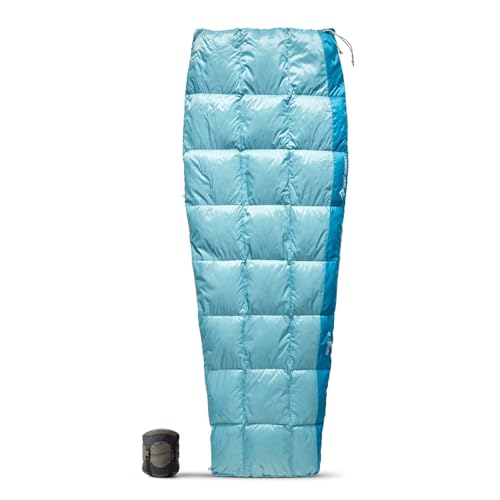
The Sea to Summit Traveller is less a sleeping bag and more a chameleon. Rated around 45°F, this quilt-style piece works as a bag in cooler weather and opens flat as a camp quilt on warmer evenings. 650+ fill power duck down carries Responsible Down Standard certification, and the non-PFC Ultra-Dry Down treatment helps the loft survive the occasional damp night under a leaky tarp.
Bikepackers, ultralight hikers, and travelers who value versatility love this kind of hybrid. Compared with the conventional mummy shape of the Kelty Cosmic 20, the Traveller trades traditional hood and zipper construction for a more open, adaptable form. Depending on your sleep style, that may feel liberating or slightly less cozy when temperatures really drop.
Reasons It Performs
- Functions as both a sleeping bag and a flat quilt
- 650+ fill down balances warmth and compressibility for travel use
- Responsible Down Standard certification appeals to ethically minded campers
- Ultra-Dry Down treatment resists moisture better than untreated down
Where It May Fall Short
- Higher temperature rating leaves less margin on cold nights
- Quilt shape feels less contained for campers who shift around a lot
Perfect Match For
Bikepackers and versatility-focused travelers who want one piece that adapts to multiple climates and sleeping styles.
Swap It Out When
Campers who need genuine 30°F protection will get more reliable warmth from the QEZER 0 Degree Down Sleeping Bag further down the list.
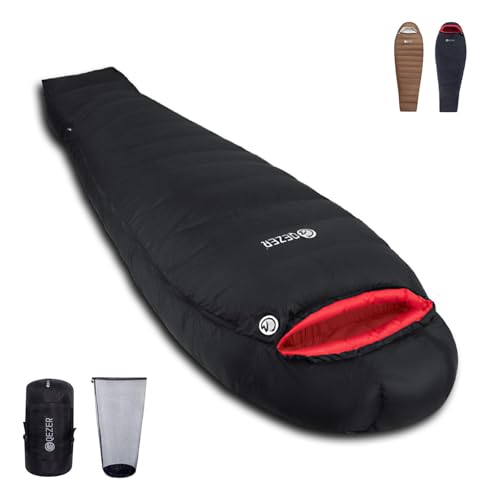
The QEZER 0 Degree is built for campers who chase winter or push into shoulder-season conditions well below freezing. Where most bags on this list target the 30°F mark, this one steps further down the thermometer, trading a little extra weight for a much wider margin of warmth. That extra headroom means comfort when unexpected cold fronts roll through or when camp sits at higher elevation.
The trade-off is plain: this is not the bag for a fast-and-light summer trip. Compared with the Sea to Summit Traveller, which adapts as a quilt and packs into a tiny corner of your bag, the QEZER 0 Degree leans toward warmth-first, weight-second thinking. If you camp into late November and early March, that balance makes sense.
Advantages To Know
- 0°F temperature rating provides a generous cold-weather margin
- Down fill delivers strong warmth for the weight relative to synthetic alternatives
- Mummy shape retains heat efficiently when temperatures drop hard
A Few Limitations
- Bulkier and heavier than the summer-friendly bags on this list
- Owners commonly report needing careful storage to keep the loft intact over time
Quick Facts
Who Should Grab It
Winter campers and shoulder-season travelers who camp below freezing and want one bag that handles genuine cold snaps.
Look Elsewhere When
Three-season backpackers chasing minimum weight should reach for the QEZER 600 Fill Power Ultralight Backpacking Bag instead.
The QEZER 600 Fill Power bag is built for the kind of camper who measures gear in grams and dreams in thru-hike mileage. At roughly 1.54 pounds with a pack size around 10.6 by 5.5 inches, it slips into a pack compartment that would barely fit a 30°F synthetic. The 600-fill duck down provides reasonable loft for the weight, and a nylon shell keeps the package light without feeling flimsy.
It’s worth noting that the comfort range sits closer to mild weather than to deep cold, with comfort ratings in the upper 50s and a limit near 45°F depending on conditions. That puts it in different territory from the QEZER 0 Degree reviewed earlier, which is built for genuine winter. This one is for summer ridge walks and shoulder-season overnights when warmth needs are moderate and pack weight matters most.
A Few Strong Suits
- Weighs about 1.54 pounds for serious pack-light appeal
- Packs down to roughly 10.6 by 5.5 inches for tight pack compartments
- Double-zipper design helps block cold air leaks
- Light enough for bikepacking and fast-packing trips
Room For Improvement
- Comfort rating sits above freezing, so cold-night versatility is limited
- Light shell fabric requires care to avoid abrasion on rough terrain
Built With In Mind
Thru-hikers, bikepackers, and fast-packers who need minimum pack weight above all else on milder trips.
Reach For A Different Pick When
Campers facing below-freezing nights should pick the QEZER 0 Degree Down Sleeping Bag earlier on this list.
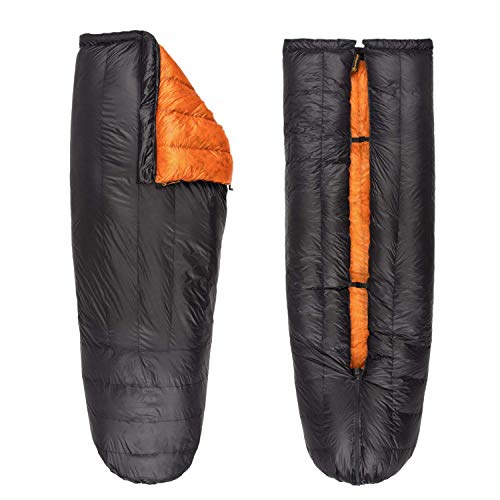
The Featherstone Moondance 25 sits at the top end of this roundup for campers who obsess over the weight column. With 850-fill power RDS-certified duck down and a thin 10-denier nylon shell treated with a calendering process to hold the down in place, this is a serious piece of ultralight engineering. It functions as a top quilt, a mummy-style bag, or a flat blanket, depending on how you set it up at camp.
Compared with the QEZER 600 Fill Power bag just before it, the Moondance delivers more loft per gram, a more premium shell, and greater versatility. The cost is a higher price and a learning curve for campers new to quilt sleeping systems. For thru-hikers already comfortable with pad-and-quilt setups, the upgrade tends to feel worth every dollar.
Standout Benefits
- 850-fill power down offers exceptional warmth-to-weight performance
- 10-denier calendered nylon is light yet breathable enough to avoid clamminess
- RDS-certified DOWNTEK down supports ethical sourcing standards
- Doubles as a top quilt, mummy bag, blanket, or underquilt in camp
Practical Considerations
- Higher price point than other bags on this list
- Quilt design takes adjustment for campers used to traditional hooded bags
- Thin shell fabric requires careful handling around rocks and branches
Feature Snapshot
The Right Fit
Experienced ultralight backpackers and thru-hikers ready to invest in premium down for long-distance comfort.
Another Choice May Suit
Campers new to quilt setups will find the Kelty Cosmic 20 a more forgiving traditional mummy introduction.
What Matters Most Before Choosing a 30 Degree Down Sleeping Bag
A 30-degree rating is a useful benchmark, but it only tells part of the story. The difference between a comfortable night and a cold, restless one usually comes down to three attributes working together.
Match the Rating to Real Conditions
Temperature ratings come in comfort, limit, and survival varieties. For most campers, comfort ratings around 30°F work well in shoulder seasons, while limit ratings closer to 20°F offer a useful buffer. If you sleep cold or camp at elevation, lean toward the conservative end of any rating range you see listed.
Weigh Fill Power Against Pack Size
Fill power, which measures how many cubic inches one ounce of down occupies, signals loft and warmth-to-weight efficiency. Higher numbers like 850 compress smaller and trap more warm air, but cost more. Lower numbers like 550 still insulate well but pack larger and weigh more. For backpacking, aim for 600 or higher to keep weight manageable.
Don’t Overlook Shape and Fit
Mummy bags hug the body and trap more heat, while rectangular bags offer room to stretch. Quilt-style options sit between the two, with the most versatility. Consider how you sleep, whether you shift around at night, and how much internal space you need to feel comfortable.
Key Considerations Across These Picks
Mistakes Worth Dodging
A common trap is chasing the lowest price and ending up with a bag rated at temperatures the manufacturer tested under ideal lab conditions. Real campsites are wetter, windier, and colder than those tests. Another mistake is buying a mummy shape for a side sleeper who keeps bumping into the walls, or grabbing a quilt before learning how to seal the foot end on cold nights.
Where The Extra Money Goes
Premium down bags justify their cost through higher fill power, lighter shell fabrics, and more ethical sourcing certifications. You also pay for baffle design that keeps down evenly distributed. The upgrade feels worth it for serious backpackers, but casual car campers rarely need the lightest possible option.