
Cloudy pool water after a storm, a long weekend of cannonballs, or a stubborn algae fight is one of those problems every backyard pool owner eventually meets. Pool flocculants handle what filters can’t, dragging fine particles together and dropping them to the floor so a vacuum can sweep them away. The seven options below cover the main styles on the market right now, from fast-acting clarifiers to heavy-duty settling agents for post-algae recovery.
A Side-By-Side Look

Natural Chemistry Clear & Perfect Pool Clarifier 2-Pack
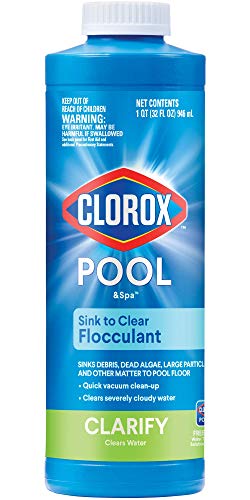
Clorox Pool & Spa Sink to Clear Flocculant

HTH 67029 Drop Out Flocculant 1 qt

HTH 67080 Drop Out Flocculant 32 oz


Baquacil Flocculant 1.5 lb 4-Pack

SUMMERBUDDY Pool Flocculant 32 oz
A Closer Look At Each Pick
Routine haze after a busy swim weekend is what this Natural Chemistry 2-pack is built for. The highly concentrated synthetic polymers grab tiny suspended particles and guide them into the filter, restoring that crystal-blue look without forcing a vacuum session. In most backyards running a standard cartridge or sand filter, the difference between cloudy and clear often comes down to this kind of gentle, ongoing chemistry rather than a heavy-handed rescue.
Pool owners who treat clarity as maintenance rather than emergency will find this two-quart supply covers an entire season of small corrections. Where the rest of this list leans toward the heavy-duty sinking agents, this pick earns its place by working with the equipment that’s already in place.
Benefits That Matter
- Polymer action works with the existing filter instead of fighting it, so there’s no sludge to vacuum after treatment
- Concentrated formula means a little goes a long way, stretching the two-quart pack across multiple touch-ups
- Doubles up nicely for households that run more than one pool or a long swim season
- Quart-sized bottles are easy to store in a small pool shed without taking over the shelf
Things To Consider
- Designed for filter-friendly clarification rather than heavy algae recovery, so a true green-water crisis needs the Clorox option instead
- Performance depends on a clean, properly running filter, which means backwashing first is often necessary
Feature Snapshot
Who It Suits Best
Backyard pool owners who want steady, low-effort clarity maintenance across a full swim season.
Skip It When
Clorox Pool & Spa Sink to Clear Flocculant is a better match after a major algae bloom, since it sinks debris instead of pushing it through the filter.
After a serious algae treatment, dead and dying material often turns the water milky in a way that filters simply can’t keep up with. The Clorox Pool & Spa Sink to Clear formula weighs down those impurities, including dead algae and floating debris, until they settle to the floor for vacuum removal. Compared with the maintenance-style Natural Chemistry pick above, this one is built for crisis recovery.
Opening-day cleanup on a long-neglected pool benefits from exactly this kind of settling action. The catch is that the pool needs to be left off and undisturbed overnight so particles can actually drop.
The Good Stuff
- Pulls down dead algae, debris, and large particles that filters can’t catch after treatment
- Makes a noticeable dent in cloudy water from heavy post-algae recovery jobs
- Single-quart bottle is easy to pour around the deep end for even distribution
Worth Noting
- Requires manual vacuuming the next morning, which adds time compared with a filter-friendly clarifier
- Pool pump typically needs to be shut off overnight for the settling to actually work, which delays swimming
Right Fit For
Pool owners dealing with heavy post-algae haze or a neglected opening-day situation that needs a hard reset.
Consider Something Else When
HTH 67029 Drop Out Flocculant is a better call for saltwater systems where pH stability matters during treatment.
Saltwater pool owners often skip flocculants because some formulas mess with pH during the treatment window. HTH 67029 is built with that exact concern in mind: the brand says it won’t throw pH off or damage filter equipment when applied as directed. The cloudy-to-clear cycle usually completes overnight, leaving a layer of settled material ready for vacuuming the next day.
For households that already own a multiport valve and a vacuum hose, the post-treatment cleanup is the easy part. The hard part is keeping pH stable while floccing, and this HTH formula is one of the calmer choices on the list.
Why It Works Well
- Compatible with saltwater systems without disturbing pH levels during treatment
- Settles fine particles overnight for easier vacuuming the following day
- Safe for standard filter equipment when applied per package directions
Trade Offs
- Only works on pools that can vacuum settled material directly to waste, since pushing it through the filter defeats the purpose
Made For
Saltwater pool owners who want a flocculant that won’t shift pH mid-treatment.
Look Elsewhere When
AquaDoc Pool Flocculant is the better fit for households juggling both an inground and an above-ground pool on the same property.
HTH’s 67080 formula is essentially a sibling to the 67029 above, but in a more standard 32 oz bottle aimed at traditional inground pool owners. The pitch is straightforward: pour, wait overnight, vacuum, swim. For anyone running a residential inground pool with a multiport valve, this is the kind of no-fuss flocculant that fits the established routine.
Where it differs from the larger Clorox option is in the calmer scope, since the 67080 is better matched to typical homeowner cloud events rather than a full-blown green recovery.
Practical Advantages
- 32 oz bottle suits a standard inground pool dose without leftover shelf-dwellers
- Designed to clear cloudy water quickly for households that want to swim again fast
- Compatible with the same waste-vacuum setup that other HTH flocculants use
Honest Caveats
- Only works on pools that can vacuum directly to waste, which excludes some cartridge-only systems
- After-treatment vacuuming adds a half-day of work before the pool is swim-ready again
Best Suited To
Standard inground pool owners who want a brand-name flocculant sized for typical residential doses.
Not Your Match When
SUMMERBUDDY Pool Flocculant is a friendlier first-time choice since it leans into a simpler pour-and-wait routine.
Households running two different pools, like a backyard inground and a smaller above-ground setup, often find themselves buying two different flocculants. AquaDoc markets this 32 oz formula across both pool types, taking the guesswork out of stocking. The chemistry binds suspended dirt into larger clumps so they drop to the floor for vacuuming, similar in approach to the HTH products above.
The honest read is that dual-type coverage is convenient but not magic. The same vacuum-to-waste requirement still applies, so cartridge-only systems may struggle with the cleanup phase regardless of branding.
Reasons It Performs
- Labeled for both inground and above-ground pools, which simplifies household stocking
- Forms larger clumps from suspended particles, making vacuum pickup easier than chasing fine silt
- 32 oz bottle suits mid-size residential doses without significant waste
Points To Keep In Mind
- Like other flocculants, requires a vacuum-to-waste option, which some cartridge filter setups don’t offer
- Above-ground pool owners with small cartridge pumps may need to manually scoop settled material
Whose Shelf It Belongs On
Mixed-pool households that want one flocculant bottle to cover both an inground and an above-ground pool.
A Better Fit Elsewhere
HTH 67029 Drop Out Flocculant is the right choice for saltwater pools where pH stability matters during treatment.
Big pools and big pools of cloudy water call for bigger packaging. The Baquacil 1.5 lb four-pack doses at one full pound per 10,000 gallons, making it a workhorse option for large residential or shared community pools. The aluminum sulfate formula is iron-free, which sidesteps the staining issues that some metal-based flocculants leave behind on light plaster surfaces.
For most backyard pools, four pouches is more than a single season’s worth, so this lands as a bulk-buyer’s pick rather than a casual grab. Owners of smaller above-ground pools may find a single quart bottle more practical.
Where It Delivers
- Doses at 1.5 lb per 10,000 gallons, matching large-pool dosing without awkward partial pouches
- Iron-free aluminum sulfate formula reduces the risk of surface staining on light plaster finishes
- Four-pack format covers multiple treatments or one heavy overhaul on a big pool
Small Caveats
- Bulk format is overkill for small above-ground pools where a single quart bottle is more sensible
- Powder application requires more measuring and stirring than a liquid pour-and-go
- Same vacuum-to-waste requirement as other flocculants on this list
Perfect Match For
Large-pool owners who treat cloudiness on a regular basis and want a multi-treatment supply on hand.
Reach For A Different Pick When
SUMMERBUDDY Pool Flocculant is a better fit for first-timers who want the simpler 32 oz pour routine.
For someone opening their first pool, the simpler the routine the better. SUMMERBUDDY keeps it that way: pour the 32 oz bottle directly into the water, wait for suspended debris to settle, then vacuum. There’s no pre-mixing, no measuring pouches, and no multi-step chemistry to learn. Where the Baquacil pick above targets experienced owners running large pools, this one targets the first-time homeowner in a small to mid-size backyard.
The honest read is that beginner-friendly packaging still needs the same overnight settling window and vacuum-to-waste step, so first-timers should plan for a swim pause before treating.
Strong Points
- Simple pour-in application without any pre-mixing or measuring
- Designed to gather suspended debris into settleable clumps for easier vacuum cleanup
- 32 oz size suits small to mid-size residential pools without leftover product
Room For Improvement
- Manual vacuuming is required after particles settle, adding a step beginners may underestimate
- Like every other flocculant on this list, pool use must pause during the settling window
Who Should Grab It
First-time pool owners who want the simplest pour-and-wait flocculant routine on the market.
Swap It Out When
Natural Chemistry Clear & Perfect Pool Clarifier is the better match for ongoing maintenance haze where filter chemistry is preferred over settling.
Matching Flocculants To The Pool And Problem At Hand
The clearest way to think about pool flocculants is to split them into two camps: filter-friendly clarifiers and sink-to-floor settling agents. Clarifiers like Natural Chemistry’s polymer formula work with the existing filter, pulling tiny particles into clumps the filter can grab. They shine during routine haze events and demand very little extra work, since the filter does the cleanup. Saltwater and cartridge owners tend to prefer this path because no vacuum-to-waste step is required.
Settling agents like the Clorox, HTH, AquaDoc, Baquacil, and SUMMERBUDDY products work differently. They weigh suspended material down to the pool floor overnight, where a vacuum sweeps it away, often directly to waste. That makes them stronger choices for post-algae recovery, neglected openings, or stubborn cloudiness where filters have given up.
Dosing Form And Pool Size
Liquid bottles in quart sizes, like most of the picks above, cover a single mid-size residential treatment without leftovers. Powder pouches in multi-packs, like the Baquacil four-pack, suit larger pools or anyone treating cloudiness multiple times a season. Powder needs more measuring and stirring, which is fine for experienced owners but adds friction for beginners.
Equipment Compatibility Matters
Vacuum-to-waste capability is the silent requirement behind half this list. Cartridge-only filter systems that can’t bypass to waste will simply push settled material back into the pool. Pool owners with multiport valves on sand or DE filters usually have this option built in, while cartridge setups may need an upgrade or a different chemistry approach altogether.
Pool Chemistry And Saltwater Sensitivity
Some flocculants affect pH during treatment, which matters more in saltwater pools where pH swings cause scale and corrosion. The HTH 67029 explicitly avoids that issue, and Baquacil’s iron-free aluminum sulfate formula reduces staining risk on light plaster. For most backyard pools, matching the flocculant to the existing sanitizing system avoids chemistry surprises later.
Key Considerations Across These Picks
Where Shoppers Go Wrong
The most common flocculant mistake is treating the wrong problem. Filter-friendly clarifiers won’t rescue a green pool, and heavy settling agents are overkill for light haze. Picking the wrong chemistry wastes product and time. Another trap is forgetting the vacuum step: settling flocculants do nothing without the follow-up vacuum the next morning, so planning a swim pause matters.
When Paying More Pays Off
Higher-priced flocculants tend to buy concentration and saltwater compatibility rather than raw cleaning power. A concentrated quart bottle covers more treatments per dollar than a diluted one, and a pH-stable formula prevents post-treatment rebalancing. For large pools or saltwater systems, that extra spend usually earns itself back in fewer repeat treatments.
The Takeaway
The right pool flocculant comes down to matching chemistry to the cloudiness at hand. Routine haze calls for a filter-friendly clarifier, while stubborn post-algae recovery calls for a settling agent and a vacuum plan. Saltwater owners, large-pool owners, and first-timers each have a clear fit on this list, and any of these seven will do the job when matched to the pool and the problem in front of it.