
Pellet smokers with Wi-Fi control let you skip the babysitting that traditional offset cookers demand, dialing in chamber temp and smoke profile from a phone while the brisket rests inside. The seven options below cover a spread of charcoal grills, drum smokers, offset units, and a pellet smoke tube accessory that adapts existing cookers. Most readers will fall into one of two camps: charcoal purists who want connected monitoring, or pellet loyalists who need wireless control for long overnight cooks.
A Snapshot Of The Selections

Oklahoma Joe’s Rambler Portable Charcoal Grill 218 sq. in.
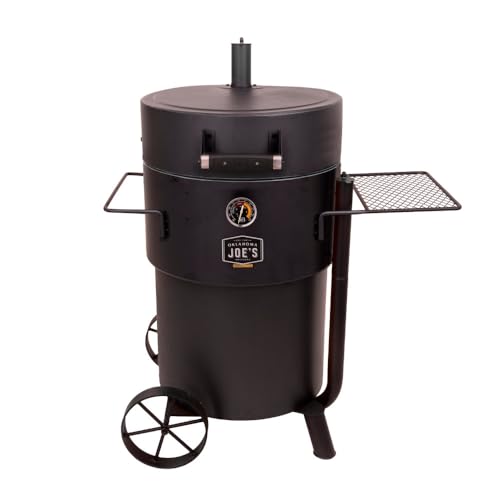
Oklahoma Joe’s Bronco Pro 21.5 in. Heavy Duty Charcoal Drum Smoker and Grill
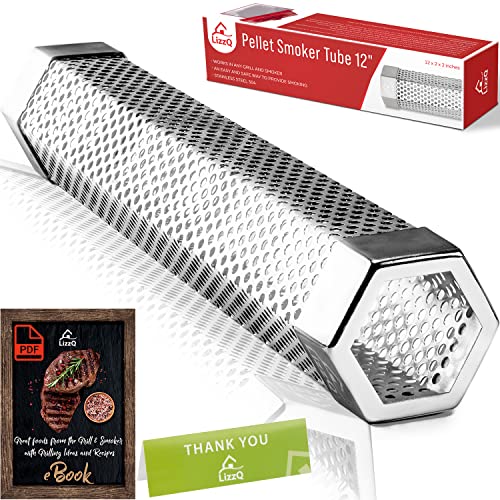
LIZZQ Premium Pellet Smoker Tube 12 inches

Oklahoma Joe’s Firecraft Series Modular Open Fire Barrel Charcoal Grill

Oklahoma Joe’s Highland Offset Reverse Flow Charcoal Smoker and Grill
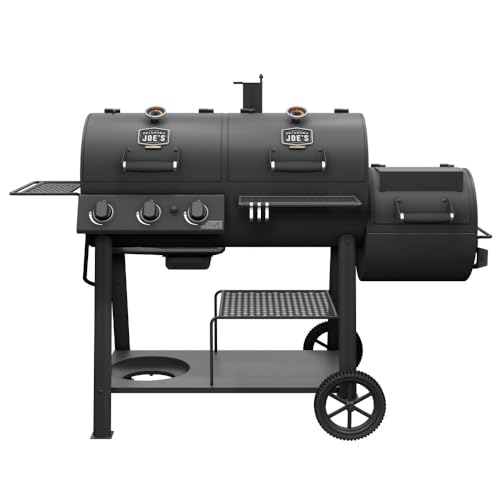
Oklahoma Joe’s Canyon Combo Dual Fuel 3-Burner Propane and Charcoal Smoker and Grill

Oklahoma Joe’s Longhorn Offset Charcoal Smoker and Grill
A Deeper Look At The Lineup
The Rambler is small enough to set on a tailgate or a picnic table, which puts it in a different category from the heavy offset units dominating this list. A height-adjustable charcoal tray handles the actual temperature work, letting the fire sit close for searing or drop down for longer indirect cooks.
For apartment dwellers without a backyard and renters hauling a grill to the park, the Rambler’s footprint matters more than its raw output. It lacks the 1000-plus square-inch chambers of the Longhorn and Canyon Combo that follow, and it isn’t built for overnight burns. That trade-off is the point: portability over capacity.
What Stands Out
- Tabletop footprint fits tailgates, small patios, and truck beds without dedicated cart space
- Adjustable charcoal tray offers quick shifts from sear to indirect without lifting grates
- Lightweight steel body is manageable for one person to load and unpack on site
Things To Consider
- At 218 square inches, expect enough room for roughly four to six burgers rather than a full brisket
- No enclosed lid means wind protection is largely up to the cook and the spot chosen
- Seasoning and rust prevention need more frequent attention on thin portable steel than on thicker stationary builds
Key Specs
Who It Suits Best
Tailgaters, renters, and park-day grillers who need real charcoal flavor in a package that fits behind a truck seat.
Look Elsewhere When
Anyone hosting a backyard cookout for more than six people should step up to the Oklahoma Joe’s Longhorn Offset Charcoal Smoker and Grill for its 1060-square-inch footprint.
The Bronco Pro moves past the Rambler’s tabletop simplicity into a vertical drum format that excels at steady, low-temperature cooking. A sealed lid combined with a deliberate airflow path is the heart of the design, allowing a consistent chamber temperature that charcoal grills in open formats can’t easily replicate.
Where the Rambler chases portability, the Bronco Pro chases burn time. The oversized charcoal basket under the cooking grate is built to run longer sessions before refueling, which matters on brisket flats and pork shoulders that punish a cook who has to crack the lid mid-cook.
Useful Touches
- Drum-style body concentrates heat for steadier chamber temperatures than open kettle grills
- Extended charcoal capacity supports overnight cooks without mid-session refueling
- Side door access keeps fuel adjustments simple without lifting the entire lid
Trade Offs
- Larger footprint demands a permanent or semi-permanent spot in the yard or on the patio
- Charcoal fuel management still requires more attention than a pellet hopper-fed system
- Drum geometry limits how many racks can be loaded compared to cabinet-style offset smokers
Feature Snapshot
Made For
Cooks committed to charcoal who want overnight low-and-slow sessions and don’t mind tending fuel every few hours.
Consider Something Else When
Anyone preferring multi-rack capacity for large gatherings should consider the Oklahoma Joe’s Canyon Combo Dual Fuel 3-Burner Propane and Charcoal Smoker and Grill for its 1031-square-inch layout.
The LIZZQ tube is a different shape of problem entirely. It’s an accessory, not a full cooker: a 12-inch perforated stainless tube that holds wood pellets and smolders inside any existing gas, charcoal, or electric grill to add real smoke flavor. Two tubes ship in the box, which extends total smoke time and lets one run while the other cools.
For someone whose main grill is a gas unit without smoke output, this is the cheapest path to a credible smoky finish on ribs or salmon. Compared to the Bronco Pro and Highland ahead in this list, the tube doesn’t cook the food itself, but it sidesteps the fuel management those charcoal units demand.
What It Does Well
- Fits gas, charcoal, and electric grills, so it doesn’t force a separate dedicated smoker purchase
- Solid burn duration covers typical short-to-medium cooks like chicken halves or fish fillets
- Stainless build holds up to repeated heating and cooling cycles better than thinner mild steel
Points To Note
- It enhances flavor but does not replace a full smoker for true low-and-slow meat cooks
- Pellets are consumed and must be restocked separately from any grill fuel already in use
- Tube placement inside smaller grills can crowd the cooking area
Right Fit For
Gas-grill owners who want smoke flavor without buying a dedicated smoker or learning charcoal management.
A Better Fit Elsewhere
Pitmasters wanting a full chamber for overnight brisket cooks should reach for the Oklahoma Joe’s Highland Offset Reverse Flow Charcoal Smoker and Grill instead.
The Firecraft barrel flips the script: it’s designed around an open firebox rather than a sealed chamber. The open firebox gives 360-degree access to stoke coals without disturbing food on the grate, which appeals to cooks who want that hands-on, fire-tending ritual rather than set-and-forget automation.
The 480-square-inch grate area splits across two heavy-gauge wire grates, and the barrel doubles as a fire pit when the grates are lifted out. Unlike the Bronco Pro’s sealed drum design, this one prioritizes flame and visibility over sealed low-and-slow chamber control.
Notable Gains
- Open firebox allows live-fire tending without lifting the main cooking surface
- Modular grates convert the barrel into a fire pit for evening gathering use
- Two-grate layout offers flexible zone cooking for different foods at different heats
Softer Spots
- Open design struggles in windy conditions and offers less temperature control than sealed drum smokers
- Heavy-gauge wire grates require regular cleaning to prevent grease and ash buildup between cooks
- Fire-tending demands more active attention than the Highland or Longhorn offset units ahead
Feature Rundown
Best Suited To
Backyard hosts who want a unit that pulls double duty as a daytime grill and an evening fire pit for entertaining.
Skip It When
Anyone chasing precise low-and-slow chamber control should consider the Oklahoma Joe’s Bronco Pro Heavy Duty Charcoal Drum Smoker and Grill instead.
The Highland is the most ambitious charcoal unit in this lineup. A reverse-flow design routes heat and smoke along a baffle path before it reaches the cook chamber, evening out temperature swings that plague traditional offset smokers. Removable baffles and an adjustable smokestack let a cook switch between reverse flow and traditional offset modes depending on what the cook needs.
At 1093 square inches, capacity is genuinely useful for competition cooks and family gatherings. Where the Longhorn below uses a classic single-direction offset, the Highland’s baffle system gives a tighter margin for error on long overnight sessions.
What Helps Most
- Reverse-flow baffle evens out chamber temperatures across the full grate area
- Switchable baffles support both reverse-flow and traditional offset configurations
- Large charcoal basket supports extended low-temperature burns without frequent refueling
Honest Caveats
- Size and weight mean it needs a dedicated patio spot rather than a portable setup
- Baffle adjustments require trial and error to dial in for unfamiliar cooks
- Initial seasoning and burn-in take longer than smaller charcoal units
Quick Facts
Who Should Grab It
Serious low-and-slow cooks wanting competition-grade chamber control without the pellet hopper learning curve.
Another Choice May Suit
Shoppers wanting a faster startup with gas assist alongside charcoal should consider the Oklahoma Joe’s Canyon Combo Dual Fuel 3-Burner Propane and Charcoal Smoker and Grill.
The Canyon Combo earns its flexibility honestly: a charcoal side handles traditional low-and-slow smoke, while a propane side delivers quick grill-ready heat for weeknight burgers without the charcoal startup wait. That dual-fuel architecture solves a real frustration, namely committing 90 minutes to fire management just to cook a few steaks.
The 750-square-inch primary charcoal chamber and the 36,000 BTU gas side together give 1031 square inches of total cooking area. For shoppers torn between the Highland’s reverse-flow precision and the gas convenience of a standard patio grill, this is the compromise that genuinely works.
What Pays Off
- Dual-fuel layout covers both long smoke sessions and fast weeknight grilling in one footprint
- Three propane burners heat quickly, holding temperature for searing without charcoal wait time
- Large primary charcoal chamber fits multiple pork shoulders or full briskets in one cook
A Few Limitations
- Propane tank adds an extra accessory purchase and a hose run across the patio
- Combined size requires a substantial permanent spot in the yard or on a large patio
- Two fuel systems mean two sets of maintenance tasks to keep on schedule
Built With In Mind
Hosts who smoke on weekends and grill on weeknights, and want both without buying two separate units.
Swap It Out When
Pure charcoal purists focused on smoke-first cooking should choose the Oklahoma Joe’s Longhorn Offset Charcoal Smoker and Grill for its single-fuel focus.
The Longhorn is the textbook traditional offset smoker: a horizontal firebox on the side feeds smoke into a larger cook chamber through a single direction of flow. It’s the design most backyard BBQ grew up with, and it produces the kind of indirect-heat smoke profile that defines competition-style ribs and brisket for many cooks.
At 1060 square inches across primary and secondary chambers, it sits right between the Highland and the Canyon Combo in capacity. Where the Highland offers reverse-flow precision, the Longhorn offers simplicity, fewer baffle adjustments, and a more traditional learning curve.
What Makes Sense
- Classic offset layout is approachable for cooks learning low-and-slow fundamentals
- Two-chamber design supports smoking multiple cuts at different stages of the same cook
- Charcoal and hardwood splits give cooks direct control over smoke intensity
Worth Bearing In Mind
- Single-direction airflow creates hotter zones near the firebox, requiring rotation of cuts during long cooks
- Chimney and damper tuning need practice to stabilize temperatures across the chamber
- Side firebox adds width that may not fit smaller patios or narrow side yards
At A Glance
Whose Shelf It Belongs On
Backyard pitmasters learning traditional offset technique who want classic BBQ flavor without reverse-flow complexity.
Where A Sibling Pick Shines
Cooks wanting more even chamber temps and baffle flexibility should look at the Oklahoma Joe’s Highland Offset Reverse Flow Charcoal Smoker and Grill for its reverse-flow heat distribution.
What To Weigh Before Choosing A Connected Charcoal Or Pellet Cooker
Wi-Fi Control Vs. Hands-On Tending
Connected pellet grills let the cook adjust temperature and smoke from a phone, which is genuinely useful for overnight brisket cooks where getting out of bed to tend a firebox is the worst part. Wi-Fi pellet grills handle that part automatically. The charcoal and offset units in this list, including the Longhorn, Highland, and Canyon Combo, instead rely on the cook to manage dampers and fuel. The trade-off is real: connected pellet grills trade the traditional bark and hardwood flavor for set-and-forget convenience. A charcoal purist chasing authentic smoke flavor typically accepts the tending work, while a weeknight cook might lean hard toward connected pellet automation.
Capacity And Footprint
Cooking area matters more than it seems at first glance. The Rambler at 218 square inches handles a small family, while the Highland at 1093 square inches handles competition loads. Grate area also tells the story of the cook’s gathering size. For a household cooking for two or four, 400 to 600 square inches is usually enough. For party cooks hosting ten or more, anything over 1000 square inches, like the Canyon Combo or Longhorn, removes the bottleneck of rotating meat on and off the grate mid-party.
Fuel Type And Operating Cost
Charcoal and hardwood splits cost less per cook than a pellet hopper’s specialty wood pellets, but they also demand more attention. Propane, like the Canyon Combo’s gas side, lights fast and burns clean, but tanks run empty and require refills. A first-time shopper should weigh the realistic cooking frequency. Weekly cooks save money with charcoal. Monthly cooks might prefer the speed of propane or pellets despite higher per-cook cost.
Build And Long-Term Maintenance
Thicker steel holds heat better and resists warping over years of thermal cycling, but it also weighs more and costs more upfront. Wire grates like the Firecraft barrel’s are easier to clean than cast iron but don’t sear as aggressively. Outdoor storage matters too, since uncovered steel will rust regardless of brand. A covered spot or grill cover extends the usable life of any charcoal unit by several seasons.
Key Considerations Across These Picks
Pitfalls Shoppers Hit
The most common mistake is buying for capacity the household will rarely use. A 1000-square-inch offset smoker sounds great in the store, but in a small yard with two people eating, it’s just a heavier object to maintain. The flip side is also true: underestimating how often guests arrive, then outgrowing a compact grill within a season. Match the unit to the realistic cooking scenario, not the imagined one.
Another trap is ignoring fuel logistics. Pellet hoppers need a dry spot for pellet storage and a power outlet nearby. Charcoal smokers need ash disposal and chimney space. Propane units need tank refills. Failing to plan for any of these makes the cook’s life harder long after the initial grill day.
When Paying More Pays Off
Higher-tier charcoal and offset smokers earn their cost through thicker steel, better dampers, and larger fuel baskets. Those features translate directly into steadier chamber temperatures during long cooks, which means more consistent bark and smoke rings without babysitting. A budget offset smoker can absolutely produce great BBQ, but it requires more fire-tending to overcome thin steel and basic airflow. For someone cooking weekly, that saved effort and improved consistency justifies the upgrade within a season or two.