
Free-ranging chickens turns into a puzzle the moment a fox or stray dog wanders through the neighborhood. A well-built electric poultry netting keeps birds contained and predators hesitant, all without the rigid look of permanent fencing. The right net matches your flock size, your soil, and how often you rotate pasture.
The Shortlist At A Glance

Starkline Premium Plus+ Braided Electric Poultry Netting 12/48/3

MTB Supply 3 ft Green Metal U-Channel Fence Posts, Pack of 10
Premier 1 PoultryNet Plus 48″ x 100′ Electric Fence
RentACoop Poultry Netting Electric Fence 48″ x 168′
More Details On Our Top Picks
Rotating a chicken run every couple of weeks wears out ordinary fencing fast, and that’s where Starkline’s braided design earns its keep. The 48″ height suits standard laying breeds, and the 100′ run gives a backyard enough footprint to let birds forage without crowding. Eleven pre-installed fiberglass posts with heavy-duty double-spiked galvanized stakes step into firm or soft ground with about the same effort, so you spend less time wrestling tools and more time watching the flock settle in.
Conductivity is the silent feature here, since more exposed wire means a stronger deterrent when a curious raccoon presses against the mesh. For homesteaders moving the line across pasture through the season, the snag-resistant braid matters more than it sounds. Owners tend to appreciate that the top strand is twisted wire, a small structural concession that keeps the line taut across long spans.
Positive Takeaways
- Braided strands hold up to repeated dragging across grass and gravel.
- Higher exposed wire surface improves the pulse birds and predators feel.
- Eleven galvanized double-spiked posts anchor cleanly in varied soil types.
- 48″ height contains most standard breeds without overbuilding the run.
- Fiberglass posts reduce overall weight compared to all-metal alternatives.
Trade-Offs Worth Weighing
- Top strand is twisted rather than braided, so periodic retensioning may be needed.
- An energizer is sold separately, which adds a step before first use.
Key Specs
Right Fit For
Backyard keepers and homesteaders who relocate the run weekly and need a fence that survives being dragged across uneven ground.
Swap It Out When
Premier 1 PoultryNet Plus is a better match for larger pastures where closer post spacing keeps a longer run from sagging in the middle.
Not every poultry run needs an electrified line. A simple welded-wire or hardware-cloth fence anchored by sturdy steel posts handles brooder pens, garden runs, and short-term containment without an energizer in sight. MTB Supply’s green U-channel posts fill that role quietly, with 1 foot of length dedicated to going underground and 2 feet above grade to support 24″ mesh.
The U-channel shape locks fence fabric against the post face, and pre-drilled holes let you attach signs, gates, or hardware-cloth clips without drilling in the field. Ten posts per pack is a sensible count for a typical backyard layout, and the green coating blends into garden borders better than raw galvanized steel. Compared with the electrified options in this roundup, this is the grounding choice for keepers who want physical barriers first.
Practical Pluses
- Pre-drilled 0.2″ holes speed up attaching clips, signs, or hardware.
- U-channel profile grips rolled fencing without extra fasteners.
- Green coating reduces visibility along garden edges.
- Ten posts per pack covers a small run without ordering extras.
Things To Consider
- Posts are not electrified, so predator deterrence depends entirely on the mesh height and material.
- Total 3 ft height suits low fences only; taller birds or jumpy breeds may need a different post.
- Driving ten posts into hard clay can be a workout without a post driver tool.
Who It Suits Best
Coop owners building a static welded-wire run, garden bed barrier, or brooder pen where electric fencing is unnecessary.
Consider Something Else When
RentACoop’s longer 168′ electric run covers much more ground for rotational grazing on open pasture.
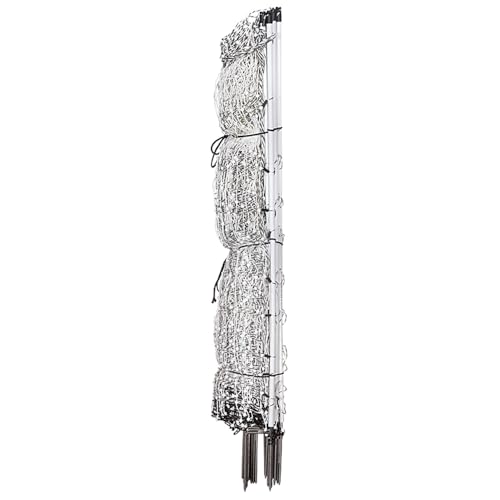
Predators don’t read your flock size before deciding whether to dig under the run. Premier 1’s PoultryNet Plus arrives as a complete electrifiable mesh with posts already pre-installed, which shortens setup time on busy farm mornings. At 48″ tall and 100′ long, it covers a substantial paddock while leaving room to extend with additional rolls.
The denser 6.8 ft post spacing is the meaningful upgrade over the standard PoultryNet. More anchor points mean less mid-span sag and a cleaner line when the herd tests the boundary. Plastic struts reinforce each bay so the fence stays upright through wind and curious livestock pressure. It also doubles as a containment tool for sheep, goats, or guard dogs, which is a quiet bonus for mixed-species operations.
What Stands Out
- Posts pre-installed every 6.8 ft reduce sag and keep the line taut.
- Plastic struts reinforce the mesh against wind and animal pressure.
- Doubles as containment for sheep, goats, cattle, or guardian dogs.
- Strong predator deterrent against raccoons, foxes, coyotes, and deer.
Honest Caveats
- An energizer is required and must be sourced separately.
- Closer post spacing adds weight, making the roll slightly heavier to reposition.
- Premium construction tends to come at a higher cost than basic electric netting.
Feature Snapshot
Whose Shelf It Belongs On
Rural keepers managing predator pressure and larger pastures who value tighter post spacing over lightweight portability.
Look Elsewhere When
Starkline’s braided netting is easier to drag weekly if you run a smaller flock and rotate pasture frequently.
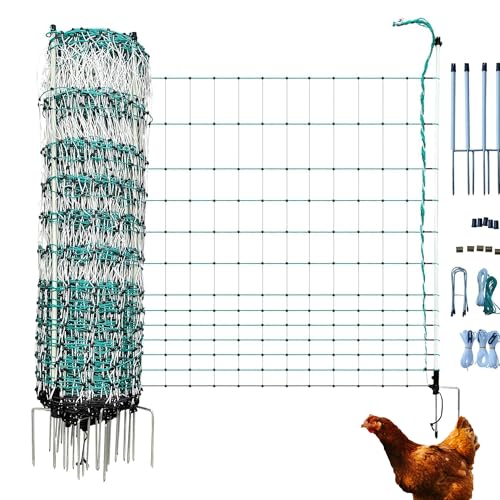
Rotational grazing only works when the fence moves with you, and 168 feet of netting gives serious coverage for one or two people handling the job. RentACoop uses triple-braided stainless steel and copper wires that hold steady current across the full run, which is the real measure of electric netting. Pair it with a low-impedance intermittent pulse energizer and the line stays hot enough to discourage raccoons and foxes without injuring curious hens.
FRP (fiberglass-reinforced plastic) posts arrive pre-attached every 12 feet, so installation leans more toward unrolling and stepping posts into place than fiddling with hardware. Over 1,700 square feet of enclosure accommodates a sizable laying flock or a temporary expansion around an existing coop. The energizer is sold separately, which keeps the upfront cost of the netting itself lower than all-in-one kits.
Well-Handled Touches
- Triple-braided stainless and copper wire maintains consistent current across long runs.
- 168′ length covers over 1,700 sq ft for sizeable flocks or temporary expansions.
- Pre-attached FRP posts simplify setup and repositioning.
- Compatible with low-impedance intermittent pulse energizers common in poultry setups.
Points To Note
- Energizer must be purchased separately for the line to function.
- FRP posts are lighter than metal alternatives and may flex in very soft soil.
- Longer run length makes the roll heavier to carry across uneven terrain.
Best Suited To
Backyard keepers practicing rotational grazing or anyone wanting a long single-run fence to expand flock space seasonally.
A Better Fit Elsewhere
MTB Supply’s U-channel posts work better for static welded-wire pens where no electrification is needed.
Choosing The Right Electric Poultry Netting For Your Flock
Height, Length, And Flock Size
Match the netting dimensions to the breed you keep. Standard 48″ height suits most laying hens, but heavier birds or jumpy breeds may test a shorter line. Length should cover your run footprint with a little slack for irregular paddock shapes.
Post Spacing And Soil Conditions
Closer post spacing reduces mid-run sag, which matters most for long runs. Fiberglass and FRP posts handle average soil well, while double-spiked galvanized stakes bite into firmer ground. Loose or sandy soil may need extra anchoring.
Conductor Materials And Energizer Compatibility
Braided stainless steel and copper wires carry current more reliably than single-strand alternatives over distance. A low-impedance intermittent pulse energizer is the typical pairing and is sold separately from most netting kits.
Portability Versus Permanent Setup
Frequent pasture rotation rewards lightweight, snag-resistant braided netting. Permanent runs benefit from denser post spacing and metal-anchored systems that stay put through weather and animal pressure.
Key Considerations Across These Picks
Common Slip-Ups When Buying Electric Netting
Forgetting the energizer is the most common mistake, since most netting kits ship without one. Underestimating post spacing is another, because wider spacing sags faster on longer runs. Skipping a quick soil check before ordering can also lead to posts that won’t stay anchored in rocky or sandy ground.
Where The Higher Price Tag Goes
Premium netting tends to invest in denser post spacing, stronger conductor braiding, and more durable post materials. Those upgrades pay off when you run a longer line, face heavier predator pressure, or rotate the fence frequently. For a small static backyard run, mid-tier options often deliver everything you need without the extra spend.
Frequently Asked Questions
How Tall Should Electric Poultry Netting Be For Chickens?
A 48″ net works for most standard laying breeds because they rarely attempt to fly over a visible barrier. Heavier birds or jumpy breeds may benefit from taller netting or additional height add-ons.
Do I Need An Energizer For Electric Poultry Netting?
Yes, an energizer is required to send pulses through the conductive strands, and most netting kits sell it separately. A low-impedance intermittent pulse model is the typical match for poultry setups.
How Far Apart Should Posts Be Spaced On Electric Netting?
Standard poultry netting uses posts every 10 to 12 feet, while premium versions tighten spacing to about 6.8 feet for less sag. Closer spacing matters more on longer runs and uneven terrain.
Can Electric Poultry Netting Handle Predators Like Foxes And Coyotes?
Properly energized netting discourages foxes, coyotes, raccoons, and similar predators through a memorable pulse. Effectiveness depends on consistent current, solid grounding, and clear sight lines along the run.
How Often Should I Move Electric Poultry Netting?
Moving the net every one to two weeks prevents overgrazing and keeps the run sanitary. Lightweight braided designs with snag-resistant strands make frequent moves manageable for a single person.
Closing Remarks
The best electric poultry netting is the one your soil, flock, and rotation schedule can actually live with. Start by sizing the run honestly, then choose the conductor quality and post spacing that match how often you’ll move the line. A thoughtful setup today means fewer headaches the next time a predator comes sniffing around the coop.