
Cooking in a camper isn’t the same as cooking at home. Space is tight, power sources vary, and you need a heat source that won’t fight your layout. The right stove turns a cramped galley into a workable kitchen, whether you’re wired into shore power or running off an inverter.
This roundup looks at six camp-ready options: a slim butane burner for quick brews, two propane camping stoves from Coleman built for outdoor cookouts, and three plug-in electric cooktops that slot into van conversions and cabin setups where 110-120V outlets are available. Use it to match your rig, your power situation, and the meals you actually want to make on the road.
The Shortlist At A Glance

TECHEF AGNI Portable Butane Stove Burner (Made in Korea)

Coleman Cascade 18 1-Burner Camping Stove, Portable Cooktop

Coleman Tabletop 2-in-1 Grill & Stove, 2 Adjustable Burners
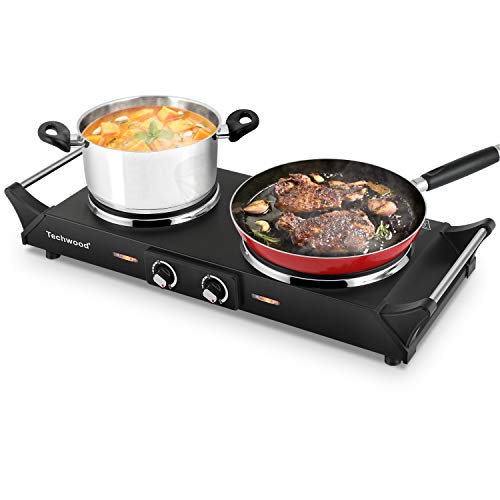
Techwood ES-3203 Hot Plate Electric Double Burner 1800W

Karinear 110V Electric Cooktop 2 Burners, 12-inch Plug-in

ANHANE Electric Cooktop Single Burner Portable 1800W Infrared
The Strengths Of Each Pick
For van dwellers who want a heat source that doesn’t depend on an inverter or a campsite hookup, butane offers a different kind of freedom. The TECHEF AGNI keeps its footprint narrow enough to slide beside a sink or tuck into a cabinet, and its Korean-made build feels sturdier than the plastic feel of basic butane units. It runs off a standard butane canister, so you can swap fuel easily at most outdoor shops.
The piezo-electric ignition (a built-in spark clicker that lights the burner with no match) is the kind of detail that pays off when your hands are cold or damp, and the magnetic locking canister system clicks the fuel bottle into place without fumbling. In a small galley where counter space is the most valuable square footage you own, this design philosophy makes a real difference.
Where It Helps
- Slim body fits on narrow counters, a galley shelf, or a fold-down prep surface without crowding your cookware.
- Auto piezo-electric ignition means no lighter hunts in windy camp setups.
- Heat panel system channels fuel efficiently for steadier simmering on small pots.
- Magnetic locking canister installs and removes in seconds, helpful when you cook in low light.
- Output rating of 11,500 BTU handles boiling, frying, and quick sautés without long warm-up times.
Things To Consider
- Butane performance drops noticeably in cold weather, so winter campers may find simmer control sluggish.
- Ventilation matters in enclosed camper interiors; using it inside without airflow is widely discouraged.
- You’ll need to keep spare canisters on hand for longer trips, since runtime is shorter than propane at similar output.
Feature Snapshot
Built With In Mind
Van dwellers, tent campers, and overlanders who cook outdoors and need a slim, canister-powered burner for tight spaces.
Skip It When
The Coleman Cascade 18 1-Burner Camping Stove suits you better when you want a propane hookup that performs in colder air and holds a wider 12-inch pan.
The Cascade 18 is a single-burner propane unit that earns its place when you want to set up camp, fire one burner, and cook without complication. Unlike the slim butane profile of the TECHEF AGNI, this stove uses a standard propane bottle and a wider cooking surface that fits up to a 12-inch pan. For tailgate cooks and picnic tables, that extra room changes how you work a meal.
The aluminized steel cooktop wipes clean after a greasy breakfast, and the rotary matchless ignition is the kind of small upgrade that adds up across a long trip. For one-pan dinners, this is a hard-working option that doesn’t need much setup time.
Benefits That Matter
- Fits a 12-inch pan, giving you room for a full skillet of eggs, hash browns, or stir-fry.
- Rotary matchless ignition lights reliably even after the stove has sat in storage.
- Aluminized steel cooktop wipes down quickly after greasy or saucy meals.
- Detached grate flips 180° for compact storage inside a camper’s exterior bin.
- Improved knob rotation supports precise simmer control for sauces and griddle work.
Worth Noting
- Single-burner design limits you to one pan at a time, which slows multi-course cooking.
- Requires a propane source, so you must pack or refill a bottle separately.
- Best used outside; in enclosed camper interiors, ventilation becomes a real concern.
Quick Facts
Right Fit For
Solo travelers and small families who cook single-pan meals at the campsite or on a picnic table and want a trusted brand.
A Better Fit Elsewhere
The Coleman Tabletop 2-in-1 Grill & Stove suits households wanting a grill and stove in one unit when two burners are part of the plan.
When camp meals include both a pot of something simmering and a grill going at the same time, single-burner stoves start to feel small. The Coleman Tabletop 2-in-1 brings a grill plate and two adjustable burners into a single chassis, which expands what one cook can do on a picnic table. Compare that with the Cascade 18’s single burner, and the case for doubling up becomes obvious.
The removable chrome-plated grate simplifies cleanup after grilled cheese or burgers, and the wind guards around the burners help flames stay lit on breezy afternoons. With non-skid feet and independent burner control, it handles a real meal without crowding the cook.
Standout Benefits
- Dual burners run independently, letting you boil pasta and grill protein at the same time.
- Combined 20,000 BTU output delivers quick preheats and confident high-heat grilling.
- Wind guards protect flames from gusts at exposed campsites and tailgate setups.
- Removable chrome grate cleans up quickly, which matters after cheese or marinara drippings.
- Push-button ignition lights both burners without a match or separate lighter.
Points To Note
- Larger footprint than the Cascade 18, so it needs more table space or a stable tailgate surface.
- Propane-only setup, meaning you must pack a tank and plan refills for longer trips.
- Grease tray needs regular emptying during heavy grilling sessions to prevent flare-ups.
Made For
Family campers and tailgaters who want grill and stovetop cooking in one unit and don’t mind the extra table real estate.
Look Elsewhere When
The Techwood ES-3203 Hot Plate Electric Double Burner is the better match when shore power is available and you prefer indoor cooking inside a converted van or camper.
The first three picks rely on gas, but some campers, particularly van lifers with solar setups, run on shore power or inverters. The Techwood ES-3203 is a plug-in cast-iron double burner that drops onto any flat counter and cooks on standard 110-120V outlets. That’s the same voltage you plug a laptop into, which makes it easy to fit into existing wiring.
The two thermostatically controlled burners each have their own temperature setting, so you can simmer a sauce while heating a skillet. Cast iron takes a moment to heat up, but it holds temperature well once it gets there, which translates to steady pan work even in a moving vehicle. Compared to the propane Coleman above, this unit trades flame for plug, and that tradeoff works well for stationary setups.
Notable Gains
- Two independently controlled burners run from a single 1800W outlet, freeing counter space.
- Works with virtually any cookware, so you can keep using the pots and pans already in your rig.
- Stay-cool handles make it safer to reposition the unit between cooking rounds.
- Black stainless steel finish wipes down with a damp cloth after spills.
- No open flame means less ventilation worry inside enclosed camper interiors.
A Few Limitations
- Cast iron plates take longer to heat than induction or gas, so quick sears require patience.
- Single 1800W draw means running both burners on high may trip a 15-amp circuit on some inverters.
- Heavier weight than ceramic alternatives, which matters when you’re stowing it between trips.
Feature Rundown
Best Suited To
Van dwellers and RV owners with reliable shore power or inverters who want two burners without stocking propane.
Reach For A Different Pick When
The ANHANE Electric Cooktop Single Burner Portable Stove is a smaller fit for solo travelers who only need one infrared burner.
The Karinear 110V cooktop moves away from coil burners toward a smooth ceramic surface, which matters for cleanup in a small camper kitchen. Infrared ceramic cooktops use radiant heat beneath a glass-ceramic top, so spills stay on the surface and wipe off without drip pans or grates. For cooks who want their counter to double as a prep area between rounds, that smooth surface is a real quality-of-life upgrade.
The 9 heating levels cover everything from a low simmer for rice to a high sear for cutlets, and the knob controls stay intuitive even for campers who don’t want to learn a touchscreen. Compared to the Techwood above, this unit trades cast iron for ceramic, gaining sleeker looks and easier cleanup at the cost of longer heat-up times.
Everyday Wins
- Plug-in 110-120V design needs no hardwiring, simplifying install in rentals and loaner campers.
- Knob controls are straightforward for anyone used to a traditional stove, including older travelers.
- Over-temperature protection cuts power if the unit overheats, adding a layer of safety indoors.
- Hot warning indicator signals residual heat so you know when the surface is safe to wipe.
- Can be used as a countertop unit or built into a cutout for a permanent installation.
Room For Improvement
- Ceramic surface requires flat-bottom cookware for proper heat transfer, which may rule out older warped pans.
- Knob control feels less precise than touch sliders when you want fine temperature changes.
- Glass top can scratch if you drag cast-iron cookware across it, so care matters during storage and use.
Core Details
Whose Shelf It Belongs On
Travelers with a permanent camper setup or rental cabin who want a flat ceramic top that doubles as extra counter space.
Swap It Out When
The Coleman Cascade 18 1-Burner Camping Stove is the better call when you cook outside without access to an electrical hookup.
The ANHANE single-burner infrared cooktop is for the solo traveler or small rig where one pan at a time is enough, and where you still want digital convenience. The touch control panel, child lock, and 4-hour timer give this little unit more brains than its compact frame suggests. For a teardrop trailer or a converted van with limited counter, that kind of feature density in a small box is welcome.
The 9 power levels range from 200W to 1800W, and the 9 temperature settings span roughly 176°F to 510°F, giving you fine control over delicate sauces or fast boils. The infrared element heats cookware directly through the glass, which transfers energy efficiently for an electric unit. The trade-off, as with the Karinear above, is the requirement for flat-bottomed pots that make good contact with the glass.
Positive Takeaways
- 9 power levels and 9 temperature settings give precise control across a wide cooking range.
- Child lock and 4-hour timer add safety for households with kids or long-simmer recipes.
- Touch control cleans up faster than knobs, since there are no crevices to wipe around.
- Low-noise operation makes it well suited to indoor use without competing with conversation.
- Compact footprint fits on a small shelf, a fold-out counter, or a narrow galley ledge.
Honest Caveats
- Single-burner design caps you at one dish, which slows any two-pan meal.
- Infrared radiant cooking performs best with flat-bottomed cookware; warped pans lose contact and heat unevenly.
- Glass top can crack under heavy impact, so packing it requires a protected spot.
Who Should Grab It
Solo van lifers and weekend campers who cook simple meals and want a quiet, compact, plug-in burner with modern touch controls.
Where A Sibling Pick Shines
The Techwood ES-3203 Hot Plate Electric Double Burner fits better when you regularly cook two things at once on shore power.
Picking The Right Burner For Your Rig
Start with how you cook, not the spec sheet. If your camper has a built-in propane line and you mostly work over a picnic table, a gas stove makes sense. If you’re tied to an inverter, generator, or shore hookup, an electric unit pays off in cleaner indoor air and zero fuel stocking.
Match Your Power Setup
The butane TECHEF and the propane Coleman models are independent of your electrical system. Butane is best in mild weather, propane holds up in cold. Both need ventilation when you use them inside any enclosed rig.
The Techwood, Karinear, and ANHANE are 110-120V cooktops, the same as a household wall outlet. On a 15-amp circuit you can run them, but two high-draw burners at once may trip a breaker on a small inverter. You may find a single burner keeps things simple on a smaller battery bank.
Size And Footprint Matter
Counter real estate in a camper is unforgiving. A slim unit like the TECHEF slips beside a sink; a wider 12-inch cooktop like the Karinear eats prime prep space but gives you a flat work surface between rounds. Measure twice, especially if you plan a permanent mount.
Heat Type And Cookware
Cast-iron coils are forgiving but slow. Ceramic infrared tops look cleaner but punish warped pans. Choose based on the cookware you already pack, since replacing a full pot set is its own cost.
Key Considerations Across These Picks
Pitfalls Shoppers Hit
The most common mistake is picking by BTU number alone. A high-output burner without proper ventilation turns a small galley into an uncomfortable space fast. Equally common is buying a 220V cooktop for a rig that only delivers 110-120V, which means it never works without a hardwired step-up. Confirm your outlet voltage before you fall in love with a unit.
Another trap is underestimating weight. Cast-iron plates are heavier than ceramic tops, and that matters in a vehicle where every pound affects fuel use and handling. If you move the stove often, lighter ceramic and infrared options are easier on your back.
When Paying More Pays Off
Higher-tier electric models usually add features you actually feel: smoother glass surfaces, child locks, longer timers, more precise temperature steps. For occasional weekend use, a basic coil burner is plenty. For full-time van life or family camping, those quality-of-life upgrades tend to matter across hundreds of meals. Worth weighing the cost against how often you’ll really cook on the road.
Frequently Asked Questions
Can you use these stoves inside an enclosed camper? Electric cooktops like the Techwood, Karinear, and ANHANE are safe indoors with proper ventilation. Butane and propane units produce combustion gases and should only be used in well-ventilated outdoor spaces.
Do these stoves work on a standard 15-amp outlet? The three electric models (Techwood, Karinear, ANHANE) plug into standard 110-120V outlets. Running two burners at full power on a small inverter may trip a breaker, so check your circuit rating.
What fuel is easiest to find on the road? Propane canisters are widely available at gas stations and outdoor stores. Butane is more compact but harder to source in some regions. Electricity depends entirely on your hookup or battery bank.
Can cast iron be used on ceramic cooktops? Ceramic and infrared surfaces like the Karinear and ANHANE work best with flat-bottomed cookware. Cast iron works, but sliding it across the glass can scratch the surface over time.
How do these compare to built-in RV stoves? Portable options give you flexibility to move the cooking surface outdoors or to different counters. Built-in RV stoves free up storage and look cleaner, but cost more and require professional installation in most cases.
Closing Thoughts
The right camper stove depends on your fuel source, your counter space, and how you actually cook on the road. Match the burner to your rig’s power setup first, then think about footprint and features. A well-chosen stove quietly disappears into your routine, and that’s the goal.