
Whether you want charcoal flavor without the wait or the speed of gas on a weeknight, the right setup changes how you cook outside. These picks balance both, so your weekend ribs and Tuesday burgers both get the treatment they deserve.
The Picks In Brief

Oklahoma Joe’s Rambler Portable Charcoal Grill 218 sq. in. Black
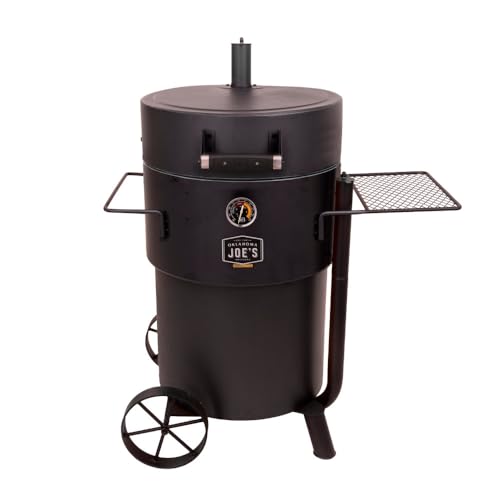
Oklahoma Joe’s Bronco Pro Charcoal Drum Smoker and Grill 366 sq. in. Black

Oklahoma Joe’s Firecraft Series Modular Open Fire Barrel Charcoal Grill 480 sq. in. Black

Oklahoma Joe’s Highland Offset Reverse Flow Charcoal Smoker and Grill 1093 sq. in. Black
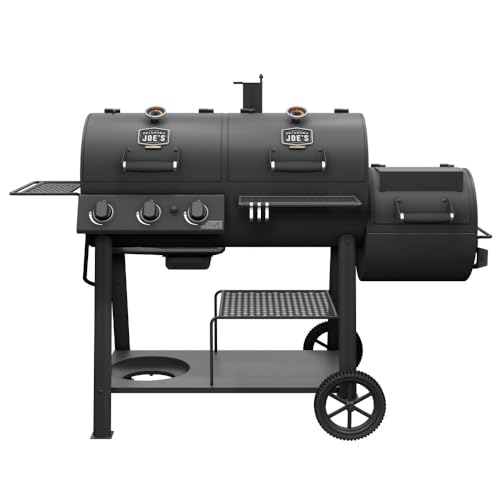
Oklahoma Joe’s Canyon Combo Dual Fuel 3-Burner Propane Gas and Charcoal Smoker and Grill 1031 sq. in. Black

Oklahoma Joe’s Longhorn Offset Charcoal Smoker and Grill 1060 sq. in. Black
A Closer Look At Each Pick
The Rambler is the smallest smoker-friendly charcoal grill in this lineup, sized for a tailgate table or a tight apartment patio where a full-size smoker simply would not fit. Its 218 square inches of cooking area is enough for four burgers, a pair of steaks, or a small rack of ribs without crowding the grate.
What separates it from a basic kettle is the height-adjustable charcoal tray, which lets you raise or lower the fuel to manage heat across hot sears and slower cooks. For travelers and renters, that control in a portable footprint is the real story here, since most tabletop grills force you to live with whatever heat the coals happen to produce.
Bright Spots
- Height-adjustable charcoal tray gives genuine heat control in a tabletop format
- Compact 218 sq. in. grate fits a small patio, truck bed, or campsite table
- Lightweight build makes it easy to transport to a tailgate or park cookout
- No propane tank needed, so you can cook anywhere charcoal is allowed
Things To Consider
- Smaller cooking area means batch cooking for a crowd is impractical
- Charcoal-only design lacks the quick-lighting convenience of gas
- Thin metal body requires careful storage to prevent rust over time
Quick Facts
Who It Suits Best
Tailgaters, campers, and renters who want real charcoal flavor from a grill they can carry with one hand.
Consider Something Else When
Pick the Bronco Pro instead if you cook larger cuts low and slow, since its 366 sq. in. drum design handles briskets the Rambler cannot fit.
The Bronco Pro trades the Rambler’s horizontal layout for a vertical drum (a barrel-shaped smoker that stands upright), and that shape change matters more than the spec sheet suggests. Drum smokers hold heat efficiently, so a smaller fire burns longer, which is exactly what you want on a brisket cook that runs past midnight.
With 366 square inches of cooking area and an oversized charcoal basket, this unit supports over 15 hours of uninterrupted smoking in normal use. Where the Rambler is a weeknight tool, the Bronco Pro is a weekend project that rewards patience with deep bark and tender pulls.
Where It Helps
- Vertical drum design holds steady heat across long cooks
- 15-hour fuel capacity reduces mid-cook charcoal refills
- Sealed lid and built-in airflow give you real control over smoke and temperature
- Smaller footprint than an offset smoker, so it fits tighter patios
Points To Note
- Learning curve is steeper than a basic kettle; first cooks often run hot or cool
- Drum shape limits the size of cuts compared to a horizontal offset
- Ash cleanup takes more effort than pull-out tray designs
Made For
Patio pitmasters who want competition-style low-and-slow results without dedicating half their yard to a full offset rig.
Where Another Pick Suits Better
Step up to the Highland if you regularly feed a crowd, since its 1093 sq. in. capacity lets you smoke multiple large cuts at once.
The Firecraft barrel is the most conversation-starting unit in this list. Where every other pick here is built for cooking first, this one blurs the line between a grill, a fire pit, and an open-flame cooking station, which makes it the natural centerpiece for a backyard that doubles as gathering space.
Its 480 square inches split across two round wire grates gives you the room to cook directly over open flame while still leaving space for a fire in the center. The modular frame is built to accept add-ons over time, so it can grow as your cooking style does.
Points In Its Favor
- Open-fire design delivers the smoky, primal flavor a closed lid cannot replicate
- Modular construction supports future expansion with compatible add-ons
- Doubles as a fire pit when the cook is done
- Heavy-gauge wire grates resist corrosion in outdoor conditions
Trade Offs
- Open design means less heat retention than a closed drum or offset smoker
- Wind affects cook temperatures more than on enclosed smokers
- Requires more fuel attention since there is no sealed chamber to stabilize heat
Feature Snapshot
Right Fit For
Hosts who want a backyard focal point that cooks as well as it sets the mood for an evening around the fire.
Skip It When
Choose the Canyon Combo instead if weeknight speed matters; its propane side lights fast and recovers heat in minutes.
The Highland is the largest charcoal smoker in this roundup, and it earns that footprint by giving you genuine reverse flow capability. Reverse flow refers to a baffle plate system that forces smoke to travel under and around the food before exiting the stack, which evens out the heat across the grate and removes the hot-spot guessing game that plagues basic offsets.
With 1093 square inches of cooking area and removable baffles, you can toggle between traditional offset smoking and reverse flow depending on the cook. For a holiday brisket plus two pork shoulders plus a tray of ribs, this is the unit that lets you load it all at once.
What It Does Well
- Reverse flow baffles distribute heat evenly across the full grate
- 1093 sq. in. handles whole-hog cooks or multiple large cuts at once
- Large charcoal basket supports long unattended burns
- Adjustable smokestack lets you tune draft for different fuel loads
A Few Limitations
- Heavy and large; requires a permanent spot and likely a helper to move
- Charcoal-only means no quick weeknight option without firing the whole rig
- First-time offset owners face a real learning curve on fire management
Key Specs
Best Suited To
Serious backyard smokers running full sessions and feeding large gatherings without splitting the cook into multiple rounds.
Not Your Match When
Reach for the Canyon Combo if you want both charcoal and propane in one frame; it gives you weekday speed without giving up smoke.
The Canyon Combo is the only true dual fuel option in this list, and that distinction defines the whole buying decision. A 36,000 BTU (British Thermal Units, a measure of heat output) three-burner propane side lights fast for weeknight burgers, while a 750 sq. in. charcoal chamber handles the long smoke sessions that justify a real grill in the first place.
For households that genuinely use both fuels, combining them in one frame saves the patio space and budget that buying a separate gas grill and charcoal smoker would eat up. It is the most flexible cooking platform in the roundup.
The Good Stuff
- Charcoal side and propane side run independently in one frame
- 36,000 BTU gas burners heat up in minutes for weeknight meals
- 1031 sq. in. total capacity fits a family cookout on either side
- Propane tank sold separately, so you can choose your fuel source
Honest Caveats
- Propane tank is not included, so plan for that added purchase
- Larger footprint than single-fuel options; measure your space first
- Two fuel systems mean two things to maintain over the life of the grill
Feature Rundown
Who Will Love This
Households that genuinely cook on both fuels and want one frame instead of two separate grills taking up patio space.
Look Elsewhere When
Pick the Longhorn if charcoal-only purism is the priority; its dedicated offset design is more focused than a combo unit.
The Longhorn closes this list as the most traditional option: a classic horizontal offset smoker with 1060 square inches of cooking area split between a 751 sq. in. primary chamber and a 309 sq. in. secondary rack. For pitmasters who learned on offset designs and do not want reverse flow complications, this is the cleanest expression of that format.
Hardwood splits and chunks give you the rich, wood-fired flavor that defines offset cooking, and the side firebox keeps the heat source separate from the cooking chamber. It is a unit built for the patient cook who treats a Saturday like an event.
Useful Highlights
- Classic offset layout produces the traditional wood-fired BBQ flavor profile
- Two-tier cooking area lets you separate large and small cuts
- Side firebox design keeps direct flame away from the food
- Sturdy steel construction suited to year-round outdoor use
Practical Considerations
- No propane side means longer startup times before cooking begins
- Offset designs require active fire tending through the cook
- Heavy enough that placement should be a long-term decision
Built With In Mind
Traditionalists who want a dedicated offset smoker without reverse flow baffles or dual fuel complexity in the frame.
Swap It Out When
Choose the Highland if even heat distribution matters more to you than classic offset character; its reverse flow baffles solve hot spots.
What To Weigh Before Choosing Your Grill
Start with how you actually cook, not the spec sheet. Households that run a mix of quick weeknight meals and long weekend smokes get the most out of a dual fuel frame like the Canyon Combo, while dedicated pitmasters tend to prefer a focused offset like the Longhorn or Highland. If patio space is tight, a vertical drum like the Bronco Pro or a tabletop unit like the Rambler fits where horizontal smokers will not.
Cooking area matters more than most people expect. The jump from a 218 sq. in. portable to a 1000+ sq. in. smoker is the difference between cooking for two and cooking for ten without batching. Match the chamber to your typical headcount, with a small buffer for guests.
Material and build drive long-term durability. Heavy-gauge steel and coated finishes hold up across seasons, while thinner bodies require diligent storage to prevent rust. Owners in wet climates commonly report that heavier construction pays for itself over a few winters.
Think about fuel logistics too. Charcoal needs storage space and longer prep time, while propane demands a tank and regulator but lights in minutes. Dual fuel units split that difference but carry the maintenance weight of both systems.
What Sets These Picks Apart
Common Buying Slip Ups
The most frequent mistake is choosing a smoker by raw cooking area alone. A 1093 sq. in. Highland does you no good if your patio cannot fit its footprint or if you never cook for more than four people. Measure your space and your typical guest count before falling for the largest chamber on the page.
Another trap is ignoring fuel type. Buyers who want weeknight speed but grab a charcoal-only offset end up underusing it within a season. Honest fuel planning, charcoal for weekends and propane for weeknights, saves you from buying twice.
Where The Extra Money Goes
Higher-tier models in this category buy heavier-gauge steel, which translates to better heat retention and longer outdoor life. They also tend to include airflow refinements like reverse flow baffles or adjustable smokestacks that make temperature management more forgiving on long cooks.
The upgrade is worth it for anyone running regular smoke sessions, since steadier temperatures mean more consistent bark and tender results. For casual grillers who fire up a few times a summer, the simpler Rambler or Bronco Pro delivers the same charcoal flavor without the price step up.
Frequently Asked Questions
What does dual fuel mean on a grill?
Dual fuel means the grill combines two fuel sources, typically propane gas for quick heat and charcoal for smoke flavor, in one frame. You can run either side independently depending on what you are cooking.
Is a charcoal smoker harder to use than a gas grill?
Yes, charcoal requires more active management. You light the fuel, wait for it to reach cooking temperature, and adjust vents throughout the cook. Gas grills light in minutes and recover heat faster, which is why dual fuel designs appeal to mixed-use households.
How much cooking area do I need for a family?
A family of four typically needs 400 to 600 square inches for full meals without batching. For regular gatherings of eight or more, 750 square inches or more gives you room to cook multiple cuts at once without crowding the grate.
Can a portable charcoal grill handle real BBQ?
Portable grills like the Rambler handle burgers, steaks, and small cuts well, but their smaller chamber limits low-and-slow projects. For ribs or briskets, a dedicated smoker with a sealed chamber produces more consistent results.
Do offset smokers require more maintenance than drum smokers?
Both need regular ash cleanup and seasonal inspection, but offsets have more seams and moving parts to monitor over time. Drum smokers are simpler mechanically, which is part of why they appeal to set-and-forget cooks.
Closing Remarks
Pick the grill that matches how you cook, not the one with the biggest spec sheet. Dual fuel works for mixed-use households, while dedicated smokers reward patience and tradition. Any of these six will deliver real charcoal flavor; the right one simply fits your patio, your routine, and the meals you actually want to make.