
Sharing sleep with a baby or partner often means fighting for blanket real estate. A wide sleeping bag cuts the tug-of-war in half, keeping each sleeper covered without overheating the other. The picks below cover newborns fresh out of the swaddle stage, older infants ready for a roomy wearable, organic-cotton families who want breathable muslin, and travelers packing light for hostels or tents. Each one solves a slightly different version of the same bedtime problem.
How The Shortlist Stacks Up
HALO Micro-Fleece Wearable Blanket, TOG 1.0

HALO Micro-Fleece Sleepsack Swaddle, TOG 3.0

mushie Baby Wearable Blanket, Organic Cotton Muslin
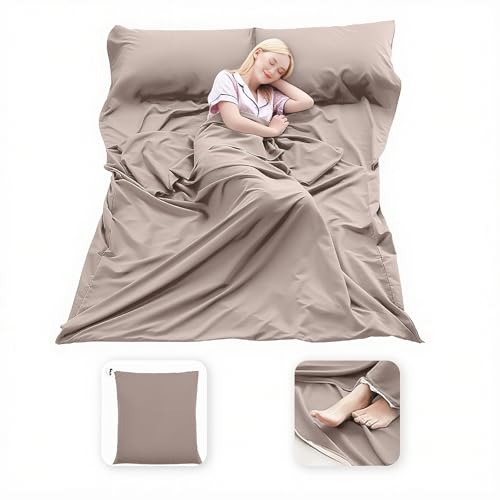
MongByYa Sleeping Bag Liner, Compact Travel Sheet
The Picks, Examined More Closely
Once the swaddle stage is over, many parents land on the HALO wearable as the next step. The micro-fleece fabric feels plush against bare skin without trapping heat the way thicker blankets can. A two-way zipper runs from the bottom up, so a midnight diaper change means unzipping the lower half without fully waking a dozing infant. The cut is generously sized through the hips and legs, which matters more than it sounds once a baby starts wiggling and side-sleeping.
The TOG 1.0 rating (a unit that measures a fabric’s thermal warmth; lower is cooler, higher is warmer) puts this in the sweet spot for most climate-controlled nurseries kept around 68 to 72 degrees. It works as a year-round default in many homes, though you may find it a touch warm in summer. Compared to the second HALO entry on this list, this version skips the adjustable wings, so it is strictly an arms-out wearable rather than a swaddle.
Notable Upsides
- Generous hip room supports natural leg positioning during deep sleep.
- Two-way zipper saves parents from disturbing the baby during changes.
- TOG 1.0 weight handles most standard nursery temperatures without extra layers.
- Micro-fleece washes up well and holds softness through repeated cycles.
- Sleeveless arm holes reduce the risk of overheating for restless sleepers.
Things To Consider
- Micro-fleece may run warm in a heated summer room, so layer cautiously.
- Once a baby can stand in the crib, the wearable length becomes a tripping factor.
- Some parents report pilling after many wash cycles at higher temperatures.
Key Product Details
Best Suited To
Parents transitioning out of the swaddle stage in a climate-controlled nursery.
Look Elsewhere When
You still need adjustable arm coverage; the HALO Micro-Fleece Sleepsack Swaddle handles that stretch.
For homes that run cool in winter, the higher TOG rating on this HALO swaddle makes the difference between a fussy baby and a settled one. The three-way adjustable wings let caregivers wrap arms snug against the torso, leave hands up near the face, or release arms entirely once the startle reflex fades. Newborns who sleep in drafty rooms benefit from the extra insulation without piling loose blankets into the crib, which pediatric safe-sleep guidance warns against.
The fit runs from newborn through about three months, depending on growth, so this is a short-window product rather than a long-haul wearable. Micro-fleece is the same fabric family as the first HALO on this list, only built with more loft and density. In a heated home above 72 degrees, you may find this version runs hot and a lighter wearable would serve better.
The Value In It
- Three adjustable swaddle positions grow with the startle reflex stages.
- TOG 3.0 fabric handles cold rooms and winter nights without extra layers.
- Zipper access keeps middle-of-the-night changes quick and quiet.
- Hip-healthy cut supports natural leg positioning.
Points To Note
- Window of use is short, ending roughly at three months for most babies.
- Too warm for summer nurseries, even with the air conditioning running cool.
- Wing fasteners take a few tries to land cleanly during sleepy diaper changes.
Made For
Newborns in cooler climates or drafty older homes who still need swaddling.
Reach For A Different Pick When
The nursery runs warm year-round; the mushie organic muslin wearable breathes far better.
Organic cotton muslin takes a different path than the fleeces on this list. The weave is airy and breathable, so heat escapes instead of pooling against the chest. Parents who avoid synthetic fibers or live in mild-to-warm climates often reach for this style first. The sleeveless arm openings leave shoulders free, and the full-body sack keeps legs from tangling in crib slats during active sleep.
The sage colorway here is one of several offered, and the neutral palette pairs well with most nursery themes. Muslin softens with each wash, so the fabric gets more comfortable over time rather than wearing out. Where the two HALO fleeces aim at cold rooms, this one is the warm-weather counterpart on the roundup.
Points In Its Favor
- Breathable muslin weave lowers the risk of overheating in summer.
- Organic cotton construction appeals to families avoiding synthetic fibers.
- Gets softer through repeated washes rather than pilling.
- Sleeveless cut suits babies who dislike fabric near their face.
Room For Improvement
- Not warm enough on its own for cool winter rooms.
- Muslin wrinkles visibly after washing and may need a quick steam.
- Lightweight fabric can shift inside a very wiggly sleeper.
Feature Snapshot
Right Fit For
Parents prioritizing natural fibers and breathability for warm-weather sleep.
Swap It Out When
The nursery runs cool at night; the HALO Micro-Fleece Wearable Blanket offers more insulation.
The category of double wide sleeping bags also covers adults sharing hostel bunks or tents, and that is where this liner earns its place. Polyester with a sanded finish feels softer than a standard nylon sack, and the sheet folds into its own pouch for storage. Backpackers who refuse to sleep directly on unfamiliar bedding appreciate the barrier it creates against questionable mattresses.
The weight lands near the low end of the category, which keeps pack volume manageable for long treks. It is a liner rather than an insulated bag, so on cold nights it needs to be paired with a blanket or a proper sleeping bag. The trade-off is weight and pack size, both of which improve when you swap a heavy bag for a liner plus a hostel quilt.
Reasons It Performs
- Lightweight build keeps backpack weight and pack volume low.
- Sand-finished polyester feels comfortable against bare skin.
- Folds into a built-in pouch for easy carry.
- Adds a hygienic layer over hostel or guest bedding.
Honest Caveats
- Provides minimal warmth on its own in cold climates.
- Polyester can feel clammy in hot, humid conditions.
Who It Suits Best
Backpackers and hostel travelers who want a clean sleep layer without bulk.
A Better Fit Elsewhere
Parents outfitting a nursery; any of the HALO or mushie wearables suit infant sleep.
Shopping Smarter For Double Wide Sleeping Bags
Measure The Sleeper, Not The Age Range
A size label only tells part of the story. Weight and height both affect how a wearable fits, and a sack that runs short in the torso will ride up over the face. Measure length from shoulder to heel, then check that number against the size chart. A wearable that fits today but leaves room for a few months of growth tends to serve better than one sized for the moment.
Match Warmth To Room Temperature
TOG ratings exist for a reason. A heavier TOG in a warm room traps heat and disrupts sleep, while a light TOG in a cold room leaves a baby shivering. Aim for the lightest TOG that still keeps the sleeper comfortable. For most climate-controlled nurseries, a midrange rating covers the calendar, while seasonal swings call for a second lighter or heavier wearable.
Think About Fabric Feel And Care
Micro-fleece traps warmth and feels plush, while muslin breathes and softens with each wash. Cotton appeals to families avoiding synthetics, but wrinkles more. Polyester in travel liners dries quickly and shrugs off odor. Whatever you choose, check the care label. A wearable that demands hand-washing rarely survives the reality of parenthood or long travel days.
Account For Safety And Room To Grow
A wearable should fit snug at the neck and shoulders without binding the hips. Too much room at the neck lets fabric ride up, while too little at the hips can press on leg joints. Hip-healthy cuts support natural leg positioning and let caregivers use the same sack longer as the baby grows.
Key Considerations Across These Picks
Common Buying Slip Ups
The most frequent mistake is choosing a TOG rating that does not match the room temperature. Parents also often size up too early, ending up with a sack that bunches around the face. For the travel liner, the trap is treating it as a winter bag, which it is not built to be.
When Paying More Pays Off
Higher-tier wearables tend to use denser fleece, sturdier zippers, and fabrics that survive repeated washes without pilling. The extra cost pays off across many months of nightly use, while a budget version may wear out or lose softness after a season.
Frequently Asked Questions
What does TOG actually measure?
TOG stands for Thermal Overall Grade, a scale that rates fabric warmth. Higher numbers mean more insulation, and the right number depends on your nursery temperature.
Are wearable blankets safer than loose blankets?
Yes. Wearables stay in place during sleep, removing the risk of loose fabric covering the face. Pediatric safe-sleep guidance favors this approach for infants.
Can a newborn use an arms-out wearable right away?
Newborns still have a strong startle reflex that benefits from arms-in swaddling. Arms-out wearables like the first HALO on this list work better after the swaddle stage fades.
How do I wash a micro-fleece wearable?
Wash on a gentle cycle with mild detergent and skip fabric softener, which coats the fibers and reduces breathability. Tumble dry low or hang dry to extend the life of the fabric.
Do travel liners work for cold-weather camping?
Not on their own. Pair a polyester liner with a proper insulated bag or a heavy blanket to stay warm below 50 degrees Fahrenheit.
Closing Remarks
The right double wide sleeping bag depends on who you are keeping covered. Newborns in cool rooms do well in the heavier HALO swaddle, while warm nurseries call for the breathable mushie cotton. Travelers chasing lighter packs will find the MongByYa liner earns its space. Match the fabric, fit, and warmth to the sleeper, and the bedtime battles tend to shrink fast.