
Hot weekends, long tailgates, and packed beach days all push your cooler to the limit, and the wrong one melts your ice by lunch. A solid pick keeps drinks cold, food safe, and your back from complaining, no matter how rough the trip gets. This list narrows down five well-rounded options that balance size, ice retention, and portability for everyday warm-weather use.
How The Shortlist Stacks Up

Portacool APEX 500 Wi-Fi Portable Evaporative Cooler 500 sqft

YETI Roadie 24 2.0 Hard Cooler with DoubleDuty Strap

Stanley Adventure Outdoor Cooler 16 qt Heavy Duty Black
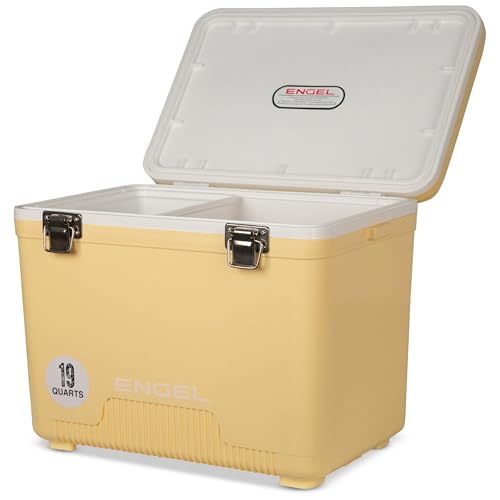
Engel 19qt Leak-Proof Air Tight Drybox Hard Shell Cooler

Portacool APEX 4000 Wi-Fi Portable Evaporative Cooler 4000 sqft
What Each Pick Brings To The Table
Picture a garage door propped open on a sticky August afternoon, and the Portacool APEX 500 quietly pushing a high-velocity stream across the workspace. It is an evaporative cooler, sometimes called a swamp cooler, which means it uses water-saturated pads and a fan to drop the air temperature instead of refrigerant and a compressor. That distinction matters in dry climates where evaporative units shine, and it explains the unit’s generous 500-square-foot coverage and a claimed airflow reach of up to 55 feet.
Wi-Fi connectivity and programable settings let you adjust speed and louver movement from a phone, which is genuinely useful when the cooler sits across the shop. The 13-gallon reservoir keeps run times reasonable before a refill. Compared with the YETI Roadie 24 2.0 reviewed below, this is a room-cooling appliance rather than a food and drink cooler, and the comparison clarifies its place in this roundup.
Practical Pluses
- Wi-Fi control and programable settings cut down on walking across the room for adjustments.
- High-velocity output with oscillating louvers spreads cool air into far corners.
- 13-gallon reservoir supports long sessions between refills.
- Variable speed lets you tune airflow to match room size and noise tolerance.
Honest Caveats
- Evaporative cooling performs best in dry air, so humid basements may feel underwhelming.
- The footprint and reservoir make it a stationary pick rather than a grab-and-go option.
- Pads need periodic cleaning to prevent mineral buildup and odors.
Key Attributes
Whose Shelf It Belongs On
Shoppers outfitting a garage gym, workshop, or open-air patio in a dry climate will get the most from this unit.
Reach For A Different Pick When
Pick the YETI Roadie 24 2.0 Hard Cooler instead if you need to chill food and drinks for a day at the lake rather than cool the air in a room.
The Roadie 24 2.0 is sized to slide behind a truck seat, which is the single most useful spec for a road-trip cooler. Rotomolded construction means the polyethylene shell is rotationally cast as one continuous piece, so seams and weak points basically disappear. YETI also redesigned the walls to be thinner and lighter than earlier Roadie generations while keeping the rugged feel that made the brand famous.
The DoubleDuty shoulder strap handles hauling short distances, and the Quick Drain plug speeds up cleanup at the end of the day. Compared with the Stanley Adventure 16-quart cooler reviewed next, the Roadie is taller and heavier, but the payoff is more ice retention and a sturdier shell for rougher outings.
What It Does Well
- Rotomolded shell shrugs off drops and rough truck-bed handling.
- Slim profile slides behind most seats for easy road-trip packing.
- Quick-drain plug empties meltwater in seconds rather than minutes.
Points To Keep In Mind
- Empty weight is noticeable, so short walks get tiring fast.
- Premium build comes at a premium price tag.
- Less interior room than wider rotomolded coolers in the same class.
Built With In Mind
Road-trippers and tailgaters who want a cooler that handles bumps and still fits behind a seat will appreciate the design.
Look Elsewhere When
Pick the Stanley Adventure Outdoor Cooler 16 qt instead if you want a lighter carry for short walks to a picnic table or festival stage.
The Stanley Adventure series leans on thick foam insulation rather than a rotomolded shell, and the trade shows up in weight, or rather, the lack of it. At 16 quarts the cooler holds roughly 21 cans with ice, which is enough for a long afternoon at a festival or a day of fishing without dragging a chest-sized cooler behind you. The top handle stays out of the way when the lid is locked down, and a BPA-free construction keeps food contact surfaces safe.
Where the YETI Roadie 24 2.0 is a tank, the Stanley 16 qt is a daypack. Both use foam insulation, but Stanley claims more than double the foam of a typical cooler in this class, which translates into longer ice retention than the weight would suggest.
Strong Points
- Lightweight build makes short carries painless.
- Heavy-duty foam insulation holds ice past the one-day mark.
- Top handle keeps grip comfortable for quick lifts in and out of a trunk.
Worth Bearing In Mind
- 16-quart capacity is tight for families or all-day crowds.
- Hard plastic shell is more dent-prone than a rotomolded cooler.
- Latch hardware feels light compared with premium competitors.
Right Fit For
Festival-goers, day hikers, and casual tailgaters who want a fuss-free cooler they can carry one-handed will get good mileage from this one.
Consider Something Else When
Pick the Engel 19qt Drybox Cooler instead if you need tougher latches and a more puncture-resistant shell for boat decks or rough job sites.
Engel markets the 19qt Drybox as a leak-proof, air-tight hard shell cooler, and the focus is on durability over plush comfort. Stainless steel latches resist corrosion in marine environments, and the hinged lid opens for fast access without the two-handed lift some coolers demand. Molded polystyrene foam insulation backs up the hard plastic shell, and Engel rates the cooler to keep ice for up to two days under typical conditions.
Capacity lands around 30 cans with a 2:1 ice-to-can setup, which makes this a middle-ground option between the Stanley 16 qt and the YETI Roadie 24 2.0. Where the Roadie prioritizes road-trip ergonomics, this one is built to take abuse.
Why It Works Well
- Stainless steel latches stand up to salt air and rough handling.
- Air-tight seal reduces meltwater mess during transport.
- 19-quart capacity holds a full lunch and drinks for two.
Trade-Offs To Consider
- Hard shell adds noticeable weight versus foam-only coolers.
- Less brand-name recognition means resale value can dip faster.
- Hinged lid is convenient but catches wind on open boat decks.
Quick Facts
Who Should Grab It
Anglers, boaters, and contractors who need a cooler that handles splashes, drops, and sun without complaint will find a match here.
A Better Fit Elsewhere
Pick the Stanley Adventure Outdoor Cooler 16 qt if you would rather shave weight and only need a cooler for casual daytime outings.
The APEX 4000 is the big sibling to the APEX 500, and the 4,000-square-foot coverage tells the story. It is built for barns, large shops, event tents, and any open-ended space where a window unit would be laughably undersized. The aerodynamic body and textured finish are about durability and airflow efficiency, and the redesigned motor pushes a cool breeze up to 50 feet across the space.
Wi-Fi controls return, so adjusting speed and louver movement from a phone is the same workflow as on the smaller APEX 500. Compared with that model, this one trades portability for raw coverage, which is the right call for fixed installations.
Well-Handled Touches
- Wi-Fi and programable settings work the same as on the smaller APEX.
- 4,000 sq ft coverage matches warehouses and large event tents.
- Aerodynamic shell directs airflow efficiently across wide spaces.
Points To Note
- Large footprint needs a dedicated spot, not a corner.
- Evaporative cooling depends on dry air to perform at its claimed level.
- Higher drain and refill demands than smaller units.
Feature Snapshot
Perfect Match For
Workshop owners, event planners, and farmers in dry climates who need to cool genuinely large spaces will benefit most from this unit.
Not Your Match When
Pick the Portacool APEX 500 instead if your space is closer to a one-car garage and you do not need the extra coverage.
Choosing The Right Cooler For Your Outing
Capacity sets the starting line. A 16-quart cooler covers a couple of people for an afternoon, while 19 to 24 quarts handles a small group for a full day. Match capacity to group size and trip length before worrying about anything else, since an undersized cooler melts ice faster than it should, and an oversized one wastes space and effort.
Ice retention depends on insulation thickness and shell construction. Rotomolded coolers, where the shell is one continuous molded piece, tend to hold ice longer than foam-only designs, but they weigh more. Foam-insulated hard plastic shells strike a balance, and for most casual trips they hold ice long enough. Portability matters too, especially if the cooler rides in and out of a truck bed or up a trail. A slim profile that fits behind a seat is a real advantage on road trips.
Latches and seals affect durability more than people expect. Stainless steel hardware resists corrosion in marine and job-site use, and a tight gasket keeps meltwater from sloshing during transport. For evaporative room coolers, dry climate is the deciding factor, since humidity limits how much cooling these units can deliver.
Mistakes Worth Dodging And What Premium Buys You
Traps First Timers Fall Into
Buying by capacity alone is the classic slip. Two 24-quart coolers can perform very differently based on insulation and shell quality, so check the ice retention claim before sizing up. Another common trap is ignoring the empty weight, since a cooler you cannot comfortably carry gets left in the garage on the day you need it. For evaporative units, picking one for a humid climate without checking first is the fastest way to feel disappointed, because these coolers lean hard on dry air to perform.
Where The Extra Money Goes
Higher build quality shows up in rotomolded shells, stainless hardware, and thicker foam insulation. These features translate into longer ice retention, fewer lid or latch repairs, and a cooler that survives multiple seasons of rough use. For occasional day trips, the mid-tier options deliver plenty of value, while regular travelers and outdoor pros get a real return from the premium tier over time.