
Cold weather camping punishes anything that isn’t designed for it. Frost builds up on cheap rainflies, seams start weeping the moment the temperature drops, and a flimsy pole becomes a real problem when the wind shifts overnight. The four tents below come from a brand with a deep track record in shelter design, and each one handles cold-weather conditions through specific fabric, coating, and structural choices worth understanding before you commit. This roundup breaks down what’s genuinely different between them so you can match the right tent to the kind of winter trips you actually take.
An Overview Of The Picks

Naturehike Village Instant Cabin Tent 4/8 Person
Naturehike Cape 4/6/8 Person Instant Tunnel Tent
Naturehike KOTA 4/6/8 Person Double Layer Tent
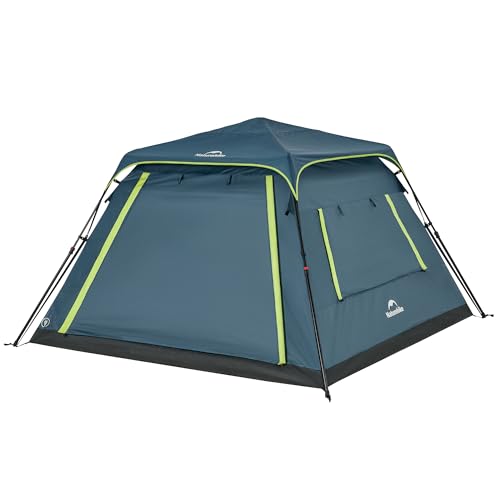
Naturehike Cape Lite 4-6 Person Cabin Tent
The Strengths Of Each Pick
The Village Instant Cabin leans into the “park the car and pitch camp in a single try” use case. Its pre-attached pole frame lets you unfold the tent into a standing cabin in roughly a minute, which matters on a cold-weather arrival when dexterity is limited by gloves and the daylight is already fading.
Compared to the tunnel-shaped Cape you’ll see further down, this one trades interior length for vertical walls, so standing room stays comfortable even for taller campers. The 150D Ti Black Technology fabric (a coated polyester designed to block a high percentage of UV radiation, with a rated UPF 12500+ sun-shield factor) and a PU 2000mm+ waterproof coating (the PU rating, short for polyurethane, is a measure of how much water pressure the fabric can withstand before leaking) give the rainfly a credible defense against sleet and wet snow. Cabin-style tents are a natural fit for cold-weather family camping where gear piles up by the door.
Real-World Strengths
- 60-second instant setup is genuinely useful on a freezing arrival, when fumbling with poles costs real time and comfort.
- Full-coverage rainfly over a Ti Black fabric shell helps with both winter UV reflection and wet-snow shedding.
- Vertical cabin walls let campers stand and change clothes without crawling, which matters in bulky cold-weather layers.
- Cabin floor plans accommodate cots, sleeping pads, and a small stove area more naturally than sloped tunnel designs.
- Available in 4-person and 8-person footprints, so you can size up for families without switching brands.
Things To Consider
- Cabin-shape tents catch more wind on exposed ridgelines than tunnel profiles, so site selection becomes more important.
- Owners commonly report that fully drying the coated polyester before storage prevents mildew at the seams over a long winter season.
Best Suited To
Families and small groups car camping at established sites where quick setup and standing room outweigh the need for wind-cheating tunnel geometry.
A Better Fit Elsewhere
Pick the Naturehike Cape Instant Tunnel Tent instead when you camp on exposed ground and want a slimmer profile to slice through winter wind.
The Cape switches from the Village’s vertical cabin walls to a longer tunnel profile, and that single design shift changes how the tent handles wind, snow load, and gear storage. Its 190T polyester (a 190-denier thread count, where higher numbers mean thicker fabric) carries a PU3000mm waterproof coating, which is a step up in water resistance compared to the Village’s PU2000mm+ shell.
The advertised floor sizes of 8.3 square meters and 12.9 square meters are genuinely roomy, so a family of four can spread out sleeping pads, packs, and a heated vestibule zone without playing Tetris. Like the Village, it uses a pre-attached pole frame for a roughly 60-second setup, which keeps the cold-weather learning curve short for newcomers to winter camping.
Positive Points
- PU3000mm coating handles heavier rain and wet snow better than entry-level shells.
- Tunnel shape presents a narrow profile to prevailing wind, reducing flapping and cold-air infiltration.
- Generous 8.3 to 12.9 square meter floor plans handle group gear in winter without crowding.
- Quick-setup pre-attached poles mean less time exposed to the elements during pitch.
Worth Noting
- Tunnel tents need taut, opposing guy lines to stay stable, so a packed-down site with limited stake room can complicate pitching.
- Tunnel ceilings slope down at the ends, so headroom near the doors is more limited than in the Village cabin.
- Owners commonly report that tunnel rainflies need careful tensioning to prevent snow pockets from forming on the roof during long storms.
Made For
Winter campers heading to exposed sites where wind, snow load, and group gear volume all demand a longer, stronger shell.
Reach For A Different Pick When
Step up to the Naturehike KOTA Double Layer Tent for serious four-season conditions where an inner mesh tent plus outer shell adds insulation and condensation control.
The KOTA is the explicit four-season entry in this shortlist, and the difference shows up in how the layers stack together. It uses a 75D 210T polyester shell (210T refers to the thread count, and 75D is the yarn thickness) with a PU3000mm+ coating, paired with a separate inner mesh tent.
That double-layer approach does three things at once: it traps a still-air buffer for insulation, it gives condensation a surface to form on away from sleepers, and it lets you split the components. You can pitch just the inner mesh on a clear summer night to stargaze, or use the outer shell alone as a sun or rain canopy. In cold weather, that separation also makes it easier to dry one layer while sleeping under the other.
Key Advantages
- Double-layer construction adds a real thermal air gap between the inner mesh and the rainfly, a meaningful upgrade in single-digit overnight temperatures.
- Inner tent and rainfly are both freestanding, so you can pitch either independently depending on weather and trip type.
- PU3000mm+ coating on 75D 210T polyester gives the outer shell solid resistance to wet snow and freezing rain.
- Vestibule and porch extensions add covered, sheltered storage for wet boots, packs, and cooking gear.
Honest Caveats
- Double-layer tents take longer to pack down and dry fully, so post-trip maintenance demands more attention than a single-shell design.
- Because the system has more pieces, first-time winter campers may find the initial pitch sequence more involved than the Village or Cape Lite.
- You’ll want a larger vehicle or rooftop storage to handle the bulk when transporting the separated layers.
Right Fit For
Year-round campers who actually need a true four-season shelter, especially in sub-freezing or wet-snow conditions where condensation and insulation both matter.
Look Elsewhere When
Choose the Naturehike Village Instant Cabin Tent instead for casual family car camping where modular layers are overkill and faster single-shell setup matters more.
The Cape Lite is the lighter, more compact cousin of the full-size Cape, and that’s where its appeal sits. It keeps the same pre-attached-frame, roughly 60-second setup approach but trims the footprint to about 101.5 by 101.5 inches with a 62.2-inch peak height.
That floor plan fits a queen-size mattress with room to spare, which is a useful benchmark for couples or small families who camp in cold weather but don’t need the 8-person capacity. The cabin shape also stays friendlier than a tunnel design in tight sites, since you don’t need opposing anchor points to keep it stable.
What Makes Sense
- 62.2-inch peak height means most adults can kneel and dress without hunching, a small but real comfort in heavy winter layers.
- Queen-size mattress compatibility simplifies cold-weather sleeping setups for two campers.
- Cabin-style geometry holds up well on hard-packed ground where staking tension is harder to achieve.
- Faster pack-down than larger cabin tents, useful for campers chasing short weather windows.
Trade Offs
- 4 to 6 person capacity caps group use; larger families or gear-heavy trips will outgrow it quickly.
- Compact cabin designs trade some wind performance for setup simplicity, so exposed alpine sites demand careful placement.
- Owners commonly note that smaller tents hold body heat well but also build condensation faster when vents aren’t used.
Who Should Grab It
Couples and small families who want a quick-setup cabin tent for shoulder-season and mild winter trips at accessible campsites.
Consider Something Else When
Choose the Naturehike Cape Instant Tunnel Tent if you regularly camp with a larger group or face stronger winds, since the longer tunnel profile handles both better.
What To Weigh Before Choosing Cold Weather Tents
Cold weather performance comes down to a handful of measurable attributes, and ignoring any one of them can derail a winter trip. Waterproofing rating, fabric denier, layer count, and structural shape all interact, so it helps to think of them as a system rather than a checklist.
Waterproofing And Fabric Strength
PU coating ratings (polyurethane waterproofing, measured in millimeters of water pressure the fabric can withstand before leaking) tell you how the rainfly handles standing water and wet snow. A PU2000mm+ shell handles light winter rain, while PU3000mm and above is better suited to heavy wet snow and freezing rain. Fabric denier (the yarn thickness; a higher number means thicker, more abrasion-resistant material) determines how well the shell resists tearing when wind-driven ice grazes the surface. For most campers, PU3000mm paired with 75D or heavier fabric strikes the right balance between weight and durability.
Shape And Structural Design
Cabin-style tents trade aerodynamic efficiency for standing room and fast setup. Tunnel tents trade headroom for a narrower wind profile and stronger snow shedding. Double-layer systems add insulation and condensation control at the cost of complexity and drying time. Match the shape to your typical site: sheltered campgrounds favor cabins, exposed ridges and open fields favor tunnels, and serious four-season use favors double-layer shells.
Capacity And Real Interior Space
Stated person counts are generous, and cold-weather camping adds bulk. Sleeping pads, insulated bags, and dry-gear stashes eat floor space fast. For two adults in winter, a 4-person footprint is more honest than tight. For a family of four, an 8-person tunnel or large cabin keeps everyone out of each other’s way through long evenings.
Key Considerations Across These Picks
Pitfalls Shoppers Hit
Cold weather tent purchases go wrong most often when capacity ratings are taken at face value. A “4-person” tent in mild summer may feel cramped for two adults in winter gear. Skipping vestibule space is another common miss, because wet boots and packs belong outside the sleeping area when temperatures drop. Site selection also gets overlooked; the best tent still struggles in a poorly chosen, wind-exposed pitch.
Where The Extra Money Goes
Higher-priced tents in this category invest in stronger PU coatings, double-layer construction, and more robust pole geometry. For most casual campers, mid-tier waterproofing is enough. Paying more makes sense when you regularly face wet snow, sub-freezing temperatures, or extended trips where condensation and durability directly affect comfort.
Frequently Asked Questions
What temperature rating should I look for in a cold weather tent?
Tents don’t carry formal temperature ratings like sleeping bags, so focus on fabric specs instead. A PU3000mm+ coating, double-layer construction, and full-coverage rainfly offer the best cold-weather protection for most campers.
Are instant setup tents strong enough for winter winds?
Most modern instant tents handle moderate winter conditions well, though cabin shapes catch more wind than tunnel designs. For exposed sites, guying out the tent and choosing a tunnel profile both improve stability.
How important is the PU waterproof rating?
It’s one of the clearest numerical indicators of how a rainfly handles sustained precipitation. PU2000mm handles light winter rain; PU3000mm or higher is a better fit for wet snow and freezing rain.
Do I need a double-layer tent for cold weather camping?
Not always, but a double-layer design adds insulation and reduces condensation drip, both meaningful upgrades in freezing temperatures. Single-shell cabins can work fine in milder shoulder-season conditions.
How should I store a cold weather tent between trips?
Always dry the tent fully before storage. Cold-weather use often leaves trapped moisture in seams and coatings, and storing damp fabric shortens its lifespan and invites mildew at the seams.
Bottom Line
Cold weather tents earn their keep through specific fabric, coating, and structural choices that become obvious once you’ve spent a windy night in the wrong shelter. The Village suits family car camping, the Cape handles wind and group use, the KOTA delivers true four-season performance, and the Cape Lite covers smaller crews who want a quicker cabin setup. Match the tent to your typical winter conditions, and the rest of the trip gets easier.