
Sleeping outdoors shouldn’t mean sleeping badly, and it definitely shouldn’t mean emptying your wallet. The right cheap sleeping pad turns cold, rocky ground into a livable surface, whether you’re car camping for the weekend, hosting last-minute guests, or stretching your pack budget for a multi-day hike. After digging through specs, materials, and real-world use cases across six very different pads, this list covers the categories that matter most: ultralight backpacking, self-inflating comfort, foam reliability, and budget-friendly crash pads.
The Leading Options At A Glance
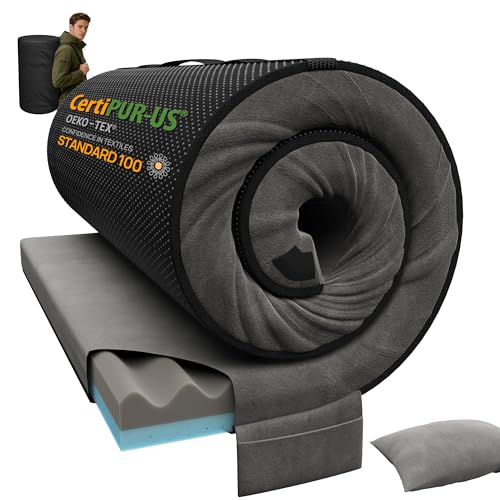
Releep 3 Inch Dual-Sided Memory Foam Camping Mattress
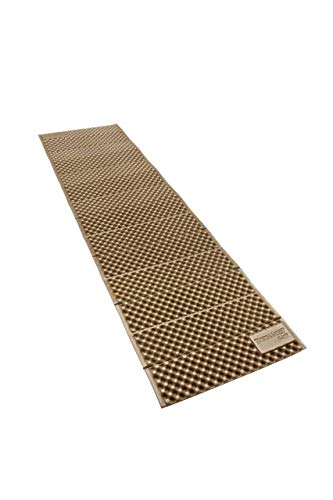
Therm-a-Rest Z Lite Original Sleeping Pad
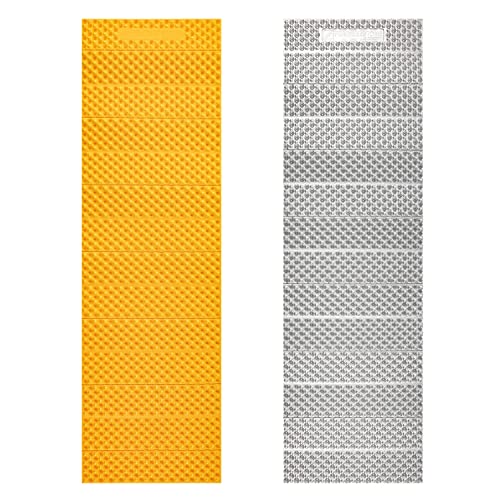
Featherstone El Cordion Insulated Closed Cell Foam Pad

Outcast Sporting Gear Soft Foam Landing Pad (30″)

LLUAII Self-Inflating Pad with Electric Pump

Exped Ultra Ultralight Inflatable Backpacking Pad
The Strengths Of Each Pick
This is the pad you reach for when comfort matters more than weight. At three inches of dual-sided construction with a gel-infused memory foam top and a denser support base beneath, the Releep mattress reads like a guest bed that happens to roll up. The waterproof shell adds peace of mind for damp tent floors, and the included pillow plus carry bag round out a package aimed at car campers, road-trippers, and anyone setting up a temporary guest bed at home.
Versus the closed-cell foam pads below, this one is heavier and bulkier, but that’s the trade-off for actual cushioning. For weekend car camping with kids or a friend crashing on the floor, you may find the extra thickness makes a real difference.
Real Benefits
- Three-inch dual-layer foam cradles hips and shoulders, the same pressure points that wake you on thinner pads
- Waterproof cover handles wet grass, morning dew, and accidental spills without soaking through
- Included pillow and carry bag skip the accessory shopping trip
- Rolls up into a manageable bundle that fits a trunk or back seat
Things To Consider
- Far too bulky and heavy for backpacking; this is a car-camping-only option
- Memory foam holds body heat, so warm-summer sleepers may run hot without airflow
- The carry bag size is generous, but expect a tight squeeze in smaller vehicles
Who It Suits Best
Car campers, weekend festival goers, and anyone needing a soft guest bed for the floor who values cushioning over pack size.
Look Elsewhere When
Thru-hikers and ounce-counting backpackers should skip to the Therm-a-Rest Z Lite or Featherstone El Cordion, which pack down much smaller.
The Z Lite is one of those products that earned its reputation decades ago and never needed a redesign. Closed-cell foam, accordion-folded into a panel that straps to any pack, with a dimpled surface that traps warm air and softens rocky ground. There is no inflation, no pump, no failure point. You unfold it, you sleep on it, you fold it back up.
It doesn’t deliver plush comfort like the Releep above, and you can feel lumpy terrain through it on the worst nights. For three-season backpacking where reliability matters more than softness, the Z Lite remains a benchmark.
Useful Strengths
- Indestructible closed-cell foam survives rocks, abrasion, and careless packing
- Accordion fold straps to the outside of any pack without consuming internal volume
- No inflation means no leaks, no pump, and no middle-of-the-night deflation surprises
- Trusted by thru-hikers for generations, with wide parts and accessory compatibility
Worth Noting
- About an inch thick, so sharp roots and rocks transmit through on the worst sites
- Bigger packed size than inflatable pads once strapped to the pack
Feature Snapshot
Made For
Backpackers, thru-hikers, and Scouts who want a no-fail pad that handles rough conditions year after year.
Consider Something Else When
Side sleepers and cold-weather campers should look at the Featherstone El Cordion, which adds tested insulation and more ground clearance.
The El Cordion is a closed-cell foam pad that takes the format Therm-a-Rest popularized and pushes it into cold-weather territory. Cross-linked polyethylene foam pairs with a heat-reflective layer, and the hexagonal nodes lift you further off cold ground than traditional egg-crate foam. The R-value, a standardized measure of how well a pad insulates from the ground, of 2.1 is independently tested to the ASTM F3340 standard, which gives you a real number to plan your sleep system around.
Compared with the Z Lite, you trade a slightly bulkier fold for noticeably better warmth and ground clearance. For shoulder-season trips where condensation and frost can ruin a lighter pad, that tradeoff makes sense.
Bright Spots
- ASTM-tested R-value of 2.1 handles frost, frozen ground, and shoulder-season nights
- Hexagonal node pattern adds height and coverage beyond standard egg-crate foam
- Closed-cell foam remains bombproof against punctures and rough terrain
- Heat-reflective film layer boosts warmth without adding weight
Trade Offs
- Folds slightly bulkier than the Z Lite, so it crowds smaller packs
- Still transmits some sharp ground feel, especially for side sleepers under 150 pounds
Feature Snapshot
Best Suited To
Three-season backpackers, early-spring hikers, and cold-sleeping side sleepers who want foam reliability with real insulation.
A Better Fit Elsewhere
Summer-only fair-weather campers will do just fine with the lighter, simpler Z Lite above.
The Outcast Landing Pad is built for water-based trips and family-friendly camping where softness trumps technical specs. The soft foam construction cushions sandy riverbanks and rocky tent sites, and the 30-inch width gives kids and pets room to sprawl without rolling off. The bright red color makes it easy to spot when the campsite gets busy.
It’s a niche pick compared to the more versatile pads above and below, but for raft loading, beach camping, and family river trips, it covers a job the others don’t.
Positive Takeaways
- Soft foam feel is forgiving on bare feet after long days on the river
- Wide 30-inch format accommodates restless kids and dogs
- High-visibility red color prevents leaving it behind at take-out points
Minor Gripes
- Foam absorbs water if submerged, so drying time matters on multi-day trips
- Less technical for backpacking and alpine use
Whose Shelf It Belongs On
Families, rafters, and recreational river campers who want comfort and visibility over gram-shaving and insulation ratings.
Swap It Out When
Multi-day backpackers should grab the Featherstone El Cordion instead, since it insulates better and dries faster in wet terrain.
This is the lazy-camper special, and there’s nothing wrong with that. The LLUAII combines open-cell foam with an electric pump that inflates the pad on its own, so you skip the lung work and the foot-pump gymnastics. At four inches thick with an R-value of 9.5, it’s aimed at cold-weather car campers who want real insulation without manually blowing up a mat.
Compared with the Releep above, you trade the traditional memory-foam feel for thicker foam, more insulation, and self-inflation. For winter truck camping or shoulder-season basecamps, this is the heavyweight option on the list.
Notable Gains
- Four-inch foam fill delivers plush cushioning even on gravel and roots
- Built-in electric pump inflates and deflates the pad automatically
- High R-value of 9.5 handles freezing ground and snow camping
- Integrated pillow saves packing a separate pillow for car-camping trips
Points To Note
- Heavy and bulky; this is firmly car-camping territory, not backpacking
- Vacuum packaging means first inflation takes patience, plus a 30-minute rest for full expansion
- Electric pump adds an extra part to maintain and keep dry
The Right Fit
Four-season car campers, truck-bed sleepers, and anyone hosting guests who wants self-inflating convenience plus winter-grade warmth.
Skip It When
Backpackers covering real distance will find this too heavy. Reach for the Exped Ultra instead, which packs down to water-bottle size.
The Exped Ultra is the inflatable counterpoint to every foam pad on this list. Welded synthetic insulation (SYNMAT technology) sits directly inside the air chambers rather than as a loose fill, which means it stays put over months of stuffing and unstuffing. With a 3.2 R-value and a packed size smaller than a Nalgene, this is built for covering miles.
Versus the foam pads above, the Exped trades puncture-proof reliability for a fraction of the packed volume and a noticeably warmer, quieter sleep. It’s the upgrade for hikers who already know their kit well and want to drop weight without dropping comfort.
Standout Benefits
- Welded microfiber insulation keeps warmth consistent across the pad surface
- Packs to roughly water-bottle size, freeing serious space in your pack
- R-value of 3.2 handles shoulder-season and most winter trips in the lower 48
- Recycled materials reduce environmental impact compared to standard fills
Honest Caveats
- Inflatables can puncture; carrying a patch kit is non-negotiable on long trips
Perfect Match For
Thru-hikers, bikepackers, and fast-packers who count every gram and want real insulation in a compact package.
Where A Sibling Pick Shines
Car campers and budget-focused families get more cushion per dollar from the LLUAII above.
What To Weigh Before Choosing Cheap Sleeping Pads
Closed-Cell Foam vs Inflatable Construction
Closed-cell foam pads like the Therm-a-Rest Z Lite and Featherstone El Cordion cannot pop or deflate, which makes them the most reliable format for rough terrain and multi-day trips. The tradeoff is bulk: foam panels don’t compress small, so they tend to ride on the outside of your pack or crowd your trunk. Inflatable pads like the Exped Ultra and LLUAII collapse to far smaller sizes and offer softer sleep, but they introduce the risk of leaks. Owners commonly report that a small patch kit solves most field issues, though a hard fall onto a sharp root can still end a trip. If your camping involves rocky ground, kids’ gear, or shared use, foam is forgiving. If you’re counting ounces and pack space, inflatable wins.
R-Value and Temperature Range
R-value measures how much insulation a pad provides against the cold ground, and the higher the number, the warmer the sleep. Foam pads without dedicated insulation land around R-value 1 to 2, which handles summer nights fine but gets uncomfortable below 40°F. Insulated foam like the El Cordion’s R-value 2.1 pushes into shoulder-season territory. Inflatable pads with welded insulation, such as the Exped Ultra’s 3.2, cross into three-season-plus territory. For winter camping or snow, look for pads with R-values of 5 or higher, which is where the LLUAII’s 9.5 sits.
Thickness, Weight, and Pack Size
Thickness and weight often trade off directly. A three-inch foam pad feels luxurious but weighs far more than a one-inch closed-cell panel. Side sleepers generally need at least two inches of padding to keep hips and shoulders off hard ground; back sleepers can get away with less. Backpackers typically target pads under 20 ounces in the 2-inch-plus range, while car campers can prioritize thickness over weight. The Exped Ultra represents the modern sweet spot for backpackers: light, warm, and small.
Use-Case Fit
A pad that works for backpacking may be overkill for a backyard or guest bed. The Releep and LLUAII shine when weight doesn’t matter, while the Z Lite, El Cordion, and Exped Ultra target hikers who count ounces. River trippers and families often want visibility, durability, and softness, which is where the Outcast Landing Pad comes in. Matching the pad to your primary use case avoids overpaying for features you won’t use and prevents frustration from underbuilt gear on harder trips.
Practical Pointers Before You Buy
Pitfalls Shoppers Hit
Buying a pad based purely on the inflated thickness number leads to disappointment when sharp ground transmits through. A pad’s R-value matters more than thickness for cold nights, and a 4-inch summer pad will feel colder than a 2-inch winter-rated one. Owners commonly report that pads rated for “all-season” without a specific R-value often fail in real cold. Another trap: ignoring packed size. A pad that fits in your tent but not your pack means strapping awkward bulk to the outside, where it snags on brush and shifts your balance. Measure your vehicle or pack space before committing.
Where The Extra Money Goes
Higher-tier pads tend to spend money on three things: insulation, weight savings, and durability. A premium inflatable like the Exped Ultra uses welded microfiber insulation that won’t shift or clump over time, which explains the cost jump from basic inflatables. Premium foam pads use cross-linked polyethylene and reflective films to push R-values higher without adding weight. Heavier denier fabrics and welded seams prevent the small leaks that plague budget inflatables. The upgrade pays off most for thru-hikers, cold-weather campers, and anyone who uses gear weekly rather than a few weekends a year. For occasional summer car camping, mid-tier pads deliver most of the comfort at a fraction of the cost.
Frequently Asked Questions
What is R-value and why does it matter?
R-value measures how well a sleeping pad insulates you from the cold ground, with higher numbers meaning more warmth. It matters because the ground pulls heat from your body faster than the air does, so an uninsulated pad can leave you cold even on mild nights.
Can cheap sleeping pads handle winter camping?
Only certain ones can. Look for pads with R-values of 4 or higher for three-season-plus use, and 5-plus for true winter and snow camping. Foam pads without insulation rarely work below freezing.
How do I clean and store a foam sleeping pad?
Wipe closed-cell foam with a damp cloth and mild soap, then air dry completely before storage. Store foam pads flat or loosely folded rather than tightly rolled, which prevents permanent creasing over time.
Are self-inflating pads worth the extra weight?
For car camping and basecamps, yes. The convenience of an electric pump plus thicker foam adds comfort at minimal inconvenience. For backpacking, the extra weight usually isn’t worth it compared to ultralight inflatables.
How long do inflatable sleeping pads last?
With careful use and proper storage, quality inflatable pads typically last several years of regular camping. Owners commonly report that valve failures and seam leaks are the most frequent issues, both fixable with patch kits.
Closing Remarks
The right cheap sleeping pad comes down to matching format and insulation to your actual trips, not the marketing claims. Foam delivers reliability and budget pricing for backpackers and families, while self-inflating and insulated inflatables reward campers who want softer sleep and smaller packs. Pick the format that fits your terrain, check the R-value against your coldest nights, and the rest tends to fall into place. Sleep well out there.