
A 10×20 footprint covers a serious slice of outdoor space: a vendor booth, a backyard reception, a shaded spot for two vehicles, or a weekend workspace. The hard part is finding a canopy that actually stays put when the breeze picks up and folds down without a fight. This roundup walks through seven options across event tents, pop-up shelters, and carport-style frames so you can match a build to your exact scenario.
Your Options, Compared
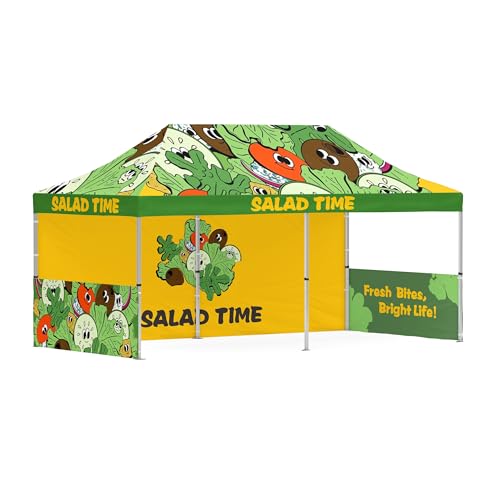
BillyPrint Custom Canopy Tent 10×20 with Logo

Dot4Dot Custom Canopy Tent with Logo 10×20

COBIZI 10×20 Pop Up Gazebo with Mesh Netting

COBIZI 10×20 Heavy Duty Pop Up Canopy Tent

Quictent 10×20 Heavy Duty Car Canopy Galvanized Frame

Quictent 10×20 Heavy Duty Carport Canopy White
CROWN SHADES 10×20 Commercial Pop Up Canopy Tent
Inside Each Recommended Option
This tent is built for small businesses and makers who treat a canopy as a moving billboard. The full-color printing extends across the canopy top, valances, peaks, and any optional walls you tack on, so your branding reads from across a crowded convention floor. The optional heavy-duty aluminum frame upgrade matters if you set up weekly rather than a few times a year.
For a vendor who sets up at weekend markets, the 10×20 footprint gives you a proper storefront with room for a table, a rack, and a conversation area. Expedited service is available if a show date is creeping up. The waterproof polyester canopy means an unexpected shower won’t end the day, though owners in coastal climates often weigh the frame upgrade for salt-air exposure.
Well-Handled Touches
- Full-coverage printing across canopy, valances, and optional walls for true brand visibility
- Waterproof polyester top keeps gear and products dry during light rain
- Optional aluminum frame upgrade for high-frequency setup and takedown
- Expedited production option when an event date is close
Things To Consider
- Custom printing adds lead time, so order ahead of the event calendar
- Optional walls and frame upgrades are add-ons and raise the total cost
- Long-term fabric care means spot-cleaning printed surfaces rather than machine washing
Who It Suits Best
Small business owners who run booths at trade shows, farmers markets, and pop-up events where brand presentation drives traffic.
Consider Something Else When
Shoppers who just want quick backyard shade without printed branding should look at the Dot4Dot Custom Canopy Tent with Logo 10×20 for a simpler ordering path.
Dot4Dot offers the same logo-driven approach as BillyPrint but with a useful twist: you can order the same design across 10×10, 10×15, or 10×20 footprints. That flexibility helps if you run a mix of compact and full-size booths and want one consistent look. The build is described as commercial-grade, targeting steady event use rather than a single weekend.
Unlike the BillyPrint, which leans toward expedited orders and a frame-upgrade option, Dot4Dot focuses on standard production runs across multiple sizes. For a craft vendor moving between a 10×10 craft fair and a 10×20 community festival, ordering matching designs keeps branding tight without redrawing artwork for each event.
The Good Stuff
- Three footprint options with shared artwork streamline multi-event branding
- Commercial-grade construction aimed at regular setup cycles
- Logo printing covers the canopy top for strong overhead visibility
Trade Offs
- Heavy-duty frame and wall upgrades add to the base price
- Custom production time means planning weeks ahead of the first show
At A Glance
Made For
Vendors and brand reps who attend events of varying sizes and want consistent logo artwork across 10×10, 10×15, and 10×20 setups.
Look Elsewhere When
Anyone needing bug-screened backyard shade should skip ahead to the COBIZI 10×20 Pop Up Gazebo with Mesh Netting instead.
This is the canopy you pick when mosquitoes ruin outdoor dinners. The four mesh sidewalls turn the 10×20 footprint into a screened room, and the double roof adds airflow above the canopy surface, which keeps things cooler than a single-layer top on a hot afternoon. The light gray and gray color scheme blends into most backyard settings rather than screaming “event tent.”
Compare that to the COBIZI heavy-duty pop-up covered next, which prioritizes frame strength over insect protection. This gazebo suits a family that hosts weekend cookouts where bugs and sun are equal problems. For most suburban patios, the mesh walls and double roof handle both in a single structure.
A Favorable Mix
- Mesh sidewalls keep mosquitoes and gnats off dining tables
- Double roof improves airflow and reduces heat buildup underneath
- Neutral gray color blends into residential yards better than bright event colors
Worth Noting
- Mesh walls are not fully waterproof, so heavy rain gets in from the sides
- Long-term mesh care usually means hand-cleaning with mild soap rather than tossing in a machine
Right Fit For
Backyard hosts who want a screened lounge and dining area for bug-heavy summer evenings.
A Better Fit Elsewhere
Vendors needing printed branding should stick with the BillyPrint Custom Canopy Tent 10×20 instead of this unprinted gazebo.
The full truss frame and powder-coated finish set this apart from a standard pop-up. The thicker pipe diameter and added intermediate support poles are built for crews that set up in windy lots, on concrete, or on grass that doesn’t want to hold a stake. Sidewalls come in the box, so you can fully enclose the footprint when weather or privacy calls for it.
Where the COBIZI mesh gazebo is about backyard comfort, this one is about commercial duty. It’s the choice for event rental companies, sports tournaments, and product launches that run into weather and need a frame that won’t buckle under tension. For most weekend users, this is overkill; for pros, it earns its weight.
The Helpful Details
- Full truss construction and powder-coated frame resist rust and flex
- Intermediate support poles add load capacity for hanging signage or lighting
- Included sidewalls convert the tent from open-air to fully enclosed
- Easy-up design still works for solo setup despite the heavier build
Points To Keep In Mind
- Heavier frame makes transport and storage harder than lighter pop-ups
- Sidewalls may need extra stakes in soft ground to stay taut in wind
Feature Snapshot
Who Should Grab It
Event crews, rental companies, and serious vendors who set up repeatedly in unpredictable weather.
Swap It Out When
Homeowners hosting backyard dinners will find the COBIZI 10×20 Pop Up Gazebo with Mesh Netting a friendlier fit than this commercial build.
The shift from event tents to carport builds starts here. Quictent’s galvanized steel frame pairs with three reinforced steel cables running across the roof, which prevents the structure from twisting in crosswinds. The Gainsboro top is a step away from basic white and helps the canopy blend with siding and fence tones.
For owners parking a daily driver, a small boat, or a project car outside, this gives garage-style coverage without pouring a slab. Compared to the CROWN SHADES commercial pop-up covered later, this isn’t really a fast-setup event tent; it’s a semi-permanent shelter. The tradeoff is more assembly time for much better wind performance.
Practical Advantages
- Three steel roof cables prevent structural twisting in gusts
- Galvanized steel frame resists rust through seasons of outdoor exposure
- Wide footprint covers a vehicle plus a workspace strip alongside it
- Gainsboro color blends with residential exteriors
Small Caveats
- Assembly takes longer than a pop-up tent and typically needs two people
- Anchoring hardware varies by surface, so concrete or asphalt installs may need extra parts
Quick Facts
Built With In Mind
Homeowners sheltering cars, small boats, or outdoor work zones that need year-round coverage.
Reach For A Different Pick When
Anyone needing a fast pop-up for weekend events should choose the CROWN SHADES 10×20 Commercial Pop Up Canopy Tent instead.
This is the simpler sibling to the Gainsboro car canopy. You get the same galvanized steel frame and reinforced structure, but without sidewalls, which makes it a clean drive-through shelter. Vehicles roll in and out without opening or closing anything, and the open sides let air move freely to reduce condensation under the cover.
Versus the Gainsboro version covered above, the white top with no walls suits a driveway where you want overhead sun protection more than enclosed storage. It’s also a sensible pick for anyone using the 10×20 footprint as a covered workspace, since open sides make it easier to bring in long materials like lumber or pipe.
A Few Highlights
- Galvanized steel frame stands up to repeated seasonal exposure
- Open-sided design allows easy vehicle and equipment access
- Reinforced roof structure reduces sag and twist over time
- White top reflects heat better than darker fabric in direct sun
Honest Caveats
- No sidewalls means rain and wind enter from the sides
- White fabric shows dirt and mildew faster than darker tops
The Numbers That Matter
Whose Shelf It Belongs On
Driveway users who want simple overhead vehicle shade without the cost or complexity of fully enclosed walls.
Where A Sibling Pick Shines
Anyone needing extra side protection should choose the Quictent 10×20 Heavy Duty Car Canopy Galvanized Frame Gainsboro version for full overhead coverage with the same robust frame.
CROWN SHADES targets mobile teams that set up and break down weekly. The thicker powder-coated steel frame and hexagonal leg design improve rigidity, while a roller bag makes transport between venues realistic for one or two people. For most pop-up buyers, this is the everyday workhorse choice that balances weight, pack-down size, and durability.
Compared to the COBIZI heavy-duty pop-up earlier in this list, the CROWN SHADES is lighter to haul but trades some raw frame strength for portability. For a sports-tournament canopy or a farmer’s market circuit, that tradeoff usually lands in the right place. You still want to stake it down, since even thicker commercial frames flex in real wind.
Positive Takeaways
- Roller bag streamlines transport to and from event sites
- Powder-coated steel frame resists rust and surface wear
- Hexagonal leg design adds rigidity over standard square tubes
- White top reflects heat and matches most event decor
Worth Bearing In Mind
- Stake and rope kit is essential in wind, since even commercial frames flex in real gusts
- Storage of the roller bag requires decent vehicle cargo space
Perfect Match For
Event teams, sports parents, and traveling vendors who need a reliable pop-up they can deploy and repack each weekend.
Not Your Match When
Anyone parking vehicles under long-term cover will get better results from the Quictent 10×20 Heavy Duty Carport Canopy White than from this portable pop-up.
How To Choose the Right 20 X 10 Canopies for Your Setup
The first call is purpose. Event canopies focus on quick setup, portability, and often printed branding; they suit trade shows, markets, and weekend gatherings. Carport-style canopies prioritize galvanized steel frames, reinforced roof cables, and weather resistance for vehicles, boats, and outdoor storage over months rather than hours.
Frame and Build Quality
Frame strength is the single biggest differentiator across this category. Look at pipe diameter, wall thickness, and whether the frame is powder-coated or galvanized. Powder-coated steel handles transport and storage well, while galvanized steel shrugs off salt air and damp climates better. For windy lots, intermediate support poles and reinforced cables prevent the twisting that ruins cheaper frames.
Canopy Fabric and Weather Resistance
The fabric spec to check is denier, which measures fiber thickness, and any waterproof or flame-retardant coating. Higher denier numbers mean tougher fabric that resists tearing at stress points. For backyard entertaining, mesh sidewalls solve a different problem, since they trade waterproofing for insect protection and airflow.
Setup, Portability, and Long-Term Use
Pop-up frames collapse into wheeled bags and work for solo setup, but heavier commercial frames may need two people. Carport builds take longer to assemble but stand for seasons. Match the format to your real frequency: a weekly market vendor needs portability, while a driveway shelter needs anchoring and rust resistance.
Key Considerations Across These Picks
Where Shoppers Go Wrong
The most common mistake is choosing a pop-up tent for semi-permanent shelter or a carport for a one-day event. Each format is built for a different use pattern, and using the wrong one leads to bent frames or sweaty, frustrated setup crews. Another slip is skipping anchoring hardware: even sturdy canopies need proper stakes, ropes, and sometimes sandbags to stay put in real wind.
The Case For Spending Up
Premium canopies cost more for measurable reasons: thicker pipe walls, galvanized finishes, reinforced roof cables, and printed branding options that budget tents skip. For anyone setting up more than a handful of times per year, those upgrades pay back in fewer replacements and better weather performance. For a single backyard party, a lighter frame makes more sense than the heavy-duty option.