
Pulling into a campsite with a loaded vehicle changes the math on what makes a great tent. You can haul real weight, you don’t need an ultralight pack-down, and you can bring gear that turns a simple shelter into a livable base camp. The picks below lean into that sweet spot: large footprints, vertical walls that make standing up easy, and pre-attached poles that skip the worst part of any trip.
The Lineup, Simplified

Naturehike Village Instant Tent Cabin
Naturehike Cape Instant Tunnel Tent
Naturehike KOTA Double-Layer Tent
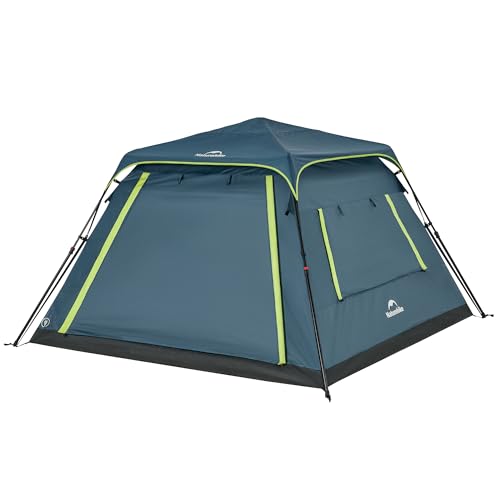
Naturehike Cape Lite Instant Cabin
A Closer Look At Each Pick
The Naturehike Village Instant Tent is built for drivers who pull up to camp and want shelter waiting for them in minutes. Its pre-attached pole design and freestanding cabin structure (a wall-tent shape that stands on its own without guy lines) claim a roughly 60-second setup, which matters when you arrive at dusk with kids and a cooler full of food. Compared to the Naturehike Cape we’ll get to in a moment, this one trades the tunnel layout for straighter vertical walls, giving you more usable interior height in the same footprint.
The shell uses 150D Ti Black technology fabric (a dense weave that blocks a high percentage of UV rays), which doubles as serious sun protection alongside its waterproof coating rated at PU 2000mm+ (a hydrostatic head measurement, meaning the fabric resists a 2-meter column of water before leaking). For a parent camping with teens who treat the tent like a bedroom, that combination covers both midday glare and an unexpected evening storm.
What Earns Its Place
- Pre-attached poles and automatic structure deliver a genuinely fast pitch, useful after a long drive.
- Vertical cabin walls create standing-room height, so you can change clothes without crouching.
- High UPF-rated fabric (UPF 12500+, a UV protection factor for fabric) blocks harsh sun on exposed sites.
- Available in 4- and 8-person footprints, letting you size up as the family grows.
- Full-coverage rainfly (the outer waterproof layer that drapes over the tent body) keeps seams and vents protected in steady rain.
Things To Consider
- The larger 8-person version is bulky in a sedan trunk, so you’ll likely need an SUV or roof box.
- Owners commonly report that the thick Ti Black fabric holds heat on calm summer afternoons, so shade and ventilation matter.
Made For
Families with one or two kids who car-camp two or three times a season and want standing height plus a real rainfly.
Look Elsewhere When
You want a long tunnel layout for separate sleeping rooms. The Naturehike Cape Instant Tunnel Tent splits that space better.
Where the Village goes vertical, the Naturehike Cape Instant Tunnel Tent goes long. Its tunnel-shaped layout, essentially a series of arched hoops creating a sleeper at each end with living space in the middle, splits the interior into defined zones, which works well when grandparents, parents, and kids all share one shelter. The 190T polyester shell (a midweight fabric measured by thread count) carries a PU 3000mm waterproof rating (a higher hydrostatic head than the Village, meaning it handles heavier sustained rain), so the Cape leans harder into wet-weather duty.
For most weekend road trips, the same 60-second pre-attached-pole pitch applies, and the larger 12.9-square-meter (about 139 square feet) footprint swallows cots, duffels, and a folding table. If you’ve camped in a cabin tent and felt cramped, the tunnel geometry here is the upgrade.
Useful Touches
- Higher PU 3000mm waterproof rating handles sustained rain better than entry-level cabin tents.
- Tunnel layout creates natural room separation, useful for privacy between adults and kids.
- Large floor area fits queen air mattresses plus camp furniture with room to spare.
- Setup remains a one-person job thanks to pre-attached poles.
Honest Caveats
- Tunnel tents rely on guy lines (taut cords staked out from the tent) for full tension, so a windy site means more staking work.
- Longer packed length than cabin-style tents, so it can fight a smaller trunk.
- Fabric is midweight 190T, so you’ll want to be gentle folding it to avoid premature seam wear.
Key Product Details
Who It Suits Best
Multi-generational families or groups of three to six who want a roomy, room-divided shelter for variable weather.
Consider Something Else When
You want fewer stakes and a freestanding cabin pitch. The Naturehike Village Instant Tent Cabin stands without guy lines in a calmer footprint.
The Naturehike KOTA earns its spot on this list for one specific reason: modularity. Its inner mesh tent and outer rainfly can be used separately or stacked, so on a warm July night you pitch just the mesh for stargazing, while a shoulder-season trip gets the full double-layer setup with vestibules (covered porch areas at the tent entrance that keep boots and packs dry) for gear storage. That’s a different value proposition than either the Village or the Cape, which are single-layer shells.
The 75D 210T polyester with a 3000mm+ waterproof rating sits at the more rugged end of this roundup, and the cabin-style footprint gives you decent interior height. For campers chasing shoulder-season trips in mountain weather, that double-layer architecture is the meaningful upgrade.
Noteworthy Benefits
- Double-layer design lets the mesh inner stand alone in summer and pairs with the fly for cold-weather camping.
- Vestibules and porch area keep muddy boots and packs out of the sleeping space.
- Heavier 75D fabric (a denier rating, where higher numbers mean thicker threads) handles abrasion from rough sites better than lighter shells.
- Available in 4-, 6-, and 8-person sizes to match trip length and group size.
Practical Considerations
- Two-piece setup takes longer than a true instant tent, so plan a few extra minutes at arrival.
- Bulkier packed size than single-layer options, and owners commonly note it wants a roomy trunk or cargo area.
Best Suited To
Year-round campers who want one shelter that adapts from summer mesh nights to shoulder-season rain and wind.
A Better Fit Elsewhere
You prioritize pure speed over versatility. The Naturehike Cape Lite Instant Cabin pitches in seconds and asks less of your setup routine.
The Naturehike Cape Lite Instant Cabin is the shortest path between car and sleeping bag. Its instant pre-attached-pole system lets one person pitch the shelter in about a minute, and the cabin footprint (around 101.5 by 101.5 inches) fits a queen mattress with floor space to spare. Compared to the larger Cape tunnel model, this Lite version trims bulk without giving up the fast-pitch convenience.
A 62.2-inch peak height lets most adults stand near the center without ducking, which is more than you typically get in this size class. For couples or small families who car-camp often and want minimal setup friction, that’s the core pitch.
A Favorable Mix
- Instant setup means one person can have the tent ready before the cooler ice melts.
- Queen-mattress-friendly floor with enough extra room for a pack or two.
- Center peak height near 5’2″ allows comfortable standing and changing.
- Smaller packed footprint suits sedans and small SUVs.
Points To Note
- Better suited to two adults or a small family than a full group of six.
- Single-layer cabin means heavier summer heat, so a shaded site improves comfort.
Feature Snapshot
Whose Shelf It Belongs On
Couples and small families who want car-camping convenience without hauling the largest cabin shell on the market.
Skip It When
You regularly camp with a larger group. The Naturehike Village Instant Tent Cabin scales up to 8 people without giving up cabin walls.
Choosing A Shelter That Fits The Way You Camp
Capacity matters, but the labeled count on a tent assumes tight sleeping, not gear storage. Add roughly one person to the rating if you want room for cots, a pack, and a chair. Cabin-style tents give you standing height and a single open space, while tunnel layouts split that space into separate rooms, useful for parents who want a defined adult zone. Vertical walls beat sloped ones for livability, since you spend more time sitting and dressing than crawling into a bag.
Weatherproofing shows up in two numbers. The waterproof rating, expressed in millimeters (PU 2000mm to PU 3000mm+), tells you how much water pressure the fabric handles before leaking, and higher UPF ratings on the canopy (a measure of how much UV radiation the fabric blocks) protect you from harsh sun. For shoulder-season trips, lean toward PU 3000mm and a full-coverage rainfly. For summer desert camping, a high UPF shell matters more than peak rain rating.
Setup style is the everyday quality-of-life factor. Pre-attached pole systems cost a little more in price and packed weight but cut setup from ten minutes to one. Double-layer tents add versatility for year-round use but ask for more steps at pitch time. Match the system to how often you actually camp: occasional summer trips reward simpler single-layer designs, while frequent or shoulder-season travelers benefit from modular double layers.
Capacity And Shape
Pick capacity by counting sleepers, then add one for gear space. Vertical walls buy livability that sloped roofs cannot match.
Weather Protection
Match the waterproof rating to your climate and check that the rainfly covers vents and seams. Higher UPF fabric helps on exposed alpine or desert sites.
Setup And Pack-Down
Instant pre-attached poles are worth the trade-off for anyone pitching alone or arriving late. Modular double-layer designs suit campers chasing year-round flexibility.
Smart Considerations Before You Pick
Common Shopping Slip Ups
The biggest trap in this category is trusting the labeled capacity at face value. A “4-person” tent fits four sleeping bags touching each other, not four sleepers plus a pack. Buyers also underestimate packed length, since a tent that pitches at 10 feet long can refuse to fit diagonally in a sedan trunk. Finally, ignoring the rainfly coverage on vents leaves you damp in a storm that comes from the side rather than straight down.
Why Top Tier Costs More
Higher waterproof ratings, denser fabric, and double-layer construction all add material and engineering, and that’s where the price difference goes. Premium picks typically bundle better UPF coatings, full-coverage rainflies, and sturdier pole hardware, which pay off on longer trips and rougher sites. The upgrade is worth it for campers chasing shoulder-season weather or unpredictable climates, while fair-weather summer road-trippers can comfortably stay at the entry tier.
Frequently Asked Questions
How big should a car camping tent be for a family of four?
Plan on a 6- to 8-person labeled capacity so each person has room for a cot, a pack, and a little walking space. Tight 4-person tents work for backpacking, not for a week of car camping.
What waterproof rating is enough for most car camping trips?
A PU 2000mm rating handles light summer rain, while PU 3000mm+ is the safer bet for sustained showers and shoulder-season trips where conditions stack up overnight.
Are instant tents actually faster than traditional tents?
Yes, and the difference compounds across a season. Pre-attached pole systems remove the sorting, threading, and trial-and-error that traditional tents require, and most claim a one-minute pitch.
Can one person set up a large car camping tent?
Most instant cabin and tunnel tents on this list are designed for a single person to pitch. Larger 8-person versions are heavier to haul, but the setup itself stays a one-person job.
Do I need a full rainfly for fair-weather camping?
A partial fly is enough on calm, clear nights, but a full-coverage rainfly protects seams and vents when weather shifts, and most car campers find the small weight trade-off worth the flexibility.
Closing Thoughts
The right car camping tent is the one that fits your group, your trunk, and the weather you actually drive into. Start with capacity, then weigh setup style, waterproof rating, and shell fabric against the trips you take most. Once those align, the rest is just packing the cooler.