
A flat, supportive sleeping surface changes a road trip from something you survive into something you genuinely enjoy. The right car camping bed turns the cargo area, the back seat, or the truck bed into a real bedroom for the night. This roundup covers foam pads, inflatable mattresses, and truck-specific designs so you can pick what fits your rig and your style of travel.
Your Options, Compared
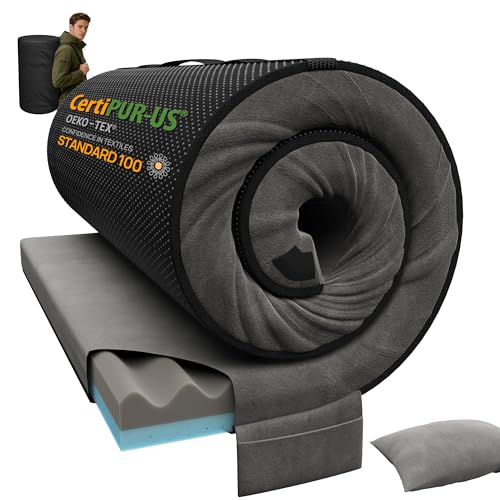
Releep 3 Inch Dual-Sided Memory Foam Camping Mattress

KASIMO Memory Sleeping Pad for Camping

Zzuvjoy 3.1″ Self Inflating Sleeping Pad with Pillow

GOTIDY Truck Bed Mattress for Full-Size Pickup
KASIMO Air Mattress Twin with Cordless Battery Pump
KASIMO Air Mattress Queen with Wireless Battery Pump
Umbrauto Car Air Mattress Backseat for SUV
The Strengths Of Each Pick
For most weekend road-trippers, the Releep 3-Inch Dual-Sided Memory Foam Mattress hits a comfortable middle ground between softness and support. A two-layer foam core pairs gel-infused memory foam on top with a denser base layer underneath, so shoulders and hips get cradled while the lower back stays level. The mattress rolls into a carry bag for stashing behind the seat when you need cargo space during the day.
Unlike the air mattresses later in this list, foam requires no pump and holds its shape once unrolled. You simply lay it flat and the foam settles on its own. A built-in pillow section saves space in your packing list, which matters when every square inch of trunk real estate counts.
Everyday Wins
- Dual-layer foam delivers the kind of pressure relief most side sleepers want after long driving days
- No pump or power source means setup takes seconds, even at remote trailheads
- Roll-up design fits neatly in a closet or cargo corner between trips
- Built-in pillow section removes one item from the packing list
- Water-resistant surface handles the occasional damp ground or spilled drink
Trade-Offs To Consider
- At three inches thick, taller campers may feel the ground more than they would on the air options below
- Foam expands slowly after unrolling, so first-night comfort improves after a few hours of breathing
Quick Facts
Right Fit For
Solo travelers and couples who pack light, sleep on a flat cargo floor, and prefer foam over inflatable support.
Swap It Out When
Pick the KASIMO Memory Sleeping Pad if you camp in cold weather and need a higher R-value to keep body heat from sinking into the ground.
Cold ground steals sleep faster than anything else on a car camping trip, and the KASIMO Memory Sleeping Pad addresses that head-on with a 9.5 R-value. R-value measures insulation against heat loss to the ground, so a higher number means warmer sleep in shoulder-season conditions. The pad uses 50D-density foam, noticeably denser than the typical 19D foam you find in entry-level pads.
Compared with the Releep above, this one trades a bit of plush memory-foam feel for a firmer, more supportive surface that resists bottoming out. A wave-pattern cell design adds ergonomic contouring without making the pad feel lumpy. It works well in a tent on cold nights and transitions cleanly into a back seat or SUV cargo area for vehicle-based sleeping.
Advantages To Know
- 9.5 R-value handles frosty nights where basic pads let body heat escape into the ground
- 50D foam density outlasts thin pads and resists compression marks over time
- Compact rolled size fits inside most vehicle cubbies for off-season storage
Points To Keep In Mind
- Firmer feel won’t appeal to sleepers who want the sink-in softness of pure memory foam
- Higher density adds a bit of weight, which matters if you also hike from the parking lot
Best Suited To
Four-season travelers and winter campers who sleep cold and need serious insulation between body and ground.
Consider Something Else When
Reach for the Zzuvjoy 3.1-Inch Self-Inflating Pad if you’d rather use a foot pump than wrestle with foam expansion by hand.
The Zzuvjoy 3.1-Inch Self-Inflating Pad earns its spot by making setup genuinely hands-off. Open the three valves and the foam core pulls air in on its own for about ten seconds, then you close the rear valves and step on the front intake for roughly twenty seconds to dial in firmness. No mouth-blowing, no separate pump to track.
It carries the same 9.5 R-value as the KASIMO above, so warmth performance lands in the same league. Where it differs is in the inflation method, which makes a real difference on cold mornings when your fingers don’t want to cooperate. The integrated pillow is shallow by design, leaving room for a real pillow on top.
A Strong Showing
- Foot-pump inflation finishes setup without bending over or huffing into a valve
- 9.5 R-value insulation handles three-season and shoulder-season temperatures
- 3.1-inch profile gives side sleepers enough room for hips and shoulders
- Foam-and-air hybrid feels more cushioned than pure foam pads
Honest Caveats
- Stepping on the intake works best on flat ground, which is fine in a cargo area but awkward on rocky campsites
- Valves need careful closure to prevent slow leaks overnight
Feature Snapshot
Who Should Grab It
Campers who hate manual inflation and want a fast, no-fuss setup after a long driving day.
Look Elsewhere When
The GOTIDY Truck Bed Mattress makes more sense for short-bed pickup owners who want a tailored fit across the bed floor.
Pickup owners get a custom-shaped sleep surface with the GOTIDY Truck Bed Mattress, designed to fit the contours of common short-bed trucks. The TENSIL Shell cover uses a double-layer fabric construction that resists abrasion from the bed liner and holds up against tailgate edges and wheel-well curves. A detachable air pump comes in the box for fast inflation and deflation.
This is a different category from the foam pads above. It’s an air mattress, so you get adjustable firmness, and the shape is built around wheel wells rather than a flat rectangle. Owners commonly report that the tailored fit is what makes the difference between a restless night and a real bed.
Real Benefits
- Tailored shape fills wheel-well gaps that rectangular pads leave empty
- Detachable pump lets you top off firmness without unplugging anything
- Reinforced shell tolerates the rough texture of spray-in bed liners
- Adjustable air pressure suits side, back, and stomach sleepers
Some Limits To Know
- Fit is model-specific, so double-check your bed length before ordering
- Air chambers can develop slow leaks in cold weather, so a patch kit belongs in the truck
Spec Overview
Made For
Short-bed pickup owners running road trips, tailgate camping, or overlanding routes who want a shaped sleep platform.
Where A Sibling Pick Shines
Switch to the Umbrauto Car Air Mattress Backseat if you sleep in the back seat of an SUV rather than in the bed.
The KASIMO Twin Air Mattress solves a small but annoying problem: you don’t always have a wall outlet handy in a vehicle. A built-in battery pump inflates the bed without cords or external power, which matters at dispersed campsites and roadside pull-offs. The TPU construction (thermoplastic polyurethane) is more durable and odorless compared with the PVC used in many budget air beds.
At 75 inches long, 35.5 inches wide, and 8.7 inches tall, the twin size slips into a back seat or cargo area without dominating the cabin. It pairs well with sleeping bags rated for cool weather, since the air gap underneath adds a layer of insulation.
Practical Advantages
- Cordless pump means no hunting for an inverter or 12V outlet at the campsite
- TPU material avoids the plastic smell some PVC beds carry for the first few nights
- 8.7-inch height gets you farther off cold metal or vinyl floors
- Twin footprint leaves room for gear storage at the foot of the bed
Small Caveats
- Battery pump needs recharging between trips, so plan a top-up at home
- Air loses a little firmness overnight, which sensitive sleepers may notice by morning
Whose Shelf It Belongs On
Solo travelers sleeping in sedans, hatchbacks, or SUV cargo areas who want quick inflation without cords.
Another Choice May Suit
The KASIMO Queen version is a better match if you travel with a partner and need the extra width.
The KASIMO Queen brings the same TPU build and cordless pump as the twin above, stretched across a 75-by-59-inch footprint. Two adults fit comfortably without the elbows-touching compromise that twins force on longer trips. The 8.7-inch height keeps you off the vehicle floor, which helps with cold-weather insulation and makes getting in and out easier.
You need real estate to use this one. A minivan cargo area, a large SUV with seats folded, or a truck topper is the realistic fit. Once you have the space, the queen feels closer to a home bed than any other option in this list.
Everyday Advantages
- Queen width gives couples personal space without forcing diagonal sleeping
- Wireless pump removes the cable-tangle issue in tight vehicle interiors
- TPU holds air more reliably than PVC, so middle-of-the-night top-offs are rare
- Odorless material keeps the cabin smelling neutral on the first use
Worth Bearing In Mind
- Larger packed size than the twin, so storage between trips takes planning
- Battery needs charging in advance and may not stretch through back-to-back nights
Key Product Details
Perfect Match For
Couples with a minivan, large SUV, or truck topper who want home-bed comfort on multi-night trips.
Not Your Match When
Solo travelers in smaller vehicles save space by going with the KASIMO Twin instead.
The Umbrauto Backseat Mattress is shaped to fill the gap between folded rear seats and the front row, which makes it the most backseat-specific option here. The thickened PVC build holds up to the sharp edges of seat frames and cargo hooks, and a plush velvet-like top layer adds a touch of softness over the inflated chambers. A pump and two pillows come with the unit.
Unlike the KASIMO air beds above, this one assumes you’re sleeping in the cabin rather than the cargo area. The shape includes a section that rests on the folded rear seat back, so two sleepers can stretch out without a pillow wall between them.
Positive Takeaways
- Custom shape bridges the back seat gap that flat pads leave uncomfortable
- Included pillows remove a packing-list item for quick weekend trips
- Velvet-like top layer feels softer against bare skin than bare PVC
- Multi-chamber design lets you adjust firmness in sections
Things To Weigh
- PVC carries more plastic odor than the TPU options above on first use
- Shape only fits certain SUVs and sedans, so measure your back seat before ordering
Built With In Mind
SUV, van, and sedan owners who sleep in the back seat and want a contoured fit rather than a flat rectangle.
Reach For A Different Pick When
The Releep 3-Inch Memory Foam Mattress is the better call for cargo-area sleeping where a flat, full-coverage pad makes more sense.
What Matters Most When Choosing Car Camping Beds
Fit and footprint come first. Measure the sleeping area you actually plan to use, whether that’s folded-down seats, a truck bed, or a minivan cargo zone, before looking at thickness or features. A 75-inch queen doesn’t help if your cargo length tops out at 60 inches.
Thickness and R-value work together. R-value, short for “resistance to heat flow,” tells you how well a pad blocks heat loss to the ground, while thickness determines pressure relief. Cold-weather travelers want both numbers high, while summer-only campers can prioritize comfort over insulation.
Inflation method affects how often you’ll actually use the bed. Self-inflating and foot-pump designs like the Zzuvjoy remove the friction of setup. Battery-powered pumps on the KASIMO twins add cordless convenience but require charging. Foam pads need no power at all but expand slowly on the first night.
Material choice changes durability and smell. TPU holds air longer, smells less, and tolerates folding better than PVC. PVC costs less up front and works fine for occasional trips, especially if you keep it stored clean between uses.
Smart Choices Across These Picks
Pitfalls Shoppers Hit
A common trap is choosing thickness over fit. A four-inch pad that doesn’t fit your cargo area gets returned; a three-inch pad that fills the space gets slept on. Another mistake is ignoring the gap between folded seats and the front row, which is exactly why shaped backseat mattresses exist in the first place.
Where The Extra Money Goes
Higher-tier options in this category typically spend your money on materials and pumps. TPU costs more than PVC but resists odor and holds air longer. Battery-powered pumps add convenience at remote sites, but you pay for the rechargeable hardware. For weekend trips in mild weather, the extra cost isn’t always worth it. For long-haul travel or cold conditions, it usually is.
Frequently Asked Questions
What thickness works best for car camping beds?
For most sleepers, three inches of foam or air is enough to keep pressure points off the vehicle floor. Side sleepers and cold-weather travelers benefit from 3.1 inches or more.
How do I pick the right size for my vehicle?
Measure the actual flat sleeping area with seats folded or cargo loaded. Subtract a couple of inches for pillow and gear space, then match that to the mattress dimensions.
Are self-inflating pads better than air mattresses?
Self-inflating pads offer a balance of setup speed and comfort, while air mattresses give adjustable firmness and pack smaller. The best choice depends on how you prioritize setup time versus pressure relief.
Can I use these mattresses outside the vehicle?
Yes. Foam pads and air mattresses work equally well in tents, on truck bed toppers, and in rooftop setups. TPU and reinforced shells handle outdoor conditions better than basic PVC.
How do I store car camping beds between trips?
Clean the surface, deflate or roll the bed, and store it in a dry bin or the included carry bag. Keeping moisture out prevents mildew and extends the life of foam and air chambers.
Closing Thoughts
The right car camping bed depends on where you sleep, how cold it gets, and how much setup you want to deal with. Foam pads serve travelers who want zero inflation and reliable warmth. Truck bed and backseat mattresses fit specific vehicle shapes that flat pads leave half-empty. Air mattresses with built-in pumps trade a bit of inflation effort for adjustable firmness. Pick the one that matches your rig, your climate, and your patience for setup.