
Cooking at a campsite used to mean wrestling with a propane bottle, dodging wind, and waiting forever for water to boil. Induction changes that picture completely: a single burner, a magnetic pan, and clean electric heat delivered straight to the cookware. For anyone running a power station, an inverter, or a hookup at a developed site, a portable induction cooktop turns meal prep into something close to a home kitchen.
You’ll still want to think through wattage, coil size, fan noise, and how tough the glass surface really is before trusting one to a bumpy drive and a folding table. The ten picks below span solo backpacker setups, family RV cooking, and tailgate-style weekend use, so you can match a burner to the way you actually camp.
The Picks In Brief
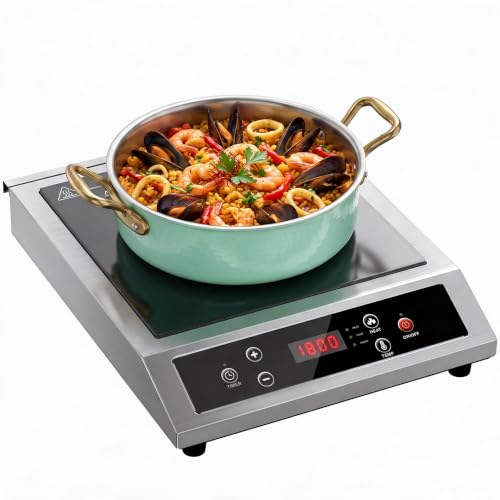
OneSetNuf Stainless Steel Induction Cooktop 1800W

Nuwave Pro Chef Induction Cooktop

Nuwave Portable Induction Cooktop Diamond with Probe

Nuwave Precision Induction Cooktop 10.25″ Ceramic Glass
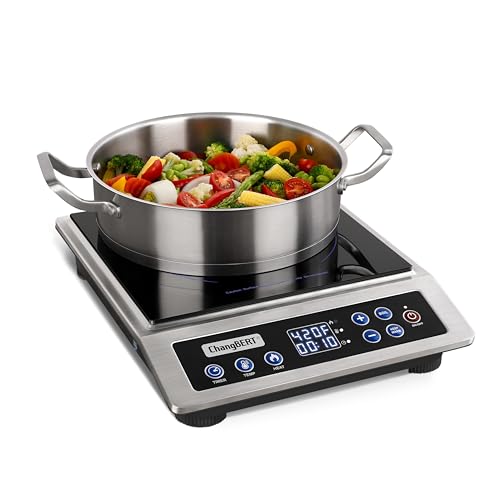
ChangBERT Portable Induction Cooktop Enhanced 1800W

ChangBERT NSF Certified Pro Chef Induction Cooktop

ChangBERT Portable Induction Cooktop 1800W with 10-Hour Timer

ChangBERT Induction Cooktop 8″ Heating Coil 1800W

Nuwave PIC Double Portable Induction Cooktop

ANHANE 1800W Electric Cooktop 11″ Single Burner
Why These Options Stand Out
If you picture camp cooking as hauling gear over tailgate edges and propping a burner on uneven wood, the OneSetNuf’s stainless housing feels reassuring the moment you set it down. The 1800W output through a dual-layer copper coil pushes heat straight into magnetic cookware, and induction’s energy efficiency (more than 83% of the electricity ends up in the pan) means less waste and faster boil times on a small power station. The brushed steel body is the kind of surface that shrugs off splatter, which matters when your “counter” is a camp tablecloth.
Unlike the Nuwave Pro Chef up next, this one leans on a more traditional dial-and-button layout rather than a wide temperature grid, so anyone new to induction gets a low-fuss interface. Owners commonly report that the copper coil holds steady heat through long simmer sessions without cycling on and off, which keeps chili from scorching at the back of the pan.
Notable Gains
- Stainless steel body resists dents and wipes clean after sticky sauces
- 1800W peak output supports rapid water boils on a moderate inverter
- Over 83% energy efficiency stretches runtime on battery setups
- Dual-layer copper coil spreads heat evenly across the pan base
Honest Caveats
- Heavier than all-plastic rivals, so it earns a permanent spot in the car rather than the backpack
- Cooling fan runs audibly under sustained high power
- Lacks the fine-grained temperature presets of the Nuwave Pro Chef
Whose Shelf It Belongs On
Family campers who set up at one site with a 1500W+ inverter and want a sturdy, splatter-proof burner that handles full-size pans.
Swap It Out When
The ChangBERT Enhanced Version is a quieter alternative if campground noise rules matter and you want lower fan output after dark.
Stepping up from a basic single-knob burner, the Nuwave Pro Chef hands you a dial of 94 pre-programmed temperatures from 100°F to 575°F in 5°F increments. That’s the kind of resolution that lets you hold a hollandaise at a gentle 140°F or push a steak pan hard at 500°F, all without restarting the clock. The digital interface responds immediately when you nudge the temperature mid-cook, which feels closer to a knob on a gas range than to a microwave-style pad.
Compared to the OneSetNuf at #1, this one is lighter, more plastic-bodied, and tuned for control rather than brute toughness. For campers who actually care about hitting a target temperature and watching it stick, that tradeoff makes sense.
A Favorable Mix
- 5°F increments give finer control than the 20°F steps on most rivals
- On-the-fly adjustments without restarting the cooking timer
- Six preset buttons speed up common tasks like sear, simmer, and warm
- Wide 100°F to 575°F range covers sous-vide holding and wok-style high heat
Trade Offs
- Plastic-leaning body is less forgiving when the gear bag takes a tumble
- Glass surface needs a flat, stable base to avoid micro-cracks in transit
Right Fit For
Campers who cook by temperature, not guesswork, and want restaurant-style control at a picnic table.
A Better Fit Elsewhere
The ChangBERT Portable Cooktop with 10-hour timer is a stronger match for slow-simmer chili that runs overnight unattended.
The Diamond earns its keep on a road trip because of a feature no other burner on this list shares: a wired temperature probe you can clip to a pot or a sous-vide bag. The cooktop uses that probe to hold the water or the pan contents at an exact target, which means you can walk away while a pork shoulder braises at a steady 165°F. The 12-inch shatter-resistant ceramic glass top gives you room for a 10-inch skillet, and the 6.5-inch heating coil focuses energy where the pan actually sits.
The 91 temperature settings, in 5°F steps from 100°F to 500°F, fall between the Pro Chef’s finer grid and the simpler ChangBERT units. For an RV galley or a van build where space is at a premium, the Diamond’s compact footprint pays off.
Where It Helps
- External probe maintains target temps without babysitting the burner
- 12-inch ceramic surface accepts large skillets and Dutch ovens
- Five preset levels (Low, Medium, Medium-High, High, Sear) simplify quick decisions
- Four programmed recipes help beginners hit common targets
Worth Bearing In Mind
- Probe cord adds a small extra piece to keep track of in a cramped galley
- Glass is shatter-resistant rather than drop-proof, so a padded case helps on rough roads
Who It Suits Best
Van lifers and RV travelers with a small inverter who want set-and-forget cooking on long drives.
Skip It When
The Nuwave Precision Induction Cooktop is a simpler, probe-free option if you mostly cook in pots without needing constant readout.
Before induction cooktops got crowded with bells and whistles, the Nuwave Precision carved out a reputation for just doing the basics well. The 10.25-inch shatter-resistant ceramic glass surface accepts a standard 10-inch pan without the coil overhanging the edges, and the 81 temperature settings from 100°F to 500°F in 5°F steps cover everything from melting chocolate to searing chicken thighs.
Where the Diamond at #3 leans on its probe, this model sticks to a clean digital interface with no extra wires to lose. You still get the on-the-fly time adjustment that Nuwave is known for, which lets you add or subtract cooking time without canceling and restarting.
What Stands Out
- 10.25-inch surface matches common pan sizes for even heating
- 81 temperature steps handle most camp recipes without preset hunting
- Time can be added or removed mid-cook, no restart needed
- No probe or extra accessories to misplace between trips
Some Limits To Know
- Fewer pre-programmed recipes than the Diamond variant
- Glass surface shows scuffs after hard use, though they don’t affect cooking
Key Specs
Best Suited To
Car campers who want a simple, reliable induction burner with broad temperature control and no extra gadgets.
Where Another Pick Suits Better
The ANHANE single burner is friendlier for families with kids around, thanks to its built-in child lock and timer.
Quieter evenings at a tent pad start with a quieter fan, and the ChangBERT Enhanced Version is built with that in mind. Its NSF commercial-grade certification hints at a body designed for constant service, and the low-noise cooling setup keeps the hum from cutting through post-hike conversation. The large heating coil handles 8-inch to 10-inch pans without leaving the base cold around the rim, which improves searing and reduces hot spots in a thin skillet.
Compared to the heavier OneSetNuf at #1, this ChangBERT is lighter on the dial side with a one-click max-power button, useful when you want to dump heat into a kettle fast. It’s a sensible upgrade for campers who already know they want induction but want less fan drone.
Everyday Advantages
- NSF certification points to commercial-grade construction under the hood
- One-click max-power button speeds up boil times
- Large coil matches pans up to 10 inches across
- Low-noise cooling fan keeps campsite conversations audible
Practical Considerations
- NSF is a commercial-kitchen certification, not a drop-proof outdoor standard
- Touch controls can be finicky with cold or wet fingers at sunrise
Who Should Grab It
Campers who want near-silent operation and a commercial-grade body without jumping to a heavier two-burner setup.
Not Your Match When
The Nuwave PIC Double is the better answer if you regularly cook two pans at once on a tailgate.
When the menu at camp stops being reheated beans and starts resembling a small brunch service, a Schott glass top and a commercial-grade coil earn their weight. Schott glass is the same tough ceramic found in many European ranges, and the ChangBERT Pro Chef pairs it with an 83% energy efficiency rating for less wasted heat in the open air. The body is built to hold steady output during long stretches of cooking, which matters when a hotel-style buffet or food station is the goal.
Compared to the ChangBERT Enhanced at #5, this one steps up in surface toughness and continuous-duty design rather than adding new modes. Anyone running a base camp for a group will appreciate the stable output.
Useful Touches
- Schott glass surface tolerates heavy use and quick wipe-downs
- Commercial-grade coil maintains output during long cooking stretches
- NSF certification supports food-safety claims in shared spaces
- Large coil handles 10-inch pans without leaving cold edges
Points To Watch
- Heavier than the Enhanced version, so it’s a car-camp item, not a backpack item
- 1800W peak draw needs a robust inverter or shore power
Made For
Group cooks and base-camp chefs who run food stations and need a burner that holds steady through long services.
Consider Something Else When
The ChangBERT 8-inch coil model is a lighter, still-capable alternative for two- to four-person trips without buffet-scale cooking.
Long-simmer dishes like campfire chili, pulled pork, or a steel-cut oatmeal that cooks while you sleep all benefit from a timer that runs longer than a quick dinner. The ChangBERT with 10-hour timer lets you set it and step away, with the unit shutting off automatically at the end. Its stainless housing and Schott glass face are a familiar combo on this brand’s commercial-grade models, and 16 power levels (300 to 1800W) plus 11 temperature presets give you flexible control across that long arc.
Against the Pro Chef at #6, the difference is mostly in the timer length and the slightly simpler preset grid. Both share the same stainless-shell DNA.
A Strong Showing
- 10-hour countdown timer handles overnight and all-day cooks
- Stainless steel housing tolerates routine wipe-downs
- Schott glass top resists thermal shock
- 16 power steps for granular heat management
A Few Limitations
- Stainless finish shows fingerprints and water spots more than black plastic
- Heavier than plastic-bodied rivals like the Nuwave Precision
Quick Facts
Who Will Love This
Slow-cook enthusiasts who want to start a stew before a hike and come back to dinner ready.
Look Elsewhere When
The Nuwave Pro Chef is the stronger fit if you care more about precise 5°F control than long timer ranges.
Mid-size pans show up everywhere in camp cooking, and the ChangBERT 8-inch heating coil is built for them. The wider coil matches the footprint of standard 9-inch to 10-inch skillets better than smaller coils, so you avoid the cold-ring effect where the outer edge of the pan never gets enough energy. NSF certification, 9 power levels, and 18 temperature settings across 120°F to 460°F add a commercial-grade feel without the price tag of the Pro Chef model.
Stacked against the Pro Chef at #6, this is a slightly simpler sibling that gives up the Schott glass in favor of a more standard ceramic top. For most campers, that distinction barely registers in real cooking.
What Earns Its Place
- 8-inch coil matches common 9- to 10-inch pans for even heat
- 18 temperature presets provide more steps than simpler burners
- 10-hour timer supports slow cooks
- NSF certification hints at solid build quality
Possible Compromises
- Ceramic glass is solid but not the Schott-tier glass on the Pro Chef
- Body adds noticeable weight to a backpack
Perfect Match For
Campers who cook with full-size pans and want an NSF-rated body without stepping into Pro Chef pricing.
Another Choice May Suit
The ChangBERT with 10-hour timer is a strong alternative if you prioritize Schott glass and more power steps.
Two pans at once changes the rhythm of camp cooking entirely. The Nuwave PIC Double houses two independent induction zones on a single body, with the option to run each at 900W, 1500W, or 1800W depending on the dish. You can boil pasta on one side while you sauté garlic on the other, which is the closest a portable burner gets to a home stovetop layout. The IMD touch panel (integrated, seamless touch controls) responds even when your fingers are slightly greasy, and the surface wipes clean in a single pass.
Compared to every other single-burner pick on this list, the PIC Double is bigger, heavier, and needs more amperage, but it replaces two separate burners if you regularly cook multi-component meals.
Practical Advantages
- Two zones let you manage a full meal without swapping pans
- Independent power settings for each burner
- IMD touch panel responds to slightly damp or greasy fingers
- One footprint replaces two single burners in the gear bag
Worth Noting
- Combined draw can exceed 15 amps on a single household circuit
- Larger surface area takes up more table real estate at a small camp
Built With In Mind
Tailgaters, RV cooks, and large-family campers who regularly run two pans at once and have the power to feed it.
Reach For A Different Pick When
The ChangBERT Pro Chef is the right answer if you mostly need one high-output burner and a tougher glass top.
Family campers juggling kids, dogs, and a stove need fewer ways to mess up, and the ANHANE addresses that directly with a built-in child lock, a timer, and a dual-ring heating element that handles both small and large pans. The 11-inch surface is generous for a single-burner design, and the 9 power levels plus 9 temperature presets cover everyday cooking without overwhelming a first-time user. The 110-120V compatibility works with any standard outlet or modest inverter.
Against the Nuwave Precision at #4, this one trades fine-grained 5°F adjustments for safer family-friendly features. If your campsite has small kids running around, that tradeoff is the whole point.
Good Reasons To Consider
- Child lock prevents accidental activation around kids
- Built-in timer helps avoid overcooking
- Dual-ring element flexes between small and large pans
- 110-120V compatibility fits most outlets and modest inverters
Soft Spots
- Fewer temperature steps than the Nuwave Pro Chef
- Compact body still needs a flat, sturdy table to sit on
Who It Suits Best
Family campers with kids in the mix who want a forgiving, safe single burner for everyday meals.
Where A Sibling Pick Shines
The ChangBERT Enhanced Version is a better fit for adults who want lower fan noise and don’t need a child lock.
What To Weigh Before Choosing A Camping Induction Cooktop
Induction cooking at camp comes down to a handful of practical decisions that show up the moment you try to boil water on a folding table. Thinking through these before adding anything to your cart will save you from returning a burner that doesn’t fit your setup.
Power Source And Wattage
Every induction cooktop on this list is rated for a standard 110-120V household outlet, but peak wattage matters. A 1800W unit demands a robust inverter or a generator if you’re boondocking; a smaller 1300W model sips less from a battery bank. Make sure your inverter can handle the surge draw that induction produces on startup, or you’ll trip breakers at the worst moment.
Cookware Compatibility
Induction only works with magnetic cookware, so cast iron and most stainless steel pans are fine while aluminum and copper need a steel plate bonded to the base. Before relying on a camp burner, test your pans with a fridge magnet: if it sticks firmly to the bottom, the pan will heat up. Anyone packing a lightweight aluminum pot will need to budget for a compatible replacement.
Size, Weight, And Surface Area
Backpackers should weight every ounce, while car campers can afford the heft of a stainless or Schott-glass model. The heating coil diameter, typically between 6.5 and 8 inches in this list, dictates how well a 10-inch skillet performs. A wider coil spreads heat to the pan edges and reduces the cold-ring effect on large skillets.
Durability And Safety Features
Glass tops are shatter-resistant rather than drop-proof, and ceramic surfaces benefit from a padded sleeve in transit. Look for built-in timers, child locks, and automatic shutoff if you plan to walk away from the burner mid-cook. NSF certification hints at commercial-grade construction but is a kitchen standard rather than an outdoor impact rating.
Picking The Right Level For Your Trips
Where Shoppers Go Wrong
Treating wattage like a one-number decision is the most common slip up. A 1800W peak rating matters less than how the burner behaves at lower settings, because most camp cooking lives in the simmer range, not the sear range. Buyers who focus only on peak output often end up with a burner that scorches delicate sauces or cycles loudly when held at low heat.
Another trap is assuming all induction cookware is the same. Pans with thin bases can warp on a high-output induction coil, and warped pans lose contact with the surface, which leads to error codes and aborted cooking sessions. Cast iron or heavy-clad stainless handles high-output induction best, so it pays to match cookware to the burner, not just the burner to the camp.
Why Top Tier Costs More
Spending up on a portable induction cooktop usually buys three things: tougher glass (Schott instead of generic ceramic), longer or more granular timer and temperature controls, and commercial-grade internal components rated for sustained duty cycles. The ChangBERT Pro Chef and the Nuwave Pro Chef both sit in this tier, with components designed to hold steady output during long cooking sessions.
The upgrade is worth it for anyone running a base camp, hosting group meals, or cooking every day on the road. For weekend warriors who cook a pot of coffee and a skillet of eggs, a simpler burner like the Nuwave Precision or ANHANE delivers enough capability without the extra cost.