
A good camping hatchet quietly earns its spot in your pack. Splitting kindling at dusk, clearing a tent pad before the rain hits, limbing a downed branch for firewood, each task calls for a tool that swings true, holds an edge, and doesn’t fight you on the trail. The best camping hatchets feel like an extension of your arm rather than another thing to babysit.
Camping hatchets run a wide spectrum today, from featherweight pack axes built for ultralight hikers to mid-length choppers that fell small trees without wrecking your shoulders. The list below focuses on handle length, blade geometry, weight balance, and steel quality. Whether you car-camp in a developed site or trek deep into the backcountry, you’ll find an option here that suits your pace and your pack.
A Fast Comparison Of The Options

Fiskars A-Series Chopping Axe 28″
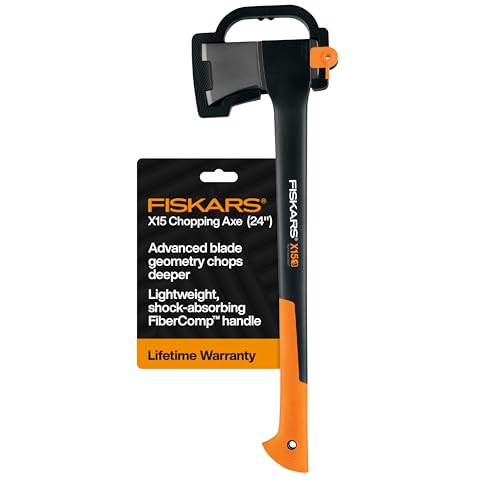
Fiskars X15 Chopping Axe 24″

Fiskars X7 Small Hatchet Axe 14″

Fiskars U14 Universal Hatchet 14″

Fiskars X24 Universal Axe 24″

Gränsfors Bruks Wildlife Hatchet 13.50″
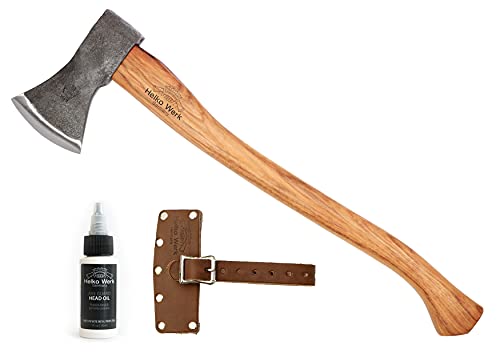
1844 Helko Werk Germany Black Forest Woodworker Axe

ESTWING Sportsman’s Axe 14″ E24A
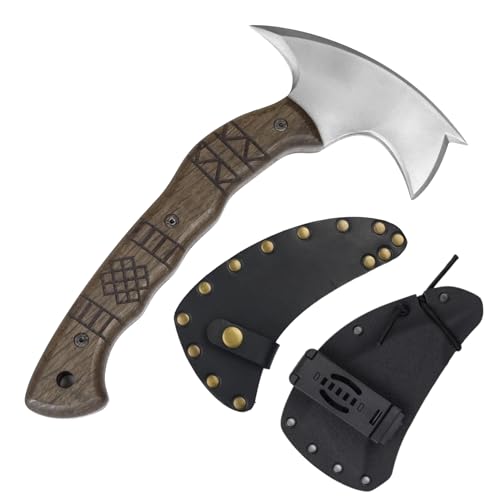
AncientSmithy Tactical Tomahawk Small Axe

MOSSY OAK 12″ Camping Axe and Survival Hatchet
A Breakdown Of The Leading Choices
The longest tool on this list earns the open space around your truck or base camp. A 28-inch handle gives you swing arc most hatchets can’t match, which translates directly into deeper bites on rounds and quicker clears of storm-felled limbs. Compared with the shorter Fiskars X15 covered next, this A-Series is for the days when firewood is measured in armfuls, not single sticks.
The low-friction blade (a coating that helps the head glide through fiber rather than drag) keeps each pull-out clean, which matters more than it sounds when you’re processing a cord of wood in fading light. The integrated head-handle design removes the weak point that ruins cheaper axes. It runs heavier than a packable hatchet, so for typical backcountry mileage most campers will leave it in the vehicle.
Where It Excels
- Longer handle provides deeper, more powerful swings for felling small trees and splitting medium rounds.
- Low-friction blade coating reduces sticking and speeds up repeated cuts during firewood prep.
- One-piece construction means no loose head after months of hard use around camp.
- Heavier head weight lets gravity do more work, useful for campers tired of fighting green wood.
Things To Consider
- Size and weight make it impractical for backpack trips beyond a few miles.
- Longer handle takes more room in a vehicle or shed than mid-size options.
Key Specs
Best Suited To
Car campers, truck campers, and base-camp hosts who process real firewood rather than a few twigs at a time.
Skip It When
You’re hiking into camp, since the Fiskars X7 Small Hatchet Axe 14″ travels far more comfortably in a pack for the same kindling work.
Stepping down four inches from the A-Series above, the X15 lands in the sweet spot many campers keep coming back to. At 24 inches the handle still gives you real chopping authority without the storage headache of a full-length felling axe. It’s the kind of tool you leave by the fire ring because it handles almost every job a campsite throws at it.
The PermaHead (a molded-over connection that locks the steel head to the shaft permanently) construction keeps the head seated through seasons of weather cycles. For limbing a downed branch or splitting medium rounds, the geometry feels less tippy than the 14-inch packable hatchets later in this list. You give up some portability, but you gain swing arc, which is the real currency of one-strike efficiency.
Real-World Strengths
- 24-inch handle balances chopping power with manageable length for transport.
- PermaHead over-mold prevents the head from loosening, a common failure point on budget axes.
- Lower-friction blade helps split medium-size logs in a single stroke on dry wood.
Worth Noting
- Still too long for serious backpacking; better as a base-camp tool.
- Less head mass than the A-Series, so green or knotty wood demands more effort.
Feature Snapshot
Made For
Weekend campers who split real rounds at a fire ring and want one tool that can also clear a windblown branch.
Consider Something Else When
Your trips are long hikes into backcountry camps, where the Fiskars X7 Small Hatchet Axe 14″ carries more easily and handles kindling with less effort.
Once you trim a campsite tool down to 14 inches, the calculus changes. The X7 rides along on a hip belt, inside a daypack’s tool sleeve, or strapped to a saddlebag without becoming a burden. It’s a true packable hatchet, the kind you grab on the way out the door because there’s no good reason not to.
The shortened handle limits swing arc, so you’re trading reach for portability. For splitting kindling, batoning (striking the back of the hatchet head with another piece of wood to drive it through a log) small sticks, or driving tent stakes, the tradeoff is well worth it. The weight distribution stays balanced enough that beginners can use it without the head dragging or wandering mid-swing.
Bright Spots
- 14-inch length fits inside or outside a backpack without dominating your load.
- Lightweight build makes it approachable for newer campers.
- Balanced weight reduces the wrist fatigue common to short hatchets.
Points To Keep In Mind
- Short handle limits how deep you can drive into larger rounds.
- Not the right tool for felling trees or processing firewood in volume.
Who It Suits Best
Backpackers and day hikers who want real cutting capability without the bulk of a mid-length chopping axe.
Look Elsewhere When
Your base camp needs firewood in volume, in which case the Fiskars A-Series Chopping Axe 28″ covers the work in fewer strokes.
The U14 borrows the same 14-inch footprint as the X7 but adds a few material upgrades that matter on day three of a trip. The RazorEdge (a precision-honed edge geometry with a thin, wide profile) blade is ground from double-hardened forged steel, which means it holds a working edge longer between touch-ups. The ToughCoat (a low-friction surface plating that resists rust and helps the head release from cuts) plating on the head does the same job the X-series coating does, but with a slicker feel that pulls free of wet fiber cleanly.
In real use, this is the hatchet you reach for when you’re not sure what you’ll be cutting. Knotty branch, soaked firewood, plastic strapping on a bundle of camp lumber, it chews through mixed tasks without complaint. The trade-off shows up in price, and in the fact that the head geometry rewards controlled swings over brute chopping.
Key Advantages
- RazorEdge forged steel holds sharpness through heavy, repeated kindling duty.
- ToughCoat plating reduces friction and helps prevent surface rust in damp conditions.
- Compact 14-inch size is friendly to shoulder carry and pack lashings.
- Versatile across kindling, light limbing, and camp setup tasks.
Trade Offs
- Priced above the entry-level Fiskars X7 without delivering more raw chopping power.
- Coated blade needs a careful re-sharpening approach so you don’t grind through the plating.
Perfect Match For
Campers who split a lot of kindling across wet weekends and want a blade that stays sharp longer than basic carbon steel.
Not Your Match When
You’re shopping for a heritage hand-forged tool, in which case the Gränsfors Bruks Wildlife Hatchet 13.50″ delivers a different kind of ownership experience.
The X24 carries the design language of Finland’s Billnäs forging heritage, where Fiskars has shaped axes for generations. At 24 inches with a thin, wide blade geometry, it splits wood efficiently while staying light enough to swing one-handed when you need to. It feels more like a precision tool than a brute chopper, and that comes through the moment you start working wet rounds.
Compared with the X15, the X24’s blade profile disperses wood differently, separating fiber more cleanly rather than wedging it apart. You’ll feel that on green or knotty wood, where the thinner edge slices between grain lines. For felling small trees, limbing, and camp-scale splitting, the X24 covers a lot of ground without needing a second tool.
Notable Gains
- Forged steel blade with thin, wide edge geometry slices rather than wedges through wood.
- Engineered weight distribution adds swing speed without punishing your shoulder.
- 24-inch handle handles felling, limbing, and splitting across one tool.
- Designed in Billnäs, Finland, with a heritage of Scandinavian axe forging.
Honest Caveats
- Not a pack option for backpackers; sized for vehicle-based and base-camp use.
- Thin edge geometry demands more careful maintenance than thicker choppers.
Technical Highlights
Whose Shelf It Belongs On
Campers who treat the campsite as a working kitchen and want one axe that performs across splitting, limbing, and felling.
Reach For A Different Pick When
You need a compact trail tool, since the Gränsfors Bruks Wildlife Hatchet 13.50″ offers hand-forged character in a packable size.
The Wildlife Hatchet comes from a small Swedish forge where each head is hand-hammered and signed off by the smith. That pedigree shows up in the way the head seats the handle, in the grain tracking along the hickory shaft, and in the simple leather guard that protects the edge in transit. At 13.5 inches, it lands between the Fiskars X7 and a traditional hand hatchet, sized for the kind of work a scout or backpacker actually does.
The longer handle compared to a true hand hatchet adds genuine swing power for felling small trees and lopping thicker branches. You give up the bulk-felling capability of the longer Fiskars X24, but you gain a tool that carries well, lasts decades, and can be re-handled when the wood eventually wears. For owners who view an axe as a long-term tool, this one earns a place on the shelf.
Useful Strengths
- Hand-forged head with traditional Swedish craftsmanship.
- 13.5-inch handle offers more power than a hand hatchet without becoming bulky.
- Replaceable hickory handle extends the working life of the tool across decades.
- Leather sheath protects the edge during pack carry.
Trade-Offs To Consider
- Premium pricing above mass-produced alternatives like the Fiskars U14.
- Wood handle needs occasional oiling to stay weather-resistant.
Spec Overview
The Right Fit
Bushcrafters, lifelong tool owners, and traditionalists who value craftsmanship and a tool that can be re-handled rather than replaced.
Where A Sibling Pick Shines
For a one-piece steel build with a leather grip and lower maintenance, the ESTWING Sportsman’s Axe 14″ E24A is a simpler ownership story.
Helko Werk has been forging axes in Germany’s Black Forest region since the 1800s, and the Rheinland pattern head on this model carries that history forward. Hand-forged C50 steel (a high-carbon tool steel known for toughness and edge retention) meets a hickory handle in a tool that feels substantial without being punishing. Compact enough to pack, weighted enough to drive a clean cut.
The Woodworker Axe leans more toward controlled shaping cuts than heavy splitting, which makes it a thoughtful companion for trail maintenance, shelter building, and detail woodwork. Where the Fiskars X7 prioritizes lightweight convenience, this Helko leans into presence and feel. Expect to oil the handle occasionally and enjoy a tool that develops character with use.
Useful Highlights
- Hand-forged in Germany with the Rheinland pattern head, a traditional cutting profile.
- Compact form factor supports both pack carry and campsite shaping work.
- C50 high-carbon steel balances toughness with edge retention for varied tasks.
- Hickory handle absorbs shock and can be replaced when worn.
Where It Is Less Suited
- Priced well above mass-produced hatchets like the MOSSY OAK 12″ Camping Axe.
- Wood handle requires seasonal oil to stay weather-resistant.
Who Will Love This
Traditionalists and detail-oriented outdoorsmen who appreciate Old World craftsmanship and a tool built to be re-handled.
Swap It Out When
You want a one-piece steel hatchet with less maintenance, in which case the ESTWING Sportsman’s Axe 14″ E24A removes the wood-care step.
ESTWING’s Sportsman’s Axe has been a campfire companion for generations, largely because of one detail: the head and handle are forged from a single piece of steel. There is no joint to loosen, no wedge to drive, no head to re-seat after a missed strike. You get an unbroken tool with a genuine leather grip that’s been sanded and lacquered for a comfortable, durable feel.
The 14-inch size mirrors the Fiskars X7 footprint, but the ownership experience differs. Where the X7 leans light and plastic-composite handled, this Estwing carries more heft in the head and a distinctly classic feel in the hand. The included ballistic nylon sheath with belt loop makes it easy to keep at your side on day hikes.
The Practical Payoff
- One-piece forged steel eliminates the loose-head failure common to two-piece designs.
- Genuine leather grip provides a comfortable, classic hand feel.
- Ballistic nylon sheath with belt loop keeps the tool accessible on the trail.
- 14-inch size balances packability with enough mass for real kindling work.
Points To Note
- Heavier than composite-handled hatchets of similar length.
- Leather grip can stiffen in cold weather and benefits from occasional conditioning.
Who Should Grab It
All-around campers who want a low-maintenance, one-piece hatchet that holds up to decades of regular use.
A Better Fit Elsewhere
Backpackers prioritizing the lightest possible tool should look at the AncientSmithy Tactical Tomahawk Small Axe for its lighter carry weight.
This tactical-styled hatchet leans toward the survival-kit end of the spectrum. At roughly 11 inches overall with a 1.76-pound carry weight, it disappears into a pack in a way the longer Fiskars models never will. The oak wood handle keeps the swing natural, and the head profile bridges cutting branches, prepping firewood, and clearing trail.
Where traditional hatchets like the Gränsfors Wildlife Hatchet prioritize heritage and feel, the AncientSmithy tool prioritizes versatility and lightweight carry. The trade-off shows up in edge retention under heavy chopping and in the price you pay for that portability. For a bug-out bag, day hike, or quick camp kit, it covers a lot of bases without tipping the scale.
Strong Points
- Compact 11-inch overall length fits in a backpack or bug-out bag with room to spare.
- Lightweight 1.76 lb design reduces carry burden on long trail days.
- Multi-role design handles wood chopping, tent setup, and trail clearing.
- Oak handle provides a natural swing feel with reasonable shock absorption.
Soft Spots
- Not suited for felling trees or processing firewood in volume.
- Tactical styling may not appeal to traditionalists who prefer classic hatchet profiles.
Right Fit For
Survival-kit builders and tactical-outdoor enthusiasts who want a versatile, lightweight hatchet for mixed scenarios.
Another Choice May Suit
Campers prioritizing budget accessibility over tactical features should consider the MOSSY OAK 12″ Camping Axe as a more wallet-friendly trail companion.
The MOSSY OAK 12″ hatchet lands as the most accessible entry point on this list. At 12 inches long with a 3/16-inch blade thickness and a black-coated head, it covers the campsite basics without asking you to commit serious budget. The included sheath adds real value for hikers who don’t want to hunt for a compatible cover later.
The hex wrench slots cut into the handle turn the tool into a multi-function companion, useful for trail-side gear repairs. You give up the steel quality and balance of the ESTWING Sportsman’s Axe and the heritage of the Helko Werk Woodworker, but for short trips, casual car camping, or a starter tool, it does the job without complaint. Treat the edge with respect and it returns the favor across a season or two of regular use.
Strengths Worth Knowing
- Affordable price point lowers the barrier for new campers building a kit.
- Compact 12-inch length fits in packs, saddlebags, and gear crates.
- Black-coated blade resists surface wear through regular use.
- Hex wrench slots in the handle add trail-side repair capability.
- Includes a sheath to protect the edge during transport.
Small Caveats
- Not built for high-volume firewood splitting or felling larger trees.
- Steel quality won’t match premium hand-forged options like the Gränsfors Bruks Wildlife Hatchet.
Who Should Grab It
New campers, casual weekend trippers, and anyone building an entry-level kit without overspending.
Not Your Match When
You want a tool that lasts decades across hard use, in which case the Fiskars X24 Universal Axe 24″ delivers more durable performance.
Picking The Right Camping Hatchet For Your Style Of Trip
Match Handle Length To How You Travel
Handle length drives almost every other decision in this category. A 28-inch axe gives you the swing arc for real firewood work, but it doesn’t ride in a backpack. A 14-inch packable hatchet travels well but limits the depth you can drive into larger rounds. The honest read is that most campers benefit from one of each: a longer tool for the base camp, a shorter one for trail days.
Prioritize Blade Steel And Coating For Your Climate
Low-friction coatings (surface treatments that reduce drag as the blade exits a cut) like ToughCoat and the Fiskars X-series finish keep the head from sticking in wet fiber, which matters more than it sounds after a rainstorm. RazorEdge-style grinding, where the blade is honed to a thin, wide profile, holds sharpness through repeated kindling duty. For dry climates, plain carbon steel works fine. For damp woods and shoulder-season camping, coated blades earn their keep.
Weight Distribution Beats Raw Weight
A heavy axe that swings poorly wears you out faster than a lighter, well-balanced one. Tools like the Fiskars X7 and Gränsfors Wildlife Hatchet weigh less on paper than bulkier alternatives, but their balance keeps the head driving where you aim it. Try to handle a few options in person when possible, since balance is felt more than measured.
Consider Maintenance And Replacement Parts
Wood-handled hatchets like the Helko Werk and Gränsfors models need occasional oil and eventually a re-handle, but they offer decades of service in return. One-piece steel options like the ESTWING Sportsman’s Axe skip that maintenance step but can’t be repaired if the handle cracks. Your tolerance for upkeep should guide the choice as much as your chopping needs.
Key Considerations Across These Picks
Common Slip Ups When Shopping For A Camping Hatchet
The biggest mistake is choosing a tool based on length alone. A long axe that lives in your garage won’t help on a five-mile hike, and a tiny hatchet won’t process a winter’s worth of firewood. Match the tool to your dominant trip style first, then consider a secondary tool for the occasional mismatch. Another trap is ignoring sheath and carry options. A quality axe without a sheath turns into a hazard in your pack, so factor in the included or compatible sheath before committing.
Why Top Tier Models Cost More
Premium picks like the Gränsfors Bruks Wildlife Hatchet and the Helko Werk Woodworker command higher prices because of forging method (each head is hand-hammered by a smith rather than stamped out by the thousands), steel quality, and replaceable wood handles. You pay for a tool that can be re-handled and re-edged across decades, rather than replaced in a season or two. For campers who use their gear hard and often, that lifecycle cost balances out. For occasional weekend trippers, the value tier hatchets cover the same jobs without the upcharge.
Frequently Asked Questions
What Size Hatchet Is Best For Camping?
Most campers find a 14-inch hatchet hits the sweet spot for general trips. It splits kindling, drives tent stakes, and clears small branches while still fitting in a daypack. Car campers with firewood needs benefit from a 24-inch or 28-inch option kept at the base camp.
How Do I Maintain A Camping Hatchet?
Keep the edge clean and dry after each use, and apply a thin coat of light oil to the metal head to prevent rust. For wood-handled models, occasional linseed oil on the handle prevents drying and cracking. Touch up the edge with a fine file or whetstone as needed rather than waiting for major dulling.
Can A Camping Hatchet Fell Small Trees?
A 24-inch or longer hatchet like the Fiskars X24 or A-Series 28″ can fell saplings and small trees under about 4 inches in diameter. For larger trees, a dedicated felling axe or saw is the safer and more efficient tool.
Is A Hatchet Or A Knife Better For Camping?
A hatchet covers wood processing tasks like splitting and limbing that a knife cannot handle safely. A knife handles finer carving and food prep. Most campers carry both, with the hatchet doing the heavy cutting and the knife handling detail work.
What Is The Safest Way To Carry A Camping Hatchet On A Hike?
Always carry a hatchet in its sheath, with the edge covered and the handle secured so it can’t swing free. Many campers strap sheathed hatchets to the outside of a pack rather than inside, both for safety and for easier access at camp.