
A quiet campsite beats a loud one. Generators that hum along without drowning out conversation let you keep coffee makers, phones, lights, and small fridges running while the rest of the camp stays peaceful. The picks below cover everything from whisper-quiet inverters and dual-fuel units to compact solar stations for backpackers and overlanders.
Your Options, Compared

BLUETTI Elite 200 V2 Portable Power Station 2073.6Wh 2600W

Honda EU2200i 2200W Inverter Generator (EU2200ITAN)

Honda EU2200i Companion 2200W Inverter Generator (EU2200ITAN5)

EF ECOFLOW Delta 3 Portable Power Station 1024Wh 1800W

BLUETTI AC200L Portable Power Station 2048Wh 2400W LiFePO4

Jackery Explorer 1000 v2 Portable Power Station 1070Wh 1500W

MARBERO 200W Portable Power Station 148Wh Camping Solar Generator
MARBERO Portable Power Station 88Wh 120W Surge Solar Generator
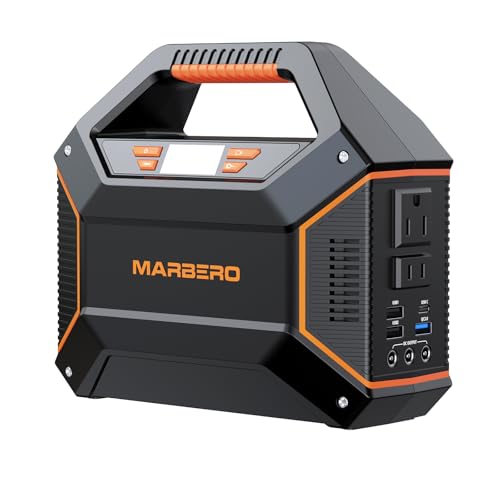
MARBERO Portable Power Station 155Wh 100W 42,000mAh

MARBERO 155Wh Solar Generator with 30W Solar Panel Kit
The Strengths Of Each Pick
Family-sized camping trips and longer off-grid stints tend to drain small power stations fast. The BLUETTI Elite 200 V2 packs a generous 2073.6Wh LiFePO4 battery, which is enough capacity (the total energy stored, measured in watt-hours) to keep a portable fridge running overnight and still top off phones and cameras the next morning.
Where this unit earns its place is the 2600W continuous AC output with up to 3900W power-lifting headroom, which means it can briefly handle resistive loads like kettles or hair dryers that exceed the rated wattage. Compared with the BLUETTI AC200L covered later, the Elite 200 V2 pushes the ceiling higher while staying in the same portable form factor. For most families, that extra cushion removes the worry of overloading the inverter.
Strengths Worth Knowing
- 2073.6Wh capacity covers a weekend of moderate use without recharging.
- Power-lifting mode handles brief surges from kettles and hair tools.
- Multiple AC and DC ports let you run several devices at once.
- LiFePO4 chemistry supports far more charge cycles than older lithium-ion packs.
- Accepts solar input for recharging off-grid during daylight hours.
Points To Keep In Mind
- The unit is heavy, so two-person carrying or a cart helps at the trailhead.
- Solar panel not included, so total ownership climbs once a compatible array is added.
Best Suited To
Families or small groups running a portable fridge, lights, and electronics on multi-day trips.
Consider Something Else When
Solo backpackers wanting a lighter pack should look at the MARBERO Portable Power Station 88Wh instead.
Noise is the first thing neighbors notice at a quiet campground. The Honda EU2200i uses inverter technology (a circuit that converts raw generator output into clean, stable AC power safe for electronics) and runs in the 48 to 57 dB(A) range, which lands somewhere between a quiet office and normal conversation. That kind of sound profile lets you keep it running through early morning coffee without waking the tent.
The 2200W peak output is enough for microwaves, small AC units, and hair dryers, while the stable inverter power is safe for laptops and camera chargers. Compared to the BLUETTI Elite 200 V2 above, this is a fuel-driven unit rather than a battery, so runtime depends on the tank rather than a recharge cycle. For travelers who already manage gasoline safely, the trade is a near-continuous power supply instead of finite watt-hours.
Benefits That Matter
- Quiet operation keeps campground neighbors content.
- Clean inverter output protects sensitive electronics.
- 2200W handles typical RV and campsite appliances.
- Fuel-based runtime far exceeds most battery stations.
Trade-Offs
- Gasoline means fuel storage, exhaust, and routine oil checks.
- Heavier than battery stations in the same wattage class.
- Not appropriate for indoor or tent use due to fumes.
Made For
Campers and RV travelers who want quiet, fuel-driven power for moderate appliance loads.
Reach For A Different Pick When
If you need a 30A RV outlet specifically, the Honda EU2200i Companion covers that need better.
RVs pull a different shape of power than tents, and the EU2200i Companion reflects that. The headline feature is the built-in 30A outlet, which feeds RV hookups without needing adapter cables. Pair that with parallel-ready hardware and you can daisy-chain two units together when a single inverter falls short.
Like the standard EU2200i above, it stays in the 48 to 57 dB(A) range during operation. The difference is purely about RV-friendliness, which makes it the more useful pick for owners who already own a standard EU2200i and want to expand capacity. Campers without RV hookups can still use it for general loads, but the 30A outlet goes unused.
What Makes Sense
- Built-in 30A outlet simplifies RV hookup.
- Parallel capability lets two units combine for higher loads.
- Inverter-grade power is safe for laptops and chargers.
- Low-noise operation suits quiet campgrounds.
Less Ideal Details
- Still requires gasoline and oil maintenance like the standard model.
- RV outlet adds cost that tent campers don’t fully use.
Right Fit For
RV owners who want a clean, quiet inverter paired with a 30A shore-style outlet.
A Better Fit Elsewhere
Tent campers without RV hookups will save by choosing the standard Honda EU2200i instead.
Short trips often punish slow-charging power stations. The EcoFlow Delta 3 takes roughly an hour to reach a full charge when paired with the maximum AC and solar input, so topping up between drives or during a lunch stop is realistic. The 1024Wh capacity is mid-sized, big enough to keep essentials alive overnight.
Output hits 1800W continuous, which handles most campsite appliances short of full-size AC units. Compare that with the larger BLUETTI Elite 200 V2 earlier, and the trade-off becomes clear: this is a faster-refreshing, smaller-reservoir unit for people who don’t need multi-day capacity. The expansion ecosystem reaches up to 5kWh if you decide to grow later.
Everyday Advantages
- Sub-hour recharge turnaround at full input.
- 1800W output covers most common camp appliances.
- Expands up to 5kWh with extra battery packs.
- LiFePO4 cells extend overall cycle life.
Practical Considerations
- 1024Wh runs smaller loads faster than bigger units.
- Fastest charge requires dedicated high-watt input hardware.
Who It Suits Best
Travelers and weekend campers who recharge between short stops rather than running multi-day off-grid.
Swap It Out When
Multi-day base campers wanting longer runtime should step up to the BLUETTI AC200L for extra capacity.
Base-camp power needs grow with time, and the AC200L is built around that growth curve. The base unit gives you 2048Wh of storage, while expansion batteries in the BLUETTI ecosystem can push total capacity up to 8192Wh. That kind of scaling matters for owners who start small but expect their off-grid setup to evolve.
The 2400W output runs heavy appliances, and 45-minute fast recharge keeps downtime short. Relative to the EcoFlow Delta 3 above, this trades charging speed for a much larger starting reservoir. If your weekend includes a portable fridge, lights, and a coffee maker running at once, the headroom pays off quickly.
Bright Spots
- Scales from 2048Wh up to 8192Wh with add-on packs.
- 2400W handles demanding appliances without strain.
- LiFePO4 chemistry improves long-term cycle count.
- 45-minute fast recharge cuts downtime between sessions.
Some Limits To Know
- Expansion batteries add noticeable cost over the base unit.
- Heavier form factor than mid-size battery stations.
Whose Shelf It Belongs On
Campers building a long-term modular setup who want room to grow capacity over time.
Where Another Pick Suits Better
Travelers prioritizing a lighter carry should check the Jackery Explorer 1000 v2 instead.
Roadtrippers tend to chase portability above all else, and the Jackery Explorer 1000 v2 lands in that sweet spot. The 1070Wh capacity pairs with a 1500W AC output, and the foldable handle plus 23.8 lb build makes it manageable to move from car to campsite without a dolly. The one-hour fast charge shrinks downtime on the road.
Where this picks up points over the EcoFlow Delta 3 is the 100W USB-C output, which feeds modern laptops directly without an inverter step. Owners commonly appreciate that for editing on the go. Compared to the BLUETTI AC200L above, you trade raw capacity and expansion for a more portable footprint and faster real-world charging.
Everyday Wins
- Lightweight foldable handle simplifies transport.
- 100W USB-C port charges laptops without an adapter.
- One-hour fast charge cuts between-drive wait time.
- 1500W output handles most campsite appliances.
Where It Is Less Suited
- 1070Wh runs out faster than larger BLUETTI units.
- Solar panel sold separately, adding to total cost.
Who Should Grab It
Roadtrippers and tailgaters wanting a grab-and-go station that handles laptops and small appliances.
Skip It When
Multi-day base campers will find more headroom in the BLUETTI AC200L or Elite 200 V2.
Small loads define small generators, and the MARBERO M822 leans into that reality. At 148Wh (about 40,000mAh equivalent) with a 200W continuous output, it’s the kind of unit you toss in a car for charging phones, running a CPAP overnight, and topping off camera batteries between hikes. The footprint stays small enough for a tent vestibule.
The AC outlet handles a 110V device intermittently, while USB QC3.0 (Quick Charge 3.0, a fast-charging protocol for Android phones and small electronics) ports speed up mobile top-offs. Compare that to the larger EcoFlow and BLUETTI units earlier, and the trade is obvious: this is a personal, bedside-style pack rather than a household supply.
The Good Stuff
- Compact 148Wh build fits in a backpack or car trunk.
- USB QC3.0 speeds up phone and small-device charging.
- 200W AC handles light-duty electronics intermittently.
- Built-in LED flashlight adds late-night campsite utility.
Possible Compromises
- 148Wh drains fast under anything beyond small electronics.
- Not built for refrigerators or high-wattage camp appliances.
Who Will Love This
Campers and CPAP users who just need overnight power for phones, lights, and low-draw medical devices.
Look Elsewhere When
Household-style campers running fridges should reach for the Jackery Explorer 1000 v2 instead.
Ultralight backpackers think in ounces, not watt-hours. The MARBERO 88Wh unit shrinks the form factor down to roughly 24,000mAh while still offering AC, DC, and USB outputs. The 120W surge rating (the brief peak wattage a unit can handle when a device starts up) covers small appliance start-up, though continuous loads stay well under that ceiling.
The included adapter charges the unit from empty to 80 percent in about two hours, and it can pass power through to devices while charging. Compare that to the larger 148Wh MARBERO above, and the trade is clear: smaller pack, lighter carry, shorter runtime. Owners commonly pair it with a 30W or 60W solar panel for true off-grid recharging.
Useful Strengths
- 88Wh pack slips into a backpack without bulk.
- Pass-through charging supports simultaneous input and output.
- Two-hour top-up to 80% from a wall outlet.
- Pairs with MARBERO solar panels for off-grid recharging.
What To Weigh
- Small reservoir limits higher-draw device runtime.
- Solar charging requires buying a panel separately.
Built With In Mind
Ultralight backpackers and bikepackers who count grams and only need essentials topped off.
Not Your Match When
Longer weekend campers will want the MARBERO Portable Power Station 155Wh for added capacity.
Real-world runtime is the metric most product pages bury, and MARBERO spells it out cleanly here: divide the 155Wh capacity by your device’s wattage to estimate hours. A 65W laptop gets roughly 2.4 hours, which sets realistic expectations for work-on-the-go sessions or weekend cabin evenings.
The 100W output rating keeps the unit squarely in laptop-and-light territory rather than camp-kitchen territory. Compared to the 148Wh MARBERO covered earlier, this trades the small AC-output bump for a slightly larger reservoir and a more accurate runtime calculation built into the listing. For cabin stays and weekend overnights, that mix tends to land well.
Real-World Strengths
- 155Wh capacity covers a few laptop cycles per day.
- Runtime formula helps set realistic charging expectations.
- Compact form fits on a desk or picnic table easily.
- 42,000mAh equivalent translates cleanly for phone users.
Where It May Fall Short
- 100W limit rules out most high-draw appliances.
- Solar charging needs a separately purchased panel.
Perfect Match For
Remote workers and weekend cabin guests powering laptops, phones, and lights for a couple of nights.
Another Choice May Suit
Anyone running a portable fridge should skip ahead to the Jackery Explorer 1000 v2 for higher wattage.
Newcomers to solar generators often hit the same wall: the unit arrives, but the panel doesn’t. This MARBERO kit solves that with the 155Wh power station, a 30W solar panel, and a power converter bundled in the box. The 6.5-foot integrated cable lets you angle the panel in direct sun while keeping the station shaded.
The 155Wh reservoir matches the standalone MARBERO unit above, so runtime numbers carry over. The difference is convenience: one box, one purchase decision, fewer compatibility questions. Compared to larger BLUETTI and EcoFlow setups, you trade raw capacity for an out-of-the-box experience that requires no extra research.
Everyday Perks
- Panel included removes extra purchases and guesswork.
- 6.5-foot cable allows flexible panel placement.
- 155Wh powers phones, lights, and laptops intermittently.
- Compact kit fits in a car trunk without rearranging.
Honest Caveats
- 30W panel recharges slowly compared to higher-wattage arrays.
- Same 155Wh cap as larger MARBERO units, no extra headroom.
Who It Suits Best
First-time solar shoppers who want a complete starter kit without buying components separately.
Where A Sibling Pick Shines
Owners who already own compatible panels save money by choosing the standalone MARBERO 155Wh instead.
What To Weigh Before Picking A Camping Generator
Output wattage and battery size are the headline numbers, but they don’t tell the full story on their own. A 2400W power station still needs enough watt-hour capacity to run a fridge overnight, and a 1000Wh battery still needs the right output to handle the appliances you care about. Matching those two numbers to your actual load list prevents the most common regret: buying a unit that runs out or won’t start.
Noise matters more than spec sheets imply. Inverter generators and battery stations both run quieter than open-frame units, but the dB ratings still translate into real-world neighbor tolerance. Campgrounds with quiet hours and shared tent spaces benefit from anything in the 50 to 60 dB(A) range, which most of these picks clear comfortably.
Fuel type changes ownership more than wattage does. Gasoline generators demand fuel storage, oil changes, and exhaust clearance. Battery stations trade that maintenance for charging logistics: wall outlets at home, solar panels off-grid, and the occasional need to pre-charge before leaving. Pick the fuel type that matches how you actually travel.
Portability shapes daily use. A 60 lb power station stays in the car, while a 10 lb unit follows you to the picnic table. Match the weight class to your routine: car campers care less about ounces, backpackers care about every gram.
Smart Trade-Offs Across The List
Common Buying Slip Ups
The most frequent mistake is matching a battery station to high-draw appliances without checking the inverter’s continuous rating. A 1500W inverter cannot safely run a 2000W device, and pushing past the rating trips protection circuits. Check the actual draw of the appliances you plan to use, including surge ratings on motors and heaters.
Another trap is ignoring recharge time. Large-capacity stations can take many hours to refill from a wall outlet, and even longer from modest solar panels. Travelers who rely on daily top-ups should favor units with fast-charge capability, like the EcoFlow Delta 3 or the Jackery Explorer 1000 v2.
Where The Extra Money Goes
Higher-tier models earn their price through LiFePO4 chemistry, which delivers far more charge cycles than older lithium-ion cells. They also tend to include faster charging, more ports, and expansion paths that let you scale capacity without buying a whole new unit. The BLUETTI AC200L and Elite 200 V2 illustrate that pattern clearly, with expansion batteries pushing capacity well beyond the base unit.
Spending more also buys quieter operation, better inverter electronics, and longer manufacturer support. For campers who use their station weekly rather than once a season, those quality differences pay back over years of ownership.
Frequently Asked Questions
How many watts do I need for a camping generator? A weekend tent setup with phones, lights, and a small fridge typically needs 500 to 1000W of continuous output. Add a coffee maker or hair dryer and you climb to 1500 to 2400W. RV owners with a 30A shore connection usually want at least 2000W.
Are battery power stations better than gas generators for camping? Battery stations run silent, need no fuel, and can be used indoors or in tents without exhaust risk. Gas generators run much longer on a single fill and handle higher-wattage loads. The right choice depends on whether you value quiet convenience or extended runtime more.
Can a portable power station run a CPAP machine overnight? Small 88Wh to 155Wh units like the MARBERO models generally cover a single overnight CPAP session, though high-pressure settings and heated humidifiers drain the pack faster. Always check your CPAP’s wattage against the station’s continuous output before relying on it.
How long does it take to recharge a camping power station with solar? A 30W panel adds roughly 30Wh per peak sun hour to a battery, so a 155Wh unit takes about five to six hours in direct sun. Larger stations with 500W or more solar input can refill far faster, often in a few hours.
Do I need an inverter generator for sensitive electronics? Inverter generators and modern battery stations both produce clean, stable power suitable for laptops, phones, and camera chargers. Open-frame generators without inverter electronics can deliver rougher output that some electronics dislike, so stick with inverter designs for charging gear.
The Takeaway
The right camping generator depends on what you actually run and how you travel. Quiet inverter gas models fit fuel-tolerant trips and RV owners, while battery stations serve campers who want silent, indoor-safe power with fast recharging. Match capacity to your load list, fuel type to your routine, and weight to your packing style, and the choice usually clarifies itself.