
A reliable flame turns a campsite into a kitchen, and choosing the wrong camping cook stove leaves you staring at cold ramen while the wind laughs. This lineup covers ultralight canister burners, family-size systems, wood-fired options, and propane workhorses so you can match a stove to your trip, not the other way around.
A Quick View Of The Lineup

Gas One 12 Pack 8oz Camping Fuel Canisters
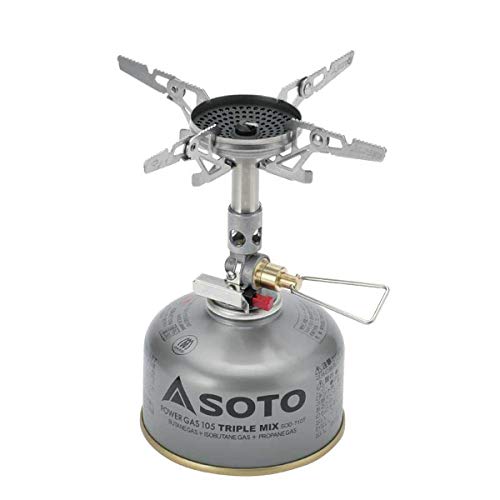
SOTO WindMaster Backpacking Stove 4Flex Combo

Coleman Cascade 18 1-Burner Camping Stove

Jetboil Sumo Camping and Backpacking Stove Cooking System

MSR PocketRocket 2 Ultralight Camping and Backpacking Mini Stove Kit

Firebox Gen 2 5″ Stainless Steel Bushcraft Stove

Coleman Tabletop 2-in-1 Grill & Stove

Jetboil Flash 1.0L Portable Fast Boil Stove

Trangia Gas Butane Burner GB74
The Details Behind The Selections
Fuel canisters do not burn anything on their own, but running out mid-boil on day two ruins a trip faster than a busted igniter. The Gas One 12-pack supplies the butane-isobutene blend (a common pressurized gas mix for backpack stoves) that powers most canister-top stoves on this list, including the SOTO WindMaster coming up next.
Each 8oz canister threads onto the standard EN 417 valve found on most portable stoves, and the self-sealing nozzle cuts flow the moment you unthread it, which matters when a loose canister rolls around in your trunk. A twelve-pack keeps a weekend warrior fueled for a full season without hunting down a hardware store on a Sunday afternoon.
Key Advantages
- Twelve canisters cover a long season of weekend trips without restocking.
- Self-sealing nozzle reduces hiss and leak risk during disconnects.
- Standard thread fits the WindMaster, PocketRocket 2, and most canister stoves.
- UL safety certification suggests the cans meet a third-party flammability standard.
Worth Noting
- Empty canisters are recyclable only where steel recycling accepts them; curbside pickup varies by region.
- You still need a stove to actually cook anything, this is fuel only.
Feature Snapshot
Right Fit For
Anyone running a canister-top stove on regular weekend trips who wants a season’s worth of fuel in one box.
Consider Something Else When
You travel to places where canisters are hard to source, the Firebox wood-burning option solves that problem instead.
Wind kills a flame faster than cold fingers kill morale, and the SOTO WindMaster leans into that reality with a recessed burner head that shields the flame from crosswinds. The 4Flex pot support is the upgrade versus the older three-arm version, expanding the base so wider pots sit flat instead of wobbling over the burner.
At roughly 3 oz (about 85 g) for the stove body alone, you barely feel it in a side pocket, and the flame holds steady enough to bring two cups of water to a boil in under three minutes on a calm day. Mountaineers and ridge-walkers who cook above the treeline tend to gravitate here because it keeps humming when lesser stoves get blown out.
Advantages To Know
- Concave burner design resists gusts that flatten upright flames.
- 4Flex pot support handles small mugs and wider 8-inch pans alike.
- Compact folded footprint fits a cookpot or jacket pocket.
- Regulator-less design keeps output consistent as fuel drops.
Points To Keep In Mind
- Fuel is sold separately, so budget for the Gas One canisters above or another compatible source.
- No built-in igniter, carry a lighter or piezo (a spring-loaded spark generator) as a backup.
- Not the lightest option in this roundup, the MSR PocketRocket 2 trims more weight.
Quick Facts
Who Should Grab It
Ridge hikers, alpine climbers, and anyone cooking above the treeline where wind tends to kill lesser stoves.
Skip It When
You count every gram and cook one-pot meals only, the MSR PocketRocket 2 covers that ground for less weight.
The Cascade 18 swaps a tiny hiking stove for a single burner that handles a real frying pan. With 8,000 BTUs (British Thermal Units, a measure of heat output; higher numbers mean faster cooking) under a 12-inch grate, you can crack eggs and brown sausage the way you would at home, and the matchless rotary ignition saves you from fumbling with a lighter in the dark.
Compared to the canister stoves earlier in this list, the Cascade runs on a propane bottle you stash beside the picnic table, so it belongs in a car-camping setup rather than a backpack. The detached grate flips 180 degrees for storage, and the regulator tucks on top so the whole thing stacks neatly in a gear bin.
Bright Spots
- 12-inch grate fits a standard home frying pan.
- Rotary ignition lights without a match.
- Improved knob rotation gives finer simmer control than older single-burner models.
- Aluminized steel cooktop wipes clean with a damp rag.
Some Limits To Know
- One burner means no simultaneous boiling and frying.
- Propane tank sold separately, add a 1-lb bottle to your cart.
- Wind can still steal heat since the flame sits exposed; a windscreen helps.
At A Glance
Best Suited To
Car campers and tailgaters who want a single burner with real cooking power and easy cleanup.
Look Elsewhere When
You need two burners going at once for pancakes and coffee, the Coleman Tabletop 2-in-1 handles that workflow.
The Sumo is Jetboil’s answer to the question, “what if I want to feed three or four hungry hikers without juggling two pots?” The 1.8-liter FluxRing pot (a ridged aluminum cup that channels heat up the sides to cut boiling time) pairs with a regulator that dials from simmer to full blast, so you can melt snow gently or push hard for a rolling boil.
Where the smaller Flash coming up later focuses on solo speed, the Sumo trades a little pack space for capacity. The insulating cozy keeps the pot hot long after you cut the flame, which doubles as a serving sleeve at the dinner table and trims fuel use across a long cook.
What Works In Its Favor
- 1.8-liter pot handles group meals and snow melting.
- Regulator control spans simmer to boil without manual fiddling.
- FluxRing surface recovers heat efficiently, shortening cook times.
- Insulating cozy doubles as a serving sleeve.
Trade Offs
- Heavier and bulkier than the solo-focused Flash and PocketRocket 2.
- Fuel canister sold separately.
Who It Suits Best
Small groups on winter trips, melted-snow expeditions, and family car-camp cooks who want one pot for everything.
Where Another Pick Suits Better
Solo backpackers counting ounces will find the Jetboil Flash 1.0L a much lighter daily driver.
Minimalists who measure gear by gram tend to land on the PocketRocket line eventually, and the 2.0 Kit bundles a stove, 0.75L pot, bowl, and lid into one nesting package. The stove body folds flat and weighs about 2.6 oz (roughly 73 g) on its own, while the pot doubles as an eating cup so you skip packing a separate mug.
The lid has straining ports cut into it for pasta water and dehydrated meals, which saves you from carrying a separate colander. The included mini pot lifter lets you grab the hot pot without burning fingertips, a small detail that matters after a long day on the trail.
Practical Pluses
- Whole kit nests together to save pack space.
- Straining lid ports skip the need for extra colander gear.
- Pot serves as both cookware and drinking vessel.
- Boils a liter of water in roughly 3.5 minutes.
Points To Note
- Exposed flame struggles in real wind without a separate windscreen.
- 0.75L pot caps out at solo meals; group cooks need something larger like the Sumo.
Right Fit For
Solo thru-hikers, bikepackers, and fastpackers who want a complete cook kit without weighing down their pack.
Not Your Match When
You regularly cook in open, gusty terrain, the SOTO WindMaster resists wind better at a similar weight.
The Firebox skips the canister economy entirely. Folded stainless-steel panels hinge into a barrel-shaped fire chamber, and the included Firesticks slot inside to hold a pot above the flames or skewer food directly. Where the canister stoves above need fuel you carry in, this one burns twigs you pick up off the ground.
The 5-inch Gen 2 model is the smaller, more packable size, and the four-panel hinged design stays rigid once unfolded. You can also feed it from the top, the side, or use the Swedish torch method (a vertical log split and lit from the top, which burns downward for hours with no tending) for long unattended cooks.
Real-World Strengths
- No fuel canisters to pack, recycle, or resupply.
- Firesticks double as cooking skewers and as a closure clip when folded.
- Multiple feed ports accept wood, charcoal, or solid fuel tablets.
- Stainless steel resists warping at sustained burn temperatures.
Honest Caveats
- Wet or snow-covered ground means gathering dry tinder becomes a chore.
- Heavier and bulkier than a small canister stove, roughly 2 lb for the kit.
- Fire bans in dry regions can rule it out entirely; check local rules first.
Made For
Bushcrafters, hammock campers, and anyone heading into remote terrain where fuel canisters are impractical to carry.
Swap It Out When
You camp under burn restrictions or cook in wet climates, a Jetboil system handles damp weather more reliably.
When the parking lot is fifty feet away and the menu is burgers plus a pot of beans, a single burner feels cramped. The Coleman Tabletop splits the cooking surface into a grill side and a stove side, each with its own adjustable burner, so breakfast hash and morning coffee run side by side.
Wind shields wrap the burners to keep gusts from cooling the griddle, and the push-button igniter eliminates a lighter. The chrome-plated grate pops off for rinsing, and the grease tray slides out for emptying without flipping the whole unit over.
Benefits That Matter
- Grill and stove run at the same time on independent burners.
- Wind shields help maintain heat at exposed campsites.
- Removable grate and grease tray simplify post-meal cleanup.
- Push-button igniter lights without matches.
Things To Consider
- 20,000 BTU total means it chews through a propane bottle faster than a single burner.
- Too bulky and heavy for any trip you have to carry on your back.
Spec Overview
Who Will Love This
Tailgaters, car campers, and cabin hosts who cook for a crowd and want grill and stovetop in one footprint.
A Better Fit Elsewhere
Solo travelers who eat out of one pot will overpay for capacity they never use, the Cascade 18 single burner handles that scale.
The Flash exists to do one job fast: boil a liter of water for coffee, ramen, or a freeze-dried dinner. Turn the knob a half-turn counterclockwise and the burner lights itself, no lighter, no clicking. The cooking cup nests over the burner and stores the whole system flat.
Compared to the Sumo reviewed earlier, the Flash trims capacity down to a solo-friendly 1L and shaves weight accordingly. The FluxRing still wraps the cup for efficient heat transfer, and the cozy keeps the contents hot long enough that you can pour, eat, and refill without re-boiling.
Where It Excels
- One-step auto ignition lights without a lighter.
- Boils water fast enough that you spend less time waiting at altitude.
- Insulating cozy retains heat after the flame cuts.
- Whole system nests into a compact cylinder for transport.
Worth Bearing In Mind
- 1L capacity caps out at solo portions; couples or groups will need the Sumo.
- Fuel canister sold separately.
Perfect Match For
Solo hikers, climbers, and morning-coffee loyalists who value speed and simplicity over cooking flexibility.
Reach For A Different Pick When
You regularly cook for two or more, the Jetboil Sumo handles group portions without much extra fuss.
The Trangia GB74 is a small replacement burner for the classic Trangia spirit stove kit, swapping liquid fuel for butane cartridges. It drops into the lower windshield of the 25 or 27 series Trangia cooksets, so existing owners can convert their system without buying a whole new stove.
Where the standalone canister stoves earlier offer full setups, this one assumes you already own the rest of the kit. Boil time lands around 3.5 minutes for a liter, and flame control responds smoothly to the valve rather than the slower simmering you’d get from a spirit burner.
What Earns Its Place
- Direct swap-in for Trangia 25 and 27 series kits.
- Standard butane cartridge compatibility keeps fuel sourcing easy.
- Faster boil times than the traditional alcohol burner it replaces.
Practical Considerations
- Useless without the matching Trangia cookset, this is a burner, not a full stove.
- Wind protection depends entirely on the cookset’s windshield design.
Built With In Mind
Trangia stove owners who want a faster, cleaner-burning alternative to their liquid-fuel burner.
Where A Sibling Pick Shines
Anyone without a Trangia kit should start with the SOTO WindMaster or MSR PocketRocket 2 instead, both arrive as complete stoves.
Choosing The Right Camping Cook Stove For Your Trips
Match The Stove To Your Travel Style
Backpackers carrying every ounce on their backs want canister stoves under 4 oz, while car campers can haul 20-lb setups without thinking twice. The SOTO WindMaster and MSR PocketRocket 2 fit the first profile, the Coleman Tabletop and Cascade 18 sit comfortably in the second. The Firebox falls in between: packable, but heavier than a small canister system.
Fuel Type Drives Real-World Logistics
Butane-isobutane canisters are clean, fast, and easy, but they can run low in sub-freezing weather and you must pack the empties out. Propane bottles are cheap to refill at any hardware store but bulky for backcountry travel. Wood and biomass stoves like the Firebox solve the fuel problem entirely, yet demand dry ground and respect for local fire rules. Pick the fuel type that fits your climate and your region’s regulations.
Capacity And Cook Style Matter
Solo hikers and quick-boil coffee drinkers rarely need more than a 1L pot, while feeding a family at a campsite demands a system with at least one large burner or a 2-in-1 grill. The Jetboil Flash covers the solo end cleanly, the Sumo handles groups, and the Coleman Tabletop gives you a full base-kitchen experience.
Key Considerations Across These Picks
Pitfalls Shoppers Hit
Buying a featherweight backpacking stove when you mostly car-camp leaves you with slow cook times and no room for a real frying pan. On the other end, hauling a 2-burner propane tabletop into the backcountry is a miserable mistake in weight and bulk. Many shoppers also forget that canister stoves need compatible fuel, so pairing a stove with the wrong thread style means a non-functional setup the first morning out. Read the fuel requirements before you commit, and double-check that your pot diameter matches the stove’s pot support before you unpack at camp.
Why Top Tier Costs More
Premium systems like the Jetboil Sumo and Flash cost more because the regulator technology, FluxRing heat exchanger, and integrated igniter add real engineering. The trade shows up in cold-weather performance, fuel efficiency, and the difference between fiddling with a lighter in the wind and turning a knob. For weekend fair-weather trips, a budget canister stove gets the job done; for shoulder-season mountaineering or high-altitude cooking, the upgrade pays back in reliability and saved fuel.
Frequently Asked Questions
How long does an 8oz fuel canister actually last?
A single 8oz canister typically runs a small burner for about two to four hours of total flame time, depending on wind, altitude, and how often you simmer versus boil. Weekend warriors usually get two to three full days out of one canister on a single-burner stove.
Can you use these stoves inside a tent?
Most camping cook stoves should never be used inside a closed tent, since carbon monoxide builds up fast and open flames pose a burn risk. Always cook outside in open air, or under a well-ventilated rain fly with the vents open.
Do altitude and cold affect stove performance?
Yes. Thin air reduces oxygen for combustion, and cold temperatures drop canister pressure, both of which weaken flame output on basic stoves. Regulated systems like the Jetboil Flash and Sumo handle cold and altitude better than unregulated burners.
Are wood-burning stoves legal everywhere?
No. Many national parks, state forests, and dry-climate regions restrict or ban open wood fires, even in a contained stove. Always check local fire regulations before relying on a wood-burning option like the Firebox.
Which stove is best for international travel?
Canister stoves with the standard EN 417 thread work across most of the world, but fuel availability varies by region. Carry enough canisters from home if you are heading somewhere remote, or pick up a multi-fuel stove that runs on liquid fuel instead.
The Takeaway
The right camping cook stove depends entirely on how you travel: backpackers chasing ounces land on the PocketRocket 2 or SOTO WindMaster, family campers gravitate to the Coleman Tabletop or Cascade 18, group cooks need the Jetboil Sumo, and wood-fuelers go with the Firebox. Match the fuel type, capacity, and weight to your usual trip, and the rest takes care of itself.