
A reliable camping burner turns a cold campsite into a hot breakfast and a long day into a comfortable evening. The right model depends on your pack size, your crew, and whether you’re cooking one-pot freeze-dried meals or a real skillet dinner. Below, nine solid options cover everyone from ultralight backpackers to tailgate chefs running two burners at once.
A Quick View Of The Lineup

MSR PocketRocket Deluxe Ultralight Backpacking Stove

Jetboil Flash 1.0L Fast Boil Camping Stove

Firebox Nano Stove G2 + X-Case Kit

Coleman Cascade 18 1-Burner Camping Stove
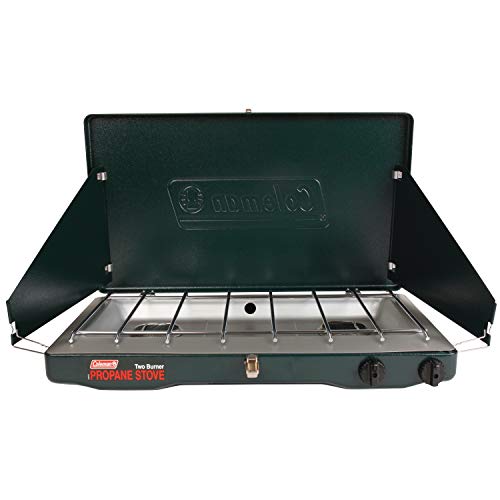
Coleman Classic Propane 2-Burner Stove

MSR PocketRocket 2 Mini Stove Kit

Bonnlo 2 Burner Cast Iron Patio Burner

Coleman Tabletop 2-in-1 Grill and Stove

Trangia Gas Butane Burner GB74
A Closer Look At Each Pick
The MSR PocketRocket Deluxe is the burner to beat when every ounce in your pack matters. It folds down to roughly the size of a small flashlight, yet it carries a built-in pressure regulator that keeps the flame steady as your canister dips toward empty. On a cold alpine morning at altitude, that regulator often means the difference between a rolling boil and a stubborn simmer.
You thread a standard isobutane canister (sold separately) directly onto the stove, push the ignition button, and dial in your flame with a broad triangular valve handle. There’s no priming, no preheating, and no pumping, which keeps setup time under a minute. The wider pot supports handle a one-liter pot or a small skillet without wobble, a step up from the original PocketRocket design.
Bright Spots
- Pressure regulator maintains output even when the fuel canister is low or cold
- Push-button igniter eliminates the need to pack a backup lighter on most trips
- Tiny packed footprint leaves room in your pack for food and layers
- Broad triangular valve gives precise low-simmer control, useful for rehydrating meals
- Hard-anodized aluminum body shrugs off trail bumps and drops
Points To Keep In Mind
- Requires separate isobutane canisters, which can be tricky to find in remote areas
- Not stable with cookware wider than about six inches
- Wind protection isn’t built in, so you’ll want a shelter or natural windbreak in open terrain
Feature Snapshot
Who It Suits Best
Thru-hikers and weight-conscious backpackers who count grams and want flame control that holds up across a long trip.
Look Elsewhere When
You’d rather skip canister fuel entirely, in which case the Firebox Nano Stove G2 + X-Case Kit handles wood and solid fuels on a single frame.
Where the PocketRocket is a bare burner that expects you to bring your own pot, the Jetboil Flash 1.0L ships as a fully integrated cooking system. The pot, burner, heat exchanger, and igniter all click into one tower, and the color-coded rubberized bands stay cool enough to grab even mid-boil. That single design choice removes a small but real annoyance on chilly mornings.
The one-step auto ignition uses a stainless steel burner and a turn-and-click knob that works much like a home stove, so no lighter makes it into your pack. Compared to the MSR PocketRocket Deluxe above, the Jetboil trades some versatility for raw speed, getting water to a rolling boil in around two minutes. The trade-off shows up when you want to simmer a sauce or fry an egg, since the integrated pot is shallow and the heat exchanger prioritizes boils over gentle cooking.
The Good Stuff
- Integrated fluxring heat exchanger speeds up boil times in cold and windy conditions
- Auto ignition lights the flame with one knob turn, no priming required
- Cool-touch grip zones let you handle the cup right after the burner shuts off
- Stainless steel burner resists corrosion over many seasons of trips
Trade Offs
- Cooking cup is shallow and narrow, so sautéing and simmering take patience
- Proprietary pot shape limits swapping in your favorite mug or pan
Best Suited To
Coffee-and-instant-meal campers who value a fast, dependable boil and don’t need a real skillet surface.
Reach For A Different Pick When
You want to cook real skillet meals for two, where the Coleman Cascade 18 1-Burner Camping Stove’s larger cooktop clears a 12-inch pan comfortably.
The Firebox Nano Stove G2 sits in a different corner of the camping burner world from the gas options above. It’s a folding stainless steel frame that runs on twigs, pinecones, alcohol, or gas with optional add-on parts. The hinged construction unfolds with no assembly, and the cross-feed fuel delivery system feeds twigs into the burn chamber from the side, so you don’t have to keep lifting the lid.
You get about a one-inch clearance at the top, which lines up well with a Trangia spirit burner setup. The whole stove weighs roughly six ounces on its own and around nine ounces with the included case, so it competes on weight with canister stoves. Where it pulls ahead is fuel independence: a handful of dry sticks replaces a $15 isobutane cartridge in the backcountry.
The Helpful Details
- Multi-fuel design supports wood, alcohol, gas, and gel with the right accessories
- Folding hinge means no loose parts to lose on the trail
- Stainless steel body tolerates direct contact with burning wood
- Cross-feed intake lets you add fuel without removing the pot
Room For Improvement
- Wood burning is fire-ban restricted in many dry regions, so check local regulations
- Requires dry fuel and patience to start, unlike the press-button convenience of gas stoves
Built With In Mind
Bushcrafters, hammock campers, and anyone running long routes through regions where canister fuel is scarce or overpriced.
A Better Fit Elsewhere
Backpackers who want push-button simplicity may prefer the MSR PocketRocket Deluxe Ultralight Backpacking Stove for its regulator and instant flame.
The Coleman Cascade 18 is the car-camping bridge between ultralight canister stoves and full camp kitchens. It delivers up to 8,000 BTUs through a single burner, with a rotary ignition that lights the flame without a match. The detached grate flips 180 degrees for storage, which keeps the stove slim enough to slide into a trunk or a large duffel.
The cooktop clears a 12-inch pan, so you can bring a real skillet from home rather than camping-specific cookware. Compared to the Jetboil Flash 1.0L above, this is a much more versatile cooking surface, but you trade the integrated system for a heavier, tabletop footprint that you set on a picnic table rather than carry on a hike.
Everyday Advantages
- Rotary ignition lights reliably without a match or striker
- 12-inch pan clearance accommodates standard home skillets and griddles
- Improved knob rotation gives finer simmer control than older Coleman models
- Aluminized steel cooktop wipes clean with a damp cloth after dinner
Trade-Offs To Consider
- Single burner limits meal complexity when cooking for more than two people
- Built-in regulator adds some bulk compared to bare canister stoves
Right Fit For
Solo car campers and overlanders who want one solid burner with home-cookware compatibility and don’t mind the extra pounds.
Not Your Match When
Group cooks running two pans at once should consider the Coleman Classic Propane 2-Burner Stove, which fits both 10-inch and 12-inch pans side by side.
The Coleman Classic Propane 2-Burner Stove has been a basecamp fixture for decades, and it shows why with up to 20,000 total BTUs across two adjustable burners. It fits a 12-inch and a 10-inch pan at the same time, so coffee and eggs can hit plates without one waiting on the other. The wind-blocking panels shield both burners from crosswinds at the campsite, which keeps your heat output steady.
A pressure regulator built into the stove line maintains consistent performance even when the cylinder runs low or the temperature drops. You can expect roughly an hour on high from a standard 16.4-ounce propane cylinder, which is plenty for a family dinner. The 4.1 by 21.9 by 13.7-inch body is a clear step up in size from the Coleman Cascade 18, so plan on real cargo space rather than a backpack.
Strong Points
- Two adjustable burners let you run high heat and a gentle simmer simultaneously
- Wind-blocking panels reduce flame loss in exposed campsites
- Pressure regulator keeps output steady through cold nights and long cooks
- Durable construction has earned a long track record across generations of campers
Things To Consider
- Requires a separate propane cylinder and adds meaningful trunk weight
- Two-burner layout may be overkill for solo overnight trips
Quick Facts
Made For
Family campers and car campers who run full dinners with two pans going at once and don’t mind extra bulk.
Swap It Out When
You want grill and griddle alongside your burners, in which case the Coleman Tabletop 2-in-1 Grill and Stove adds a hot surface for bacon and pancakes.
The MSR PocketRocket 2 Mini Stove Kit is the all-in-one answer for backpackers who don’t want to assemble a cook kit from separate parts. It bundles the PocketRocket 2 burner with a 0.75-liter hard-anodized aluminum pot, a 16-ounce bowl, a clear lid with straining ports, a mini pot lifter, and a stuff sack. The pot’s insulated grip lets it double as your eating and drinking vessel, which trims the gear list further.
Compared to the PocketRocket Deluxe earlier in this list, you lose the pressure regulator but gain a complete cookware set in a single nested package. The pot lid doubles as a strainer for pasta water or tea, and the bowl handles both hot and cold food safely. For solo overnight trips where every gram and every cubic inch matters, that all-in-one approach is hard to beat.
Well-Handled Touches
- Nested design fits burner, pot, bowl, and lid in one compact package
- Pot doubles as eating and drinking vessel thanks to insulated grip
- Lid’s straining ports make pasta and tea prep faster without extra tools
- Mini pot lifter protects fingers when handling hot cookware on a small burner
Where It May Fall Short
- Smaller 0.75-liter pot limits meal size for hungry appetites or doubleshot coffee drinkers
Whose Shelf It Belongs On
Solo backpackers and bikepackers who want one tidy package that includes everything needed to boil, cook, and eat.
Consider Something Else When
Group cooking or larger meals call for the Coleman Classic Propane 2-Burner Stove, which runs two pans simultaneously.
The Bonnlo 2 Burner Cast Iron Patio Burner is the heavy hitter of this list, built around cast iron heads and rated for serious BTU output. Detachable stand legs give you flexibility on uneven campsite terrain, and the wide burner bracket accepts oversized pots and woks. If you’ve ever tried to stir-fry over a typical camping stove and felt cramped, this layout solves that.
The trade-off for that power and cast iron build is weight and footprint, so this is firmly a drive-up camping or backyard burner rather than a pack-along. You get adjustable firepower across both heads, useful when one dish needs a hard sear and another needs a low braise. Think of it less as a backcountry tool and more as a portable outdoor range.
What Stands Out
- Cast iron heads retain and radiate heat evenly across large cookware
- Detachable stand legs fold for transport and stabilize on rough ground
- Wide bracket accommodates woks, Dutch ovens, and oversized stock pots
- Adjustable firepower on both heads handles everything from sear to simmer
Some Limits To Know
- Cast iron adds serious weight and bulk compared to other picks here
- Higher heat output demands careful fuel planning on longer trips
Right Fit For
Campsite chefs running cast iron, woks, or large pots who set up a stationary kitchen and don’t need to carry the burner far.
Not Your Match When
Backcountry campers should look at the MSR PocketRocket Deluxe Ultralight Backpacking Stove, which trims ounces without sacrificing flame control.
The Coleman Tabletop 2-in-1 Grill and Stove combines a griddle on one side with two adjustable propane burners on the other, so breakfast, lunch, and dinner can run side by side without swapping cookware. It produces up to 20,000 BTUs across the unit, and the push-button starter lights the burners without hunting for a match. Wind guards on the burner side help keep the flame steady at breezy tailgates.
The chrome-plated grate is removable for quick cleanup, and the integrated grease tray catches drips before they hit your picnic table. Compared to the Coleman Classic Propane 2-Burner Stove covered earlier, you trade a bit of burner real estate for a full grill surface. For tailgate cooks and patio chefs, that extra surface pays off the moment pancakes hit the griddle.
What Pays Off
- Two adjustable burners and a grill surface run simultaneously for full meals
- Push-button igniter removes the need for matches at the campsite
- Removable chrome-plated grate speeds up post-cook cleanup
- Integrated grease tray protects tables and simplifies washing
Trade-Offs To Consider
- Larger footprint than a pure two-burner stove, so plan on cargo space
- Grill surface area is modest compared to full-size tailgate grills
Made For
Tailgaters, RV campers, and family cooks who want both grill and burner capability in a single tabletop unit.
A Better Fit Elsewhere
Minimalists cooking solo may prefer the lighter, single-burner footprint of the Coleman Cascade 18 1-Burner Camping Stove.
The Trangia Gas Butane Burner GB74 is a drop-in replacement head for the Trangia 25 and 27 series stoves, swapping a standard butane cartridge in place of the classic spirit burner. If you already own a Trangia cookset, this little burner turns your wind-shielded system into a regulated gas setup without buying a whole new stove. Around a liter of water reaches a boil in roughly 3.5 minutes under typical conditions.
The burner uses standard butane cartridges, which are widely stocked and pack flat. The wind protection from your existing Trangia windshield keeps the flame stable, and the wide burner base fits the same pots and pans you already use. Compared to the Jetboil Flash 1.0L above, you trade the integrated cooking cup for full Trangia cookware compatibility.
The Case For It
- Standard butane cartridges are easy to find at most outdoor and travel retailers
- High-efficiency burner cuts fuel use compared to running a spirit burner
- Fits the lower windshield of Trangia 25 and 27 series stoves
- Easy flame control for both boiling and simmering
Less Ideal Details
- Only makes sense if you already own or plan to buy a Trangia cookset
Best Suited To
Existing Trangia owners who want a faster, cleaner-burning alternative to the traditional alcohol spirit burner.
Skip It When
You don’t already run a Trangia system, in which case the MSR PocketRocket Deluxe Ultralight Backpacking Stove is a more complete starting point.
What To Weigh Before Choosing Your Camping Burner
Start with the realistic cook style. Ultralight backpackers gravitate toward small screw-on canister stoves like the MSR PocketRocket Deluxe or the Jetboil Flash, while car campers get more versatility from tabletop units like the Coleman Cascade 18 or the Coleman Tabletop 2-in-1. Fuel type matters as much as burner size: isobutane and propane canisters are widely available, but wood-burning options like the Firebox Nano Stove G2 shine where canisters run out or fire bans allow it.
Wind protection is a real-world concern that often gets overlooked. Integrated wind shields on the Coleman Classic 2-Burner and the rubberized bands on the Jetboil keep flames stable in breezy conditions, which directly affects how fast your water boils and how steady your simmer stays. Cookware compatibility is the next layer, since 12-inch clearances on the Coleman Cascade 18 let you bring home skillets rather than specialty pans.
Finally, think about cleanup and storage. Chrome-plated grates and aluminized steel tops wipe down easily, while cast iron heads like the Bonnlo demand seasoning and care. Match the burner to your typical trip length, your packing style, and your menu, and the rest of the decision tends to fall into place.
Smart Considerations Before You Decide
Common Shopping Slip Ups
Underestimating how often wind kills your flame is a frequent miss, so look for integrated wind shields or plan on a windscreen for bare burners. Another trap is grabbing the smallest ultralight stove and expecting to cook real meals, when a shallow pot barely handles an instant noodle cup. Weight-focused shoppers should also check canister availability for their route, since backcountry resupply can be tough.
Why Top Tier Costs More
Premium camping burners tend to add features that pay off on real trips: pressure regulators for cold-weather performance, integrated heat exchangers for faster boils, and ignition systems that remove the need for a separate lighter. Those upgrades usually show up as fewer failures in cold conditions, faster meal prep, and a smoother learning curve for first-time users. Spending up makes the most sense when your trips push into shoulder seasons or higher altitudes, where budget stoves start to lose steam.
Frequently Asked Questions
What fuel do most camping burners use?
The majority run on screw-on isobutane or propane canisters, though wood-burning options like the Firebox Nano Stove G2 work with twigs and pinecones for fuel-free travel.
How long does a camping burner canister last?
A standard 16.4-ounce propane cylinder lasts roughly an hour on high with a two-burner stove, while smaller isobutane canisters on ultralight burners run for several days of light boiling use.
Can camping burners be used indoors?
Outdoor use in ventilated spaces is the standard guidance, since both gas combustion and wood smoke produce carbon monoxide and other byproducts that are unsafe in enclosed areas.
Do I need a windscreen for my camping burner?
Built-in wind protection on stoves like the Jetboil Flash and the Coleman Classic 2-Burner reduces the requirement, but bare canister stoves benefit greatly from a foldable windscreen in breezy conditions.
How do I clean a camping burner?
Allow the burner to cool fully, then wipe the cooktop with a damp cloth and mild soap; chrome-plated grates lift off for deeper cleaning, while cast iron heads need seasoning rather than soap.
Wrap Up
Camping burners run the full range from pocket-size screw-on stoves to full tabletop ranges with grills and dual burners. Match the stove to your typical trip rather than chasing the lightest or most powerful model you find, and you’ll get years of reliable meals on the trail. Pick the option that fits your crew, your packing style, and the menus you actually cook, and the rest of the camp setup tends to follow naturally from that one decision.