
A canvas tent at noon can feel like a parked greenhouse, and a hot camper van turns a quick stop into a sweaty retreat. Choosing the right cooling option for outdoor trips means weighing size, power source, and how loud you can tolerate it at midnight. This roundup covers four picks, from compact personal chillers to full rooftop rigs and home-room portable units.
An Overview Of The Picks
SOLEEY Portable Mini AC Evaporative Cooler
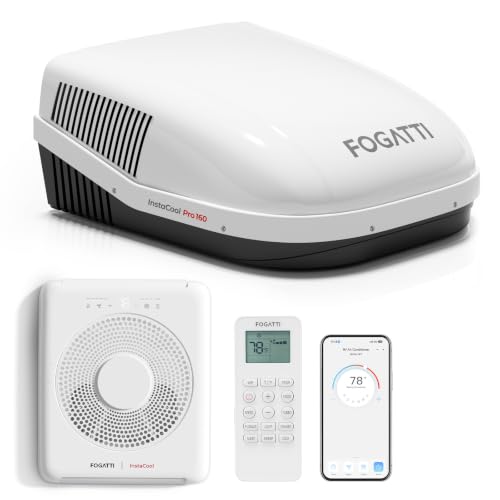
FOGATTI RV Air Conditioner (White)
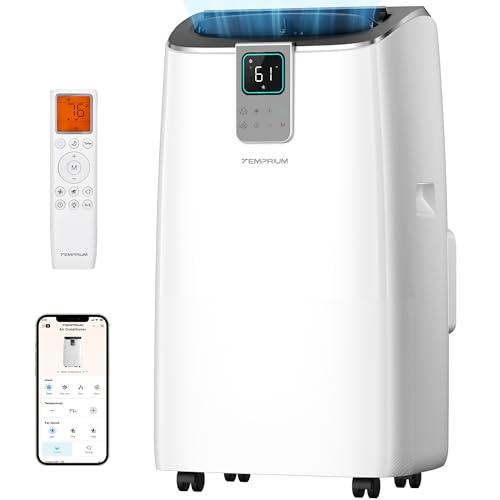
Temprium 14,000 BTU 4-in-1 Smart AC
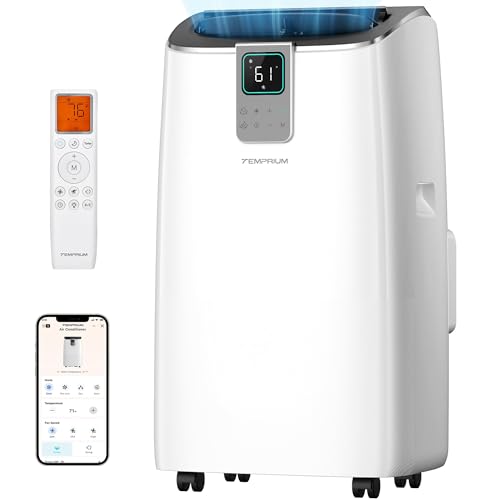
Temprium 16,000 BTU Inverter Dual Hose Portable AC
The Details Behind The Selections
The SOLEEY Portable Mini AC Evaporative Cooler is the smallest item on this list, and that is precisely its appeal for anyone sleeping in a tent or driving cross-country with limited cargo space. It functions as an evaporative cooler, meaning it pulls in warm air, runs it through a moistened filter, and pushes out a cooler breeze rather than refrigerated cold air. You simply fill the reservoir, plug it into a USB-style power source, and point it toward your face or sleeping bag.
Unlike the rooftop RV units covered later, this one asks nothing of your vehicle and travels in a backpack. It also runs very quietly and includes a multi-color night light, which parents and tent campers tend to appreciate. For dorm rooms and small summer cabins, you may find it does enough on its own.
Notable Upsides
- Lightweight and easy to carry on hikes or in car trunks
- Multiple fan speeds let you tune airflow without overusing the battery
- Auto-off timer prevents overnight drain on small power banks
- Color-changing night light doubles as a kid-friendly tent feature
- No installation or venting, so you can set it on any flat surface
Worth Noting
- Evaporative cooling performs poorly in humid climates, since it relies on dry air for evaporation
- Reservoir needs refilling every few hours during heavy use
Who It Suits Best
Casual tent campers, dorm dwellers, and anyone needing a personal breeze without installing hardware will find it useful.
Consider Something Else When
RV owners covering serious mileage in hot climates should reach for the FOGATTI RV Air Conditioner, which delivers genuine refrigerated cooling tied to vehicle power.
The FOGATTI RV Air Conditioner is a permanently mounted rooftop unit built for camper vans, travel trailers, and fifth wheels. It connects to both 115V AC shore power and 12V DC battery systems, so you can run it on a campground hookup, a generator, or your house batteries, depending on how your rig is wired. Ducted or non-ducted installation lets you match it to ducted ceiling vents or a simple ceiling cutout.
Compared to the SOLEEY evaporative cooler reviewed above, this is real refrigeration, not water-based cooling. You control it with a remote, mobile app, the wall panel, or voice commands, which sounds redundant until you are parked under awning and want to drop the temperature without climbing up. Owners commonly report straightforward retrofit installs on standard 14-inch rooftop openings.
Practical Pluses
- Genuine refrigerated cooling handles high humidity without losing effectiveness
- Multiple control options, including app and voice, suit different setups
- Fits ducted and non-ducted RV ceilings for retrofit flexibility
- Doubles as a rooftop upgrade that raises resale appeal on used rigs
Trade Offs
- Requires professional or experienced DIY installation and electrical wiring
- Drawing significant power means you will need a generator or robust battery bank off-grid
- Adds rooftop weight and height, which matters on low-clearance garages and tree-lined camp roads
- Cooling only, with no built-in heat strip, which limits shoulder-season use
Quick Technical Notes
Made For
Full-time RVers and weekend trailer travelers with existing roof vents and electrical capacity.
Look Elsewhere When
Casual tent campers who want something packable should stick with the SOLEEY Portable Mini AC Evaporative Cooler instead.
The Temprium 14,000 BTU 4-in-1 Smart AC is a portable room unit designed to handle cooling, fan, dehumidifier, and heating functions in a single box. At 14,000 BTU (BTU, or British Thermal Unit, is a measure of how much heat an air conditioner can remove per hour), it targets rooms up to roughly 750 square feet, which covers most cabins, basement apartments, and ground-floor basecamp rooms. WiFi connectivity means you can adjust settings from a phone before walking in, a small but meaningful convenience after a dusty trail.
Where the FOGATTI above is bolted to a roof and wired into a vehicle, this Temprium rolls on casters and vents through a window kit. The 4-in-1 mode lineup helps in shoulder seasons when a space heater alone is not enough and the AC alone is too much. Depending on your room size, you may find the included window kit handles most standard slider and crank openings.
A Favorable Mix
- Multi-mode design covers cooling, dehumidifying, and heating needs across three seasons
- App control reduces trips to the unit, helpful in dark cabins
- Enough capacity for large living areas without permanent installation
- Lower claimed daily energy draw than older portable ACs in the same BTU class
Points To Keep In Mind
- Portable units vent warm air through a window, so sealing the window kit well matters
- Heavier than personal evaporative coolers, making it less backpack-friendly
Best Suited To
Hybrid travelers running a cabin or home base alongside weekend trips, and anyone wanting one unit for year-round climate control.
A Better Fit Elsewhere
Roof-mount RV owners with a dedicated rooftop opening should choose the FOGATTI RV Air Conditioner for a cleaner install.
The Temprium 16,000 BTU Inverter Dual Hose Portable AC is the heavyweight of this lineup. It uses a dual hose design, meaning one hose pulls air in and the other exhausts heat out, which is more efficient than single hose units in hot rooms. The inverter compressor ramps up and down instead of clicking on and off, so the temperature holds steadier and the noise dips lower overnight.
Compared to the 14,000 BTU Temprium above, this model adds capacity and the dual-hose efficiency bump. You will notice the difference most in sun-baked lofts, large glamping tents, or workshop conversions where the room reaches real heat. Owners commonly report that the four-way oscillation and Turbo Mode help push cooled air into corners that single-hose units leave warm.
The Value In It
- Dual hose design reduces negative pressure that pulls hot outside air through gaps
- Inverter compressor runs quieter and holds temperature more steadily than fixed-speed units
- Four-way oscillation spreads air across wide floor plans
- Turbo Mode tackles extreme afternoon heat without long warm-up delays
- Same portable form factor as the smaller Temprium, no permanent install
Honest Caveats
- Bulkier and louder than the personal SOLEEY cooler in a quiet tent setting
- Higher power draw requires a 15-amp or better circuit at your campsite hookup
Whose Shelf It Belongs On
Shoppers cooling larger spaces such as 750-square-foot basecamps, sunrooms, and big glamping setups get the most return here.
Swap It Out When
Travelers packing light into a small tent will find the SOLEEY Portable Mini AC Evaporative Cooler far more practical to haul.
Matching A Cooler To Your Trip
Power source shapes everything when picking a Camping Ac. Tent campers and backpackers usually run on USB power banks or 12V car outlets, which makes a small evaporative unit like the SOLEEY the realistic choice. RV travelers with rooftop wiring should look at the FOGATTI rooftop unit, which needs both 115V AC and 12V DC to operate properly. Anyone with a stationary basecamp, such as a cabin or glamping tent with a real electrical hookup, can step up to a portable room unit like the Temprium 14,000 or 16,000 BTU models and benefit from genuine refrigerated cooling.
BTU capacity matters more than most shoppers realize. A 14,000 to 16,000 BTU portable covers around 750 square feet, while a personal evaporative cooler is sized for the space around your body, not the room. Humidity also changes the answer. Evaporative coolers need dry air to feel effective, so humid climates push you toward refrigerated options. Noise tolerance is the last filter: rooftop RV units are quiet indoors, dual-hose inverter portables are moderate, and small evaporative coolers sit at the bottom of the noise scale, which tent sleepers tend to appreciate.
Key Considerations Across These Picks
Mistakes Worth Dodging
A common slip is choosing an evaporative cooler for humid coastal camping and expecting refrigerated-style results. Another is underestimating power needs. RV rooftop units need serious amperage, and high-BTU portable units assume a 15-amp circuit, which a basic campground outlet does not always provide. Sealing the window kit on any portable AC is another detail people skip, and warm air leaking back in wipes out the cooling gains.
What The Higher Tier Buys
Stepping up from a personal cooler to a 14,000 or 16,000 BTU portable buys refrigerated cooling, dehumidification, and whole-room coverage instead of personal breeze. Stepping up to the FOGATTI rooftop unit adds a permanent install that frees floor space, app and voice control, and consistent performance regardless of humidity. The upgrade pays off when you camp often, in mixed climates, or you need a quiet room rather than a personal fan.
Frequently Asked Questions
How do evaporative coolers differ from real air conditioners? Evaporative coolers use water to cool air through evaporation, which works best in dry climates and provides a personal breeze. Real air conditioners use refrigerant compression to cool and dehumidify, which works in any humidity level.
Can a portable AC run off a regular campground outlet? Most 14,000 to 16,000 BTU portable units need a dedicated 15-amp or 20-amp circuit. A shared campground post can handle them if you are not running other high-draw gear on the same circuit.
Do RV rooftop units work while driving? Most RV air conditioners are designed for stationary use with shore power or a generator, since they draw too much current for the engine alternator alone.
How loud are portable air conditioners at night? Inverter compressors run noticeably quieter than fixed-speed compressors. Dual-hose inverter portables usually sit in the 40 to 50 decibel range at low settings, comparable to a desktop fan.
Is a window kit hard to install? Most portable AC window kits use a foam-filled panel that fits sliding or crank windows. Installation takes a few minutes, and sealing gaps with tape makes a meaningful difference in cooling performance.
Closing Remarks
The right Camping Ac depends on where you camp, how you power it, and how much room you need to cool. Small evaporative units win on portability, rooftop RV units win on full-rig cooling, and high-BTU portables win on stationary basecamps with real power. Match the cooling type to your climate and your power source first, then pick capacity from there.