
Two people, one shelter, a weekend of weather you can’t fully predict. That’s the core puzzle behind choosing a 2 man camping tent, and the answer shifts depending on whether you’re car camping at a state park, bikepacking into the Wind Rivers, or pitching a play fort in the backyard for the kids. This roundup walks through nine options that cover the spread: ultralight backpacking shelters, roomy cabin-style family tents, and a few accessory pads that turn rough ground into something you can actually sleep on.
Your Options, Compared

Coleman Kids Wonder Lake 2-Person Glow-in-The-Dark Tent

ALPS Mountaineering Lynx 2-Person Backpacking Tent
KTT Extra Large 8-10 Person Family Cabin Tent (Style A)

MSR Tents Elixir 2

DULCE DOM True 4″ Wide Sleeping Pad with Foot Pump

DULCE DOM True 4″ Double Sleeping Pad with Foot Pump

DULCE DOM 4.7″ Extra Thick Inflatable Mattress
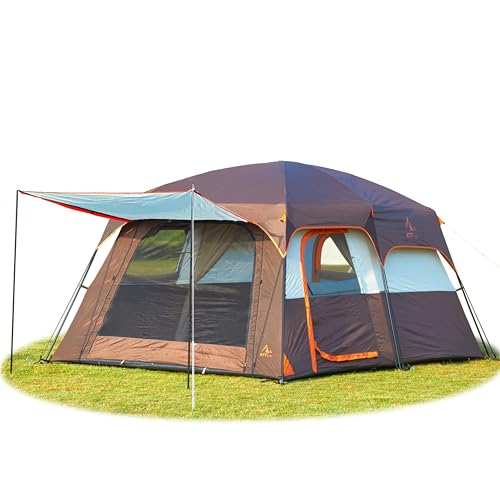
KTT Extra Large 10-12 Person Family Cabin Tent (Style B)
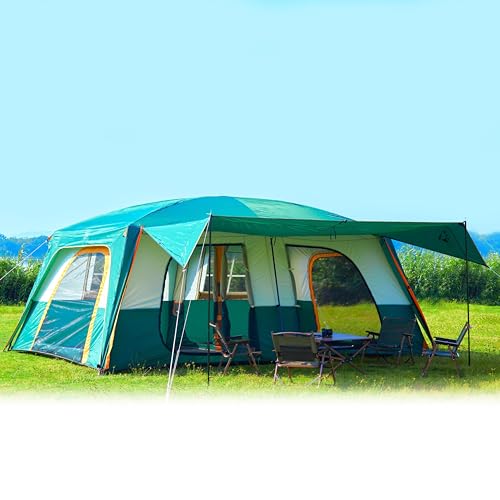
KTT Extra Large 12-14 Person Family Cabin Tent
The Details Behind The Selections
Real wilderness use isn’t really the point here. The Coleman Kids Wonder Lake 2-Person Glow-in-The-Dark Tent is built for the kind of camper who has barely grown out of a sleeping bag, with a floor plan of 7 by 4 feet and a 3-foot center height that feels roomy when you’re eight and a bit cozy when you’re an adult sitting upright.
The glow-in-the-dark ceiling, made possible by phosphorescent material woven into the polyester shell, charges under any light source and then softly illuminates the interior after lights-out, which most kids reportedly find magical. For parents staging a backyard campout or a first family camping trip, that single feature does most of the persuading.
Everyday Perks
- Welded corners and inverted seams help keep rainwater out during overnight storms.
- The included rainfly adds a second weather layer when the forecast turns grim.
- A pole frame tested to handle 35+ mph winds keeps the structure stable in blustery conditions.
- Setup reportedly takes about 10 minutes, a real plus for impatient campers.
- Includes a carry bag for easier transport from garage to campsite.
Things To Consider
- At 3 feet of peak height, adults will spend most of their time lying down or crawling.
- Polyester fabric and plastic components require careful drying before storage to prevent mildew.
Quick Facts
Who It Suits Best
Families introducing young children to camping through backyard sleepovers or short state park trips where the goal is fun rather than hardcore performance.
Where Another Pick Suits Better
Couples heading into the backcountry should reach for the MSR Tents Elixir 2, which handles real trail mileage and weather in ways this kid-focused shelter simply isn’t designed for.
The Lynx sits in that sweet spot where most entry-level backpackers actually shop. Compared to the Coleman Kids Wonder Lake reviewed above, this is a real backpacking tool: aluminum poles instead of fiberglass, half-mesh sidewalls for airflow, and a two-pole rectangular dome that pitches quickly with clip-style attachments.
For weekend hikers carrying 30 to 40 pounds into a wooded camp, you get a shelter that handles real trail conditions without the sticker shock of premium ultralight options. The mesh dominates the upper walls, which means star-gazing on calm nights and better condensation management in humid weather.
What It Does Well
- Aluminum poles shed weight while standing up to repeated bend cycles on the trail.
- Mesh walls covering roughly half of each side improve ventilation and reduce interior condensation.
- Two-pole clip design pitches quickly, useful after a long day of hiking.
Honest Caveats
- Trail weight sits well above premium ultralight models, so longer thru-hikers may want lighter options.
- Mesh-heavy walls trade privacy and warmth for airflow, which matters in shoulder-season conditions.
- Aluminum poles are tougher than fiberglass but can still bend under hard impact, so careful site selection helps.
Who Should Grab It
New backpackers and weekend campers who want a dependable three-season shelter at a price that doesn’t punish a learning curve.
Skip It When
Thru-hikers counting every ounce should look at the MSR Tents Elixir 2, which leans lighter and more weather-tough for serious mileage.
The KTT Family Cabin shifts the conversation from trail mileage to trunk space. Inside dimensions of 12.5 by 8.5 feet with a 6.2-foot ceiling translate to roughly four full air mattresses laid side by side, which is what you need when the campsite is the destination rather than a waypoint.
Straight-wall construction means the walls go up vertically instead of sloping inward, so adults can actually stand and change clothes without hunching. A central divider curtain splits the interior into two rooms, and three mesh doors and three mesh windows give you cross-breezes when the summer sun beats down.
Positive Takeaways
- Oxford polyester shell resists abrasion better than standard tent fabrics during setup on rough ground.
- Two-room layout with privacy curtain helps parents and kids keep separate sleeping zones.
- Multiple mesh doors and windows reduce stuffiness on warm nights.
Points To Keep In Mind
- At this footprint, expect a longer pitch time than a backpacker’s two-pole dome, often 20 to 30 minutes with practice.
- The size means it won’t fit on small tent pads at busy campgrounds without spilling into neighboring sites.
- Repair patches included in the box cover minor pinholes, but seam failures on big shelters usually need professional re-seaming.
Feature Snapshot
Right Fit For
Families car camping at established campgrounds where standing room, privacy, and gear storage matter more than packed weight.
Look Elsewhere When
Two hikers who need to split the load should consider the ALPS Mountaineering Lynx 2-Person Backpacking Tent, which carries comfortably in a backpack.
The Elixir 2 is the shelter you reach for when a trip actually matters. Its 75/25 polyester-nylon blend balances weight, abrasion resistance, and packability, while nearly vertical walls turn the interior into a livable rectangle rather than a sloping cave.
That true rectangular floor plan sounds like a small thing until you try fitting two wide sleeping pads inside; many 2-person tents force diagonal pad placement, which leaves one sleeper hanging off the edge. Strategically placed mesh panels pull double duty here, removing condensation while keeping heat inside when temperatures drop overnight.
The Case For It
- Near-vertical walls maximize livable space, so two sleepers fit without overlapping pads.
- Mesh placement balances airflow with warmth retention across cool nights.
- Built-in gear loft keeps headlamps, books, and glasses off the tent floor.
Trade Offs
- The premium construction commands a noticeably higher price than entry-level options.
- Setup uses more stakes and guy lines than simpler domes, so first-time pitchers need patience.
- Less interior volume than cabin-style family tents, by design.
Built With In Mind
Three-season backpackers, bikepackers, and anyone willing to pay more for a shelter that handles real weather without weighing them down.
Reach For A Different Pick When
You mostly camp with a car full of gear and want a standing-height basecamp, in which case the KTT Extra Large Family Cabin Tent gives you far more usable square footage.
The shift from tents to pads matters here because no shelter saves a bad night’s sleep. This DULCE DOM model uses 75-denier TPU-coated fabric, which most owners report as noticeably tougher than the 40-denier nylon that punctures easily on rocky sites. The honeycomb layout of independent air cells distributes weight across shoulders, hips, and lower back instead of letting one point bottom out.
The built-in foot pump is the real time-saver: no lung-blowing, no separate pump to forget on the kitchen counter. A dual-layer airtight valve locks air in once you’ve topped it off, which matters when temperatures drop overnight and air contracts.
Practical Pluses
- True 4-inch loft keeps sleepers well off hard-packed ground.
- 75D TPU shell resists punctures from pine needles and small stones.
- Foot-pump inflation means no mouth-blowing and no extra accessories to pack.
Small Caveats
- Bulk when deflated takes up more pack space than a torso-length closed-cell foam pad.
- Valve assembly benefits from periodic cleaning to maintain a tight seal, especially after dusty trips.
At A Glance
Who Will Love This
Campers who want a wide, supportive pad for two sleepers and would rather use their breath for conversation than for inflating gear.
A Better Fit Elsewhere
Backpackers chasing ultralight pack weights should consider a closed-cell foam pad instead, since any inflatable pad adds ounces and pump time.
Sharing a single pad rather than two separate mats changes how a tent feels. The DULCE DOM double-wide version uses the same 75D TPU-coated shell and 4-inch loft as the wide pad reviewed above, but stretches it across a shared footprint with an integrated pillow zone for both sleepers.
No gap in the middle means no more rolling into a cold trench at 3 a.m., and the shared air cell system inflates with one round of foot pumping. Couples who camp together regularly tend to find this setup more restful than pairing two narrow pads.
The Upside
- One unified sleeping surface eliminates the gap that plagues paired single pads.
- Integrated pillow zones remove the need for separate pillows on shorter trips.
- Dual-layer airtight valve holds pressure overnight as air cools and contracts.
Potential Drawbacks
- Moving sleepers transfer motion across the whole pad more than on separated mats.
- Repair complexity increases on a single large bladder compared to smaller individual pads.
Perfect Match For
Established couples who camp together often and want a single, comfortable sleep system without juggling two separate pads.
Swap It Out When
Sleepers with very different firmness preferences should pick the 4.7-inch DULCE DOM Inflatable Mattress instead, which lets each person adjust their own inflation.
At 4.7 inches of loft, this DULCE DOM pad sits noticeably higher off the ground than the 4-inch models reviewed above. The extra thickness shows up where side sleepers feel it most: shoulders and hips stay suspended rather than pressing into the dirt beneath.
Independent air chambers form the support structure, so a localized lean doesn’t cause the whole pad to compress. The trade-off is bulk and weight, since more material means more to inflate and more to dry before packing.
The Value In It
- 4.7-inch loft protects side sleepers’ hips and shoulders from pressure points.
- Independent air chambers stabilize the surface when one sleeper shifts position.
Worth Bearing In Mind
- Higher loft requires more pumps to reach full inflation.
- Larger packed size may not fit inside smaller backpacking packs.
- Thicker fabric takes longer to dry thoroughly after dewy mornings, which matters in damp climates.
Feature Card
Whose Shelf It Belongs On
Side sleepers and anyone with pressure-sensitive joints who prioritizes cushioning over compact pack size on car camping and short hiking trips.
Another Choice May Suit
Backpackers tight on volume should pick the standard 4-inch DULCE DOM Wide Sleeping Pad, which packs down smaller for tighter packs.
Style B of the KTT Family Cabin shares the same 12.5 by 8.5 foot interior footprint as Style A reviewed earlier, but swaps the hook count to 6 corner plus 1 middle and adds a PE-coated polyester floor. The double-layer construction stacks a tent body with a separate rainfly, which gives you better weather sealing and a small insulating air gap between layers.
For families running a full-size air bed plus cots, the floor dimensions still accommodate four queen-style air mattresses, and the divider curtain keeps the kids’ side separate from the adults’ side without anyone building walls.
A Few Strong Suits
- PE-coated floor resists ground moisture better than uncoated polyester.
- Included repair patches and buckles support field fixes for small mishaps.
Some Limits To Know
- Bulk when packed demands a large trunk or cargo space, not a sedan backseat.
- Multiple doors and windows mean more zippers to maintain over the life of the tent.
Technical Highlights
Made For
Families who already know they want a standing-height cabin and care about a coated floor for damp ground conditions.
Not Your Match When
Small families or couples should consider the KTT Extra Large 8-10 Person Family Cabin Tent instead, since they’ll get the same cabin experience with less packed weight.
The largest tent in this roundup expands to 16 feet long, 11 feet wide, and 7.4 feet tall, which is essentially a hotel room with a fabric roof. Inside that footprint you can stage cots for a big family reunion, host a covered picnic during rain, or run a basecamp for a group trip where everyone needs their own corner.
Compared to the other KTT cabins above, this one adds a third mesh top window and a single large back window, which keeps airflow moving through a much larger interior volume. Hooks on both rooms (8 corner plus middle) handle lanterns and gear hammocks without overloading any single point.
The Good Stuff
- 16 x 11 ft footprint accommodates a dozen sleepers with cots or pads.
- 7.4 ft ceiling height lets adults stand fully upright across most of the interior.
- Three top windows plus back window maintain airflow in a large enclosed space.
Practical Considerations
- Pitching this size takes longer than smaller KTT cabins, often requiring two or three adults.
- Requires a sizeable flat clearing, which eliminates it from many small campground sites.
Best Suited To
Extended family gatherings, group basecamps, and large outdoor events where standing height and square footage outweigh packed weight.
Consider Something Else When
Smaller families will overbuy with this size; the KTT Extra Large 8-10 Person Family Cabin Tent delivers the same cabin experience in a more manageable footprint.
What To Weigh Before Picking Your Shelter
A 2 person camping tent succeeds or fails on three attributes that don’t show up in marketing photos: packed weight, weather handling, and how the floor plan fits your sleeping pads. Backpackers should treat anything over about 4 pounds per person as a real burden, while car campers can ignore weight entirely and focus on headroom and door count.
Materials matter more than brand recognition. Polyester resists UV degradation better than nylon but weighs slightly more. Aluminum poles handle repeated flexing, while fiberglass poles are cheaper but tend to splinter after hard impacts. Floor coatings like PE or bathtub-style raised seams keep ground moisture from seeping upward on rainy nights.
Match the tent to your most common trip, not your dream trip. A thru-hiker who occasionally takes a family car camping trip should buy for the trail and rent a cabin tent for the reunion, not the other way around. The KTT cabins above show what full-room living looks like, while the ALPS Mountaineering Lynx and MSR Elixir 2 demonstrate the backcountry end of the spectrum.
Key Considerations Across These Picks
Common Shopping Slip Ups
Buying for capacity you won’t actually use is the most common trap. Manufacturers rate tents by “sleepers” using a tight formula, so a “4-person” tent really fits two adults and a kid, not four grown adults. Reading floor dimensions instead of capacity numbers keeps expectations realistic.
Forgetting ventilation is another miss. Tents with all-fabric walls feel sauna-like in summer, which is why the mesh-heavy ALPS Mountaineering Lynx and the multi-window KTT cabins above work better in warm weather. Conversely, all-mesh tents fail in shoulder-season cold snaps, so balance mesh with fabric coverage for your climate.
What The Higher Tier Buys
The price gap between the ALPS Mountaineering Lynx and the MSR Elixir 2 reflects real engineering: lighter fabrics, better pole geometry, stronger seam sealing, and tighter dimensional tolerances. For a backpacker logging serious miles, those upgrades compound into better sleep and faster setup over a season of trips.
For car-camping cabins, the higher price points buy more square footage, more windows, and more durable Oxford polyester shells, which extends the tent’s useful life across multiple family seasons. Pay for the upgrade when you can feel the difference; skip it when a base model already meets your use case.
Frequently Asked Questions
How big should a 2 man camping tent actually be?
True 2-person tents measure roughly 7 by 4 to 7 by 5 feet inside, which fits two 20-inch wide sleeping pads side by side without overlap. Anything tighter usually forces diagonal pad placement, while anything larger starts feeling like a small family tent.
Are bigger tents harder to pitch than smaller ones?
Generally yes, because more fabric, more poles, and more stake points multiply the time and the chance for missteps. The KTT family cabins above typically take 20 to 30 minutes with two adults, while the ALPS Mountaineering Lynx and MSR Elixir 2 often pitch in under 10 minutes solo.
Can a 2 man tent handle winter camping?
Most 2-person tents in this roundup are three-season designs, which means they handle snow loads up to a point but not sustained winter storms. For four-season use, dedicated winter tents with stronger pole structures and snow skirts are a safer investment.
What does “waterproof” actually mean on a tent label?
Look for a hydrostatic head rating (a measure of how high a column of water the fabric can resist before leaking) of at least 1500mm for the floor and 1000mm for the rainfly. Sealed or taped seams matter more than the headline number, since that’s where most leaks actually start.
Should I buy a footprint or a tarp to go under my tent?
A footprint (a custom-fit ground cloth that sits under your tent) protects the floor from abrasion and ground moisture, extending the tent’s life on rough sites. For backpackers watching ounces, a generic polycro sheet cut to size works almost as well at a fraction of the weight.
Bottom Line
The right 2 man camping tent depends entirely on where you’re going and how you sleep. Backpackers get the most from the MSR Elixir 2 or the ALPS Mountaineering Lynx, families get the most from the KTT cabin series, and anyone prioritizing sleep quality should pair any of those shelters with one of the DULCE DOM sleeping pads reviewed above. Pick the tent that matches your most common trip, and the rest of the gear puzzle tends to solve itself.