
A good night’s sleep on the trail doesn’t have to cost a week’s wages. Closed-cell foam mats and self-inflating pads have quietly closed the gap between ultralight and comfortable, giving weekend hikers, thru-hikers, and casual car campers a real cushion under their bag. The picks below cover the kinds of budget sleeping pads most people actually end up buying, from packable accordion foam to thick, insulated air-and-foam hybrids.
How The Shortlist Stacks Up

Therm-a-Rest Z Lite Sol Sleeping Pad

Therm-a-Rest Z Lite Original Sleeping Pad
Featherstone Outdoor El Cordion Insulated Sleeping Pad

Zzuvjoy Memory Sleeping Pad with Foot Pump

FOCHIER F Closed Cell Foam Sleeping Pad

Night Cat Foam Sleeping Pad
Gear Doctors Oxylus Self-Inflating Sleeping Pad

TREKOLOGY Inflatable Sleeping Pad 4.9″
REDCAMP Foldable Foam Camping Pad

Elegear 4″ Thick Insulated Sleeping Pad
The Picks, Examined More Closely
The Z Lite Sol has earned its cult status the slow way: years of trail testing by ultralight hikers and weekend warriors alike. Its accordion-fold foam design slips behind a backpack or straps to the outside without complaint, and the signature dimpled surface traps warm air under your sleeping bag. For a two-season thru-hike or a summer backpacking loop, this is the benchmark closed-cell foam pad most other brands quietly measure themselves against.
Compared to the standard Z Lite that follows it, the Sol adds a reflective layer for a meaningful bump in warmth, making it a smarter pick when shoulder-season nights start creeping into the 40s. Side sleepers weighing around 150 lb or under will find it forgiving enough, while heavier users may notice the 0.75-inch profile compressing flat under hips and shoulders.
Bright Spots
- Closed-cell foam shrugs off moisture, dirt, and punctures that ruin inflatable pads in the field
- Heat-reflective coating delivers noticeably warmer sleep than the standard Z Lite for cold shoulder-season trips
- Accordion fold packs flat against a pack, freeing up interior space for bulky winter gear
- Sets up in seconds since there’s nothing to inflate, a real win on a frozen pre-dawn morning
Trade Offs Worth Knowing
- Comfort plateau hits fast for side sleepers, where the thin profile presses through at hips and shoulders
- Bulk in the pack still beats any inflatable, so ultralight packers sometimes pair it with a torso-length inflatable instead
Specs Snapshot
Best Suited To
Ultralight backpackers, thru-hikers, and summer campers who count grams and want a pad that simply refuses to fail.
Skip It When
Side sleepers above 160 lb who camp often should reach for the thicker Zzuvjoy Memory Sleeping Pad instead, where foam depth makes a real difference.
The Original is the Z Lite that started it all: a no-frills closed-cell foam mat that has outlasted countless inflatable competitors. The accordion folds open in seconds and lays flat on rocky tent platforms without sliding, and the dimple pattern quietly traps a layer of warm air beneath your bag. For first-time campers and budget-conscious weekend hikers, this is the safest pick in the entire category.
Versus the Sol version above, the Original skips the reflective coating in favor of a lower cost, which makes sense for summer trips and mild nights. If you’ve borrowed a friend’s gear and never owned your own pad, this is the one to start with before upgrading to a thicker self-inflating model.
Well-Handled Touches
- Durable foam construction handles being strapped under a pack through rocky terrain season after season
- Zero-setup design means even kids can pitch a working sleep system without adult help
- Generates a real layer of warmth from trapped air pockets, despite its thin profile
Soft Spots
- Comfort for side sleepers runs thin, and most people will wake up aware of the ground
- Warmer conditions are where it shines; cold-weather use usually means pairing it with an extra layer underneath
The Right Fit
First-time campers, scout troops, and budget shoppers who want a pad that simply works without learning curves.
A Better Fit Elsewhere When
Anyone camping into shoulder season should reach for the Featherstone Outdoor El Cordion Insulated Sleeping Pad, which adds a tested R-value for noticeably warmer sleep.
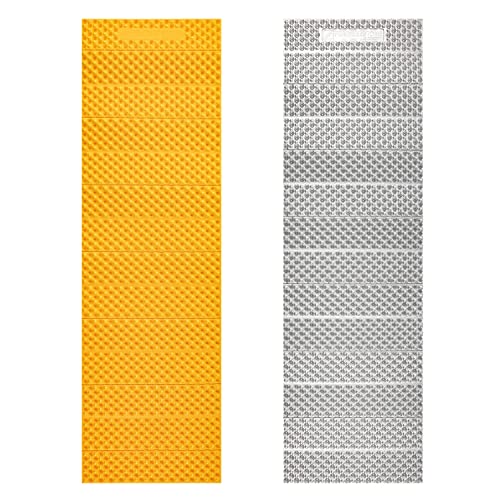
Featherstone’s El Cordion stands out by pairing closed-cell foam with a heat-reflective film and an ASTM-tested R-value of 2.1. That spec puts it squarely in three-season territory, well past what most foam pads manage. The hexagonal nodes lift you further off the ground than egg-crate foam, which sounds small until you’ve felt cold air pooling under a flat mat at 4 a.m.
Compared to the Therm-a-Rest Sol reviewed earlier, the El Cordion trades some of the brand cachet for a tested warmth spec and noticeably more loft. It’s also a smarter fit than ultralight roll-ups for backpackers headed into shoulder season or high-elevation trails where temperatures drop fast.
Notable Upsides
- ASTM F3340-tested R-value of 2.1 gives a real number to plan around in cold conditions
- Hexagonal nodes raise the sleeper noticeably off rocky or frozen ground
- Reflective film layers boost warmth without adding inflatable bulk to the pack
Points To Keep In Mind
- Closed-cell foam still feels firm under side sleepers, especially on uneven tent platforms
- Pack volume remains larger than any inflatable hybrid, even with the same warmth rating
Who Should Grab It
Backpackers and thru-hikers pushing into shoulder season or higher elevations who want tested warmth without switching to an inflatable.
Swap It Out When
Anyone chasing deep-winter warmth should look at the Elegear 4″ Thick Insulated Sleeping Pad, where a 9 R-value delivers genuine cold-weather insulation.
Where the picks above assume you’re counting ounces, the Zzuvjoy leans the other direction: a 3.1-inch self-inflating foam pad with a foot-pump system and an integrated pillow. Open the three valves, let the foam expand for ten seconds, then step on the front intake to firm things up. The whole routine takes about half a minute, which is genuinely impressive for a pad this thick.
Versus the foam mats earlier, this is the comfort-first option for car camping, festival weekends, or base-cabin trips. With a stated 9.5 R-value, it also handles colder nights than the closed-cell picks, though the added size and weight rule it out for serious backpacking.
A Strong Showing
- 3.1-inch foam profile finally gives side sleepers a real cushion at hips and shoulders
- Foot-pump inflation avoids breath-inflating and keeps moisture out of the foam core
- Integrated pillow removes one more piece of gear to remember on a family camping trip
Honest Caveats
- Bulk and weight make it a poor fit for backcountry miles
- Self-inflating foam can hold moisture long-term, so drying it thoroughly before storage matters
Feature Card
Whose Shelf It Belongs On
Car campers, festival-goers, and side sleepers who want a comfortable, easy-setup pad without inflating by mouth.
Look Elsewhere When
Thru-hikers and ultralight backpackers will prefer the Therm-a-Rest Z Lite Sol Sleeping Pad, which trims weight and pack volume dramatically.
FOCHIER F’s peanut-shaped foam pad doubles as a picnic blanket, yoga mat, and budget sleeping surface, which is more useful than it sounds. The accordion folds nest together to cut pack size, and the IXPE foam gives a noticeably softer feel than the bare closed-cell foam found on gym mats. For day hikers and casual campers, this is the budget pick that quietly works in three different settings.
It’s not as refined as the Therm-a-Rest Sol reviewed earlier, and the warmth rating trails behind Featherstone’s ASTM-tested option. But for a starter mat that handles groceries, trail lunches, and overnight trips without complaining, the value here is hard to argue with.
The Upside
- Peanut-shape nesting folds shrink the packed footprint compared to standard rectangles
- IXPE foam gives a softer lay than bare closed-cell, which matters on long sit-and-stare evenings
- Waterproof surface handles wet grass, damp tent floors, and surprise drizzles without soaking through
Practical Considerations
- Comfort is still thin for side sleepers, since the foam depth barely passes half an inch
- Warmth rating falls short of ASTM-tested pads, so cold nights will require an extra layer
Right Fit For
Day hikers, casual campers, and yogis who want one mat that covers trailside lunches and overnight trips alike.
Not Your Match When
Cold-weather campers should reach for the Gear Doctors Oxylus Self-Inflating Sleeping Pad, which delivers a tested R-value of 4.3 for genuinely cold nights.
Night Cat’s pad is built around a single number: 1.08 lb. That’s the kind of weight where a foam mat starts to compete with inflatable pads on grams but still keeps the durability of closed-cell foam. The IXPE core pairs with a silver aluminum foil backing for waterproofing and a small bump in radiant warmth. The accordion fold compacts to roughly 22.8 x 5.9 x 5.1 inches, and the included elastic straps keep everything tidy.
Compared to the FOCHIER F mat reviewed just before, the Night Cat shaves weight and adds a reflective backing. It’s not as warm as the Featherstone ASTM-tested pad reviewed earlier, but for fast-and-light trips where every ounce matters, this is the foam pad to pack.
Features That Help
- 1.08 lb weight keeps foam competitive with inflatable pads on serious backpacking trips
- Silver foil film layers in waterproofing and a small boost in radiant warmth
- Elastic straps keep the folded bundle tight, preventing rattles and gear-bag tangles
Where It May Fall Short
- Foam depth stays modest, so side sleepers will feel ground pressure on long nights
- IXPE foam tends to show scuffs and compression marks faster than denser polyethylene builds
Specs Snapshot
Who It Suits Best
Lightweight backpackers and thru-hikers who want foam durability without giving up the gram count of an inflatable pad.
Another Choice May Suit When
Car campers and family campers will find the Zzuvjoy Memory Sleeping Pad with Foot Pump more comfortable for stationary trips.
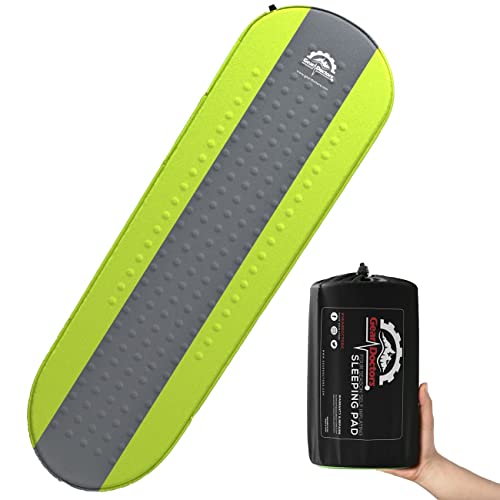
The Oxylus bridges two camps. Inside, you get a foam core that expands automatically when the valve opens, then a few breaths of top-off to dial in firmness. Outside, an R-value of 4.3 pushes the pad into genuinely cold-weather territory without crossing into expedition-weight pricing. Packed size lands around 8 x 12 inches and roughly 35 oz, which fits most internal-frame packs without complaint.
Compared to the closed-cell foam mats reviewed earlier, this is a meaningful upgrade in comfort at the cost of weight. Compared to the Elegear reviewed at the end of the list, it’s a more versatile mid-weight option for shoulder-season trips where deep-winter ratings are overkill.
Key Advantages
- 4.3 R-value handles shoulder-season and mild winter nights without an extra foam layer
- Self-inflating foam core speeds setup, with just a few breaths needed for final firmness
- Compact packed size slips into most internal-frame packs without reorganizing the load
A Few Limitations
- Self-inflating foam can trap moisture, so drying the core before long-term storage is essential
- Puncture repairs require carrying a patch kit, unlike closed-cell foam that simply absorbs abuse
Feature Rundown
Made For
Backpackers, motorcycle campers, and shoulder-season travelers who want real warmth without upgrading to an expedition pad.
Reach For A Different Pick When
Deep-winter campers pushing into sub-zero territory should consider the Elegear 4″ Thick Insulated Sleeping Pad for its 9 R-value.
TREKOLOGY’s pad pushes the comfort needle with a 4.9-inch loft and a built-in pump that inflates the mat without breath or external accessories. The 73.2 x 29.9-inch surface gives restless sleepers room to roll, and the integrated neck-support pillow removes one more piece of foam from the gear pile. For side sleepers who hate the feel of closed-cell foam under their shoulders, this is the budget-friendly answer.
Compared to the Zzuvjoy reviewed earlier, the TREKOLOGY leans thinner on R-value but trades that for a noticeably thicker air profile and a built-in inflation system. It’s a smarter pick for tent camping than backpacking miles, given the bulk and the puncture risk that comes with thinner inflatable fabrics.
A Few Strong Suits
- 4.9-inch thickness finally gives side sleepers a true mattress feel in the tent
- Built-in pump skips the mouth-inflation step entirely, no dizziness or moisture issues
- Neck-support pillow is molded into the pad, saving space and improving sleep posture
Practical Considerations
- Inflatable construction means carrying a patch kit for field repairs on longer trips
- Bulk rules it out for serious backpacking, where pack space matters more than comfort
Built With In Mind
Side sleepers, tent campers, and travelers who want the closest thing to a home mattress without leaving the campsite.
Consider Something Else When
Backpackers counting every cubic inch should look at the Night Cat Foam Sleeping Pad, which trades comfort for durability and a fraction of the bulk.
REDCAMP takes a different angle: extra width. At 22 inches across and 72 inches long, the pad gives restless sleepers and broader-shouldered campers more room than typical 20-inch foam mats. The 0.75-inch IXPE build with an R-value of 2.1 sits comfortably between the Therm-a-Rest Original reviewed second and the Featherstone ASTM-rated option reviewed third. Color options also make it easier to keep family gear straight at a busy campsite.
Versus the Night Cat pad reviewed just before, the REDCAMP trades some gram savings for a wider sleep platform and tested warmth. It’s a friendly pick for car campers who still want the simplicity of foam over the complexity of inflatable repair kits.
What Works In Its Favor
- 22-inch width suits restless sleepers who roll, and broader-shouldered campers who feel boxed in
- R-value of 2.1 keeps the pad functional into three-season conditions
- Multiple colorways make it easy to assign family members their own pad at shared campsites
Details To Watch
- Side sleepers still feel ground pressure through the 0.75-inch profile on rocky tent platforms
- Foam can absorb sweat and tent condensation, so wiping it down before storage prevents mildew smells
Perfect Match For
Restless sleepers, family campers, and anyone tired of being squeezed into a narrow foam mat in a two-person tent.
Where A Sibling Pick Shines
Thru-hikers watching pack weight will prefer the lighter Therm-a-Rest Z Lite Sol Sleeping Pad, which trims ounces without losing the foam construction.
The Elegear lands at the top end of the warmth spectrum, claiming an R-value of 9 across a 4-inch loft. That’s deep-winter territory, the kind of spec you’d expect on a mountaineering pad that costs three times as much. The self-inflating core means the foam expands on its own, and a few breath-inflated breaths dial in final firmness.
Compared to the Gear Doctors Oxylus reviewed earlier, the Elegear doubles down on insulation and depth at the cost of packed size and weight. This is a basecamp or snow-camping pad rather than a long-distance backpacker’s choice, but the warmth-to-cost ratio is genuinely impressive.
The Value In It
- 9 R-value handles deep-winter conditions and high-elevation snow camping
- 4-inch loft gives home-mattress comfort for side sleepers who camp through cold months
- Self-inflating core simplifies setup when hands are cold and fingers are slow
Honest Caveats
- Packed size and weight are too bulky for backpacking miles
- Self-inflating foam can trap moisture long after the trip ends, so thorough drying matters
Who Will Love This
Winter campers, snow campers, and basecamp travelers who need serious warmth without stepping into expedition-tier pricing.
Consider Something Else When
Three-season backpackers will find the Gear Doctors Oxylus Self-Inflating Sleeping Pad lighter and packable enough for shoulder-season miles.
Picking The Right Pad Without Overspending
Buying a sleeping pad comes down to three honest questions: how warm, how thick, and how heavy. The warmth answer is your R-value (insulation rating). Thru-hikers can usually get by with 2.0 to 3.0, while shoulder-season trips demand 4.0 or more.
How R-Value Maps To Real Conditions
An R-value of 2.0 handles summer and early fall nights above 40°F, while 3.0 to 4.0 covers most spring and fall trips. Anything above 5.0 is genuinely cold-weather territory, suitable for snow camping and high-elevation trips. Going below 2.0 only makes sense in hot summer conditions or short weekend overnights.
Comfort vs. Packability
Closed-cell foam is nearly indestructible and packable in a flat fold, but the trade-off is a thin feel that side sleepers notice immediately. Self-inflating pads add air-foam hybrid comfort but pack down to a small bundle that fits inside a pack. The comfort upgrade is real for restless sleepers and side sleepers, but the added weight matters on long miles.
Weight Budgets Worth Tracking
Backpackers should aim for under 1.5 lb total pad weight on multi-day trips, which rules out most self-inflating hybrids. Car campers can ignore weight entirely and chase comfort and warmth instead. Weekend hikers sit in the middle, where anything from 1 to 3 lb works without complaint.
A Few Things Worth Weighing
Slip-Ups First-Time Shoppers Make
The most common mistake is buying purely on price and ending up with a thin foam mat that leaves hips and shoulders aching. The second is choosing the warmest pad available when a 2.0 R-value foam mat handles 90% of summer trips. The third is ignoring packed size entirely, then discovering the pad doesn’t fit inside the pack.
What The Higher-End Models Really Add
A premium pad typically means more loft, a tested R-value, and an inflation system that doesn’t require breath or extra pumps. The upgrade is worth it for side sleepers, cold-weather campers, and anyone camping more than a handful of nights per year. Casual summer campers and day hikers can save money by sticking with closed-cell foam.
Frequently Asked Questions
What R-value do most three-season campers actually need?
Three-season camping usually means an R-value between 2.0 and 4.0, which covers spring, summer, and fall nights for most sleepers. Cold sleepers should aim closer to 4.0, while warm sleepers can drop to 2.0 in mild climates.
Are closed-cell foam pads actually comfortable for backpacking?
Closed-cell foam pads are firm and thin, but they remain popular because they refuse to puncture and pack down flat. Side sleepers tend to prefer self-inflating or inflatable pads, while back sleepers handle closed-cell foam comfortably on most trips.
How do self-inflating pads actually work?
Self-inflating pads combine open-cell foam with an air bladder: open the valve, the foam expands, and a few breaths finish the inflation. Close the valve and the pad holds its firmness for the night.
Can a budget pad really handle winter camping?
A few budget pads now reach R-values of 4.0 and above, which handles mild winter nights. Deep-winter camping still demands pads with R-values of 5.0 or higher, paired with a winter-rated sleeping bag.
How should I store a sleeping pad between trips?
Store pads unrolled or loosely folded in a dry place, away from direct sunlight and heat sources. Self-inflating and inflatable pads last longer when stored inflated or loosely folded, never compressed tight in a stuff sack for months on end.
Wrap Up
Sleeping pads are the kind of gear you forget about when they work and remember for years when they don’t. Match the warmth rating to your climate, pick a thickness your body type can live with, and don’t overspend on features you won’t use. A well-chosen foam mat under a 20-degree bag will out-sleep a premium inflatable paired with the wrong system every time.