
Cordless lawn care has finally caught up with traditional gas rigs, and the options now span everything from drop-in lithium batteries to full electric tractors. If your old lead-acid battery groans on a chilly morning, or you’re tired of the gas-and-oil routine, the picks below cover both paths. You’ll find a mix of battery upgrades and one fully battery-powered tractor, so you can pick based on your riding mower and the size of your yard.
The Shortlist At A Glance
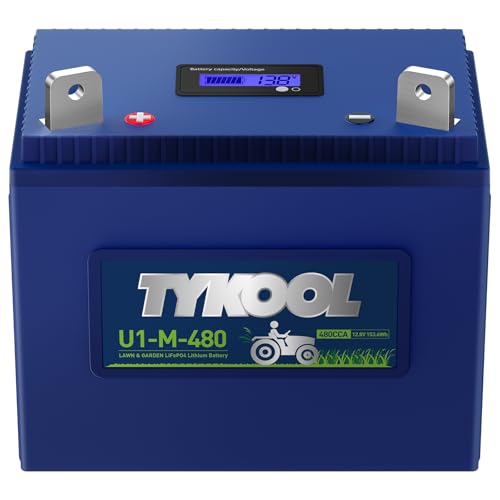
TYKOOL 480CCA Group U1 Lithium LiFePO4 Lawn Mower Battery

Mighty Max 12V 35AH SLA Riding Mower Battery (2 Pack)

Forgetyo U1 12V 16Ah 720CCA Lithium LiFePO4 Battery

Sears Craftsman Husqvarna 190097 Battery Charger
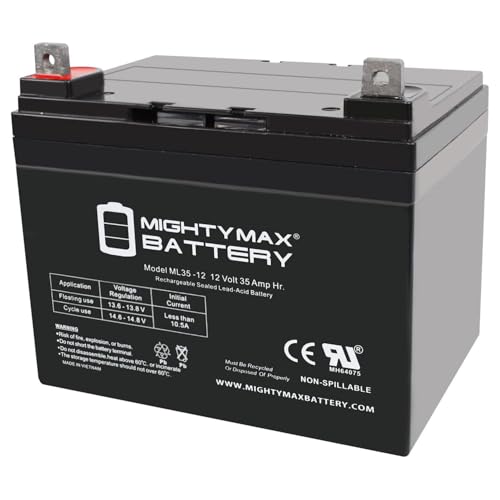
Mighty Max 12V 35Ah SLA for John Deere Lawn Tractor

BRS U1 AGM 12V 300 CCA Lawn Tractor Battery

Briggs & Stratton 7600188YP Sealed Battery Kit
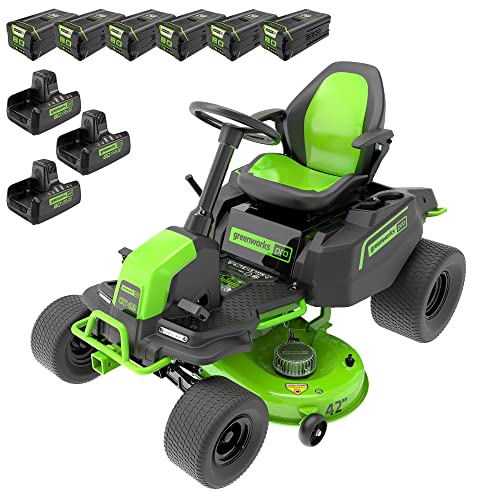
Greenworks PRO 80V 42″ Electric Lawn Tractor
The Strengths Of Each Pick
Drop this LiFePO4 (lithium iron phosphate) unit into the same Group U1 tray where your old lead-acid battery sat, and your tractor wakes up faster, especially on those chilly April mornings when lead-acid drags its feet. The chemistry is the same family used in the lightweight Forgetyo pick further down, but the TYKOOL leans harder on raw cranking muscle for mid-sized mowers that need a confident turn of the key.
For anyone who stores the tractor in an unheated shed or only mows on weekends, that cold-start behavior is the whole point. It also broadens compatibility, since the Group U1 case fits a long list of popular garden tractor brands, including John Deere, Cub Cadet, Craftsman, and Troy-Bilt. Compared to the Mighty Max SLA pair above, the trade is weight and price for far longer cycle life.
Where It Excels
- 480A cold cranking amps (CCA) deliver confident starts in cold spring conditions when lead-acid struggles.
- LiFePO4 chemistry supports thousands of charge cycles, so the battery outlasts several SLA replacements.
- Group U1 case drops into common John Deere, Cub Cadet, Craftsman, and Troy-Bilt tractor trays without modification.
- Stable 12V output means lights and accessories run consistently while the engine cranks.
Things To Consider
- Requires a charger that matches LiFePO4 charging profiles, so a leftover SLA charger may not fully top it off.
- Higher upfront cost than a basic SLA, though the longer cycle life offsets it over time.
Key Specs
Right Fit For
Owners of mid-sized garden tractors who want a set-and-forget lithium upgrade and store their equipment in unheated spaces.
Look Elsewhere When
The Mighty Max 12V 35AH pair is a better fit for shoppers on a tight budget who only need basic starting power for a casual-use rider.
Sealed lead-acid (SLA) remains the familiar, no-fuss option for riders that need a basic replacement, and the two-pack format means you get a spare on the shelf for next season. For John Deere tractor owners running older electric-start systems, the 35Ah (amp-hour) capacity delivers the steady cranking that those engines expect, without the cost jump to lithium.
The chemistry is spill-proof AGM (absorbent glass mat, a design where the acid is held in fiberglass mats so the battery cannot leak), so mounting orientation is forgiving inside a tractor tray. For households that already own an SLA-compatible charger and want the simplest swap possible, this pair is the kind of low-fuss purchase that quietly does its job.
A Strong Showing
- Two batteries in one pack means a backup is ready when the first one finally gives out.
- Sealed AGM construction resists spills and tolerates a wide range of mounting positions.
- 35Ah capacity suits John Deere riders that need steady cranking rather than high peak amps.
Worth Noting
- Heavier than lithium alternatives, so lifting two units into a tractor tray takes more effort.
- Shorter cycle life than the TYKOOL lithium option, so replacements come sooner under frequent use.
- Cold-weather cranking drops noticeably compared to lithium chemistry, which matters in northern climates.
Whose Shelf It Belongs On
John Deere owners with an older rider who want a familiar SLA replacement and appreciate having a backup unit on hand.
Swap It Out When
The TYKOOL 480CCA lithium battery is a better fit for anyone who values lighter weight, longer cycle life, and stronger cold-weather starting.
Where the TYKOOL emphasizes raw cranking amps, this Forgetyo battery leans the other way: it sheds roughly two-thirds of the weight of a comparable lead-acid pack while still pushing a serious 720A peak CCA figure. For anyone with a smaller garden tractor who has ever winced while wrestling a 40-pound battery out of a tight tray, that lighter feel is genuinely liberating.
The 16Ah capacity is modest, but starting a rider only needs a brief, high-current burst rather than long sustained output. That makes this format a comfortable fit for occasional weekend mowing. The Group U1 case keeps compatibility broad across the usual brand suspects, so installation rarely requires more than the included hardware.
Practical Advantages
- Weighs around five pounds, a fraction of a comparable lead-acid battery, making swaps easier.
- 720A peak CCA delivers confident starts for small to mid-sized rider engines.
- LiFePO4 chemistry holds voltage steadily through the cranking cycle.
Room For Improvement
- Modest 16Ah capacity makes it less suited to rigs with heavy accessory loads.
- Like most lithium batteries, it needs a compatible LiFePO4 charger for full top-offs.
Best Suited To
Owners of compact garden tractors who want to lose weight off the front end and prefer easy, no-strain battery swaps.
Reach For A Different Pick When
The Briggs & Stratton 7600188YP Sealed Battery Kit is a better fit for riders running OEM Briggs & Stratton charging systems that pair with a factory-spec battery.
Not every “battery” problem is actually the battery, and this OEM (original equipment manufacturer) Sears, Craftsman, and Husqvarna part exists for exactly that moment. It’s a charger module rather than a starting battery, so it belongs on the bench next to the rider rather than inside its tray. Vintage Craftsman riders from the early electric-start generations rely on these onboard chargers to keep the battery topped off between mows, and a dead charger mimics a dead battery perfectly.
For anyone with a tractor that suddenly refuses to hold a charge, swapping this part first can save the cost of a battery that was never the problem. The compatibility list covers several legacy Sears, Craftsman, and Husqvarna rider models, which is exactly the niche this component fills.
What Helps Most
- Genuine OEM replacement matches the original wiring and mounting points.
- Restores charging function on legacy riders so the existing battery can do its job again.
- Covers several Sears, Craftsman, and Husqvarna rider models from the same era.
Some Limits To Know
- Only useful for riders with the compatible onboard charging circuit, so newer models are out of scope.
- Not a battery itself, so it doesn’t solve weak cranking on its own without a healthy paired battery.
Made For
Owners of older Sears, Craftsman, or Husqvarna riders who suspect the onboard charger rather than the battery is the failed component.
Not Your Match When
The TYKOOL 480CCA lithium battery is a better fit for anyone who has already confirmed the starting battery itself is the weak point.
When the rider only needs one replacement battery and you don’t want to stockpile a spare, this single-unit Mighty Max sits in the same SLA family as the two-pack above. The 35Ah output handles the steady cranking demand of a John Deere 108 series rider, which is exactly the model in its title. The chemistry is the same sealed AGM design found across the Mighty Max line, so the spill-proof convenience carries over.
For a small lawn that only sees the rider every other week, the value here is hard to argue with. The trade-off is the usual SLA story: shorter cycle life than lithium, more weight, and a noticeable dip in cold-weather cranking, so shops in mild climates get the most out of it.
What Makes Sense
- Direct-fit replacement for the John Deere 108 series at a modest entry price.
- Sealed AGM construction removes the worry of acid spills during installation.
- 35Ah capacity comfortably covers weekly residential mowing sessions.
Small Caveats
- Cold cranking is weaker than lithium options like the TYKOOL 480CCA, so northern climates may see slower starts.
- Single-unit packaging means no spare on the shelf, unlike the two-pack Mighty Max listed above.
Who Should Grab It
John Deere 108 owners in mild climates who just want a straightforward, affordable SLA replacement without extra frills.
A Better Fit Elsewhere
The BRS U1 AGM battery is a better fit for shoppers who want stronger cold cranking and a sealed design that handles a wider range of small-engine equipment.
The BRS sits in a useful middle ground between the no-frills Mighty Max SLAs and the more expensive lithium picks. It’s a sealed AGM unit that ships fully charged, so the install turns into a tray swap rather than a charging project. With 300 CCA, cold-weather starting is reasonable, and the broad compatibility across lawn tractors, generators, UTVs, and ATVs makes it a flexible shelf component for a busy property.
For households that run more than one piece of small-engine gear, that cross-equipment compatibility is a quiet bonus. You’re not locked into a riding-mower-only use case, and the sealed design means it can sit on a garage shelf for a season without leaking.
Strengths Worth Knowing
- Arrives fully charged, which shortens the install to a clean tray swap.
- Sealed, maintenance-free AGM construction removes water top-ups from the routine.
- Works across lawn tractors, generators, UTVs, and ATVs, not just one machine.
- Vibration resistance helps in tractors that travel over uneven ground.
Possible Compromises
- 300 CCA is solid but trails the TYKOOL 480CCA in genuinely frigid conditions.
- Heavier than the Forgetyo lithium option, so swapping still takes some effort.
Quick Facts
Who It Suits Best
Property owners with several small-engine machines who want one battery that can move between them as needs shift.
Where Another Pick Suits Better
The TYKOOL 480CCA is a better fit for anyone who mows through freezing temperatures and wants noticeably stronger cold-start cranking.
Genuine Briggs & Stratton replacement parts exist because some riders simply don’t play nicely with aftermarket batteries, and this sealed kit is the factory-spec answer. The “kit” framing means the battery arrives with whatever hardware and connectors the engine expects, so the swap is closer to a one-tool job than a wiring puzzle. For anyone whose tractor was engineered around a specific battery footprint and venting path, that’s a real relief.
The honest read is that you’re paying a little more for the OEM seal rather than for dramatically different performance numbers. For riders under warranty, or anyone who simply prefers factory-fit components, that premium often feels reasonable.
Key Advantages
- Factory-spec fit removes guesswork around tray dimensions and terminal placement.
- Sealed design keeps the battery safe from leaks on uneven terrain.
- Helps preserve any existing warranty coverage that depends on OEM parts.
Where It May Fall Short
- Costs more than aftermarket options like the Mighty Max SLA pair for similar rated output.
- Performance specs are conservative compared to high-CCA lithium upgrades like the Forgetyo unit.
Perfect Match For
Riders with Briggs & Stratton engines where the factory battery dimensions, venting, and warranty terms matter.
Skip It When
The Forgetyo U1 720CCA lithium is a better fit for shoppers who want lighter weight and noticeably stronger peak cranking on a non-warrantied rider.
Where the other picks are batteries or chargers, the Greenworks PRO 80V is the entire tractor, fully electric from the first crank of the deck. The 42-inch cutting deck and six 5.0Ah batteries (amp-hour ratings that signal how long each battery can deliver current) make this a serious property tool, with the included triple dual-port chargers designed to keep the rotation moving through a long mow. The brushless motor and 80V platform target the same power band you’d expect from a small-displacement gas engine, but with the quiet and maintenance-light feel of a battery platform.
For households ready to skip the gas can entirely, this is the all-in-one step. You give up the ability to refuel in seconds, but you also give up oil changes, spark plugs, and most of the noise.
Real-World Strengths
- 42-inch deck trims mowing time on properties up to roughly two acres per charge.
- Six 5.0Ah batteries rotate through the system, extending usable runtime between plug-ins.
- Brushless motor design reduces routine maintenance compared to gas equivalents.
Trade Offs
- Charging turnaround between sessions is longer than refilling a gas tank, so planning matters for larger lots.
- Higher upfront investment than a battery swap, since you’re buying a complete tractor.
Feature Snapshot
Who Will Love This
Homeowners on properties up to about two acres who want a quiet, low-maintenance replacement for a gas rider and don’t mind a longer charging window.
Consider Something Else When
The TYKOOL 480CCA lithium battery is a better fit for shoppers who already own a working gas rider and only need to upgrade the battery, not the whole machine.
What Matters Most When Choosing a Battery Riding Mower
Start with the platform, not the marketing. If you already own a working gas or electric-start rider, the decision is really about which battery fits the tray and the charging system. A Group U1 case covers most modern garden tractors, but the chemistry underneath that case changes everything about how the rider feels over the next five years. SLA keeps costs low and stays forgiving in storage, while lithium LiFePO4 trades a higher price for lighter weight, longer cycle life, and stronger cold starts.
For shoppers going fully battery-powered, deck width and battery count matter more than peak horsepower claims. A 42-inch deck with six 5.0Ah packs covers a different workload than a single-battery push-style rig, and the charger count decides how quickly the rotation bounces back between sessions.
Match the battery to the climate, not just the brand. Cold cranking amps are a real number with real consequences in northern regions, and a battery that fires up easily in Texas can groan through a Vermont April morning. LiFePO4 tends to hold voltage better in cold storage, which is why so many of the picks above lean on it for year-round reliability.
Key Considerations Across These Picks
Wrong Turns To Avoid
The most common slip is buying a lithium battery without checking the charger’s voltage profile. LiFePO4 cells want a specific charging curve, and an old SLA charger can undercharge them, leaving the tractor sluggish on cold mornings. Take a minute to confirm the charger’s compatibility before clicking through.
Another trap is assuming all “Group U1” batteries are interchangeable across brands. The case size is similar, but terminal placement and vent orientation sometimes differ between manufacturers, especially between OEM kits and aftermarket units. A quick tray measurement before purchase can prevent a return.
The Upgrade Payoff
Spending up on a LiFePO4 battery instead of a basic SLA trades a higher sticker for a longer service life and noticeably lighter weight, which is meaningful for anyone who swaps batteries every few seasons. The premium matters most for cold-climate owners and frequent mowers.
The jump from a battery swap to a full electric tractor is a different kind of upgrade, swapping fuel and oil for charging time and a higher upfront cost. The payoff is real for anyone mowing up to about two acres who values quiet operation and minimal maintenance over refuel speed.
Frequently Asked Questions
How long do battery riding mower batteries typically last? SLA batteries usually give two to four seasons of regular residential use before capacity drops noticeably. LiFePO4 batteries commonly stretch to several times that, though exact lifespan depends on charge cycles, climate, and storage conditions.
Can I swap a lead-acid battery for lithium in any rider? In many cases yes, as long as the Group U1 case fits the tray and the charging system supports a lithium profile. Some older tractors with basic chargers may need a charger upgrade to fully top off a lithium battery.
How long does it take to charge an electric riding mower? Charging time depends on the battery count and charger output. A multi-battery electric tractor with multiple chargers usually needs a few hours to return to full capacity, so most owners plug in between sessions rather than mid-mow.
Are battery riding mowers powerful enough for thick grass? Brushless electric platforms and modern lithium riders handle typical residential lawns well, including thicker spring growth. Very tall, wet, or neglected grass can still tax any battery rig, just as it would a gas rider, so mowing frequency matters.
Do battery mowers work in cold weather? Yes, though lithium batteries tend to hold their cranking power better in the cold than SLA options. Storing the battery indoors during freezing stretches can also help maintain capacity.
The Takeaway
The right pick depends on whether you’re upgrading one component or replacing the whole machine. For battery swaps, the TYKOOL 480CCA and the Forgetyo 720CCA are the strongest lithium choices, while the BRS U1 AGM and the Mighty Max pair cover shoppers who prefer familiar SLA value. For a full electric rig, the Greenworks PRO 80V 42-inch tractor is the most capable all-in-one option. Match the chemistry to your climate, the case to your tray, and the deck to your lawn, and the rest tends to take care of itself.