
Swapping a dead battery on a riding mower is one of those springtime headaches that can ruin a perfectly good mowing day. Zero turn mowers pull a lot of cranking amps, so a mismatched or under-spec battery leaves you turning a key to nothing. The right replacement depends on your deck size, your climate, and how often you fire up the engine.
This roundup compares ten replacement options across lead-acid, AGM, and lithium chemistries. Every pick here is sized to the U1 footprint common on residential riding mowers, so fit is rarely the issue. The differences show up in cranking power, weight, longevity expectations, and how much maintenance you’re willing to deal with across the seasons.
A Quick View Of The Lineup

MARXON U1 Riding Lawn Mower Battery 12V 330CCA

Forgetyo U1 Lithium Lawn Mower Battery 12V 720CCA

WEIZE Lawn Garden AGM Battery 12V 300CCA
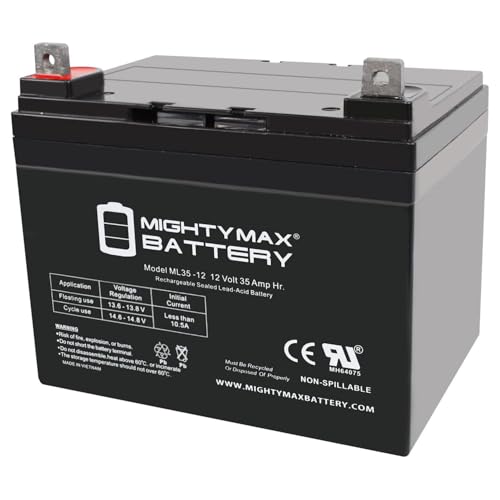
Mighty Max ML35-12 12V 35Ah SLA Battery

UPLUS U1 Lawn Mower Battery 12V 330CCA AGM

Autocessking U1 Lawn Mower Battery 12V 320CCA

Mighty Max ML-U1R-CCAHR 12V 320CCA AGM

Daakmax U1 AGM Lawn Mower Battery 12V 200CCA

Briggs & Stratton 7600188YP Sealed Battery Kit
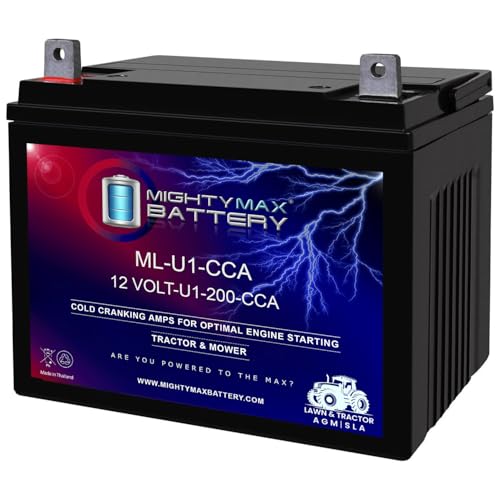
Mighty Max ML-U1 12V 200CCA for Troy-Bilt
Inside Each Recommended Option
The MARXON U1 sits at the top of this list because it lines up with what most residential zero turn owners actually run. It’s a 12V sealed lead-acid battery rated at 330 cold cranking amps (CCA), which is the current (literally) the battery can deliver for 30 seconds at 0°F without dropping below a usable voltage. That’s enough headroom for most single-cylinder and small twin mower engines.
You get a U1 case measuring roughly 7.68 by 4.92 by 6.14 inches, with the positive terminal on the left. The compatibility list is unusually wide, covering Husqvarna, Cub Cadet, John Deere, Exmark, and a long list of commercial-grade brands. If you don’t know exactly which U1 your mower takes, this is a sensible default.
Real-World Strengths
- 330 CCA handles cold morning starts on engines up to about 25 HP without strain.
- Wide brand coverage reduces the risk of buying the wrong case size.
- Sealed lead-acid (SLA) construction means no watering or acid checks.
- Common U1 footprint fits the vast majority of residential zero turn trays.
Worth Noting
- Heavier than lithium options, so removing it for winter storage takes more effort.
- No advanced charge indicators, so you’ll want a multimeter or load test if it sits unused for months.
Quick Facts
Who Should Grab It
Homeowners running a residential zero turn with a U1 tray who want a proven, broadly compatible replacement without thinking too hard about brand matching.
Skip It When
The Forgetyo U1 Lithium Lawn Mower Battery is a better fit if shedding 15 pounds of battery weight matters for storage or transport.
The Forgetyo U1 is the only lithium LiFePO4 (lithium iron phosphate, a chemistry prized for thermal stability and long cycle life) option in this roundup, and it shows in the numbers. Rated at 720 CCA at 12.8V and 16Ah, it cranks harder than every lead-acid unit here, despite weighing roughly a third of the MARXON above. The case measures about 7.7 by 5.1 by 7.2 inches, which is a hair taller than the U1 spec.
Compatibility covers John Deere, Cub Cadet, Craftsman, and Troy-Bilt rider models, plus a few generator applications. The trade-off is price and chemistry unfamiliarity: lithium doesn’t behave like a flooded lead-acid battery, so charging routines matter more.
Useful Strengths
- 5.07-pound weight makes seasonal swaps far easier on your back.
- 720 CCA delivers strong ignition even after long winter storage.
- LiFePO4 chemistry resists capacity loss in cold weather better than flooded lead-acid.
Trade Offs
- Taller case can mean trimming or shimming in a tight U1 tray.
- Charging needs a lithium-compatible charger, which is an extra cost if your current tender is lead-acid only.
- Higher upfront cost than comparable AGM units.
Best Suited To
Zero turn owners who carry their battery inside for off-season storage or want less weight on the front axle.
A Better Fit Elsewhere
The WEIZE Lawn Garden AGM Battery is the smarter buy for shoppers who prefer a traditional AGM swap at a friendlier price.
The WEIZE Lawn Garden AGM Battery is the dependable workhorse most people end up buying. It’s a 12V 300CCA AGM (absorbent glass mat, a sealed lead-acid design where electrolyte is held in fiberglass mats, so it can’t spill) unit in the BCI (Battery Council International, the group that defines physical battery sizes) Group U1 case, weighing in at about 18.68 pounds. Dimensions run 7.68 by 5.12 by 6.22 inches, with a slightly taller total height of 7.09 inches including terminals.
Square-hole nut-and-bolt terminals keep the install familiar, and the positive-on-left polarity matches most U1 wiring. John Deere, Toro, Cub Cadet, and Craftsman riders all show up on the compatibility list, which covers the bulk of mid-sized residential decks.
Well-Handled Touches
- AGM sealed design eliminates acid spills even if the tray tips.
- 300 CCA handles typical residential mowers without complaint.
- Nut-and-bolt terminals grip securely, so vibration won’t loosen the cables.
- Wide compatibility covers most residential mower brands.
Honest Caveats
- AGM doesn’t love sitting at a partial state of charge, so a tender helps in winter.
- Heavier than the lithium Forgetyo above, which matters for older riders with front-heavy balance.
The Right Fit
Shoppers who want a no-fuss AGM replacement at a friendly price and don’t need the cranking reserve of a lithium upgrade.
Look Elsewhere When
The Mighty Max ML35-12 makes more sense if your John Deere 108 series needs the larger 35Ah footprint.
The Mighty Max ML35-12 is a different beast from the U1 crowd. It’s a 12V 35Ah sealed lead-acid battery, which puts it firmly in the higher-capacity category for riding mowers. Amp-hours (Ah) measure how much current a battery can deliver over time, so 35Ah means longer accessory runtime than typical 25Ah U1 units. Dimensions run about 7.76 by 5.12 by 7.01 inches, with the listing calling it a replacement for the John Deere Lawn Tractor-Riding Mower 108.
The trade-off is footprint. This battery is taller than a standard U1, so it fits some mower trays and not others. For owners of compatible models, the larger reserve is a real upgrade.
Reasons It Performs
- 35Ah capacity out-runs typical 25Ah U1 batteries for accessory loads.
- SLA AGM construction resists spills and vibration on rough terrain.
- Wide operating temperature range supports cold-shed winters and hot summers.
Points To Keep In Mind
- Taller case won’t fit every U1 tray; measure your hold-down first.
- Listing includes only the battery and screws, no harness.
- Heavier than standard U1 options.
Key Specs
Whose Shelf It Belongs On
John Deere 108 owners and anyone whose mower tray can accept a taller, higher-capacity battery.
Reach For A Different Pick When
The WEIZE Lawn Garden AGM Battery is a better match if your tray only fits a standard U1 height.
The UPLUS U1 is built for people who don’t want to think about their battery. It’s a 12V 25Ah 330CCA AGM unit sized at 7.68 by 4.92 by 6.93 inches, with maintenance-free sealed construction. No fluid to check, no acid to refill, no vent caps to tighten.
Compatibility runs deep: John Deere, Cub Cadet, Husqvarna, Craftsman, Toro, Ariens, Poulan Pro, and Troy-Bilt all appear on the list. For households running more than one brand over the years, that wide net keeps the swap simple.
Everyday Perks
- Truly sealed AGM means install-and-forget ownership.
- 330 CCA matches the MARXON’s output for similar-sized engines.
- Broad compatibility list covers most residential mower brands.
- Positive-on-left polarity matches standard U1 wiring layouts.
Smaller Limitations
- Heavier than the lithium Forgetyo, which adds up over years of seasonal swaps.
- Standard U1 capacity (25Ah) means accessory runtime is shorter than the ML35-12 above.
Made For
Owners who store their mower outdoors through winter and want a sealed battery that shrugs off temperature swings.
Not Your Match When
The Briggs & Stratton 7600188YP Sealed Battery Kit is worth considering if your mower calls for an OEM-equivalent replacement.
The Autocessking U1 is the middle child of this roundup, and that’s exactly the point. It’s a 12V 28Ah 320CCA AGM battery with positive-on-left polarity and compatibility for John Deere, Toro, Cub Cadet, and Craftsman riders. The dimensions listed (about 9.45 by 8.70 by 6.81 inches) look larger than a standard U1, so check tray clearance before committing.
CCA lands between the WEIZE 300CCA and the MARXON 330CCA, which puts it right in the sweet spot for typical residential engines. The AGM construction keeps it sealed and spill-proof.
Everyday Advantages
- 320 CCA handles cold starts without overpromising on capacity you won’t use.
- AGM sealed design tolerates the rough terrain zero turns are known for.
- Wide compatibility with the most common residential brands.
Soft Spots
- Listed dimensions are larger than a standard U1 case, so measure first.
- Hazmat shipping restrictions can affect delivery options.
Built With In Mind
Suburban zero turn owners who mow weekly through spring and summer and want a middle-tier AGM without overspending.
Where A Sibling Pick Shines
The MARXON U1 is the safer fit if you need guaranteed standard U1 dimensions for a tight tray.
The ML-U1R-CCAHR is the high-rate variant in the Mighty Max U1 lineup. The “HR” suffix marks it as a High Rate Series battery, which means it’s built to deliver strong bursts of current when the starter first engages. The 12V 320CCA rating matches the Autocessking above, but the construction focus is different.
Nut-and-bolt (NB) terminals give you a secure connection that won’t loosen under vibration. For riders with stiffer starters or those who fire up in genuinely cold conditions, the high-rate design pays off.
Points In Its Favor
- High-rate design delivers faster initial crank for cold starts.
- Nut-and-bolt terminals resist loosening from vibration.
- 320 CCA covers most residential zero turn engine demands.
Trade-Offs To Consider
- Capacity isn’t specified beyond CCA, so accessory runtime depends on the mower’s charging system.
- No harness or mounting hardware included, just the battery and screws.
Right Fit For
Owners in colder climates who crank their mower in sub-freezing temperatures and want extra starting headroom.
Swap It Out When
The WEIZE Lawn Garden AGM Battery is a smoother pick for warmer climates where the cold-start edge doesn’t matter as much.
The Daakmax U1 sits at the lower end of the cranking-power range here. It’s a 12V 24Ah 200CCA AGM battery with standard BCI Group U1 dimensions (7.68 by 5.12 by 7.09 inches) and a maintenance-free sealed design. Compatibility lists Craftsman, Cub Cadet, and Toro riders.
200 CCA is enough for smaller single-cylinder engines in mild climates, but you’ll notice the difference on a frosty morning or a twin-cylinder deck. The trade for that lower output is a more compact footprint and often a friendlier price.
Where It Helps
- Standard U1 footprint fits every common residential battery tray.
- Maintenance-free AGM design suits occasional-use mowers.
- Compact 24Ah design suits riders with weight-sensitive front axles.
Potential Compromises
- 200 CCA is tight for cold starts or twin-cylinder engines.
- Smaller capacity means accessory loads (lights, electric PTO) drain it faster.
Feature Snapshot
Best Suited To
Light-duty riders in warmer climates with single-cylinder engines under 20 HP.
Consider Something Else When
The Mighty Max ML-U1R-CCAHR delivers stronger cranking for cold mornings or twin-cylinder engines.
The Briggs & Stratton 7600188YP is the OEM-spec replacement option in this roundup. It’s sold as a sealed battery kit, which means it arrives with the terminals and configuration matched to specific Briggs & Stratton-powered riders and zero turns. The “YP” suffix marks it as a factory-style part.
For owners of Briggs & Stratton engines who want a guaranteed-fit replacement without cross-referencing dimensions, this is the path of least friction. You’re paying for the brand match as much as the battery itself.
The Helpful Details
- Factory-fit design removes the dimension-checking step from the install.
- Sealed construction suits outdoor storage conditions.
- OEM (original equipment manufacturer) match for Briggs & Stratton-powered mowers.
Where It May Fall Short
- CCA and capacity details aren’t always published in the listing, so you’ll want your engine model number handy.
- Costs more than third-party AGM units with similar specs.
Perfect Match For
Briggs & Stratton-powered riders where matching the factory part matters more than chasing the highest CCA number.
Another Choice May Suit
The UPLUS U1 Lawn Mower Battery covers more brands if you own multiple mowers across different labels.
The Mighty Max ML-U1 rounds out this list as a model-specific replacement. It’s listed as a 12V 200CCA SLA AGM battery for the Troy-Bilt 361106 lawn tractor, and it carries the same U1 footprint as the broader ML-U1R-CCAHR above. The 200 CCA rating makes it a fit for smaller engines in mild conditions.
The narrow compatibility listing is intentional: it’s tuned for a specific Troy-Bilt model number, which removes guesswork for owners of that exact unit.
Why It Works Well
- Model-specific listing eliminates fitment guesswork for Troy-Bilt 361106 owners.
- SLA AGM sealed design works in outdoor storage.
- Compact 200 CCA class suits small single-cylinder engines.
Some Limits To Know
- Limited compatibility beyond the listed Troy-Bilt model.
- Lower CCA rating means cold-weather starts will feel weaker than the MARXON or Forgetyo above.
Who Will Love This
Troy-Bilt 361106 owners who want a drop-in replacement without measuring or cross-referencing.
Not Your Match When
The WEIZE Lawn Garden AGM Battery is the stronger choice for mowers with larger engines that need more cranking headroom.
What Matters Most Before Choosing Battery For Zero Turn Mower
Cold Cranking Amps and Capacity
CCA is the headline number for any starting battery. A 300 to 330 CCA unit handles most residential zero turns comfortably, while 200 CCA is fine for smaller engines in warm climates. Capacity (Ah) matters more if you run accessories like headlights, electric PTO clutches, or work lights when the engine is off. Higher Ah means longer accessory runtime before the battery drops below a usable voltage.
Battery Chemistry
Flooded lead-acid batteries are the cheapest but need periodic watering and venting. AGM batteries cost a bit more but seal the electrolyte in fiberglass mats, which makes them spill-proof and lower-maintenance. Lithium LiFePO4 batteries weigh far less and last longer in cycle terms, but require a compatible charger and cost significantly more up front.
Tray Fit and Terminal Layout
Most zero turns use the BCI Group U1 case, but height varies by half an inch or more across brands. Measure your existing battery’s height, length, and width, and check whether the positive terminal sits on the left or right. A mismatch can leave you with cables that don’t reach or a battery that doesn’t sit in the hold-down clamp.
Climate and Storage Conditions
Cold climates punish weak batteries. Stored outdoors in sub-freezing temperatures, a battery slowly loses charge, and weak cells fail first. If you store your mower in an unheated shed, lean toward the higher CCA end of the range or run a maintenance tender through the winter.
Key Considerations Across These Picks
Pitfalls Shoppers Hit
The most common mistake is buying on price alone and ending up with a 200 CCA unit when your mower really wants 300+. That mismatch shows up the first cold morning. The second is assuming all U1 batteries are the same size: a quarter-inch difference in height can keep the hold-down from seating. Measure twice before ordering, and double-check the positive terminal side against your existing wiring.
Where The Extra Money Goes
Higher-tier batteries in this category buy you more CCA, longer cycle life, lighter weight, or sealed AGM construction that survives vibration and outdoor storage. The lithium upgrade pays off if you carry the battery inside each winter or want to shave weight off the front axle. For occasional-use mowers in mild climates, a mid-range AGM is plenty, and spending more mostly buys peace of mind rather than measurable performance gains.
Frequently Asked Questions
What CCA do I need for a zero turn mower?
Most residential zero turn mowers run well with 300 to 350 CCA. Larger twin-cylinder engines benefit from the higher end of that range, while small single-cylinder riders can manage with 200 CCA in warm climates.
Can I use a lithium battery in place of lead-acid?
Yes, as long as the case fits the U1 tray and you use a lithium-compatible charger. Lithium batteries are lighter and hold charge longer in storage, but they cost more up front and don’t pair with old lead-acid tenders.
How long does a riding mower battery last?
Three to five years is typical for AGM batteries in regular use. Flooded lead-acid batteries may last slightly less if not maintained, while lithium LiFePO4 options often push past five years with proper charging.
Do I need to maintain a sealed AGM battery?
Sealed AGM batteries don’t need watering, but they do benefit from a maintenance charger during long storage periods. Keeping the charge above 50% through winter extends cycle life noticeably.
What size battery does a zero turn mower take?
The majority of residential zero turn mowers use a BCI Group U1 battery. Commercial zero turns may use larger groups like U1R or 26, so check your owner’s manual before ordering.
Closing Remarks
The right battery comes down to matching CCA to your engine, chemistry to your maintenance tolerance, and case dimensions to your tray. For most homeowners, a 300+ CCA AGM in the standard U1 footprint will deliver years of reliable starts without much fuss. Run a tender through winter, keep the terminals clean, and the swap should feel routine.